W tej strefie proponujemy bardzo szeroką ofertę z dziedziny psychologii oraz dziedzin powiązanych: astronomii i astrofizyki, ekologii, filozofii, kultury, podróżnictwa, religii, socjologii, sztuki. Szczególnie polecamy z tej kategorii bestseller pt. Księga Urantii. Księga Urantii podaje jasną i zwięzłą integracją nauki, filozofii i religii. Ci, którzy ją czytali i zgłębiali, wierzą, że Księga Urantii może wnieść bardzo wiele wartości do religijnej i filozoficznej myśli ludzi tego świata.
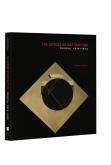
Russian avant-garde art—the exciting art movement that flourished in Russia in the years surrounding the 1917 revolution—resulted in remarkable works of art, architecture, literature, film, theater, dance, and graphic design. The first non-figurative art movement, it was enormously important in the development of modern art.
This lavishly illustrated exhibition catalog looks at six major works by six renowned Russian artists: Kazimir Malevich, Vladimir Tatlin, Ivan Kliun, Ilja Chashnik, El Lissitzky, and Lyubov Popova. Stunning reproductions are accompanied by original documents, objects, manuscripts, and photographs from the collection of art historian Andréi Nakov.
Nakov also writes on how, in the late 1950s, Canadian diplomats posted to Moscow were instrumental in helping form the collection of George Costakis, who worked at the Canadian Embassy and whose collection of Constructivist and other Russian avant-garde works grew to become the largest and most representative collection anywhere.
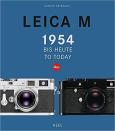
There is no other product in the world that is as exacting technically as the Leica M camera, whose design, manufacture and styling remained nearly unchanged during the past 60 years. This book vividly describes, in words and with numerous illustrations how this unique camera came to be and how it was possible to continually optimize its functions and to complement them with new technologies that were both innovative and sensible. Completely up-to-date with all information on the new Digital Leica M Typ 240.
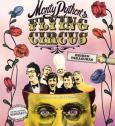
This is the story of Monty Python, one the most popular and influential forces in modern comedy-and of their TV show-told in words and images. This celebratory book includes 22 removable facsimiles of rare memorabilia from their official archives, including hand-scribbled scripts, cue sheets, character lists, posters, and animation artwork. Written with active input from the Pythons themselves, the book recounts the adventures of all six members and their TV show, from early days in the Cambridge Footlights through early appearances on the BBC, global stardom, the inevitable fights, and their triumphant reunions.
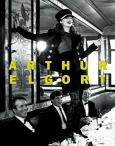
Voici la première monographie de Arthur Elgort, un mélange de ses plus iconiques photographies de mode aux côtés de son travail personnel. Ce livre présente plus de cinq décennies de la carrière de ce photographe de mode à la longévité rare dans ce monde d’artifices. Son style ? Humour et décontraction, et un amour immodéré de la musique et de la danse, en particulier le jazz et le ballet. En 1971 Arthur Elgort débute pour le Vogue britannique et créé la sensation pour ses « instantanés » mis en scène, son art du mouvement et sa maîtrise de la lumière naturelle qui lui feront vite transcender les normes de la photographie de mode. Arthur Elgort a vite collectionné les collaborations et travaillé pour des magazines comme Vogue (américain, français et italien), Interview, GQ, et Rolling Stone. Il a signé de nombreuses campagnes publicitaires pour des marques de mode comme Chanel, Valentino et Yves Saint Laurent.
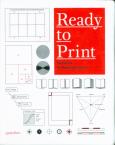
Ready to Print is an easy to follow reference for designers that thoroughly explains each stage of how to prepare data for prepress and production.
Clearly structured chapters on “Paper,” “Printing Techniques,” “Typography,” “Trapping,” “Color,” “Image Editing,” and “PDF” as well as abundant descriptive graphics impart essential knowledge in a comprehensive way. From the traits of various types of paper to the recommended settings when exporting data into a print-ready PDF,Ready to Print reveals both opportunities and limitations in pre-press and production. In short, this book paves the way for designers how to create the best-possible print product.
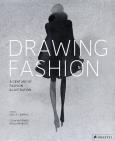
A unique collection of remarkable drawings by the most important fashion illustrators at their creative heighths from the early 20th century util the present day.
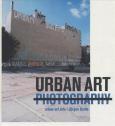
Berlin is a particularly strong magnet for international street artists and its landscape is filled with artwork and signatures that are inventing new visual codes. But the impressions that these artists leave are inevitably fleeting, as their art falls victim to the city’s unrelenting development. Luckily, the book Urban Art Photography serves as a permanent documentation and time capsule of both the creation and evolution of these constantly changing images.
Today, the desire to escape the urban bustle inspires the longing to retreat to natural serenity. The book Arcadia is an inspiring reference that shows how the archaic idea of ife in harmony with nature can be reflected in contemporary living. Taking readers on a journey through a collection of contemporary alpine and backcountry architecture and interior design, it profiles architects and designers who are embracing nature and creating provocative rural hideaways that adapt to their surrounding habitats and their topographical and climatic conditions.
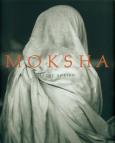
For five hundred years the holy city of Vrindavan in northern India has been a haven for India's dispossessed widows. Cast out by their families and condemned by strict marital laws that deny them legal, economic, and, in extreme cases, even human rights, they have made their way to the city to worship at its temples and live in its ashrams, surviving on charitable handouts or begging on the streets. In Vrindavan they worship the young god Krishna, who invades their dreams, helping them to cast off memories from their past lives and prepare for new and better lives are to come. Their ultimate dream is to reach Moksha--heaven--where they will find freedom from the cycle of death and rebirth and live surrounded by their gods forever. Fazal Sheikh's photographs capture the meditative mood of the city and his portraits of the widows convey their sense of acceptance of life's nearing its end and a longing for what is to come. As in his previous books, he spent time with his subjects, listening to their stories, many of which reveal the suffering caused by traditions that still govern Indian society. Through his depiction of the city and its inhabitants, Fazal Sheikh once again contributes to our knowledge and understanding of a community whose existence, to those who live outside it, remains closed.
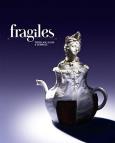
Fragiles is an eclectic collection of unconventional contemporary work in porcelain, glass and ceramics. Today, these materials are increasingly being used in playful ways by both established and emerging design talents, who are inspired by Modernism, an ironic depiction of kitsch and an expanded repertoire of forms made possible by technological developments such as rapid prototyping. The spectrum and quality of these innovative projects shows a current generation of designers just how relevant and challenging working with these traditional fragile materials can be.
A powerful collection of the luminous last work by one of the true giants of twentieth-century photography.
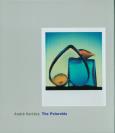
After the death of his wife, André Kertész consoled himself by taking up a new camera, the Polaroid SX70. As with earlier equipment, he mastered the camera and produced a provocative body of work that both honored his wife and lifted him out of depression.
Here Kertész dips into his reserves one last time, tapping new people, ideas, and tools to generate a whole new body of work through which he transforms from a broken man into a youthful artist. Taken in his apartment just north of New York City’s Washington Square, many of these photographs were shot either from his window or in the windowsill. We see a fertile mind at work, combining personal objects into striking still lifes set against cityscape backgrounds, reflected and transformed in glass surfaces. Almost entirely unpublished work, these photographs are a testament to the genius of the photographer’s eye as manifested in the simple Polaroid.
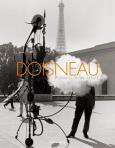
During the golden age when Montparnasse was teeming with artists, Robert Doisneau gained remarkable access to the artists working in Paris from 1937 onwards, and he visited their studios and caught them in various private moments: working, reflecting, and even playing with their children. This book, which includes some previously unpublished photographs, shares Doisneau’s intimate view on the work and lives of these artists. Many remain famous—Picasso, David Hockney, Jasper Johns, Giacometti, Saul Steinberg, Marcel Duchamp, Le Corbusier, Foujita—while others have fallen into obscurity, perhaps one day to be rediscovered. Regardless of the artist’s social status—whether major figure of the day or struggling newcomer—Doisneau approached each subject with the same humble eye. His signature black-and-white photographs capture the nostalgia of the period and bear witness to these artists in the act of creating some of the world’s finest art. This book, published in cooperation with Doisneau’s daughters, is a fascinating document of the daily lives of artists by one of the world’s most famous and popular photographers.
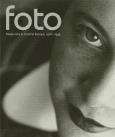
This book presents the work of approximately one hundred individuals whose creations exemplify the potential of photography in Central Europe between the two World Wars. Foto brings together for the first time works by recognized masters such as the Russian El Lissitzky, the Hungarian László Moholy-Nagy, and the German Hannah Hóch―all of whom developed their photographic ideas in Germany―with contemporaries like Karel Teige and Jaromír Funke (Czechoslovakia), Kazimierz Podsadecki (Poland), Károly Escher (Hungary), and Trude Fleischmann (Austria), who are less well known today.
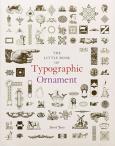
This little book contains a beautiful and varied collection of typographic ornaments sourced from specimen books of type foundries, dating from 1700.
David Jury explains how the need for typographic ornaments arose and developed, and sets them in their historical context. The chapters cover natural forms; geometric forms; rules and borders; wreaths, borders and scrolls; and pictorial ornaments. The last chapter charts the rise of the graphic designer over the last century, and how modern designers are now reinterpreting these typographic ornaments into new forms of art.
The Little Book of Typographic Ornament is an invaluable reference for graphic designers, as well as providing a source of copyright-free images.
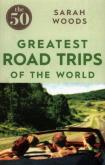
If you ve ever dreamed of embarking on an epic car journeyl, The 50 Greatest Road Trips is packed full of the most exotic, exciting and iconic drives across the Americas, Asia, Europe and Africa.
From the Amalfi Coast to the Draa Valley, the Silk Road to the Alaska Highway, the North Coast 500 to the Historic Route 66, it showcases the ultimate in car adventures.
This unmissable selection will make you feel the urge to climb into an old Chevrolet, crank up the tunes on the stereo, flick the sunroof open and settle back for one heck of a ride on the open road.
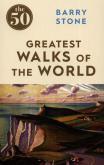
Whether negotiating the fractured limestone pavements of Ireland's Burren Way or rock scrambling through Utah's Buckskin Gulch, the rush of life is slowed when all you need for the day is on your back and your only goal a well-grassed campsite.
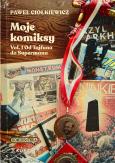
Książka ""Moje komiksy Vol. 1. Od Tajfuna do Supermana"" zabiera czytelnika w nostalgiczną, ale także pełną odniesień do współczesności, podróż przez fantastyczne światy. Wszystko zaczyna się na odległej planecie, terroryzowanej przez straszliwe monstrum, a kończy w świecie opanowanym przez superbohaterów. W trakcie tej wyprawy dowiecie się, co Tytus zawdzięcza radzieckiemu Sputnikowi, czym Łamignat zezłościł Swaroga oraz dlaczego Superman zakłada majtki na rajtuzy!Paweł przelał na papier swoją wieloletnią miłość do medium, które nie raz i nie dwa było uważane za dziecinne i gorsze. W niniejszej publikacji nie tylko obcuje ze sztuką komiksu, ale punktuje najważniejszych przedstawicieli gatunku i tytuły, które ukształtowały go jako odbiorcę popkultury komiksowej i nie tylko. Przybliża fantastyczne światy z wirtuozerską precyzją!Marcin Andrys, ParadoksBez akademickiego zadęcia, z pełną miłością do medium, ale jednocześnie bez zaślepienia nostalgią. Drobiazgowa wiedza przepleciona różnymi ciekawostkami tworzą pozycję, którą czyta się z prawdziwym zainteresowaniem.Damian ""Damex"" Maksymowicz, DC ManiakPaweł nadał swojej książce przewrotny tytuł. Opisując, czasem w sposób bardzo osobisty i emocjonalny, tych kilka komiksów, które wywarły na nim największe wrażenie, oferuje solidną dawkę rzetelnej wiedzy oraz faktów na temat poszczególnych autorów i ich dzieł.Marcin Osuch, EsensjaPaweł włożył w tę książkę całe serce. Serce, które bije dla komiksu.Jakub Syty, ThorgalverseMoje komiksy to książka pełna emocji. Zarówno poprzez sentymentalne podróże do czasów dzieciństwa, jak i współczesne spojrzenie na zjawisko komiksu i dyskusje, jakie się wokół tego gatunku toczą. To pozycja intrygująca, która jest żywym świadectwem fana, pełnym miłości do tej formy sztuki.Jakub Wołosowski, KZ
Prezentowana monografia, wydana przez Narodowy Instytut Polskiego Dziedzictwa Kulturowego za Granicą POLONIKA i Towarzystwo Naukowe "Societas Vistulana", jest pierwszym tak wszechstronnym i wieloaspektowym opracowaniem poświęconym wileńskiej nekropolii. Publikacja wpisuje się w nurt badań naukowych nad dziedzictwem kultury i sztuki polskiej pozostającej poza granicami Rzeczypospolitej. Z satysfakcją przekazujemy Czytelnikom książkę, w której niezwykle rzetelnie opracowane teksty, opatrzone bogatym materiałem ilustracyjnym, uzupełnionymi przez nieznane dotąd archiwalia, wzajemnie dopełniają się, tworząc jednorodną opowieść. Uwzględnia ona zarówno historię miejsca, ocenę wartości artystycznej nagrobków, grobowców i kaplic, epigrafikę nagrobną, jak i kompozycję przestrzenną cmentarza z analizą szaty roślinnej. Książka jest poniekąd kroniką wileńskiej Rossy, ukazującą równocześnie symboliczne znaczenie tej nekropolii.
Cmentarz Na Rossie - jedna z najstarszych nekropolii w Europie i jedna z najważniejszych polskich nekropolii narodowych, jest miejscem szczególnym; jego wielowątkowa i różnorodna przestrzeń, jego zmienne, niejednokrotnie burzliwe dzieje nierozerwalnie związane są z losami miasta, którego stanowi integralną część - z historią Wilna ostatnich dwustu lat. Recenzowana monografia jest pierwszą publikacją powstałą jako dwugłos badaczy polskich i litewskich, analizujących wespół przeszłość i wartości kulturowe tego wspólnego dziedzictwa Polaków i Litwinów, jakie stanowi nekropolia Na Rossie"
(dr hab. Małgorzata Dolistowska, prof. Politechniki Białostockiej)
Niewątpliwie otrzymujemy wyraźnie rozszerzoną bazę faktograficzną tej nekropolii, mimo wielu, bardzo ważnych wcześniejszych tego typu publikacji. Takie elementy jak metodycznie przeprowadzona analiza i ocena stylistyczna wielu obiektów, są dokonane po raz pierwszy. Otrzymaliśmy również niezwykle drobiazgową relację ze zdarzeń po 1935 roku. Po raz pierwszy dokonano tak szczegółowej analizy szaty roślinnej cmentarza. Aspekt literacki znakomicie przybliża nas do atmosfery i kultury XIX i I poł. XX wieku
(dr hab. Zbigniew Bania, prof. Uniwersytetu Łódzkiego)
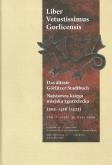
Rok po ukazaniu się pierwszej części edycji Czerwonej Księgi zaprezentować możemy jej część drugą. Udostępnienie w tak krótkim czasie więcej niż dwukrotnie większej (tu 4415 pozycji, w tomie 1.: 1768) niż w tomie pierwszym liczby zapisek możliwe było jedynie dzięki współpracy i pomocy wielu osób. Każdy z grona wydawców skupiał się na swoich zadaniach w zakresie opracowania edycji i komentarza naukowego, jednak odpowiedzialność za efekt końcowy ponoszą solidarnie. Znaczną część odpisu rękopisu skolacjonował Dietrich Lücke, czym zasłużył na szczególne podziękowanie. Obszerny indeks, odnoszący się obecnie do ponad sześciu tysięcy zapisek, sporządzony został znów przez Roberta Koszellniego. Jednocześnie przyjęto zasadę kontynuacji indeksu z tomu pierwszego, poprawiając przy tym błędy i uzupełniając braki. Indeks został także nagrany na płytę DVD, co ułatwi znalezienie wszystkich wariantów pisowni, do których – z braku miejsca – nie odsyłano w wersji papierowej.
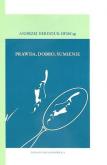
Autor z głębokim zaangażowaniem i precyzją ukazuje właściwe rozumienie dynamizmu życia moralnego oraz tłumaczy jego funkcjonowanie, tak w wymiarze indywidualnym (osoba - podmiot działań moralnych) jaki wspólnotowym (etyczne odniesienia społeczne). Przeprowadzona refleksja ma charakter praktyczny i bardzo życiowy, zachowując jednocześnie walor naukowy i w pełni profesjonalny. W swoich rozważaniach Autor opiera się na rozumnej obserwacji rzeczywistości, odnosi się do prawd objawionych, korzysta z nauczania Magisterium Kościoła i odwołuje się do licznych autorytetów z dziedziny etyki teologicznej oraz innych dyscyplin naukowych, przez co praca zyskuje walor interdyscyplinarny, a jednocześnie zachowuje swój zasadniczy rys rozprawy o charakterze teologicznomoralnym.
Z recenzji wydawniczej ks. dr. hab. Macieja Olczyka, prof. UAM
Autor udowadnia, iż spojrzenie oczami teologa moralisty na aktualne procesy zachodzące w świecie i ich ocena w kategoriach normatywnych i duchowych daje szansę nadania ludzkiej egzystencji głębszego wymiaru, adekwatnego do godności chrześcijańskiego powołania. Ponadto, zachęca wszystkie osoby dobrej woli do kształtowania w sobie postawy odpowiedzialności za podejmowane wybory oraz realizowane zadania społeczne. Zaprezentowane w książce wyniki poszukiwań naukowych Autora stanowią wyraźny i pobudzający do refleksji wkład do rozważań nad miejscem prawdy, dobra i poprawnie uformowanego sumienia w życiu moralnym współczesnego człowieka.
Z recenzji wydawniczej dr. hab. Adama Zadrogi
Ten produkt jest zapowiedzią. Realizacja Twojego zamówienia ulegnie przez to wydłużeniu do czasu premiery tej pozycji. Czy chcesz dodać ten produkt do koszyka?