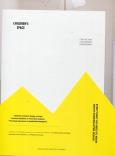
Niniejsze opracowanie to pierwsze w literaturze przedmiotu kompendium wiedzy ukazujące genezę i rozwój polskich agencji prasowych, od tworzenia zalążków tych instytucji aż do chwili obecnej. Jest to zarazem synteza podsumowująca stulecie istnienia rodzimych agencji prasowych.
W opracowaniu prześledzono proces ewolucji polskich agencji prasowych, od agencji telegraficznych do agencji elektronicznych (e-agencji). Autorka podkreśla kontekst polityczny wyrażający się w uwikłaniu agencji prasowych w bieżącą politykę, ukazując rolę omawianych instytucji w procesie rozpowszechniania informacji. Książka wykracza znacznie poza problematykę właściwą dla historii mediów, podejmując refleksję nad perspektywami rozwoju współczesnych agencji informacyjnych.
Walor opracowania stanowi materiał ilustracyjny w postaci fragmentów biuletynów prasowych. Książka adresowana jest do medioznawców, historyków mediów, politologów oraz studentów dziennikarstwa.
Dr hab. prof. UJK Renata Piasecka-Strzelec - pracownik naukowy Instytutu Dziennikarstwa i Informacji Uniwersytetu Jana Kochanowskiego w Kielcach. Swoje zainteresowania badawcze koncentruje wokół historii mediów oraz historii najnowszej Polski. W ostatnich latach analizuje również kierunki rozwoju współczesnych polskich agencji informacyjnych w kontekście społeczeństwa sieci.
Autorka wielu artykułów naukowych, rozdziałów w monografiach oraz trzech publikacji zwartych. Najważniejsze opracowanie w jej dotychczasowym dorobku naukowym to monografia Polskie agencje prasowe w latach 1944-1972. Upowszechnianie i reglamentacja informacji, działalność propagandowa (Wydawnictwo UJK, Kielce 2012).
Książka ma na celu umożliwienie zdiagnozowania poziomu wypalenia i poszukania jego potencjalnych źródeł w codziennej pracy nauczyciela.Stanowi próbę odpowiedzi na takie pytania:- jak skutecznie wzmacniać chęć do działania?- jak radzić sobie ze stresem w pracy z uczniami?- jak stać się autorytetem w swojej dziedzinie?- jak zachować pasję do tego, co robimy?- jak efektywnie pracować nad własnym rozwojem?
„Pozostaje więc fragment, jako emanacja, przebłysk cząstkowej prawdy, przybliżający nas do nadziei poznania i zrozumienia. Tak rozumiany fragment odkrywa trop, daje jakiś punkt podparcia, choćby zawarta w nim myśl była raczej pytaniem niż odpowiedzią”.
Publikowane w tym tomiku fragmenty i zapiski w zamyśle autora mają stać się impulsem do namysłu nad pytaniami przybliżającymi zrozumienie pewnych ważnych aspektów naszej współczesności.
Since nursery education has been highly valued these days, there is a growing demand for 'children-centred' kindergarten designs. But it is a challenging task for designers to create a kindergarten that can meet conventional needs and benefit children's physical and mental development as it requires not only excellent professional skills but a thorough understanding of educational venue. Knowledge of children's psychology is sometimes necessary. It places the designers of a kindergarten in face of many unexpected problems during the process.
Over the last fifteen years of his life, Tolstoy collected and published the maxims of some of the world’s greatest masters of philosophy, religion and literature, adding his own contributions to various questions that preoccupied him in old age, such as faith and existence, as well as matters of everyday life.
Banned in Russia under Communism, A Calendar of Wisdom was Tolstoy’s last major work, and one of his most popular both during and after his lifetime. This new translation by Roger Cockrell will offer today’s generation of readers the chance to discover, day by day, these edifying and carefully selected pearls of wisdom.
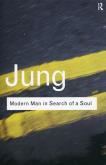
Modern Man in Search of a Soul is the perfect introduction to the theories and concepts of one of the most original and influential religious thinkers of the twentieth century. Lively and insightful, it covers all of his most significant themes, including man's need for a God and the mechanics of dream analysis. One of his most famous books, it perfectly captures the feelings of confusion that many sense today. Generation X might be a recent concept, but Jung spotted its forerunner over half a century ago. For anyone seeking meaning in today's world, Modern Man in Search of a Soul is a must.
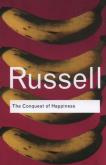
The Conquest of Happiness is Bertrand Russell’s recipe for good living. First published in 1930, it pre-dates the current obsession with self-help by decades. Leading the reader step by step through the causes of unhappiness and the personal choices, compromises and sacrifices that (may) lead to the final, affirmative conclusion of ‘The Happy Man’, this is popular philosophy, or even self-help, as it should be written.
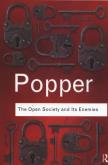
‘If in this book harsh words are spoken about some of the greatest among the intellectual leaders of mankind, my motive is not, I hope, to belittle them. It springs rather from my conviction that, if our civilization is to survive, we must break with the habit of deference to great men.’
- Karl Popper, from the Preface
Written in political exile during the Second World War and first published in two volumes in 1945, Karl Popper’s The Open Society and Its Enemies is one of the most influential books of all time. Hailed by Bertrand Russell as a ‘vigorous and profound defence of democracy’, its now legendary attack on the philosophies of Plato, Hegel and Marx exposed the dangers inherent in centrally planned political systems and through underground editions become an inspiration to lovers of freedom living under communism in Eastern Europe.
Popper’s highly accessible style, his erudite and lucid explanations of the thoughts of great philosophers and the recent resurgence of totalitarian regimes around the world are just three of the reasons for the enduring popularity of The Open Society and Its Enemies and why it demands to be read today and in years to come.
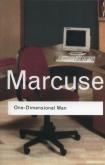
One of the most important texts of modern times, Herbert Marcuse's analysis and image of a one-dimensional man in a one-dimensional society has shaped many young radicals' way of seeing and experiencing life. Published in 1964, it fast became an ideological bible for the emergent New Left. As Douglas Kellner notes in his introduction, Marcuse's greatest work was a 'damning indictment of contemporary Western societies, capitalist and communist.' Yet it also expressed the hopes of a radical philosopher that human freedom and happiness could be greatly expanded beyond the regimented thought and behaviour prevalent in established society. For those who held the reigns of power Marcuse's call to arms threatened civilization to its very core. For many others however, it represented a freedom hitherto unimaginable.
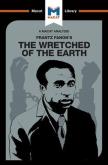
Frantz Fanon is one of the most important figures in the history of what is now known as postcolonial studies – the field that examines the meaning and impacts of European colonialism across the world.
Born in the French colony of Martinique, Fanon worked as a psychiatrist in Algeria, another French colony that saw brutal violence during its revolution against French rule. His experiences power the searing indictment of colonialism that is his final book, 1961’s The Wretched of the Earth. Fanon’s account of the physical and psychological violence of colonialism forms the basis of a passionate, closely reasoned call to arms – a call for violent revolution. Incendiary even today, it was more so in its time; the book first being published during the brutal conflict caused by the Algerian Revolution. Viewed as a profoundly dangerous work by the colonial powers of the world, Fanon’s book helped to inspire liberation struggles across the globe.
Though it has flaws, The Wretched of the Earth is above all a testament to the power of passionately sustained and closely reasoned argument: Fanon’s presentation of his evidence combines with his passion to produce an argument that it is almost impossible not to be swayed by.
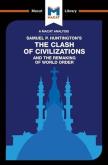
The end of the Cold War, which occurred early in the 1990s, brought joy and freedom to millions. But it posed a difficult question to the world's governments and to the academics who studied them: how would world order be remade in an age no longer dominated by the competing ideologies of capitalism and communism? Samuel P. Huntington was one of the many political scientists who responded to this challenge by conceiving works that attempted to predict the ways in which conflict might play out in the 21st century, and in The Clash of Civilizations he suggested that a new kind of conflict, one centred on cultural identity, would become the new focus of international relations. Huntington's theories, greeted with scepticism when his book first appeared in the 1990s, acquired new resonance after 9/11.
The Clash of Civilizations is now one of the most widely-set and read works of political theory in US universities; Huntington's theories have also had a measurable impact on American policy. In large part, this is a product of his problem-solving skills. Clash is a monument to its author's ability to generate and evaluate alternative possibilities and to make sound decisions between them. Huntington's view, that international politics after the Cold War would be neither peaceful, nor liberal, nor cooperative, ran counter to the predictions of almost all of his peers, yet his position – the product of an unusual ability to redefine an issue so as to see it in new ways – has been largely vindicated by events ever since.
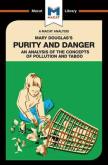
Mary Douglas is an outstanding example of an evaluative thinker at work. In Purity and Danger: An Analysis of Concepts of Pollution and Taboo, she delves in great detail into existing arguments that portray traditional societies as “evolving” from “savage” beliefs in magic, to religion, to modern science, then explains why she believes those arguments are wrong. She also adeptly chaperones readers through a vast amount of data, from firsthand research in the Congo to close readings of the Old Testament, and analyzes it in depth to provide evidence that traditional and Western religions have more in common than the first comparative religion scholars and early anthropologists thought.
First evaluating her scholarly predecessors by marshalling their arguments, Douglas identifies their main weakness: that they dismiss traditional societies and their religions by identifying their practices as “magic,” thereby creating a chasm between savages who believe in magic and sophisticates who practice religion.
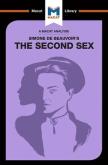
Simone de Beauvoir’s 1949 book The Second Sex is a masterpiece of feminist criticism and philosophy. An incendiary take on the place of women in post-war French society, it helped define major trends in feminist thought for the rest of the 20th century, and its influence is still felt today.
The book’s success owes much to Beauvoir’s brilliant writing style and passion, but both are rooted in the clarity of her critical thinking skills. She builds a strong argument against the silent assumptions that continually demoted (and still demote) women to “second place” in a society dominated by men. Beauvoir also demonstrates the central skills of reasoning at their best: presenting a persuasive case, organising her thoughts, and supporting her conclusions.
Above all, though, The Second Sex is a masterclass in analysis. Treating the structures of contemporary society and culture as a series of arguments that tend continuously to demote women, Beauvoir is able to isolate and describe the implicit assumptions that underpin male domination. Her demolition of these assumptions provides the crucial ammunition for her argument that women are in no way the “second” sex, but are in every way the equal of men.
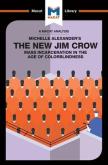
Michelle Alexander’s The New Jim Crow: Mass Incarceration in the Age of Colorblindness is an unflinching dissection of the racial biases built into the American prison system. Named after the laws that enforced racial segregation in the southern United States until the mid-1960s, The New Jim Crow argues that while America is now legally a colorblind society – treating all races equally under the law – many factors combine to build profound racial weighting into the legal system.
The US now has the world’s highest rate of incarceration, and a disproportionate percentage of the prison population is comprised of African-American men. Alexander’s argument is that different legal factors have combined to mean both that African-Americans are more likely to be targeted by police, and to receive long jail sentences for their crimes. While many of Alexander’s arguments and statistics are to be found in other books and authors’ work, The New Jim Crow is a masterful example of the reasoning skills that communicate arguments persuasively. Alexander’s skills are those fundamental to critical thinking reasoning: organizing evidence, examining other sides of the question, and synthesizing points to create an overall argument that is as watertight as it is persuasive.
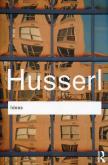
With a new foreword by Dermot Moran ‘the work here presented seeks to found a new science – though, indeed, the whole course of philosophical development since Descartes has been preparing the way for it – a science covering a new field of experience, exclusively its own, that of "Transcendental Subjectivity"’ - Edmund Husserl, from the author’s preface to the English Edition Widely regarded as the principal founder of phenomenology, one of the most important movements in twentieth century philosophy, Edmund Husserl’s Ideas is one of his most important works and a classic of twentieth century thought. This Routledge Classics edition of the original translation by W.R. Boyce Gibson includes the introduction to the English edition written by Husserl himself in 1931. Husserl’s early thought conceived of phenomenology – the general study of what appears to conscious experience – in a relatively narrow way, mainly in relation to problems in logic and the theory of knowledge. The publication of Ideas in 1913 witnessed a significant and controversial widening of Husserl’s thought, changing the course of phenomenology decisively. Husserl argued that phenomenology was the study of the very nature of what it is to think, "the science of the essence of consciousness" itself. Husserl’s arguments ignited a heated debate regarding the nature of consciousness and experience that has endured throughout the twentieth and continues in the present day. No understanding of twentieth century philosophy is complete without some understanding of Husserl, and his work influenced some of the great philosophers of the twentieth century, such as Martin Heidegger and Jean-Paul Sartre.
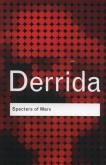
Prodigiously influential, Jacques Derrida gave rise to a comprehensive rethinking of the basic concepts and categories of Western philosophy in the latter part of the twentieth century, with writings central to our understanding of language, meaning, identity, ethics and values.
In 1993, a conference was organized around the question, 'Whither Marxism?’, and Derrida was invited to open the proceedings. His plenary address, 'Specters of Marx', delivered in two parts, forms the basis of this book. Hotly debated when it was first published, a rapidly changing world and world politics have scarcely dented the relevance of this book.
Never before has there been a greater need for deeper listening and more open communication to cope with the complex problems facing our organizations, businesses and societies. Renowned scientist David Bohm believed there was a better way for humanity to discover meaning and to achieve harmony. He identified creative dialogue, a sharing of assumptions and understanding, as a means by which the individual, and society as a whole, can learn more about themselves and others, and achieve a renewed sense of purpose.
`Professor Douglas writes gracefully, lucidly and polemically. She continually makes points which illuminate matters in the philosophy of religion and the philosophy of science and help to show the rest of us just why and how anthropology has become a fundamentally intellectual discipline' - New Society
Professor Douglas' book sparkles with intellectual life and is characterised by a concern to understand. Right or wrong, sound or idiosyncratic, it presents a rare and exciting spectacle of a mind at work.' - Times Literary Supplement
Descartes's Meditations on First Philosophy remains one of the most widely studied works of Western philosophy. This volume is a refreshed and updated edition of John Cottingham's bestselling 1996 edition, based on his translation in the acclaimed three-volume Cambridge edition of The Philosophical Writings of Descartes. It presents the complete text of Descartes's central metaphysical masterpiece, the Meditations, in clear, readable modern English, and it offers the reader additional material in a thematic abridgement of the Objections and Replies, providing a deeper understanding of how Descartes developed and clarified his arguments in response to critics. Cottingham also provides an updated introduction, together with a substantially revised bibliography, taking into account recent literature and developments in Descartes studies. The volume will be a vital resource for students reading the Meditations, as well as those studying Descartes and early modern philosophy.
Now in its third edition, this leading undergraduate textbook has been revised and updated throughout to take account of recent developments in world politics. Concise and engagingly written, the book is core reading for courses on international organizations, international law and politics, and global governance. Unlike other textbooks in the field, it takes readers behind the scenes of the world's most important international institutions to explore their legal authority and the political controversies that they generate. It presents chapter-length case studies of the world's leading international organizations, with attention to the legal, political, and practical aspects. The new edition adds depth to the discussion of international relations theory and features new case material on Brexit, the Argentine sovereign debt, the Syrian war, the cholera epidemic in Haiti, and more.
Ten produkt jest zapowiedzią. Realizacja Twojego zamówienia ulegnie przez to wydłużeniu do czasu premiery tej pozycji. Czy chcesz dodać ten produkt do koszyka?