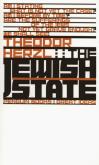
We shall live at last as free men on our own soil, and die peacefully in our own homes' Theodor Herzl's passionate advocacy of the founding of a Jewish state grew out of his conviction that Jews would never be assimilated into the populations in which they lived. Herzl concluded that the only solution for the majority of Jews would be organised emigration to a state of their own.
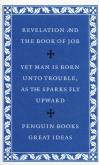
Aprofound consolation to early believers, these two books from the Bible deeply influenced the rise of the Christian church: the apocalyptic Revelation portraying the religion's ultimate triumph over its foes and The Book of Job depicting one man's faith in the face of incredible adversity.
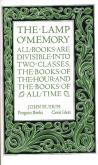
John Ruskin overturned Victorian society's ideas about art and architecture, arguing that ancient buildings must be conserved for their deep, mystical links with the past and that creative design is essential - not for financial gain, but to communicate eternal human truths.
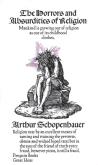
A fascinating examination of ethics, religion and psychology, this selection of Schopenhauer's works contains scathing attack on the nature and logic of religion, and an essay on ethics that ranges from the American slavery debate to the vices of Buddhism.
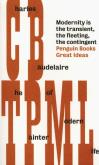
Poet, aesthete and hedonist, Baudelaire was also one of the most groundbreaking art critics of his time. Here he explores beauty, fashion, dandyism, the purpose of art and the role of the artist, and describes the painter who, for him, expresses most fully the drama of modern life.
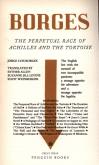
In this collection of wise, witty and fascinating essays, Borges discusses the existence (or non-existence) of Hell, the flaws in English literary detectives, the philosophy of contradictions, and the many translators of 1001 Nights. Varied and enthralling, these pieces examine the very nature of our lives, from cinema and books to history and religion.
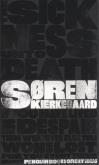
Influencing philosophers such as Sartre and Camus, and still strikingly modern in its psychological insights, Kierkegaard's The Sickness Unto Death explores the concept of 'despair' as a symptom of the human condition and describes man's struggle to fill the spiritual void.
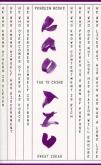
Fundamental to Chinese philosophy and religion, the Tao Te Ching is a simple guidebook for virtue, encouraging peace, understanding and humility. Ranging from political advice to common wisdom, it has also served as an inspiration to artists across the ages and throughout the world.
Rousseau's explosive cry for human liberty helped to spark the French Revolution and has haunted our discussion of how we should rule one another ever since - seen as both a blueprint for political terror and as a fundamental statement of democracy.
Adaring critique of communism and how it had gone wrong behind the Iron Curtain, Camus' essay examines the revolutions in France and Russia, and argues that since they were both guilty of producing tyranny and corruption, hope for the future lies only in revolt without revolution.
Perhaps the most widely read thinker of all time, Confucius transformed Chinese philosophy with his belief that the greatest goal in life was pursuit of 'The Way': a search for virtue not as a means to rewards in this world or the next, but as the pinnacle of human existence.
One of the most important thinkers ever to write in English, the Empiricist David Hume liberated philosophy from the superstitious constraints of religion; here, he argues that all are free to choose between life and death, considers the nature of personal taste and succinctly criticises common philosophies of the time.
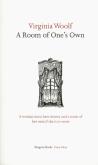
Woolf's blazing polemic on female creativity, the role of the writer, and the silent fate of Shakespeare's imaginary sister remains a powerful reminder of a woman's need for financial independence and intellectual freedom.
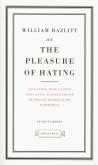
Love turns, with a little indulgence, to indifference or disgust: hatred alone is immortal'
William Hazlitt
William Hazlitt's tough, combative writings on subjects ranging from slavery to the imagination, boxing matches to the monarchy, established him as one of the greatest radicals of his age and have inspired journalists and political satirists ever since.
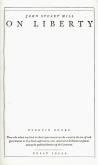
In one of the most influential philosophical works ever writer, John Stuart Mill explores the risks and responsibilities of liberty. Examining the tyranny that can come both from government and from the herd-like opinion of the majority, Mill proposes a freedom to think, unite, and pursue our pleasures as the most important freedoms, as long as we cause no harm to others.
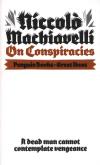
Machiavelli is one of the most famous strategists of all time. In this collection he discusses the dangers of conspiracies, and the component parts of an army, vital for gaining and holding power in his day. He also gives advice on tactics and discipline, and explains why promises made under force ought not to be kept.
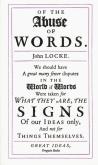
John Locke was one of the greatest figures of the Enlightenment, whose assertion that reason is the key to knowledge changed the face of philosophy. These writings on thought, ideas, perception, truth and language are some of the most influential in the history of Western thought.
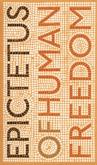
In this personal and practical guide to moral self-improvement and living a good life, the second-century philosopher Epictetus tackles questions of freedom and imprisonment, stubbornness and fear, family, friendship and love, and leaves an intriguing document of daily life in the classical world.
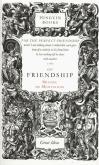
Michel de Montaigne was the originator of the modern essay form; in these diverse pieces he expresses his views on relationships, contemplates the idea that man is no different from any animal, argues that all cultures should be respected, and attempts, by an exploration of himself, to understand the nature of humanity.
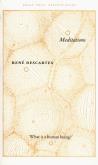
Widely regarded as the father of modern Western philosophy, Descartes sought to look beyond established ideas and create a thought system based on reason. In this profound work he meditates on doubt, the human soul, God, truth and the nature of existence itself.
Ten produkt jest zapowiedzią. Realizacja Twojego zamówienia ulegnie przez to wydłużeniu do czasu premiery tej pozycji. Czy chcesz dodać ten produkt do koszyka?