W tej strefie proponujemy bardzo szeroką ofertę z dziedziny psychologii oraz dziedzin powiązanych: astronomii i astrofizyki, ekologii, filozofii, kultury, podróżnictwa, religii, socjologii, sztuki. Szczególnie polecamy z tej kategorii bestseller pt. Księga Urantii. Księga Urantii podaje jasną i zwięzłą integracją nauki, filozofii i religii. Ci, którzy ją czytali i zgłębiali, wierzą, że Księga Urantii może wnieść bardzo wiele wartości do religijnej i filozoficznej myśli ludzi tego świata.
Proces transformacji społecznej opiera się na umiejętnościach, których można się nauczyć. Ty i Twoja grupa możecie stać się bardziej skuteczni w tworzeniu zmiany, której pragniecie. Twoje zaangażowanie w te kwestie może zwiększać Twoje poczucie samorealizacji, zamiast je obniżać. Ta książka umożliwia, osobom chcącym skutecznie wesprzeć zmianę, dostęp do zaawansowanych umiejętności z obszarów rozwoju osobistego i rozwiązywania konfliktów. Będzie przydatna m.in. osobom pracującym nad zmiana polityczną, kreowaną przez oddolne ruchy obywatelskie. Lata pracy z licznymi organizacjami dążącymi do zmian politycznych, a także szkolenie pracowników takich grup jak Greenpeace New Zealand czy New Zealand Peace Foundation, sprawiły, że odczuwam coraz większą wagę dzielenia się umiejętnościami NLP, służącymi wzmacnianiu osobistej odporności i zarządzaniu konfliktami. Ta książka jest wynikiem 45 lat aktywności politycznej i 40 lat uczenia umiejętności porozumiewania się.
Richard Bolstad
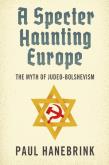
The first comprehensive account of the evolution and exploitation of the Judeo-Bolshevik myth, from its origins to the present day.
For much of the twentieth century, Europe was haunted by a threat of its own imagining: Judeo-Bolshevism. This myth—that Communism was a Jewish plot to destroy the nations of Europe—was a paranoid fantasy, and yet fears of a Jewish Bolshevik conspiracy took hold during the Russian Revolution and spread across Europe. During World War II, these fears sparked genocide.
Paul Hanebrink’s history begins with the counterrevolutionary movements that roiled Europe at the end of World War I. Fascists, Nazis, conservative Christians, and other Europeans, terrified by Communism, imagined Jewish Bolsheviks as enemies who crossed borders to subvert order from within and bring destructive ideas from abroad. In the years that followed, Judeo-Bolshevism was an accessible and potent political weapon.
After the Holocaust, the specter of Judeo-Bolshevism did not die. Instead, it adapted to, and became a part of, the Cold War world. Transformed yet again, it persists today on both sides of the Atlantic in the toxic politics of revitalized right-wing nationalism. Drawing a worrisome parallel across one hundred years, Hanebrink argues that Europeans and Americans continue to imagine a transnational ethno-religious threat to national ways of life, this time from Muslims rather than Jews.
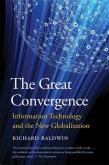
Between 1820 and 1990, the share of world income going to today’s wealthy nations soared from twenty percent to almost seventy. Since then, that share has plummeted to where it was in 1900. As Richard Baldwin explains, this reversal of fortune reflects a new age of globalization that is drastically different from the old.
In the 1800s, globalization leaped forward when steam power and international peace lowered the costs of moving goods across borders. This triggered a self-fueling cycle of industrial agglomeration and growth that propelled today’s rich nations to dominance. That was the Great Divergence. The new globalization is driven by information technology, which has radically reduced the cost of moving ideas across borders. This has made it practical for multinational firms to move labor-intensive work to developing nations. But to keep the whole manufacturing process in sync, the firms also shipped their marketing, managerial, and technical know-how abroad along with the offshored jobs. The new possibility of combining high tech with low wages propelled the rapid industrialization of a handful of developing nations, the simultaneous deindustrialization of developed nations, and a commodity supercycle that is only now petering out. The result is today’s Great Convergence.
Because globalization is now driven by fast-paced technological change and the fragmentation of production, its impact is more sudden, more selective, more unpredictable, and more uncontrollable. As The Great Convergence shows, the new globalization presents rich and developing nations alike with unprecedented policy challenges in their efforts to maintain reliable growth and social cohesion.
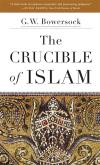
Little is known about Arabia in the sixth century CE. Yet from this distant time and place emerged a faith and an empire that stretched from the Iberian peninsula to India. Today, Muslims account for nearly a quarter of the global population. G. W. Bowersock seeks to illuminate this most obscure and yet most dynamic period in the history of Islam—from the mid-sixth to mid-seventh century—exploring why arid Arabia proved to be such fertile ground for Muhammad’s prophetic message, and why that message spread so quickly to the wider world.
In Muhammad’s time Arabia stood at the crossroads of great empires, a place where Christianity, Judaism, and local polytheistic traditions vied for adherents. Mecca, Muhammad’s birthplace, belonged to the part of Arabia recently conquered by the Ethiopian Christian king Abraha. But Ethiopia lost western Arabia to Persia following Abraha’s death, while the death of the Byzantine emperor in 602 further destabilized the region. Within this chaotic environment, where lands and populations were traded frequently among competing powers and belief systems, Muhammad began winning converts to his revelations. In a troubled age, his followers coalesced into a powerful force, conquering Palestine, Syria, and Egypt and laying the groundwork of the Umayyad Caliphate.
The crucible of Islam remains an elusive vessel. Although we may never grasp it firmly, Bowersock offers the most detailed description of its contours and the most compelling explanation of how one of the world’s great religions took shape.
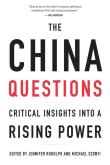
Many books offer information about China, but few make sense of what is truly at stake. The questions addressed in this unique volume provide a window onto the challenges China faces today and the uncertainties its meteoric ascent on the global horizon has provoked.
In only a few decades, the most populous country on Earth has moved from relative isolation to center stage. Thirty-six of the world’s leading China experts—all affiliates of the renowned Fairbank Center for Chinese Studies at Harvard University—answer key questions about where this new superpower is headed and what makes its people and their leaders tick. They distill a lifetime of cutting-edge scholarship into short, accessible essays about Chinese identity, culture, environment, society, history, or policy.
Can China’s economic growth continue apace? Can China embrace the sacrifices required for a clean environment? Will Taiwan reunite with the mainland? How do the Chinese people understand their position in today’s global marketplace? How do historical setbacks and traditional values inform China’s domestic and foreign policy? Some of the essays address issues of importance to China internally, revolving around the Communist Party’s legitimacy, the end of the one-child policy, and ethnic tensions. Others focus on China’s relationship with other nations, particularly the United States. If America pulls back from its Asian commitments, how will China assert its growing strength in the Pacific region?
China has already captured the world’s attention. The China Questions takes us behind media images and popular perceptions to provide insight on fundamental issues.
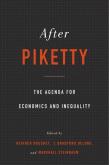
Thomas Piketty’s Capital in the Twenty-First Century is the most widely discussed work of economics in recent history, selling millions of copies in dozens of languages. But are its analyses of inequality and economic growth on target? Where should researchers go from here in exploring the ideas Piketty pushed to the forefront of global conversation? A cast of economists and other social scientists tackle these questions in dialogue with Piketty, in what is sure to be a much-debated book in its own right.
After Piketty opens with a discussion by Arthur Goldhammer, the book’s translator, of the reasons for Capital’s phenomenal success, followed by the published reviews of Nobel laureates Paul Krugman and Robert Solow. The rest of the book is devoted to newly commissioned essays that interrogate Piketty’s arguments. Suresh Naidu and other contributors ask whether Piketty said enough about power, slavery, and the complex nature of capital. Laura Tyson and Michael Spence consider the impact of technology on inequality. Heather Boushey, Branko Milanovic, and others consider topics ranging from gender to trends in the global South. Emmanuel Saez lays out an agenda for future research on inequality, while a variety of essayists examine the book’s implications for the social sciences more broadly. Piketty replies to these questions in a substantial concluding chapter.
An indispensable interdisciplinary work, After Piketty does not shy away from the seemingly intractable problems that made Capital in the Twenty-First Century so compelling for so many.
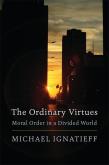
What moral values do human beings hold in common? As globalization draws us together economically, are our values converging or diverging? In particular, are human rights becoming a global ethic? These were the questions that led Michael Ignatieff to embark on a three-year, eight-nation journey in search of answers. The Ordinary Virtues presents Ignatieff’s discoveries and his interpretation of what globalization—and resistance to it—is doing to our conscience and our moral understanding.
Through dialogues with favela dwellers in Brazil, South Africans and Zimbabweans living in shacks, Japanese farmers, gang leaders in Los Angeles, and monks in Myanmar, Ignatieff found that while human rights may be the language of states and liberal elites, the moral language that resonates with most people is that of everyday virtues: tolerance, forgiveness, trust, and resilience. These ordinary virtues are the moral operating system in global cities and obscure shantytowns alike, the glue that makes the multicultural experiment work. Ignatieff seeks to understand the moral structure and psychology of these core values, which privilege the local over the universal, and citizens’ claims over those of strangers.
Ordinary virtues, he concludes, are antitheoretical and anti-ideological. They can be cheerfully inconsistent. When order breaks down and conflicts break out, they are easily exploited for a politics of fear and exclusion—reserved for one’s own group and denied to others. But they are also the key to healing, reconciliation, and solidarity on both a local and a global scale.
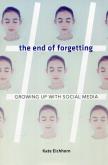
Until recently, the awkward moments of growing up could be forgotten. But today we may be on the verge of losing the ability to leave our pasts behind. In The End of Forgetting, Kate Eichhorn explores what happens when images of our younger selves persist, often remaining just a click away. For today's teenagers, many of whom spend hours each day posting on social media platforms, efforts to move beyond moments they regret face new and seemingly insurmountable obstacles. Unlike a high school yearbook or a shoe box full of old photos, the information that accumulates on social media is here to stay. What was once fleeting is now documented and tagged, always ready to surface and interrupt our future lives. Moreover, new innovations such as automated facial recognition also mean that the reappearance of our past is increasingly out of our control. Historically, growing up has been about moving on-achieving a safe distance from painful events that typically mark childhood and adolescence. But what happens when one remains tethered to the past? From the earliest days of the internet, critics have been concerned that it would endanger the innocence of childhood. The greater danger, Eichhorn warns, may ultimately be what happens when young adults find they are unable to distance themselves from their pasts. Rather than a childhood cut short by a premature loss of innocence, the real crisis of the digital age may be the specter of a childhood that can never be forgotten.
This wide-ranging account of our emotional responses to technologies, from the telegram to Instagram, shows that technology changes not only how we feel, but what our feelings mean.
Facebook makes us lonely. Selfies breed narcissism. On Twitter and comment boards, hostility reigns. Pundits and psychologists warn us that digital technologies substantially alter our emotional states. But in this lively and surprising account, we learn that technology doesn’t just affect how we feel from moment to moment—it changes profoundly the underlying emotions themselves.
Bored, Lonely, Angry, Stupid examines nineteenth- and twentieth-century letters, diaries, and memoirs and draws on contemporary research and interviews with Americans of different ages and backgrounds to document how our emotions have been transformed by technological change. Where we now strive to escape boredom, earlier generations saw unstructured time as an opportunity for productivity and creativity. Where loneliness is now pathologized, we once thought of solitude as virtuous. Even as we ask whether technology is making us lonelier, it is altering the meaning of loneliness.
In this timely book, Luke Fernandez and Susan Matt contend that current technology has removed many of the limits on our emotional landscape. Thus we seek to be constantly stimulated, engaged, and validated, while our anger and antisocial impulses are not only unconstrained but affirmed by the digital company we keep.
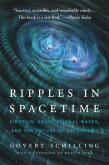
It has already been called the scientific breakthrough of the century: the detection of gravitational waves. Einstein predicted these tiny ripples in the fabric of spacetime nearly a hundred years ago, but they were never perceived directly until now. Decades in the making, this momentous discovery has given scientists a new understanding of the cataclysmic events that shape the universe and a new confirmation of Einstein’s theory of general relativity. Ripples in Spacetime is an engaging account of the international effort to complete Einstein’s project, capture his elusive ripples, and launch an era of gravitational-wave astronomy that promises to explain, more vividly than ever before, our universe’s structure and origin.
The quest for gravitational waves involved years of risky research and many personal and professional struggles that threatened to derail one of the world’s largest scientific endeavors. Govert Schilling takes readers to sites where these stories unfolded—including Japan’s KAGRA detector, Chile’s Atacama Cosmology Telescope, the South Pole’s BICEP detectors, and the United States’ LIGO labs. He explains the seeming impossibility of developing technologies sensitive enough to detect waves from two colliding black holes in the very distant universe, and describes the astounding precision of the LIGO detectors. Along the way Schilling clarifies concepts such as general relativity, neutron stars, and the big bang using language that readers with little scientific background can grasp.
Ripples in Spacetime provides a window into the next frontiers of astronomy, weaving far-reaching predictions and discoveries into a gripping story of human ambition and perseverance.
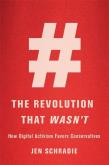
This surprising study of online political mobilization shows that money and organizational sophistication influence politics online as much as off, and casts doubt on the democratizing power of digital activism.
The internet has been hailed as a leveling force that is reshaping activism. From the Arab Spring and Occupy Wall Street to Black Lives Matter and #MeToo, digital activism seemed cheap, fast, and open to all. Now this celebratory narrative finds itself competing with an increasingly sinister story as platforms like Facebook and Twitter—once the darlings of digital democracy—are on the defensive for their role in promoting fake news. While hashtag activism captures headlines, conservative digital activism is proving more effective on the ground.
In this sharp-eyed and counterintuitive study, Jen Schradie shows how the web has become another weapon in the arsenal of the powerful. She zeroes in on workers’ rights advocacy in North Carolina and finds a case study with broad implications. North Carolina’s hard-right turn in the early 2010s should have alerted political analysts to the web’s antidemocratic potential: amid booming online organizing, one of the country’s most closely contested states elected the most conservative government in North Carolina’s history.
The Revolution That Wasn’t identifies the reasons behind this previously undiagnosed digital-activism gap. Large hierarchical political organizations with professional staff can amplify their digital impact, while horizontally organized volunteer groups tend to be less effective at translating online goodwill into meaningful action. Not only does technology fail to level the playing field, it tilts it further, so that only the most sophisticated and well-funded players can compete.
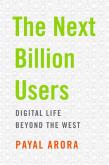
"New-media pundits obsess over online privacy and security, cyberbullying, and revenge porn, but do these things really matter in most of the world? ""The Next Billion Users"" reveals that many assumptions about Internet use in developing countries are wrong.
After immersing herself in factory towns, slums, townships, and favelas, Payal Arora assesses real patterns of Internet usage in India, China, South Africa, Brazil, and the Middle East. She finds Himalayan teens growing closer by sharing a single computer with common passwords and profiles. In China's gaming factories, the line between work and leisure disappears. In Riyadh, a group of young women organizes a YouTube fashion show.
Why do citizens of states with strict surveillance policies appear to care so little about their digital privacy? Why do Brazilians eschew geo-tagging on social media? What drives young Indians to friend ""foreign"" strangers on Facebook and give ""missed calls"" to people? ""The Next Billion Users"" answers these questions and many more. Through extensive fieldwork, Arora demonstrates that the global poor are far from virtuous utilitarians who mainly go online to study, find jobs, and obtain health information. She reveals habits of use bound to intrigue everyone from casual Internet users to developers of global digital platforms to organizations seeking to reach the next billion Internet users."
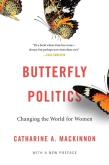
“Sometimes ideas change the world. This astonishing, miraculous, shattering, inspiring book captures the origins and the arc of the movement for sex equality. It’s a book whose time has come—always, but perhaps now more than ever.”—Cass Sunstein, coauthor of Nudge
Under certain conditions, small simple actions can produce large and complex “butterfly effects.” Butterfly Politics shows how Catharine A. MacKinnon turned discrimination law into an effective tool against sexual abuse—grounding and predicting the worldwide #MeToo movement—and proposes concrete steps that could have further butterfly effects on women’s rights. Thirty years after she won the U.S. Supreme Court case establishing sexual harassment as illegal, this timely collection of her previously unpublished interventions on consent, rape, and the politics of gender equality captures in action the creative and transformative activism of an icon.
"Although an elusive concept, ""camp"" can be found in most forms of artistic expression, revealing itself through an aesthetic of deliberate stylization. Fashion is one of the most overt and enduring conduits of the camp aesthetic. As a site for the playful dynamics between high art and popular culture, fashion both embraces and expresses such camp modes of enactment as irony, humor, parody, pastiche, artifice, theatricality, and exaggeration.
Drawing from Susan Sontag's seminal essay ""Notes on Camp"", the book explores how fashion designers have used their metier as a vehicle to engage with the camp aesthetic in compelling, humorous, and sometimes incongruous ways. As a sartorial manifestation of the camp sensibility, this thought-provoking publication contributes new theoretical and conceptual insights into the camp canon through texts and images. Stunning new photography by Johnny Dufort highlights works by such fashion designers as Virgil Abloh, Thom Browne, Jean-Charles de Castelbajac, John Galliano, Jean Paul Gaultier, Marc Jacobs, Karl Lagerfeld, Alessandro Michele, Franco Moschino, Miuccia Prada, Richard Quinn, Yves Saint Laurent, Elsa Schiaparelli, Jeremy Scott, Anna Sui, Gianni Versace, and Vivienne Westwood."
An extraordinary survey of Van Gogh’s travels, this book explores the influential artist’s journeys across the continent from his hometown of Zunderf in the southern Netherlands to Auvers-sur-Oise near Paris, where his life came to an end.
This publication features hundreds of colour images, including maps, contemporary photographs, and related artworks by Van Gogh, which paint a vivid picture of his life and career.
Nienke Denekamp and Rene van Blerk convey a vivid account of Van Gogh’s story in this book. The accessible style allows readers of all ages to familiarise themselves with one of history’s great artists.
"This richly illustrated publication explores the full career of the hugely influential and endlessly fascinating French-American artist Marcel Duchamp (1887-1968). A pioneer whose creative output was predicated on a fundamental questioning of what art is, Duchamp is well known despite remaining mysterious as an artist, owing to his elusive persona and the unconventional nature of his work.
Focusing on the world-renowned Duchamp collection at the Philadelphia Museum of Art, ""The Essential Duchamp"" tells the artist's story through four key periods. The book begins with his early paintings and engagement with the avant-garde, then charts his abandonment of painting and invention of the readymade. This is followed by the creation of his alter ego Rrose Selavy and the optical experiments of the interwar years, and, finally, by the making of ""Etant donnes"" (1946-66), the project that occupied the artist in the final two decades of his life. Shorter accompanying texts include explanations of key terms Duchamp used for his innovative ideas – readymade, precision optics, pictorial nominalism, and infrathin – as well as interviews and statements by the artist about his own art and ideas."
"This kaleidoscopic book covers almost 3,000 years of Arab history and shines a light on the footloose Arab peoples and tribes who conquered lands and disseminated their language and culture over vast distances. Tracing this process to the origins of the Arabic language, rather than the advent of Islam, Tim Mackintosh-Smith begins his narrative more than a thousand years before Muhammad and focuses on how Arabic, both spoken and written, has functioned as a vital source of shared cultural identity over the millennia.
Mackintosh-Smith reveals how linguistic developments – from pre-Islamic poetry to the growth of script, Muhammad's use of writing, and the later problems of printing Arabic – have helped and hindered the progress of Arab history, and investigates how, even in today's politically fractured post–Arab Spring environment, Arabic itself is still a source of unity and disunity."
"One of the most emulated and significant figures in modern art, Andy Warhol (1928-1987) rose to fame in the 1960s with his iconic Pop pieces. Warhol expanded the boundaries by which art is defined and created groundbreaking work in a diverse array of media that includes paintings, sculptures, prints, photographs, films, and installations.
This ambitious book is the first to examine Warhol's work in its entirety. It builds on a wealth of new research and materials that have come to light in recent decades and offers a rare and much-needed comprehensive look at the full scope of Warhol's production – from his commercial illustrations of the 1950s through his monumental paintings of the 1980s. Donna De Salvo explores how Warhol's work engages with notions of public and private, the redefinition of media, and the role of abstraction, while a series of incisive and eye-opening essays by eminent scholars and contemporary artists touch on a broad range of topics, such as Warhol's response to the AIDS epidemic, his international influence, and how his work relates to constructs of self-image seen in social media today."
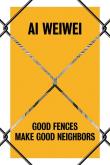
A comprehensive presentation of Ai Weiwei’s recent Public Art Fund exhibition Good Fences Make Good Neighbors, a powerful reflection on the global refugee crisis
Internationally renowned Chinese artist and activist Ai Weiwei (b. 1957) transformed over 300 sites across New York City into a compelling, ambitious public art exhibition concerned with the global refugee and migration crises. Good Fences Make Good Neighbors (on view from October 2017 to February 2018) consisted of immersive large-scale sculptures for city monuments, fences on building facades and bus stops, and portraits of refugees and immigrants displayed on outdoor banners. This publication documents the extraordinary project from conception to final installation, giving a behind-the-scenes look at the research, preparatory drawings, planning, and fabrication that brought it to life. The book includes an in-depth interview with Ai Weiwei about the project’s personal significance, an essay by curator Nicholas Baume, and statements from a wide variety of individuals—including Olafur Eliasson, David Miliband, Hans Ulrich Obrist, and Jorge Ramos, among many others—about their interactions with the artworks. As Baume asserts, “Ai Weiwei created a remarkable model for what great public art strives to be—emotionally engaging and politically resonant, conceptually and formally inventive yet broadly accessible.”
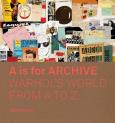
A riveting excursion through Warhol’s incomparable personal collections, from the bizarre to the illuminating
Andy Warhol (1928–1987) remains an icon of the 20th century and a leading figure in the Pop Art movement. He also was an obsessive collector of things large and small, ordinary and quirky. Since 1994, The Andy Warhol Museum has studied and safeguarded the artist’s archive encompassing hundreds of thousands of these objects, at turns strange, amusing, and poignant. From this array, many of these items have been researched and described in this book for the first time.
Written by Matt Wrbican, the foremost authority on Warhol’s personal collection, A is for Archive features curated selections from this collection, shedding light on the artist’s work and motivations, as well as on his personality and private life. The volume is organized alphabetically, honoring Warhol’s own use of a whimsical alphabetical structure: “A is for Autograph” (a selection of signed objects, many of which influenced his most popular works), “F is for Fashion” (featuring his collections of cowboy boots, neckties, and jackets), “S is for Stamp” (works of art by Warhol and others relating to stamps and mailed items), and “Z is for Zombie” (a grouping of photographs and ephemera of Warhol in various disguises: drag, robot, zombie, clown). The book also features an insightful essay by renowned art critic and Warhol biographer Blake Gopnik.
For the myriad fans of Warhol and his quixotic world, this volume is essential and unforgettable.
Ten produkt jest zapowiedzią. Realizacja Twojego zamówienia ulegnie przez to wydłużeniu do czasu premiery tej pozycji. Czy chcesz dodać ten produkt do koszyka?