W tej strefie proponujemy bardzo szeroką ofertę z dziedziny psychologii oraz dziedzin powiązanych: astronomii i astrofizyki, ekologii, filozofii, kultury, podróżnictwa, religii, socjologii, sztuki. Szczególnie polecamy z tej kategorii bestseller pt. Księga Urantii. Księga Urantii podaje jasną i zwięzłą integracją nauki, filozofii i religii. Ci, którzy ją czytali i zgłębiali, wierzą, że Księga Urantii może wnieść bardzo wiele wartości do religijnej i filozoficznej myśli ludzi tego świata.
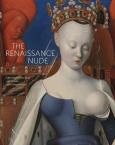
Reflecting an era when Europe looked to both the classical past and a global future, this volume explores the emergence and acceptance of the nude as an artistic subject. It engages with the numerous and complex connotations of the human body in more than 250 artworks by the greatest masters of the Renaissance. Paintings, sculptures, prints, drawings, illuminated manuscripts and book illustrations reveal private, sometimes shocking, preoccupations as well as surprising public beliefs – the Age of Humanism from an entirely new perspective. This book presents works by Albrecht Durer, Lucas Cranach and Martin Schongauer in the north and Donatello, Raphael and Giorgione in the south; it also introduces names that deserve to be known better. A publication this rich in scholarship could only be produced by a variety of expert scholars; the sixteen contributors are preeminent in their fields and wide-ranging in their knowledge and curiosity. The structure of the volume – essays alternating with shorter texts on individual artworks – permits studies both broad and granular. From the religious to the magical and the poetic to the erotic, encompassing male and female, infancy, youth and old age, The Renaissance Nude examines in a profound way what it is to be human.
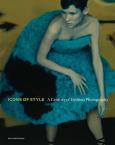
In 1911 the French couturier Paul Poiret challenged Edward Steichen to create the first artistic, rather than merely documentary, fashion photographs, a moment that is now considered to be a turning point in the history of fashion photography. As fashion changed over the next century, so did the photography of fashion. Steichen's modernist approach was forthright and visually arresting. In the 1930s the photographer Martin Munkacsi pioneered a gritty, photojournalistic style. In the 1960s Richard Avedon encouraged his models to express their personalities by smiling and laughing, which had often been discouraged previously. Helmut Newton brought an explosion of sexuality into fashion images and turned the tables on traditional gender stereotypes in the 1970s, and in the 1980s Bruce Weber and Herb Ritts made male sexuality an important part of fashion photography. Today, following the integration of digital technology, teams like Inez & Vinoodh and Mert & Marcus are reshaping our notion of what is acceptable-not just aesthetically but technically and conceptually-in a fashion photograph. From glossy pages in Vogue and Harper's Bazaar to framed prints on museum walls, fashion photography encompasses both commercial advertising and fine art. This survey of one hundred years of fashion photography updates and reevaluates this history in five chronological chapters by experts in photography and fashion history. It includes more than three hundred photographs by the genre's most famous practitioners as well as important but lesser-known figures, alongside a selection of costumes, fashion illustrations, magazine covers, and advertisements.
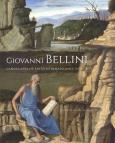
Praised by Albrecht Du rer as being "the best in painting", Giovanni Bellini (ca. 1430-1516) is unquestionably the supreme Venetian painter of the quattrocento and one of the greatest Italian artists of all time. His landscapes assume a prominence unseen in Western art since classical antiquity. Drawing from a selection of masterpieces that span Bellini's long and successful career, this exhibition catalogue focuses on the main function of landscape in his oeuvre: to enhance the meditational nature of paintings intended for the private devotion of intellectually sophisticated, elite patrons. The subtle doctrinal content of Bellini's work-the isolated crucifix in a landscape, the "sacred conversation", the image of Saint Jerome in the wilderness-is always infused with his instinct for natural representation, resulting in extremely personal interpretations of religious subjects immersed in landscapes where the real and the symbolic are inextricably intertwined.This volume includes a biography of the artist,essays by leading authorities in the field explicating thethemes of the J. Paul Getty Museum's exhibition, anddetailed discussions and glorious reproductions of the twelve works in the exhibition, including their history and provenance, function, iconography, chronology, and style.
Computerized processes are everywhere in our society. They are the automated phone messaging systems that businesses use to screen calls; the link between student standardized test scores and public schools’ access to resources; the algorithms that regulate patient diagnoses and reimbursements to doctors. The storage, sorting, and analysis of massive amounts of information have enabled the automation of decision-making at an unprecedented level. Meanwhile, computers have offered a model of cognition that increasingly shapes our approach to the world. The proliferation of “roboprocesses” is the result, as editors Catherine Besteman and Hugh Gusterson observe in this rich and wide-ranging volume, which features contributions from a distinguished cast of scholars in anthropology, communications, international studies, and political science.
Although automatic processes are designed to be engines of rational systems, the stories in Life by Algorithms reveal how they can in fact produce absurd, inflexible, or even dangerous outcomes. Joining the call for “algorithmic transparency,” the contributors bring exceptional sensitivity to everyday sociality into their critique to better understand how the perils of modern technology affect finance, medicine, education, housing, the workplace, food production, public space, and emotions—not as separate problems but as linked manifestations of a deeper defect in the fundamental ordering of our society.
At the turn of the twentieth century, Swedish artist Hilma af Klint (1862–1944) created a body of work that left visible reality behind, exploring the radical possibilities of abstraction years before Vasily Kandinsky, Kazimir Malevich, or Piet Mondrian. Many consider her the first trained artist to create abstract paintings. With Hilma af Klint: Notes and Methods, we get to experience the arc of af Klint’s artistic investigation in her own words.
Hilma af Klint studied at the Royal Swedish Academy in Stockholm where she was part of the first generation of female students. Up until the beginning of the century, she painted mainly landscapes and detailed botanical studies. Her work from this period was that of a young artist of her time who meticulously observed the world around her. But, like many of her contemporaries, af Klint was also interested in the invisible relationships that shape our world, believing strongly in a spiritual dimension. She joined the Theosophical Society, and, with four fellow female members who together called themselves “The Five,” began to study mediumship. Between 1906 and 1915, purportedly guided by a higher power, af Klint created 193 individual works that, in both scale and scope of imagery, are like no other art created at that time. Botanically inspired images and mystical symbols, diagrams, words, and geometric series, all form part of af Klint’s abstract language. These abstract techniques would not be seen again until years later.
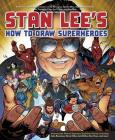
Spider-Man, the X-Men, the Fantastic Four, Iron Man, the Incredible Hulk, and the Avengers all share a common trait -- these hugely popular Marvel Comics superheroes were co-created by the legendary Stan Lee. Now, Lee shows readers everything they'll need to make their own mighty superheroes, just like his classic creations. Lee exposes his secret tools and techniques for bringing strong, inspiring heroes and heroines to life. He even shows aspiring creators how to expand their super-universes with evil villains, trusty sidekicks, brutes and monsters, super-pets, secret hideouts, and more! These invaluable insights from one of the greatest superhero creators of all time are must-haves for all fans of Lee's legendary superhero comic work.
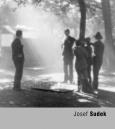
Dubbed the “poet of Prague,” Josef Sudek (1896–1976) was one of the most important and celebrated of Czech photographers. Sudek produced his best work during his middle-aged years, having grown up and out of the rules of modernism and into a style of his own. Whereas his photographs from the 1930s are mainly a reflection of the external world, by the 1940s he was returning to himself, finding his own unique creative path. It was during this period that he made his most famous photograph, a view of the world seen through his studio window, the window ledge doubling as a stage for still-life objects—a setup which he repeated to great effect. Not even the pressures of World War II and the difficult postwar years—including the demands of socialist realism in the arts—interrupted the continuity of his oeuvre, documented in this back-in-print volume.
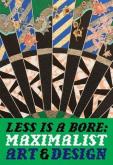
Less Is a Bore: Maximalist Art & Design is a multigenerational survey of strategies of pattern and decoration in art and design. Borrowing its ethos from Robert Venturi's infamous retort to Mies van der Rohe's modernist edict "less is more," it includes works that privilege decoration and maximalism over modernism's "ornament as crime" philosophy. The catalog begins in the 1970s with artists who sought to rattle the dominance of modernism and minimalism, such as those affiliated with Pattern & Decoration. Less Is a Bore includes experiments in patterning by Sanford Biggers, Jasper Johns and Miriam Schapiro; the transgressive sculpture and furniture of Lucas Samaras and Ettore Sottsass; and the installations of Polly Apfelbaum, Nathalie du Pasquier and Virgil Marti. Also included are works by Roger Brown, Monir Shahroudy Farmanfarmaian, Jeffrey Gibson, Valerie Jaudon, Joyce Kozloff, Robert Kushner, Ellen Lesperance, Sol LeWitt, Howardena Pindell, Lari Pittman, Pae White and Betty Woodman, among others.
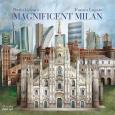
Milan revealed by the spectacular paper architecture of Dario Cestaro, in pop-up book that recounts the city’s history in simple texts and curious anecdotes. A fascinating journey through colorful pages that turn into Milan’s most famous buildings, helping even the youngest of readers to recognize its principal landmarks: the Duomo, with its soaring spires; the Castello Sforzesco, with its imposing battlement walls; the Teatro alla Scala, temple of opera; the Basilica of Sant’Ambrogio, a medieval treasure chest dedicated to the city’s patron saint; the Stazione Centrale, with its daring vaults of iron and glass; the city’s new skyline, redesigned by skyscrapers over 200 meters in height.
What characterize Armani's style and make it so contemporary and relevant are crossovers of identity and culture, as can be seen from the mannish taste that influences many of his recent collections. But what has marked out Armani's research and continues to set it apart is the ethics from which he derives his aesthetics. From his very first interviews, he has always explained his choices in terms of concepts like dignity, rigor, freedom and authority. A way of accentuating the qualities of strength in women that complement the courage to display sensuality and tenderness in men. This interpretation of the nature of cross gendering is the strongest indication of the contemporary nature of his creations: to illustrate this phenomenon thoroughly, going beyond what the success of the Armani jacket is usually attributed to, the book establishes connections between art, culture and society, for the Armani style is the representation of a liquid society, in which every boundary is crossed and redrawn. What emerges is a vivid, intriguing picture of society and its changes and of the man who, through fashion, has been able to interpret and even anticipate them.
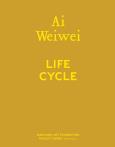
Ai Weiwei (born 1957) is recognized around the globe for his conceptual installations that generate dialogue between the contemporary world and traditional Chinese modes of thought and production. Ai’s multifaceted installation at the Marciano Art Foundation includes Life Cycle, a sculptural response to the global refugee crisis, and a series of figures based on mythic creatures from the Classic of Mountains and Seas, crafted from bamboo and silk.
This is the third book in the PERSPECTIVES IN CURATING series, which offers timely reflections by curators, artists, critics, and art historians on emergent debates in curatorial practice around the world.
Comradeship is a collection of essays by Zdenka Badovinac, the forward-thinking Slovenian curator, museum director, and scholar. Badovinac has been an influential voice in international conversations rethinking the geopolitics of art after the fall of communism, a ferocious critic of unequal negotiations between East and West, and a historian of the avant-garde art that emerged in socialist and post-socialist countries in the last century. She has been, moreover, an advocate for radical institutional forms: museums responsive to the complexities of the past and commensurate to the demands of the present.
Gathering writings from disparate and hard-to-find sources alongside new texts, this book offers an essential portrait of a major thinker, and a crucial handbook of alternative approaches to curating and institution-building in the 21st century.
“Whip smart, politically astute, curatorially inventive: Zdenka Badovinac is nothing less than the most progressive and intellectually rigorous female museum director in Europe. This anthology includes key essays accompanying her series of brilliant exhibitions in Ljubljana, and is essential reading for anyone interested in the differences between former east and former west. For anyone seeking curatorial alternatives to the neoliberal museum model of relentless expansion and dumbed- down blockbusters, Badovinac is a galvanizing inspiration.”
—Claire Bishop, art historian and critic
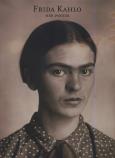
The Diego Riviera-Anahuacalli and Frida Kahlo Museum Trust Fund, as well as its Technical Committee, are honored to present the book Frida Kahlo, Her Photographs, which includes over 500 pictures from Frida Kahlo Museum Archive. Pablo Ortiz Monasterio - a photographer, editor, curator, and eager promoter of photography in Mexico - was in charge of this selection.
W procesie zakładania i budowy miast ogniskował się postęp. W ich formach nabierały realnych kształtów wizje kolejnych jednostek przedstawiające najbardziej efektywne w danym czasie sposoby organizacji życia wspólnotowego. Miasta były i są barometrem kondycji państw i regionów, a także jedną z najtrwalszych pozostałości po przodkach, wciąż powszechnie użytkowaną.
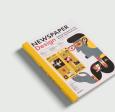
Over recent years, the world of news making has dramatically changed. Newspaper Design examines the forces that have transformed the industry and showcases the best of editorial design in the news context. Following the shift to digital, the role of visual journalists has evolved. As our reading habits change, so do the ways in which designers deal with typography, grid systems and illustration in order to tell a story in the most engaging way.
Newspaper Design discusses the daily challenges of journalists and editorial designers, and introduces the work of the teams behind some of the most influential newspapers, such as the New York Times, the Guardian, and Libération. Unique insights from professionals paired with outstanding visual examples reveal the inner workings of the news industry and make Newspaper Design a must-have for designers, publishers and journalists.
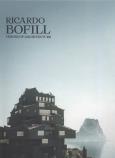
Ricardo Bofill is one of the 20th century’s most unique architects and radical visionaries. His visions for urban and communal life challenged preconceived notions of shared space and proposed alternative styles of living. This monograph explores his revolutionary approach by profiling his greatest projects like La Fábrica, Walden 7, La Muralla Roja or Abraxas. Spectacular new photography by Salva López, texts by experts like Nacho Alegre and Douglas Murphy as well as by Bofill himself are complemented with sketches and floor plans. Bofill’s fantastic creations satisfy a longing for originality, personality and progressive ideals.
At the heart of this book are those maverick spirits who are striding forward to find creative solutions to protect and preserve the landscapes that have transformed us-ideas deeply inspired by our connection to nature. From pioneers of closed-loop clothing, who continually recycle their materials into new products, to the open-source approach of sustainable outdoor brands, we are holding ourselves accountable for our actions in everything we do. We free dive beneath the ice in Canada and free-climb Patagonian peaks. We trek through the frozen tundra of Baffin Island, savor the beauty of North America from the saddle of a bike, and surf Arctic waves. Pick up your backpack and step outside-it is time to get inspired to live a life less ordinary beneath the open sky.
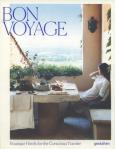
Excellent hospitality and sustainable journeys can go hand in hand. New getaways offer amazing design and delicious food while approaching an eco-friendly experience for travellers and locals alike.
From a lodge in the Namibian desert made from shipwrecks that protects endangered wildlife, to a restored hotel in Hong Kong that draws on local tradition, or a guesthouse in Beirut where locals teach cooking and pass on family recipes for local dishes: all these hotels combine the highest standards of hospitality with the smallest ecological footprint.
(...) Bez cienia przesady można stwierdzić, że monografia stanowi nadzwyczaj ważne i wartościowe przedsięwzięcie wydawnicze, gdyż trudno byłoby przecenić jej walory poznawcze i praktyczne. Autorom udało się bowiem w sposób istotny uporządkować i poszerzyć bardzo obszerną wiedzę o istocie niepełnosprawności intelektualnej, sytuacji kobiet niepełnosprawnych intelektualnie, a także o szerokim kontekście społeczno-kulturowym. Będzie więc cennym nabytkiem dla tych wszystkich, którzy w swojej codziennej praktyce rodzicielskiej, opiekuńczej, socjalnej, klinicznej, psychologicznej czy pedagogicznej konfrontowani są z trudną i złożoną problematyką kobiet z niepełnosprawnością intelektualną.
Prof. nadzw. dr hab. Mieczysław Dudek
Ten produkt jest zapowiedzią. Realizacja Twojego zamówienia ulegnie przez to wydłużeniu do czasu premiery tej pozycji. Czy chcesz dodać ten produkt do koszyka?