‘Every sort of passion verges on chaos, I know, but what the collecting passion verges on is a chaos of memories.’
From intimate musings on his book collection, to a dream-like trip through the bustling streets of Marseille, each of these essays offers a compelling journey into the mind of one of the twentieth century’s most influential philosophers.
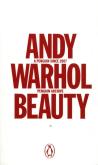
People should fall in love with their eyes closed. Just close your eyes. Don’t look.’
From Warhol’s romantic relationships to his thoughts on interior design, these candid, highly entertaining musings - on love, sex, beauty, work and space – give an intimate glimpse into the mind of one of the most iconic figures in twentieth-century culture.
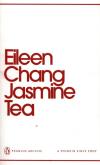
‘But how sweet a fruit the ‘suppose’ must be, that people will sup and sup on it! A juicy fruit, like a lychee but without the pit, sparkling and light green: a fruit that hides the tart within the sweet.’
In this haunting collection of stories, a young man’s obsession leads to tragedy and a woman’s bitterness poisons a family’s legacy. In delicate, piercing prose, Chang captures a world of quiet cruelties and calamitous desires in pre-revolutionary China.
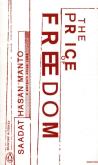
Saadat Hasan Manto, the most widely read and translated writer in the Urdu language, captured the devastation and absurdity of the partition of India and Pakistan like no other. The Price of Freedom brings together ten of his best stories, focusing on human voices from the religious fracture that forever unhinged two newly independent nations. Powerful, piercing and deeply moving, Manto’s works are key to understanding this bloody chapter in South Asian history.
What would happen if a doctor implanted the pituitary gland and testicles of a man into the body of a stray dog? In Mikhail Bulgakov’s topsy-turvy world, the dog starts to walk on two legs, drink, smoke, thieve, chase women and recite every swear word in Russian. The perfect candidate for a government official, in other words. This rude, riotous send-up of the Soviet Union, banned immediately on publication, is satire red in tooth and claw.
A young writer leaves the city to complete her manuscript in a small coastal town, but finds herself writing about the lives of its inhabitants instead – their occupation with memory and tradition, their vibrant female friendships, and the idyll of the landscape that informs their sense of togetherness. A classic of American fiction adored by Willa Cather and Henry James, The Country of the Pointed Firs seems woven from the fabric of community itself.
Mitch and Yonko haven’t spoken in a year. As children, they were inseparable, raised together in an orphanage outside Tokyo—but ever since the sudden death of Mitch’s brother, they’ve been mourning in their private ways, worlds apart. In the aftermath of the Fukushima nuclear catastrophe, they choose to reunite, finding each other in a city undone by disaster.
Mitch and Yonko have drifted apart, but they will always be bound together. Because long ago they witnessed an unspeakable tragedy, a tragedy that they’ve kept secret for their entire lives. They never speak of it, but it’s all around them. Like history, it repeats itself.
Yuko Tsushima’s sweeping and consuming novel is a metaphysical saga of postwar Japan. Wildcat Dome is a hugely ambitious exploration of denial, of the ways in which countries and their citizens avoid telling the truth—a tale of guilt, loss, and inevitable reckoning.
'Tsushima evades any label, her fiction transcends gender to focus on the existential loneliness that is at the heart of humanity.' Japan Times
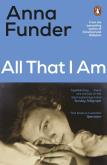
When Hitler comes to power in 1933, a tight-knit group of friends and lovers become hunted outlaws overnight. United in their resistance to the madness and tyranny of Nazism, they must flee the country. Dora, passionate and fearless, her lover, the great playwright Ernst Toller, her younger cousin Ruth and Ruth's husband Hans find refuge in London. Here they take breath-taking risks in order to continue their work in secret. But England is not the safe-haven they think it to be, and a single, chilling act of betrayal will tear them apart…
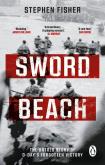
6th June 1944 saw the largest seaborne assault in human history: D-Day. The landings on the five Normandy beaches, Utah, Omaha, Gold, Juno and Sword, will go down in legend as the first footsteps on the journey to end the war in northern Europe.
While much has been written about the operation as a whole, little detailed attention has been paid to the battle for Sword Beach itself, the easternmost of the amphibious attack areas. For the first time, historian and archaeologist Stephen Fisher puts the British landing under the spotlight and using previously unseen research, documents and personal testimonies pieces together the buildup, the day itself and its aftermath in such a way as to uniquely bring the operation to vivid life.
Following a massive air and naval bombardment that began before the sun had even risen, the stage was set for the first of tens of thousands of troops to come ashore on Sword that day. It was to be a day of triumph and tragedy as the Allies pushed forward to the key objective of Caen against German defenders who were, uniquely on D-Day, backed up by an armoured division.
Never before has this campaign been afforded such insightful and detailed scrutiny. Stephen Fisher brings his considerable knowledge and expertise to paint a thrilling picture of how the deep beachhead was established and pays tribute to the heroism and sacrifices that were made on that fateful day.
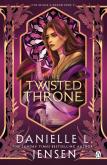
Ahnna is haunted by the destruction of her homeland so when the wealthy kingdom of Harendell claims her as a bride for its crown prince, Ahnna is prepared to do whatever it takes to gain influence as the future queen.
But she soon discovers that beneath the beautiful surface of Harendell's court lurk dark secrets and the only person who she feels she can trust is not her future husband, but his infuriating half brother, James.
And it isn't long before Ahnna finds herself attracted to a forbidden prince . . ,
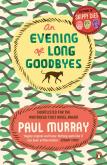
Acclaimed as one of the funniest and most assured Irish novels of the last decade, An Evening of Long Goodbyes is the story of Dubliner Charles Hythloday and the heroic squandering of the family inheritance. Featuring drinking, greyhound racing, vanishing furniture, more drinking, old movies, assorted Dublin lowlife, eviction and the perils of community theatre, Paul Murray's debut novel is a tour de force of comedic writing wrapped in an honest-to-goodness tale of a man - and a family - living in denial . . .
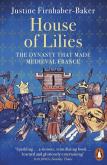
Starting in the tenth century from an insecure foothold around Paris, the Capetians built a nation that stretched from the Atlantic to the Mediterranean and from the Rhône to the Pyrenees. They founded practices and institutions that endured until the Revolution, transformed Paris from a muddy backwater to a splendid metropole, and popularized the fleur-de-lys, the lily, as the emblem of France. Time and again, their opponents woefully misjudged who they were up against, as through guile, ruthlessness, luck and marriage the Capetians disposed of them all.
This is the story of the most powerful kingdom in Christendom. It is a tale of religious upheaval, heroism, adulterous affairs, holy wars, pogroms and persecution. From Hugh Capet to Eleanor of Aquitaine, the Capetians were men and women of vision and ambition, who considered themselves chosen by God to fulfil a great destiny. They did not simply rule France: they created it.
House of Lilies is a highly enjoyable account of this extraordinary sequence of events, set against one of the great eras in the history of western Europe. Justine Firnhaber-Baker brilliantly conveys not only the cultural effervescence of the French court, but also the intellectual achievements, the battles and the religious fervour, as well as the series of catastrophes that led to the dynasty's ultimate demise.
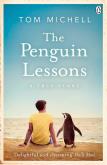
When schoolteacher Tom Michell pulls a penguin from an oil slick off the coast of Uruguay he has no idea what to do.
Back at his apartment, Tom cleans him, but upon returning to the beach the penguin refuses to return to the ocean. Tom has one option: to smuggle the penguin over the Argentinian border to the prestigious boarding school Tom calls home.
There follows a heart-warming story of one remarkable penguin, who adapts to boarding school life. Whether it's as team mascot or swimming coach extraordinaire - Juan Salvador the penguin transforms the lives of all he meets.
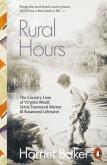
1917. Virginia Woolf arrives at Asheham, on the Sussex Downs, immobilized by nervous exhaustion and creative block.
1930. Feeling jittery about her writing career, Sylvia Townsend Warner spots a modest workman’s cottage for sale on the Dorset coast.
1941. Rosamond Lehmann settles in a Berkshire village, seeking a lovers’ retreat, a refuge from war, and a means of becoming ‘a writer again’.
Rural Hours tells the story of three very different women, each of whom moved to the country and was forever changed by it.
We encounter them at quiet moments – pausing to look at an insect on the windowsill; jotting down a recipe; or digging for potatoes, dirt beneath their nails. Slowly, we start to see transformations unfold. Invigorated by new landscapes, and the daily trials and small pleasures of making homes, they emerge from long periods of creative uncertainty and private disappointment; they embark on new experiments in form, in feeling and in living. In the country, each woman finds her path: to convalescence and recovery; to sexual and political awakening; and, above all, to personal freedom and creative flourishing.
Graceful, fluid, and enriched by previously untouched archival material, Rural Hours is both a paean to the bravery and vision of three pioneering writers, and a passionate invitation to us all: to recognize the radical potential of domestic life and rural places, and find new enchantment in the routines and rituals of each day.
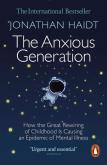
Jonathan Haidt has spent his career speaking truth and wisdom in some of the most difficult spaces – communities polarized by politics and religion, campuses battling culture wars, and now the mental health emergency hitting teenagers today in many countries around the world.
In The Anxious Generation, Haidt shows how, between 2010 and 2015, childhood and adolescence got rewired. As teens traded in their flip phones for smartphones packed with social media apps, time online soared, including time spent comparing oneself to a vast pool of others. Time engaging face-to-face with friends and family plummeted, and so did mental health.
But this is not just a story about technology; this profound shift took place against a backdrop of declining childhood freedom and free-play, as parents over-supervised every aspect of their children’s lives offline, depriving them of the experiences they most need to become strong and self-governing adults.
In this book, Haidt makes a compelling argument that the loss of play-based childhood and its replacement with a phone-based childhood that is not suitable for human development is the source of increased mental distress among teenagers. The Anxious Generation delves into the latest psychological and biological research to show the four fundamental ways in which a phone-based childhood disrupts development – sleep deprivation, social deprivation, cognitive fragmentation and addiction. Haidt offers separate in-depth analyses of what has happened to girls, and what has happened to boys, offering practical advice for parents, schools, governments, and teens themselves. Drawing on ancient wisdom and cutting-edge research, this eye-opening book is a life raft and a powerful call-to-arms.
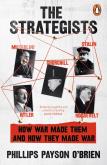
In THE STRATEGISTS, Professor Phillips Payson O'Brien shows how the views these five leaders forged in WW1 are crucial to understanding how they fought WW2. For example, Churchill's experiences of facing the German Army in France in 1916 made him unwilling to send masses of British soldiers back there in the 1940s, while Hitler's mistakes on the Eastern Front were influenced by his reluctance to accept that conditions had changed since his own time fighting. The implications of the power of leaders remain with us to this day: to truly understand what is happening in Ukraine, for example, requires us to know what has influenced the leaders involved.
This is a history in which leaders – and their choices – matter. For better or worse.
Why are humans everywhere prone to believe in ghosts?
How might our tendency to imitate one another be contributing to the climate catastrophe?
And does our deep evolutionary past impel us to vote for strongmen?
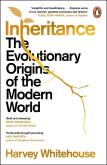
In 1987, Harvey Whitehouse went to live with an indigenous community deep in the Papua New Guinea rainforest. His experiences there convinced him that, far from being wildly different, humans are fundamentally alike: their beliefs and behaviours rooted in a set of evolutionary urges that can be found in any society, anywhere.
Here, Whitehouse roves across twelve millennia and five continents to uncover how these evolved urges have both shaped and been reshaped by human history. Along the way, he shows that this ancient inheritance does not just hold the key to explaining the modern world – but perhaps also to changing it.
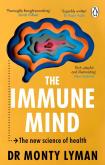
Until a decade ago, we misunderstood a fundamental aspect of human health. Although the brain and the body have always been viewed as separate entities – treated in separate hospitals – science now shows that they are intimately linked. Startlingly, we now know that our immune system is in constant communication with our brain and can directly alter our mental health. This has opened up a new frontier in medicine. Could inflammation cause depression, and arthritis drugs cure it? Can gut microbes shape your behaviour through the vagus nerve? Can something as simple as brushing your teeth properly reduce your risk of dementia? Could childhood infections lie behind neurological and psychiatric disorders such as tics and OCD?
In The Immune Mind, Dr Monty Lyman explores the fascinating connection between the mind, immune system and microbiome. A specialist in the cutting-edge field of immunopsychiatry, Lyman argues that we need to change the way we treat disease and the way we see ourselves. For the first time, we have a new approach to medicine that treats the whole human being.
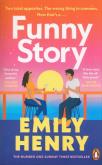
Daphne always loved the way Peter told their story. That is until it became the prologue to his actual love story with his childhood bestie, Petra.
Which is how Daphne ends up rooming with her total opposite and the only person who could possibly understand her predicament: Petra's ex, Miles.
As expected, it’s not a match made in heaven – that is until one night, while tossing back tequilas, they form a plan.
And if it involves posting deliberately misleading photos of their adventures together, well, who could blame them?
But it’s all just for show, of course.
Because there’s no way Daphne would start her new chapter by falling in love with her ex-fiancé’s new fiancée’s ex . . . right?
‘This book is an action, a political action where revolution is the goal’
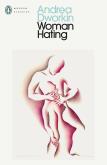
Andrea Dworkin’s blazing, prophetic debut argued that a deep-rooted hatred of women has been ingrained in society for centuries – and still governs us today. From fairy tales to erotic novels to witch-burnings, she uncovers the ways in which male violence and oppression have been normalized throughout history, and points the way to liberation.
‘To see where we are going we must understand where we have been. Woman Hating is a much needed and long overdue addition toward that understanding’ Audre Lorde
‘A singularly powerful voice … Dworkin [gave] definitive expression to the radical feminist tenet that sexual domination was the beating heart of patriarchy’ Amia Srinivasan, LRB
Ten produkt jest zapowiedzią. Realizacja Twojego zamówienia ulegnie przez to wydłużeniu do czasu premiery tej pozycji. Czy chcesz dodać ten produkt do koszyka?