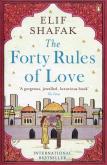
Ella Rubinstein has a husband, three teenage children, and a pleasant home. Everything that should make her confident and fulfilled. Yet there is an emptiness at the heart of Ella's life - an emptiness once filled by love.
So when Ella reads a manuscript about the thirteenth-century Sufi poet Rumi and Shams of Tabriz, and his forty rules of life and love, her world is turned upside down. She embarks on a journey to meet the mysterious author of this work.
It is a quest infused with Sufi mysticism and verse, taking Ella and us into an exotic world where faith and love are heartbreakingly explored. . .
'Enlightening, enthralling. An affecting paean to faith and love' Metro
'Colourfully woven and beguilingly intelligent' Daily Telegraph
'The past and present fit together beautifully in a passionate defence of passion itself' The Times
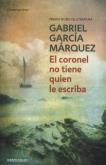
La segunda novela del maestro colombiano, una historia de injusticia y violencia. El coronel no tiene quien le escriba fue escrita por Gabriel Garcia Marquez durante su estancia en Paris, adonde habia llegado, a mediados de los cincuenta, como corresponsal de prensa y con la secreta intencion de estudiar cine. El cierre del periodico para el que trabajaba le sumio en la pobreza mientras redactaba en tres versiones distintas esta excepcional novela, que luego fue rechazada por varios editores antes de su publicacion. Tras el barroquismo faulkneriano de La hojarasca, esta segunda novela supone un paso hacia la ascesis, hacia la economia expresiva, y el estilo del escritor se hace mas puro y transparente. Se trata tambien de una historia de injusticia y violencia: un viejo coronel retirado va al puerto todos los viernes a esperar la llegada de la carta oficial que responda a la justa reclamacion de sus derechos por los servicios prestados a la patria. Pero la patria permanece muda... El coronel destapo el tarro del cafe y comprobo que no habia mas de una cucharadita. Retiro la olla del fogon, vertio la mitad del agua en el piso de tierra, y con un cuchillo raspo el interior del tarro sobre la olla hasta cuando se desprendieron las ultimas raspaduras del polvo de cafe revueltas con oxido de lata. Mientras esperaba a que hirviera la infusion, sentado junto a la hornilla de barro cocido en una actitud de confiada e inocente expectativa, el coronel experimento la sensacion de que nacian hongos y lirios venenosos en sus tripas. Era octubre. Una manana dificil de sortear, aun para un hombre como el que habia sobrevivido a tantas mananas como esa. Durante cincuenta y seis anos -desde cuando termino la ultima guerra civil- el coronel no habia hecho nada distinto de esperar. Octubre era una de las pocas cosas que llegaban.
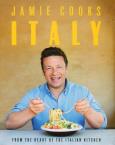
Jamie returns to cooking the food he loves the most, getting right to heart of the Italian kitchen in his ultimate go-to Italian cookbook. He shows you that truly authentic Italian cooking is simple, beautiful and achievable.
Jamie's Channel 4 series Jamie Cooks Italy is on every Monday at 8:30pm . . . find all of the recipes and more inside.
This wonderful, best-ever collection of recipes, deliver on big flavours and comfort; a celebration of truly great Italian food you'll want to cook for yourself, your friends and your family. From this week's episode . . .
· BAKED TIELLA RICE with beautiful sea salt mussels, courgette, cherry tomatoes, white wine and creamy Parmesan.
· CORTECCIA. Easy-peasy homemade pasta, perfectly designed to hold Jamie's fresh broccoli and tangy cheese pesto, making every mouthful delicious.
· SUMMER FISH STEW. A luxurious, one-pot wonder celebrates fish and seafood with blow your mind flavours.
· ORICCHIETTE is one of Jamie's favourite pasta shapes. He makes it with aubergines and black chickpeas, or tomatoes and broad beans.
Featuring 140 recipes in Jamie's fuss-free and easy-to-follow style, the book has chapters on Antipasti, Salads, Soups, Pasta, Rice & Dumplings, Meat, Fish, Sides, Bread & Pastry, Dessert and all of the Italian basics you'll ever need to know.
Jamie fell in love with Italian food 25 years ago. Now he's sharing his ultimate recipes, a mixture of fast and slow cooking, famous classics with a Jamie twist, simple everyday dishes and more indulgent labour-of-love choices for weekends and parties. VIVA L'ITALIA!
Don't wait, order Jamie Cooks Italy now, and be the first to try food that will transport you straight to the landscapes of Italy.
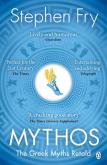
In Stephen Fry's vivid retelling we gaze in wonder as wise Athena is born from the cracking open of the great head of Zeus and follow doomed Persephone into the dark and lonely realm of the Underworld. We shiver when Pandora opens her jar of evil torments and watch with joy as the legendary love affair between Eros and Psyche unfolds.
Mythos captures these extraodinary myths for our modern age - in all their dazzling and deeply human relevance.
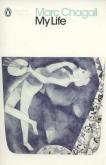
'Here is my soul. Look for me here; here I am, here are my pictures, my roots'
Marc Chagall, one of the twentieth century's most popular artists, grew up in a close-knit, bustling Russian-Jewish community, the son of a herring seller. In his colourful, dreamlike autobiography, written as he was about to leave his homeland for good in 1922, he vividly brings to life the memories and places that fed into his unique work, from his shtetl childhood to revolutionary Russia and Belle Epoque Paris. Filled with Chagall's own evocative illustrations, My Life is as warm, joyful and humane as his art.
'Chagall writes as whimsically as he paints: lovingly ofother people, humorously and lovingly of himself' Daily Mail
'Anyone who likes Chagall's paintings will enjoy this book:the work of an unteachable, unspoiled folk artist' Evening Standard
'The general uncertainty as to what is really happening makes it easier to cling to lunatic beliefs'
Biting and timeless reflections on patriotism, prejudice and power, from the man who wrote about his nation better than anyone.
Penguin Modern: fifty new books celebrating the pioneering spirit of the iconic Penguin Modern Classics series, with each one offering a concentrated hit of its contemporary, international flavour. Here are authors ranging from Kathy Acker to James Baldwin, Truman Capote to Stanislaw Lem and George Orwell to Shirley Jackson; essays radical and inspiring; poems moving and disturbing; stories surreal and fabulous; taking us from the deep South to modern Japan, New York's underground scene to the farthest reaches of outer space.
'My God! A whole minute of bliss! Is that really so little for the whole of a man's life?'
A poignant tale of love and loneliness from Russia's foremost writer.
One of 46 new books in the bestselling Little Black Classics series, to celebrate the first ever Penguin Classic in 1946. Each book gives readers a taste of the Classics' huge range and diversity, with works from around the world and across the centuries - including fables, decadence, heartbreak, tall tales, satire, ghosts, battles and elephants.
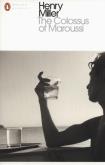
'Out of the sea, as if Homer himself had arranged it for me, the islands bobbed up, lonely, deserted, mysterious in the fading light'
Enraptured by a young woman's account of the landscapes of Greece, Henry Miller set off to explore the Grecian countryside with his friend Lawrence Durrell in 1939. In The Colossus of Maroussi he describes drinking from sacred springs, nearly being trampled to death by sheep and encountering the flamboyant Greek poet Katsumbalis, who 'could galvanize the dead with his talk'. This lyrical classic of travel writing represented an epiphany in Miller's life, and is the book he would later cite as his favourite.
'One of the five greatest travel books of all time' Pico Iyer
Combined for the first time here are Maus I: A Survivor's Tale and Maus II - the complete story of Vladek Spiegelman and his wife, living and surviving in Hitler's Europe. By addressing the horror of the Holocaust through cartoons, the author captures the everyday reality of fear and is able to explore the guilt, relief and extraordinary sensation of survival - and how the children of survivors are in their own way affected by the trials of their parents. A contemporary classic of immeasurable significance.
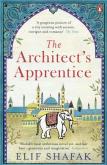
The Architect's Apprentice is a dazzling and intricate tale from Elif Shafak, bestselling author of The Bastard of Istanbul.
'There were six of us: the master, the apprentices and the white elephant. We built everything together...'
Sixteenth century Istanbul: a stowaway arrives in the city bearing an extraordinary gift for the Sultan. The boy is utterly alone in a foreign land, with no worldly possessions to his name except Chota, a rare white elephant destined for the palace menagerie.
So begins an epic adventure that will see young Jahan rise from lowly origins to the highest ranks of the Sultan's court. Along the way he will meet deceitful courtiers and false friends, gypsies, animal tamers, and the beautiful, mischievous Princess Mihrimah. He will journey on Chota's back to the furthest corners of the Sultan's kingdom and back again. And one day he will catch the eye of the royal architect, Sinan, a chance encounter destined to change Jahan's fortunes forever.
Filled with all the colour of the Ottoman Empire, when Istanbul was the teeming centre of civilisation, The Architect's Apprentice is a magical, sweeping tale of one boy and his elephant caught up in a world of wonder and danger.
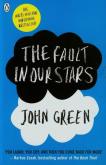
Despite the tumor-shrinking medical miracle that has bought her a few years, Hazel has never been anything but terminal, her final chapter inscribed upon diagnosis. But when a gorgeous plot twist named Augustus Waters suddenly appears at Cancer Kid Support Group, Hazel's story is about to be completely rewritten.
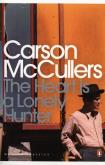
Carson McCullers's prodigious first novel was published to instant acclaim when she was just twenty-three. Set in a small town in the middle of the deep South, it is the story of John Singer, a lonely deaf-mute, and a disparate group of people who are drawn towards his kind, sympathetic nature. The owner of the café where Singer eats every day, a young girl desperate to grow up, an angry drunkard, a frustrated black doctor: each pours their heart out to Singer, their silent confidant, and he in turn changes their disenchanted lives in ways they could never imagine ...
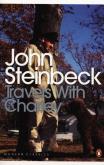
In 1960, when he was almost sixty years old, John Steinbeck set out to rediscover his native land. He felt that he might have lost touch with its sights, sounds and the essence of its people.
Accompanied only by his dog, Charley, he travelled all across the United States in a pick-up truck. His journey took him through almost forty states, and he saw things that made him proud, angry, sympathetic and elated.
All that he saw and experienced is described with remarkable honesty and insight.
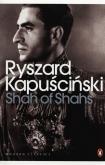
Shah of Shahs depicts the final years of the Shah in Iran, and is a compelling meditation on the nature of revolution and the devastating results of fear. Here, Kapuscinski describes the tyrannical monarch, who, despite his cruel oppression of the Iranian people, sees himself as the father of a nation, who can turn a backward country into a great power - a vain hope that proves a complete failure. Yet even as Iran becomes a 'behemoth of riches' and as the Shah lives like a European billionaire, its people live in a climate of fear, terrorised by the secret police. Told with intense power and feeling, Kapuscinski portrays the inevitable build-up to revolution - a cataclysmic upheaval that delivered Iran into the rule of the Ayatollah Khomeini.
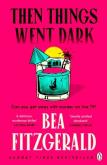
Six people land on a desert island ready to make their reality show debut. But three weeks and eighteen episodes later, five of the six contestants sit in a Portuguese police station, and none of them are winners.
Because twelve million people were watching when Rhys Sutton died. The best friend, the rival, the girlfriend, the lover, and the sworn enemy are left standing. And no-one is talking. But how do you keep secrets when the world has been watching?
Especially when, just a day before his murder, Rhys was the most hated man on television.
A new Cornish family series from million copy bestselling author, Hilary Boyd!
Peggy Gilbert wasn’t quite ready to leave London behind. But partner Ted’s yearning for a fresh start has led to a leap into the unknown.
Life on the Cornish coast hasn’t quite been what she expected; despite the healing sea breeze, she yearns for the bright lights of the city.
But when neighbour Lindy offers her a lifeline, she finally begins to embrace village life, basking in the friendship of someone who seems to be its beating heart. But beneath Lindy’s seemingly perfect surface simmer secrets that are soon threatening Peggy’s future in Pencarrow Bay.
Can she fight to remain in the community she has come to love? And save her future with Ted?
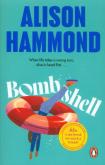
The joyful and heart-warming rom-com for 2025 from the much-loved TV presenter Alison Hammond, perfect for fans of Alexandra Potter.
'I loved the whole book . . . couldn't put it down!' 5 STAR reader review
'A fabulous debut novel . . . had me hooked from the start!' 5 STAR reader review
'I loved this . . . I'll definitely be recommending it!' 5 STAR reader review
When life takes a wayward turn, dive in head first...
Family has always meant everything to Madison. Married to the nation’s heartthrob, TV handyman Rich, with two beautiful children, she’s always put their needs first. And she’s never regretted a second, even if her own career has taken a backseat.
Then, out of the blue, Rich drops a bombshell. He needs some space and he’s moving out.
Overwhelmed by this revelation, Madison turns to her tight-knit group of friends for help. Bolstered by their support, Madison decides to dive into the situation head first and find out what’s really going on. Even if it means turning detective on her own husband.
And with her own interior-design career about to take off (once her manager stops squashing her bold ideas for his terrible ones, and provided she doesn’t get distracted by the new guy in the office), Madison’s about to rediscover her own worth.
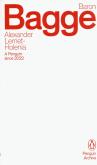
Baron Bagge, a cavalry officer during the First World War, receives orders from his unhinged commander to ride into Russian machine guns. But instead of meeting certain death, he and his brigade pass, unscathed, into a peaceful, otherworldly country where festivities are in full swing… Alexander Lernet-Holenia, championed in his lifetime by Roberto Calasso, Stefan Zweig and Rainer Maria Rilke, triumphs in this dreamlike novel of mystery and yearning.
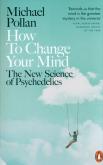
Reminds us that the mind is the greatest mystery in the universe' Yuval Noah Harari, Guardian, Books of the YearCould psychedelic drugs change our worldview? Join Michael Pollan on a journey to the frontiers of the human mind. Diving deep into an extraordinary world - from shamans and magic mushroom hunts to the pioneering labs mapping our brains - and putting himself forward as a guinea-pig, Michael Pollan has written a remarkable history of psychedelics and a compelling portrait of the new generation of scientists fascinated by the implications of these drugs.
How to Change Your Mind is a report from what could very well be the future of consciousness. 'A sweeping and often thrilling chronicle of the history of psychedelics, all interwoven with Pollan's adventures as a psychedelic novice. This is a serious work of history and science, but also one in which the author, under the influence of toad venom, becomes convinced he's giving birth to himself' Oliver Burkeman, Guardian'A mind-altering book ...
full of transformations' Richard Godwin, Evening Standard'An irresistible blend of history, research and personal experience. In terms of the psychedelic wave, the book is the big kahuna, the Big Bang moment for a movement that is gathering force' John McKenna, Irish Times'Entertaining and engrossing' Paul Laity, Financial Times'Deeply absorbing, wise and beautifully written' Mick Brown, Literary Review'An astounding book' Andrew Sullivan, New York Magazine
Ten produkt jest zapowiedzią. Realizacja Twojego zamówienia ulegnie przez to wydłużeniu do czasu premiery tej pozycji. Czy chcesz dodać ten produkt do koszyka?