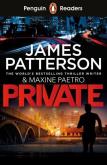
Jack Morgan has a company called Private. Private helps people. Sometimes, Private helps the police, too. Now, Jack's friend is dead. Private must find the killer. Penguin Readers is a series of popular classics, exciting contemporary fiction, and thought-provoking non-fiction written for learners of English as a foreign language. Beautifully illustrated and carefully adapted, the series introduces language learners around the world to the bestselling authors and most compelling content from Penguin Random House. The eight levels of Penguin Readers follow the Common European Framework and include language activities that help readers to develop key skills. Private, a Level 2 Reader, is A1+ in the CEFR framework. Sentences contain a maximum of two clauses, introducing the future tenses will and going to, present continuous for future meaning, and comparatives and superlatives. It is well supported by illustrations, which appear on most pages.
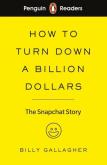
In 2008, Evan Spiegel, Reggie Brown, and Bobby Murphy made a photo app called Snapchat. Just two years later, Facebook wanted to buy Snapchat for $3 billion. This is the story of how Snapchat grew from a university student's idea into a multibillion-dollar company.
Penguin Readers is a series of popular classics, exciting contemporary fiction, and thought-provoking non-fiction written for learners of English as a foreign language. Beautifully illustrated and carefully adapted, the series introduces language learners around the world to the bestselling authors and most compelling content from Penguin Random House. The eight levels of Penguin Readers follow the Common European Framework and include language activities that help readers to develop key skills.
How to Turn Down a Billion Dollars: The Snapchat Story, a Level 2 Reader, is A1+ in the CEFR framework. Sentences contain a maximum of two clauses, introducing the future tenses will and going to, present continuous for future meaning, and comparatives and superlatives. It is well supported by illustrations, which appear on most pages.
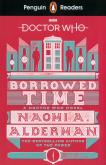
Andrew Brown works at a big international bank. He makes lots of money every day, but he never has enough time. Now, he might have found a way to borrow some. But, instead of making his life easier, more time might just give him more problems. Maybe the time-travelling Doctor can help! Penguin Readers is a series of popular classics, exciting contemporary fiction, and thought-provoking non-fiction written for learners of English as a foreign language. Beautifully illustrated and carefully adapted, the series introduces language learners around the world to the bestselling authors and most compelling content from Penguin Random House. The eight levels of Penguin Readers follow the Common European Framework and include language activities that help readers to develop key skills. Doctor Who: Borrowed Time, a Level 5 Reader, is B1 in the CEFR framework. The text is made up of sentences with up to four clauses, introducing present perfect continuous, past perfect, reported speech and second conditional. It is well supported by illustrations, which appear regularly.
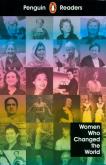
These are the stories of some of the women who changed our world. Read about the women who fought to be equal to men, and learn about the things that women have done in education, science, sport and politics.
Penguin Readers is a series of popular classics, exciting contemporary fiction, and thought-provoking non-fiction written for learners of English as a foreign language. Beautifully illustrated and carefully adapted, the series introduces language learners around the world to the bestselling authors and most compelling content from Penguin Random House. The eight levels of Penguin Readers follow the Common European Framework and include language activities that help readers to develop key skills.
Women Who Changed the World, a Level 4 Reader, is A2+ in the CEFR framework. The text is made up of sentences with up to three clauses, introducing more complex uses of present perfect simple, passives, phrasal verbs and simple relative clauses. It is well supported by illustrations, which appear regularly.
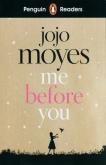
When Lou Clark loses her job at a café, she is given a job caring for Will Traynor. Will was disabled in a motorbike accident. Lou knows she needs the money. Will knows that his accident took away his love of life. Neither of them know that they're going to change each other's lives forever.
Penguin Readers is a series of popular classics, exciting contemporary fiction, and thought-provoking non-fiction written for learners of English as a foreign language. Beautifully illustrated and carefully adapted, the series introduces language learners around the world to the bestselling authors and most compelling content from Penguin Random House.The eight levels of Penguin Readers follow the Common European Framework and include language activities that help readers to develop key skills.
Me Before You, a Level 4 Reader, is A2+ in the CEFR framework. The text is made up of sentences with up to three clauses, introducing more complex uses of present perfect simple, passives, phrasal verbs and simple relative clauses. It is well supported by illustrations, which appear regularly.
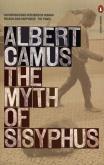
The summation of the existentialist philosophy threaded throughout all his writing, Albert Camus' The Myth of Sisyphus is translated by Justin O'Brien with an introduction by James Wood in Penguin Classics.
In this profound and moving philosophical statement, Camus poses the fundamental question: is life worth living? If human existence holds no significance, what can keep us from suicide? As Camus argues, if there is no God to give meaning to our lives, humans must take on that purpose themselves. This is our 'absurd' task, like Sisyphus forever rolling his rock up a hill, as the inevitability of death constantly overshadows us. Written during the bleakest days of the Second World War, The Myth of Sisyphus (Le Mythe de Sisyphe) argues for an acceptance of reality that encompasses revolt, passion and, above all, liberty.
This volume contains several other essays, including lyrical evocations of the sunlit cities of Algiers and Oran, the settings of his great novels The Outsider and The Plague.
Albert Camus (1913-60) is the author of a number of best-selling and highly influential works, all of which are published by Penguin. They include The Fall, The Outsider and The First Man. Awarded the Nobel Prize for Literature in 1957, Camus is remembered as one of the few writers to have shaped the intellectual climate of post-war France, but beyond that, his fame has been international.
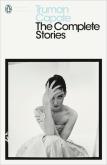
Including a previously-unpublished story 'The Bargain', Truman Capote's The Complete Stories is the first ever complete collection stories from one of the masters of American literature, and the author of Breakfast at Tiffany's. This Penguin Classics edition includes an introduction by Reynolds Price.
Passionate, perceptive and eloquent, the short stories of Truman Capote are amon the greatest works of twentieth-century American fiction. This new collection gathers them all together for the first time: from early, eerie Southern Gothic tales such as 'Miriam' and 'The Headless Hawk', to the brilliantly evocative 'Children On Their Birth-days' and the tenderly autobiographical 'A Christmas Memory' - an affectionate portrayal of Capote's own Alabama upbringing. Whether describing the Deep South of his childhood, or considering city life with the penetrating gaze of an outsider - as in 'Among the Paths to Eden' and the hitherto unpublished 'The Bargain' - these stories rank among Capote's finest work: acutely observed tales from a unique and brilliant mind.
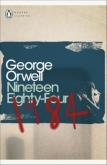
Hidden away in the Record Department of the sprawling Ministry of Truth, Winston Smith skilfully rewrites the past to suit the needs of the Party. Yet he inwardly rebels against the totalitarian world he lives in, which demands absolute obedience and controls him through the all-seeing telescreens and the watchful eye of Big Brother, symbolic head of the Party. In his longing for truth and liberty, Smith begins a secret love affair with a fellow-worker Julia, but soon discovers the true price of freedom is betrayal.
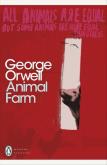
'All animals are equal but some animals are more equal than others'
When the downtrodden animals of Manor Farm overthrow their master Mr Jones and take over the farm themselves, they imagine it is the beginning of a life of freedom and equality. But gradually a cunning, ruthless élite among them, masterminded by the pigs Napoleon and Snowball, starts to take control. Soon the other animals discover that they are not all as equal as they thought, and find themselves hopelessly ensnared as one form of tyranny is replaced with another.
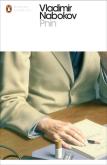
Professor Timofey Pnin, late of Tsarist Russia, is now precariously perched at the heart of an American campus. Battling with American life and language, Pnin must face great hazards in this new world: the ruination of his beautiful lumber-room-as-office; the removal of his teeth and the fitting of new ones; the search for a suitable boarding house; and the trials of taking the wrong train to deliver a lecture in a language he has yet to master.
Wry, intelligent and moving, Pnin reveals the absurd and affecting story of one man in exile.
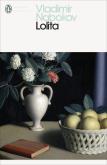
Lolita, light of my life, fire of my loins. My sin, my soul. Lo-lee-ta: the tip of my tongue taking a trip of three steps down the palate to tap, at three, on the teeth. Lo. Lee. Ta.
Humbert Humbert is a middle-aged, frustrated college professor. In love with his landlady's twelve-year-old daughter Lolita, he'll do anything to possess her. Unable and unwilling to stop himself, he is prepared to commit any crime to get what he wants.
Is he in love or insane? A silver-tongued poet or a pervert? A tortured soul or a monster? Or is he all of these?
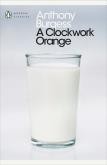
Anthony Burgess's nightmare vision of a society overrun by nihilistic violence and governed by a menacing totalitarian state, A Clockwork Orange includes an introduction by Blake Morrison in Penguin Modern Classics.
Fifteen-year-old Alex doesn't just like ultra-violence - he also enjoys rape, drugs and Beethoven's ninth. He and his gang of droogs rampage through a dystopian future, hunting for terrible thrills. But when Alex finds himself at the mercy of the state and subject to the ministrations of Dr Brodsky, and the mind-altering treatment of the Ludovico Technique, he discovers that fun is no longer the order of the day. The basis for Stanley Kubrick's notorious 1971 film, A Clockwork Orange is both a virtuoso performance from an electrifying prose stylist and a serious exploration of the morality of free will.
In his introduction, Blake Morrison situates A Clockwork Orange within the context of Anthony Burgess's many other works, explores the author's unhappiness with the Stanley Kubrick film version, analyses the composition of the Nadsat argot spoken by Alex and his droogs, and examines the influences on Burgess's unique, eternally original style.
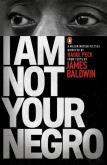
The New York Times bestseller based on the Oscar nominated documentary film
In June 1979, the writer and civil rights activist James Baldwin embarked on a project to tell the story of America through the lives of three of his murdered friends: Medgar Evers, Malcolm X and Martin Luther King, Jr. He died before it could be completed. In his documentary film, I Am Not Your Negro, Raoul Peck imagines the book Baldwin never wrote, using his original words to create a radical, powerful and poetic work on race in the United States - then, and today.
'Thrilling . . . A portrait of one man's confrontation with a country that, murder by murder, as he once put it, "devastated my universe"' The New York Times
'Baldwin's voice speaks even more powerfully today . . . the prose-poet of our injustice and inhumanity . . . The times have caught up with his scalding eloquence' Variety
'A cinematic séance . . . One of the best movies about the civil rights era ever made' Guardian
'I Am Not Your Negro turns James Baldwin into a prophet' Rolling Stone
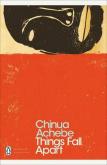
Okonkwo is the greatest warrior alive. His fame has spread like a bushfire in West Africa and he is one of the most powerful men of his clan.
But he also has a fiery temper. Determined not to be like his father, he refuses to show weakness to anyone - even if the only way he can master his feelings is with his fists. When outsiders threaten the traditions of his clan, Okonowo takes violent action. Will the great man's dangerous pride eventually destroy him?
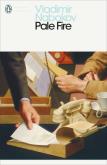
The American poet John Shade is dead; murdered. His last poem, Pale Fire, is put into a book, together with a preface, a lengthy commentary and notes by Shade's editor, Charles Kinbote. Known on campus as the 'Great Beaver', Kinbote is haughty, inquisitive, intolerant, but is he also mad, bad - and even dangerous? As his wildly eccentric annotations slide into the personal and the fantastical, Kinbote reveals perhaps more than he should.
Nabokov's darkly witty, richly inventive masterwork is a suspenseful whodunit, a story of one-upmanship and dubious penmanship, and a glorious literary conundrum.
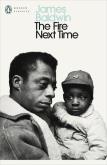
We, the black and the white, deeply need each other here if we are really to become a nation'
James Baldwin's impassioned plea to 'end the racial nightmare' in America was a bestseller when it appeared in 1963, galvanising a nation and giving voice to the emerging civil rights movement. Told in the form of two intensely personal 'letters', The Fire Next Time is at once a powerful evocation of Baldwin's early life in Harlem and an excoriating condemnation of the terrible legacy of racial injustice.
'Sermon, ultimatum, confession, deposition, testament, and chronicle ... all presented in searing, brilliant prose' The New York Times Book Review
'Baldwin writes with great passion ... it reeks of truth, as the ghettoes of New York and London, Chicago and Manchester reek of our hypocrisy' Sunday Times
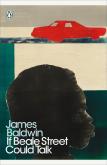
We are in Harlem, the black soul of New York City, in the era of Aretha Franklin and Ray Charles. The narrator of Baldwin's novel is Tish nineteen, and pregnant. Her lover Fonny, father of her child, is in jail accused of rape. Flashbacks from their love affair are woven into the compelling struggle of two families to win justice for Fonny. To this love story James Baldwin brings a spare and impassioned intensity, charging it with universal resonance and power.
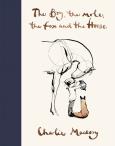
A reminder of the most important things in life. A book of hope for uncertain times.
Enter the world of Charlie's four unlikely friends, discover their story and their most poignant life lessons. Charlie's first book includes his most-loved illustrations and new ones too.
The conversations of the boy, the mole, the fox and the horse have been shared thousands of times online, recreated in school art classes, hung on hospital walls and turned into tattoos.
'A wonderful work of art and a wonderful window into the human heart' Richard Curtis
Malcolm grew up in the shadow of the Homecoming Queen's death.
His older brother was the prime suspect and left Echo Ridge in disgrace.
His mother's remarriage vaulted them to Echo Ridge's upper crust, but it could all change when mysterious threats around town hint that a killer plans to strike again.
And the return of Malcolm's brother doesn't help matters. But his return is just a coincidence... isn't it?
Ellery and Malcolm both know it's hard to let go when you don't have closure.
Then another girl disappears.
As they race to unravel what happened, they realise every secret has layers in Echo Ridge. The truth might be closer to home than either of them want to believe.
And somebody would kill to keep it hidden.
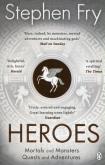
Few mere mortals have ever embarked on such bold and heart-stirring adventures, overcome myriad monstrous perils, or outwitted scheming vengeful gods, quite as stylishly and triumphantly as Greek heroes.
In this companion to his bestselling Mythos, Stephen Fry brilliantly retells these dramatic, funny, tragic and timeless tales.
Join Jason aboard the Argo as he quests for the Golden Fleece. See Atalanta - who was raised by bears - outrun any man before being tricked with golden apples. Witness wily Oedipus solve the riddle of the Sphinx and discover how Bellerophon captures the winged horse Pegasus to help him slay the monster Chimera.
Filled with white-knuckle chases and battles, impossible puzzles and riddles, acts of base cowardice and real bravery, not to mention murders and selfless sacrifices, Heroes is the story of what we mortals are truly capable of - at our worst and our very best.
Ten produkt jest zapowiedzią. Realizacja Twojego zamówienia ulegnie przez to wydłużeniu do czasu premiery tej pozycji. Czy chcesz dodać ten produkt do koszyka?