W tej strefie zapraszamy czytelników tak zwane artystyczne dusze po książki z kategorii Sztuka. Polecamy szereg publikacji o sztuce i jej historii,ciekawostki i portfolia artystów, eseje, albumy, książki o malarstwie, rzeźbiarstwie, architekturze oraz histoii fotografii. Biografie ciekawych artystów, książki i powieści przedstawiające fascynujące losy malarzy i osób uwiecznianych na obrazach. W tym dziale tylko ksiązki ze sztuka w tle.
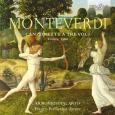
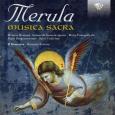
Qual Si Puo Dir
3’28
Canzonette D'amore
2’50
La Fiera Vista
4’23
Raggi Dov'e Il Mio Ben
4’30
Vita De L'alma Mia
4’36
Il Mio Martir
5’22
Son Questi I Crespi Crini
3’27
Io Mi Vivea
3’01
Su Su Su
4’03
Quando Sperai
2’47
Come Faro Cuor Mio
2’51
Corse Alla Morte
3’04
Tu Ridi Sempre Mai
1’05
Chi Vuol Veder D'inverno
2’59
Gia Mi Credea
2’18
Godi Pur Del Bel Sen
2’23
Giu Li A Quel Petto
4’03
Si Come Crescon
2’10
Io Son Fenice
5’10
Chi Vuol Vedere Un Bosco
4’05
Hor Care Canzonette
2’27
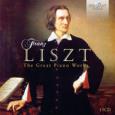
Franz Liszt is universally celebrated as one of the greatest-ever virtuoso performers on the modern piano. Contemporary accounts describe his seemingly superhuman technical abilities and equally striking charisma and stage presence. Yet Liszt was a formidable composer, and his expansion of pianistic possibilities was achieved as much through innovation in his own great piano works as through his astonishing performance on the instrument, if not more. Like many child virtuosos thrust early into busy concert careers (Liszt’s began at the age of nine) he retired early, weary of the spotlight, turning his back on the stage at the remarkably early age of 35. Since he lived to the likewise remarkable old age of 75, much more than the latter half of his life was devoted solely to composition, and having been a pianist of his calibre, the works he created for his own instrument were indeed groundbreaking.
Showcasing the demanding pieces in this set – from the thundering of Liszt’s virtuoso side to the mysticism of his deeply spiritual side – are 15 renowned pianists on recordings dating from 1994–2016. Liszt’s piano works may be divided into several diverse categories. These include the virtuoso showpieces based on themes from operas (Isoldens Liebestod Alexander Gavrylyuk, Wagner Transcriptions François Dumont, Bellini and Donizetti Transcriptions Mark Viner, Verdi and Beethoven Transcriptions Michele Campanella); religious-inspired or devotional works (Bénédiction de Dieu dans la solitude and 2 Légendes Irene Russo) the spare, enigmatic pieces from his last years (Trübe Wolken, En reve, Bagatelle sans tonalité Philipp Kopachevsky and La lugubre gondola Misha Dacić); a ground-breaking sonata regarded as an iconic work of the repertoire (Sonata in B minor Philipp Kopachevsky); and numerous piano transcriptions of other composers’ non-operatic works (Grandes études de Paganini Goran Filipec, Beethoven Symphony No.6 in F Op.68 ‘Pastorale’ Michele Campanella). The set concludes with a grand gesture, as Nelson Freire is joined by the Dresdner Philharmonie under Michel Plasson for Liszt’s two well-loved piano concertos.
Franz Liszt was without doubt one of the greatest (if not The Greatest) pianists of all time, as well as an innovating and visionary composer, in one word…a Genius!
This set presents an extensive survey of Liszt’s piano works, grand scale or intimate, thundering or tender, passionate or devout. In these works we find all Liszt’s pianistic innovations, feats of jaw dropping virtuosity, unheard-of sonorities and future-looking asceticism.
All genres of his pianistic output are present: original works like the complete Hungarian Rhapsodies, the Complete Studies, Années de Pelerinage, Ballades, Polonaises, Mephisto Waltzes and the immortal Sonata, Opera Paraphrases and Fantasies, Beethoven Symphony transcriptions and the Piano Concertos and Totentanz.
Performed by an extraordinary line up of present day pianists: Enrico Pace, Vincenzo Maltempo, Nelson Freire, and many more.
Recorded between 1994 and 2016.
This set comes with new liner notes written by Philip Borg-Wheeler.
In the popular imagination, French Christmas music may now be almost wholly defined by Minuit, chrétiens and favourites such as Petit Papa Noël covered by Charles Aznavour and Johnny Hallyday, but the festive season was marked in the Baroque era with great merriment, principally through the genre of Noëls: sacred collections of secular songs, celebrating often vernacular aspects of the Nativity such as the Shepherds, especially by giving the occasion to compose in the always popular pastoral vein, in simple keys such as F major and in the lilting siciliano rhythm.
Many such Noëls may be enjoyed on this special collection of both choral and instrumental music, concentrating on the High Baroque era. Corrette, Dandrieu and Balbastre all wrote exuberant Noels for organ; Michel Corrette developed the idea further with narrative-led instrumental symphonies, which are collected complete on CD2 and performed by a historically informed ensemble.
The collection begins with the Toronto-based Aradia Ensemble. They built their 1999 recording of Marc-Antoine Charpentier around his best-known work, the Messe de Minuit (Midnight Mass). The director Kevin Mallon gave it a specially Canadian flavour by interpolating a version of the French carol with a text in the tribal language of the Huron Indians. ‘Colourful performances,’ was the original verdict of Gramophone, on which ‘the soloists and chorus sing with consistent clarity.’ Operatically inclined singers will note the presence in the ensemble of Jane Archibald, who has since become known worldwide as a coloratura soprano of distinction, especially in the role of Zerbinetta in Strauss’s Ariadne auf Naxos. The final disc of Joyeux Noël is an organ recital, moving through the ages from Dandrieu to the grandest examples of late-Romantic organ masses and Christmas pieces by Franck and Dubois. It’s a uniquely compilation, fully annotated, sure to bring a touch of distinction to a festive stocking.
A compilation of popular music written for Christmas time by French Baroque and Romantic composers.
Presented are the ever popular “Messe de Minuit” by Charpentier, the Six Symphonies de Noël by Michel Corrette, charming and atmospheric depictions of the Christmas story, and a fine selection of Noëls for organ, genre pieces of a pastoral nature, either festive or intimate, by Dandrieu, Balbastre, Boëly, Guilmant, Dubois and Franck.
The perfect musical companion for a true “Joyeux Noël”!
Tomadin, Manuel - Praeludium Und Chaconne D-dur
Praeludium
Chaconne
Tomadin, Manuel - Konzert Fuer Orgel A-dur
1. Allegro
2. Siciliana
3. Vivace
Tomadin, Manuel - Konzert Fuer Orgel F-dur
1. Allegro
2. Adagio
3. Vivace
Tomadin, Manuel - Konzert Fuer Orgel D-dur
1. Allegro
2. Largo
3. Vivace
Tomadin, Manuel - Konzert Fuer Orgel G-dur
1. Allegro
2. Adagio
3. Allegro
Tomadin, Manuel - Fuge D-dur
Tomadin, Manuel - Konzert Fuer Orgel A-dur
1. Allegro
2. Adagio
3. Vivace
Tomadin, Manuel - Konzert Fuer Orgel E-dur
1. Allegro
2. Adagio
3. Vivace
Tomadin, Manuel - Konzert Fuer Orgel H-dur
1. Allegro
2. Siciliana
3. Allegro
Płyta 2.
Tomadin, Manuel - Praeludium, Fuge, Adagio Und Cha
Praeludium
Fuge
Adagio
Chaconne
Tomadin, Manuel - Adagio D-dur
Tomadin, Manuel - Konzert Fuer Orgel G-dur
1. Allegro
2. Adagio
3.allegro
Tomadin, Manuel - Konzert Fuer Orgel D-dur
1. Allegro
2. Adagio
3. Largo
4. Allegro
Tomadin, Manuel - Konzert Fuer Orgel A-moll
1. Preludio
2. Vivace
3. Adagio
4. Allegro
Tomadin, Manuel - Konzert Fuer Orgel D-moll
1. Allegro
2. Adagio
3. Vivace
Tomadin, Manuel - Konzert Fuer Orgel G-moll
1. Allegro
2. Affettuoso
3. Fuga: Allegro
Tomadin, Manuel - Praeludium, Fuge Und Allegro-ada
Praeludium
Fuge
Allegro - Adagio
The 17th century was the Golden Age of the North German organ school.
The big cities Hamburg and Luebeck boasted of magnificent organs and
famous composers, like Buxtehude, Reincken and Tunder. However in the
small city of Husum the hugely talented Nikolaus Bruhns was the titular
organist and he issued a collection of 17 organ works, now known as the
Husumer Orgelbuch, preserved in the Royal Library of Copenhagen.
? The Husumer Orgelbuch contains works by Druckenmüller, Zeyhold, Zinck
and Bruhns himself.
? Played on two magnificent historical organs: the Schnitger organ (1721)
of the Sint-Michaëlskerk in Zwolle and the famous Hinsz organ (1733) in
the small town of Leens, both in the northern part of the Netherlands.
? Italian organist Manuel Tomadin is a specialist in this repertoire. He
wrote the excellent liner notes on the music, extensive descriptions and
the full specification of both organs.
Accademia Degli Invaghiti - Vespro Per La Festa Di
Introduktion
Verse: Deus In Adiutorium / Responsorium: Domine A
Antiphon: Angelicam Vitam
Psalm: Dixit Dominus
Canzon Francese: La Gonzaga
Antiphon: In Dei Orto Sata
Psalm: Laudate Pueri
Canzon A Quattro
Antiphon: Paterni Oblita Amoris
Psalm: Laetatus Sum
Konzert - Psalm: Laudemus Dominum - Zwei Sinfonien
Antiphon: In Sancte Trinitatis
Psalm: Nisi Dominus
Antiphon: Trinitate Venerata
Konzert
Psalm: Lauda Jerusalem
Duo Seraphim
Sonata Sopra Sancta Maria
Capitulum: Confitebor
Hymnus: Exultet Celebres Virginis
Responsorium: Ora Pro Nobis
Antiphon: Hodie Beata Barbara
Sinfonie
Magnificat
Oratio Et Conclusio
Vincenzi, Pier Paolo - Kleine Stuecke Fuer Klavier
Nr. 1 Melodia
Nr. 2 Serenata
Nr. 3 Danza
Vincenzi, Pier Paolo - Chanson Do Rouet (L'arcolai
Vincenzi, Pier Paolo - Canto Del Mattino (Romanza)
Vincenzi, Pier Paolo - La Petite Coquette (Air De
Vincenzi, Pier Paolo - C'est Toi Que J'aime (Impro
Vincenzi, Pier Paolo - Aria Campestre
Vincenzi, Pier Paolo - Flatterie (Adulazione) Op.
Vincenzi, Pier Paolo - Mazurka Op. 14
Vincenzi, Pier Paolo - Badinage (Burlesca) Op. 15
Vincenzi, Pier Paolo - Berceuse Op. 20
Vincenzi, Pier Paolo - Notturno Op. 22
Vincenzi, Pier Paolo - Danza Nr. 2 Op. 26
Vincenzi, Pier Paolo - Kleine Stuecke Fuer Klavier
Nr. 1 Loin Dans La Mer
Nr. 2 Feuille D'album
Nr. 3 Pensee Espagnole
Vincenzi, Pier Paolo - Stuecke Fuer Klavier Op. 29
Nr. 1 Romanza
Nr. 2 Scherzino
Nr. 3 Barzelletta
Vincenzi, Pier Paolo - Gocce Di Rugiada Op. 33
Vincenzi, Pier Paolo - Au Village Op. 34
Vincenzi, Pier Paolo - A La Mazurke Op. 35
Vincenzi, Pier Paolo - Valzer Op. 36
Vincenzi, Pier Paolo - Foglio D'album Op. 41
Vincenzi, Pier Paolo - Suite Im Alten Stil Op. 42
1. Allegro
2. Sarabanda
3. Capriccio
Vincenzi, Pier Paolo - Folgio D'album Op. 41 (Uebe
Vincenzi, Pier Paolo - Fuga Reale O. Op.
Płyta 2.
Vincenzi, Pier Paolo - Stuecke Fuer Klavier Op. 43
Nr. 1 Verra?
Nr. 2 Acque Correnti
Nr. 3 Valle Fiorita
Vincenzi, Pier Paolo - Stuecke Fuer Klavier Nr. 1-
Nr. 1 Risonanze Nostalgiche
Nr. 2 Festa Silana
Vincenzi, Pier Paolo - Scherzo
Vincenzi, Pier Paolo - Scherzando
Vincenzi, Pier Paolo - Danza Calabrese
Vincenzi, Pier Paolo - Impromptu
Vincenzi, Pier Paolo - Mezurka
Vincenzi, Pier Paolo - Preludio
Vincenzi, Pier Paolo - Vespero
Vincenzi, Pier Paolo - Foglio D'album
Vincenzi, Pier Paolo - Invocazione (Bearb. Fuer Kl
Vincenzi, Pier Paolo - Serenata A Dispetto (Bearb.
Vincenzi, Pier Paolo - Kleine Stuite Fuer Orcheste
Danza (Bearb. Fuer Klavier)
Vincenzi, Pier Paolo - Stueck Fuer Klavier Zu Vier
Vincenzi, Pier Paolo - Chansonnette Op. 31 (Fuer K
Vincenzi, Pier Paolo - Sentiment Poetique (Fuer Kl
Vincenzi, Pier Paolo - Amour Joyeux Op. 37 (Fuer K
Vincenzi, Pier Paolo - Suite Fuer Orchester (Auszu
Idillo (Bearb. Fuer Klavier Zu Vier Haenden)
Alla Gavotta (Bearb. Fuer Klavier Zu Vier Haenden)
Alvarez, Agustin - Konzert Fuer 2 Cembali Nr. 1 C-
1. Andante
2. Minue
Alvarez, Agustin - Konzert Fuer 2 Cembali Nr. 2 A-
1. Andante
2. Allegro
3. Tempo De Minue
Alvarez, Agustin - Konzert Fuer 2 Cembali Nr. 3 G-
1. Andantino
2. Minue
Alvarez, Agustin - Konzert Fuer 2 Cembali Nr. 4 F-
1. Affettuoso - Andante Non Largo
2. Minue
Alvarez, Agustin - Konzert Fuer 2 Cembali Nr. 5 A-
1. Cantabile
2. Minue
Alvarez, Agustin - Konzert Fuer 2 Cembali Nr. 6 D-
1. Allegro - Andante - Allegro - Andante
2. Minue
Antonio Soler (1729-1783) was a scholar, musicologist (he wrote about the history of Spanish music), composer and virtuoso keyboard player. He was in the service of the Spanish Royal family, and personal tutor of the Infante Gabriel de Bórbon. Soler wrote a great quantity of solo keyboard sonatas for the use at the Royal court. They are one movement works, much in the style of the sonatas by Domenico Scarlatti (whom he knew personally). The sonatas abound in instrumental virtuosity, daring harmonies and attractive melodies in pre-classical style. Soler wrote the 6 Concertos for 2 Harpsichords for his royal pupil. Judging by the brilliance and vitality of these popular works the composer and his pupil must have hugely enjoyed themselves playing them… Played by the harpsichord duo L’entretien des clavecins, formed by Agustín Álvarez and Eusebio Fernandez-Villacanas, playing magnificent copies, built by Andrea Restelli, of a Taskin and Donzelague harpsichord.
The Spanish harpsichordists Agustín Álvarez (b.1959) and Eusebio Fernández-Villacanas (b.1974) form the harpsichord duet L’entretien des clavécins. For this album they play on two instruments by the Milanese maker Andrea Restelli: a copy of a Pascal Taskin (Edinburgh 1769), and a copy of Pierre Donzelague (London 1711). They have presented the programme on this album in the context of a Goya exhibition at
the Prado in Madrid, which houses many of the most renowned examples of his art.
Agustín Álvarez harpsichord
built by Andrea Restelli (Milano 2005) copy of Pascal Taskin (Edinburgh 1769)
Eusebio Fernández-Villacanas harpsichord
built by Andrea Restelli (Milano 2012) copy of Pierre Donzelague (London 1711)
Recording: 10-12 October 2015, Diego de León, Madrid, Spain
Losito, Valerio - Sonate Fuer Viola D'amore Und Kl
1. Moderato, Assai Cantabile Ed Espressivo
2. Adagio Molto Espressivo
3. Allegro Assai Sempre Scherzando - Trio: Molto C
4. Allegro Con Brio
Losito, Valerio - Sonate Fuer Viola D'amore Und Kl
1. Moderato Assai, Molto Espressivo
2. Andante Sostenuto E Molto Espressivo
3. Scherzino: Allegretto Scherzando - Trio: Modera
4. Allegro Ma Non Troppo
Płyta 2.
Losito, Valerio - Sonate Fuer Viola D'amore Und Kl
1. Moderato
2. Andante Molto Sostenuto
3. Allegro Assai Quasi Presto
4. Allegro Assai Molto Energico
Losito, Valerio - Lyrische Stuecke Fuer Viola D'am
Nr. 1 Idylle
Nr. 2 Humoreske
Nr. 3 Romanze
Nr. 4 Barcarole
Nr. 5 Elegie
Nr. 6 Cavatine
Nr. 7 Legende
Nr. 8 Ballade
Nr. 9 Gavotte
? Robert Lach (1874-1958) was an Austrian scholar, (ethno)musicologist,
philosopher, Professor at the Wiener Akademie, in short a scientist pur
sang, with a passion for composing: he wrote a substantial oeuvre of 10
symphonies, masses, 25 string quartets and other chamber music. His
style is Post-Brahmsian: quietly flowing and arching melodies over rich
and late-romantic harmonies.
? Robert Lach was the last composer writing for the viola d’amore, an
instrument much in use in the baroque, but later overshadowed by the
violin and viola. This recording presents his complete 3 sonatas for this
instrument, as well as the 9 Lyrische Stücke.
? Italian violinist Valerio Losito is a strong advocate of this music, he
already recorded a highly praised viola d’amore solo album for Brilliant
Classics (BC94367) as well as sonatas by Veracini, Tessarini and Scarlatti.
? This disc is a FIRST RECORDING, and a real find!
? Extensive liner notes written by the artist.
Imperato, Gianluca - Preludes Nr. 1-25 Op. 30
Nr. 1 C-dur
Nr. 2 C-moll
Nr. 3 Des-dur
Nr. 4 Cis-moll
Nr. 5 D-dur
Nr. 6 D-moll
Nr. 7 Es-dur
Nr. 8 Es-moll
Nr. 9 E-dur
Nr. 10 E-moll
Nr. 11 F-dur
Nr. 12 F-moll
Nr. 13 Fis-dur
Nr. 14 Fis-moll
Nr. 15 G-dur
Nr. 16 G-moll
Nr. 17 As-dur
Nr. 18 Gis-moll
Nr. 19 A-dur
Nr. 20 A-moll
Nr. 21 B-dur
Nr. 22 B-moll
Nr. 23 H-dur
Nr. 24 H-moll
Nr. 25 C-dur
Imperato, Gianluca - Romance Op. 16 Nr. 2
Imperato, Gianluca - Kinderstuecke Op. 31 (Auszug)
Nr. 4 Traeumereien
Nr. 6 Walzer
Nr. 10 Lied Aus Dem Osten
Nr. 11 Albumblatt
Imperato, Gianluca - Sketches Nr. 1-12 Op. 47 (Aus
Nr. 3 Gajamente
Nr. 7 Agitato
Imperato, Gianluca - Klavierstuecke Nr. 1-2 Op. 99
Nr. 1 Impromptu Fuer Die Linke Hand
Nr. 2 Melodie
Vandalia - Villancicos Y Canciones (Sevilla 1560)
Zagaleja De Lo Verde
Puse Mis Amores
Si El Pastorcico Es Nuevo
Si No Os Uviera Mirado
!ay, Ay, Que Ravio Y Muerto!
Covarde Cavallero
?que Sentis, Coracon Mio?
Duelete De Mi, Senora
Buscad Buen Amor
!ay, Que No Oso Mirar!
!o Dulce Contemplacion!
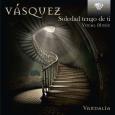
Soledad Tengo De Ti
!a, Hermoas, Abrime, Cara De Rosa!
Vos Me Mataste
La Mi Sola Laureola
?de Donde Venis, Amores?
Con Que La Lavare
De Los Alamos
Lindos Ojos Aveys, Senora
Morenica, Dame Un Beso
Quien Amores Tiene
En La Fuente Del Rosel
Vandalia - O Mas Dura Que Marmol A Mis Quexas
Little is known about the life of Spanish composer Juan Vásquez, fl. 16th century. A skilled and successful composer, he was in the service of the King of Spain. His compositions are mainly secular, in the form of polyphonic madrigals and “Villancicos”, popular songs set for a vocal ensemble of 3 or 4 voices. The Villancicos are based on folk music and traditional texts, peasant melodies brimming with joy, happiness and Spanish vitality! Performed with infectious enthusiasm by the Spanish Early Music group Vandalia, consisting of 4 excellent vocal soloists, accompanied by the Iberian Harp. The booklet contains scholarly liner notes, biography and full texts, both
the original Spanish and the English translation.
The booklet includes a comprehensive introduction to the music of Vásquez, original sung texts and modern English translations.
Rocío de Frutos soprano (RdF) · Gabriel Díaz countertenor (GD)
Víctor Sordo tenor (VS) · Javier Cuevas bass (JC) · Sara Águeda iberian harp (SA)
Recording: 13-15 of july 2015, Convento de Nuestra Senora de Loreto, Espartinas, Sevilla, Spain
Schola Gregoriana Benedetto XVI - Ad Te Levavi Ocu
Schola Gregoriana Benedetto XVI - Universi (Gradua
Schola Gregoriana Benedetto XVI - Populus Sion (In
Schola Gregoriana Benedetto XVI - Dominus Dixit
Schola Gregoriana Benedetto XVI - Quem Quaeritis I
Schola Gregoriana Benedetto XVI - Puer Natus Est (
Schola Gregoriana Benedetto XVI - Hosanna Filio Da
Schola Gregoriana Benedetto XVI - Christus Factus
Schola Gregoriana Benedetto XVI - Dominus Jesus (A
Schola Gregoriana Benedetto XVI - In Hoc Cognoscen
Schola Gregoriana Benedetto XVI - Mandatum Novum
Schola Gregoriana Benedetto XVI - Ubi Caritas (Hym
Schola Gregoriana Benedetto XVI - Tenebrae Factae
Schola Gregoriana Benedetto XVI - Resurrexi (Intro
Schola Gregoriana Benedetto XVI - Victimae Paschal
Schola Gregoriana Benedetto XVI - Stirps Jesse (Re
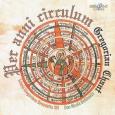
This new recording of Gregorian Chant presents a journey through the
complete Liturgical Year: Advent, Christmas, Lent, Easter and Ordinary
Time, the ever-recurring spiritual cycle, caught in the timeless medieval
melodies of Gregorian Chant, as it was and as it always will be.
? Sung with devotion and clear intonation by the Schola Gregoriana
Benedetto XVI from Bologna, and recorded in the spacious and warm
acoustics of the St. Christina’s Church in Bologna.
? The booklet contains excellent
liner notes as well as the sung
texts.
Other information:
? Contains notes about the music in English
and Italian.
? Contains biographies of the performers.
? Contains sung texts in Latin.
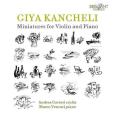
Cortesi, Andrea - Miniatueren Fuer Violine Und Kla
Nr. 1 Thema Aus The Eccentrics
Nr. 2 Nach Dem Thema Aus The Crucible
Nr. 3 Thema Aus As You Like It
Nr. 4 Nach Den Themen Aus Mother Courage & Her C
Nr. 5 Nach Dem Thema Aus Some Interviews On Person
Nr. 6 Nach Den Themen Aus Khanuma, Sior Todero Und
Nr. 7 Nach Den Themen Aus Cinema Und The Role For
Nr. 8 Nach Den Themen Aus Bear's Kiss Und Richard
Nr. 9 Thema Aus When Almonds Blossomed
Nr. 10 Nach Den Themen Aus Mimino Und The Role For
Nr. 11 Nach Den Themen Aus The Caucasian Chalk Cir
Nr. 12 Nach Den Themen Aus Hamlet Und Don Quichote
Nr. 13 Thema Aus The Caucasian Chalk Circle
Nr. 14 Nach Dem Thema Aus Khanuma
Nr. 15 Nach Den Themen Aus Don Quichote Und The Ca
Nr. 16 Thema Aus King Lear
Nr. 17 Nach Dem Thema Aus Hamlet
Nr. 18 Thema Aus Waiting For Godot
Cortesi, Andrea - Rag-gidon-time
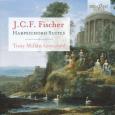
? Johann Caspar Ferdinand Fischer (1656-1746) was born in Bohemia, and
was active as a Kapellmeister at the Saxon-Lauenburg court for a
staggering 60 years.
? Fischer introduced the French keyboard style to Germany, a sign of the
German court’s efforts to emulate the grand way of living and culture of
Versailles and its Sun King. His keyboard suites have French titles: Pieces
de Clavessin, suites of courtly dances. His style is a fusion of the elaborate
and ornamented French style and the German Stylus Phantasticus of his
compatriots Froberger and Buxtehude.
? Tony Millán is one of Spain’s foremost keyboard players, he is equally at
home in the Baroque as in the 20th century. He plays a magnificent copy
of a Christian Vater harpsichord (1738), built by Andrea Restelli, using the
Tartini-Vallotti temperament.
? Liner notes written by the artist.
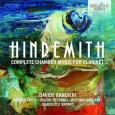
Bandieri, Davide - Quartett Fuer Klarinette, Violi
1. Maessig Bewegt
2. Sehr Langsam
3. Maessig Bewegt
Bandieri, Davide - Sonate Fuer Klarinette Und Klav
1. Maessig Bewegt
2. Lebhaft
3. Sehr Langsam
4. Kleines Rondo: Gemaechlich
Płyta 2.
Bandieri, Davide - Musikalisches Blumengaertlein U
(Keine Satzbezeichnung)
Priere D'une Vierge Dans La Tonart Mixolydique
(Keine Satzbezeichnung)
Kanon (Zum Schiessen)
Broken Melody
Marsch Der Lowenreichswehr
Lied
Die Gebetsmuehle Im Schwarzwald
Ein Taenzlein
Bandieri, Davide - Zwei Duette Fuer Violine Und Kl
Bandieri, Davide - Variationen Fuer Klarinette Und
Bandieri, Davide - Ludus Minor Fuer Violoncello Un
1. Fuga Prima Ex C
2. Interludium: Leicht Bewegt
3. Fuga Secunda Ex G
4. Interludium
5. Fuga Tertia Ex F
Bandieri, Davide - Quintett Fuer Klarinette Und St
1. Sehr Lebhaft - 2. Ruhig
3. Schneller Laendler
4. Arioso: Sehr Ruhig
5. Sehr Lebhaft, Wie Im Ersten Satz
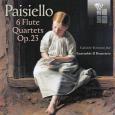
Formenti, Gabriele - Quartett Fuer Flote Und Strei
1. Allegro Moderato
2. Minuetto
Formenti, Gabriele - Quartett Fuer Flote Und Strei
1. Andante Poco Adagio
2. Rondo: Allegretto
Formenti, Gabriele - Quartett Fuer Flote Und Strei
1. Allegro Spirituoso
2. Minuetto
Formenti, Gabriele - Quartett Fuer Flote Und Strei
1. Poco Adagio
2. Rondo: Allegro Moderato
Formenti, Gabriele - Quartett Fuer Flote Und Strei
1. Andante
2. Rondo
Formenti, Gabriele - Quartett Fuer Flote Und Strei
Allegro
? Giovanni Paisiello (1740-1816) is one of the key composers of the
Neapolitan School, primarily famous for his vast amount of operas
written when in the service of Ferdinand IV of Naples.
? Paisiello’s instrumental output is also substantial, and it was written for
the ever growing bourgeoisie, for domestic use by advanced amateurs.
His 6 Flute Quartets are delightful works, full of charming, sunny
melodies and sparkling virtuosity, in the true tradition of the Neapolitan
School, as comparable with Cimarosa and Guglielmi.
? The Italian ensemble Il Demetrio specialises in Baroque and Early Classical
music, playing on authentic instruments.
Artist :
Ensemble Il Demetrio
Gabriele Formenti flute, Elisa Bestetti violin
Maurizio Schiavo viola, Antonio Papetti cello
Ten produkt jest zapowiedzią. Realizacja Twojego zamówienia ulegnie przez to wydłużeniu do czasu premiery tej pozycji. Czy chcesz dodać ten produkt do koszyka?