W tej strefie zapraszamy czytelników tak zwane artystyczne dusze po książki z kategorii Sztuka. Polecamy szereg publikacji o sztuce i jej historii,ciekawostki i portfolia artystów, eseje, albumy, książki o malarstwie, rzeźbiarstwie, architekturze oraz histoii fotografii. Biografie ciekawych artystów, książki i powieści przedstawiające fascynujące losy malarzy i osób uwiecznianych na obrazach. W tym dziale tylko ksiązki ze sztuka w tle.
Niniejsza praca jest pierwszą monografia jednej z najpiękniejszych kamieniczek dawnego Gdańska, zwanej najpierw Domem Speimana, potem Steffensów, a na koniec Złotą Kamieniczką. Wieloletnie badania autora nad jej dziejami, pozwoliły mu odkryć wiele nieznanych dotąd faktów. W książce opisano m.in. historię parceli, zmiany własności i przemiany zabudowy. W szczegółowy sposób przedstawiono proces powstawania kamieniczki, sylwetki jej twórców, detale architektury, znaczenie i symbolikę rzeźbiarskiej dekoracji fasady. Treść uzupełniają liczne ilustracje.
Zegar astronomiczny w Kościele Mariackim w Gdańsku jest jednym z najcenniejszych obiektów tego rodzaju w Europie. Ukończony w roku 1470 - na trzy lata przed narodzeniem Kopernika, funkcjonował do roku 1553, po czym popadł w zaniedbanie. Dzięki ewakuacji w czasie II wojny światowej zachował większość autentycznego wystroju. Odbudowa, a ściślej restauracja prowadzona od 1993 roku pod kierunkiem Autora, przywróciła zegar do życia.
There is a star to tytuł trzeciej płyty Natalii Moskal. Album zawiera czternaście piosenek znanych m.in. z włoskich powojennych filmów – w nowych aranżacjach Jana Stokłosy. Całość wydano w formie książki, w której można przeczytać o procesie powstawania płyty i poznać genezę jej tajemniczego tytułu. Utwory zostały zaaranżowane na orkiestrę z wykorzystaniem m.in. akordeonu, wibrafonu i saksofonu. Album, który ukazał się 13 listopada, promowany jest przez słynny utwór Mambo Italiano, który śpiewali Betty Midler, Dean Martin i wielu innych artystów.
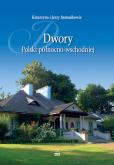
W Dworach Polski północno-wschodniej opisaliśmy ziemiańskie siedziby, które przetrwały donaszych czasów. W ciągu 25 lat dotarliśmy chyba do wszystkich dworów i pałaców zachowanychna terenie Litwy, Białorusi i Polski północno-wschodniej. Przedstawiliśmy je w ośmiu pozycjachksiążkowych i dziesiątkach artykułów publikowanych w czasopismach popularnonaukowych i krajoznawczych.W Dworach Polski północno-wschodniej"" zamieściliśmy opisy i fotografie 85 dworów znajdującychsię na terenie województwa podlaskiego i północno-wschodniej części województwa warmińsko-mazurskiego oraz 41 dworów położonych na ziemiach Podlasia południowego, które znalazłosię w granicach województwa lubelskiego i mazowieckiego. Nie wszystkie jednak zabytkowe dworyznalazły się w tym albumie. Część z nich była bardzo zniszczona, do niektórych nie udało nam sięuzyskać dostępu, nie uwzględniliśmy też tych obiektów, których ani architektura, ani dzieje nie byłyinteresujące. Zamieściliśmy je natomiast i będziemy nadal zamieszczać na naszej stronie internetowej:www.dworypogranicza.pl.
Album reprodukcji obrazów malarzy marynistów z fachowym komentarzem żeglarza. Jak pisze w posłowiu kierowniczka działu marynistyki Narodowego Muzeum Morskiego w Gdańsku, dr Monika Jankiewicz-Brzostowska, „pod piórem autora obrazy ożyły, bowiem odczytana została kryjąca się w nich opowieść.”
Marek Sarba, polski malarz mieszkający w USA stwierdza, że nie spotkał w światowej literaturze takiego zestawienia obrazów marynistycznych z fachowym wyjaśnieniem, co się na nich dzieje.
Niniejsza książka, wydana w osiemdziesiątą rocznicę urodzin Profesora Jana Stęszewskiego, jest wyrazem uznania zasług w obszarze naukowym, organizacyjnym i dydaktycznym, związanych z Jego wieloletnią działalnością jako Kierownika Zakładu Muzykologii Instytutu Historii Sztuki UAM, a później w katedrze Muzykologii UAM oraz Przewodniczącego Sekcji Muzykologicznej Poznańskiego Towarzystwa Przyjaciół Nauk.
Tematem publikacji jest debata o aktualnej kondycji i przyszłości miast w Królestwie Polskim w latach 1905-1915.Korzystając z takich narzędzi, jak analiza dyskursu, socjologia i antropologia miast oraz dorobku historiografii, autor przygląda się fenomenowi dziwiętnastowiecznej urbanizacji i industrializacji. Stara się osadzić polską dyskusję na temat wizji rozwoju miast, samorządu miejskiego, prawa miejskiego obywatelstwa i politycznego znaczenia ośrodków miejskich na szerszym tle przemian zachodzących w ówczesnej Europie. Zastanawia się, czy rewolucja 19051907 była rewolucją miejską i jak zmieniła postrzeganie miast w polskim dyskursie publicznym. Szuka odpowiedzi na pytanie, w jakim stopniu program polonizacji miast Królestwa Polskiego miał charakter modernizacyjny oraz analizuje utopijne wizje rozwoju miast z początku XX wieku.Książka adresowana jest do szerokiego kręgu odbiorców-badaczy miast, historyków, socjologów i aktywistów miejskich, a także wszystkich zainteresowanych poruszaną problematyką.
Badania nad prasą oficjalną wydawaną w PRL w ostatnich latach zamarły. Na rynku wydawniczym pojawiały się ledwie jeden-dwa tytuły na ten temat, raz na jakiś czas, a gazety czy tygodniki publikowane w tamtym okresie były zazwyczaj wdzięcznym tematem do obśmiewania lub ilustrowania innych książek. Nadszedł czas, aby to zmienić i przywrócić właściwe proporcje, gdyż w dobie radia i raczkującej telewizji to prasa stanowiła główne źródło kształtowania świadomości społeczeństwa PRL. Stanowiła również ogromny oręż władz w walce o rząd dusz Polaków, a skutki tamtego okresu odczuwamy do dziś.Prezentowany tom w tylko niewielkim stopniu wypełnił rozległa tematykę działalności prasy oficjalnej w PRL. Zdajemy sobie z tego sprawę, lecz uznajemy to za początek, nowe otwarcie w badaniach nad tą problematyką.
Making stops in North and South America, Europe, Asia, Africa, and Australia, this edition rounds up some of today’s most exceptional and inspiring interiors across six continents. From rustic minimalism to urbane eclecticism, the selection celebrates a global spectrum of styles, united by authenticity, a love of detail, and a zest for individual expression that will never go out of fashion.
Includes interiors in Argentina, Brazil, China, Cuba, Denmark, France, Germany, Greece, Indonesia, Italy, Japan, Kenya, Morocco, South Africa, Spain, Sweden, Turkey, the UK, the USA, and many more countries.
With pictures by leading interior photographers including Xavier Béjot, Pieter Estersohn, Marina Faust, Reto Guntli, François Halard, HieplerBrunier, Ditte Isager, Nikolas Koenig, Ricardo Labougle, Eric Laignel, Åke Lindman, Thomas Loof, Jason Schmidt, Mark Seelen, René Stoeltie, Tim Street-Porter, Vincent Thibert, Simon Upton, Paul Warchol.
omadic homes come in all shapes and sizes. They are for the wealthy and the poor, the trendy and the out-of-luck. Changing one’s place of residence is an endeavor that is as old as humanity, for reasons of season, or, more recently, to better occupy leisure time.
Written and edited by Philip Jodidio, this volume with illustrations by Russ Gray contains some of the most remarkable examples of homes on the move. Starting with totally revamped Airstream mobile homes, and going on to spectacular moveable vacation houses of the Epic Retreats “pop-up boutique hotel” in Wales, this book doesn’t stop moving, surveying the best in campers and tents, and going on to extravagant marine dwellings like BIG’s Urban Rigger, or the Manta Underwater Room in Zanzibar. At the other end of the spectrum, we find refugee housing for those forced into a life on the move, including shelters designed by the Pritzker Prize–winning architect Shigeru Ban.
What we discover throughout is that the nomadic spirit of our hunter-gatherer ancestors is very much alive in the modern world. Where architecture has often sought stability and thus the lack of movement, modernity has brought a sense of the finite, and a good deal of modesty about posterity and longevity. What more contemporary thought could there be than to seek nothing so much as to move, to grow perhaps, but always to move. “A good traveler,” said the ancient Chinese philosopher Lao Tzu “has no fixed plans and is not intent on arriving.” As this book ably shows, it is the journey that counts.
From the end of World War II until the mid-1960s, exciting things were happening in American architecture. Emerging talents were focusing on innovative projects that integrated at once modern design and low-cost materials. The trend was most notably embodied in the famous Case Study House Program, a blueprint for modern habitation championed by the era’s leading American journal, Arts & Architecture.
The complete facsimile of the ambitious and groundbreaking Arts & Architecture was published by TASCHEN in 2008 as a limited edition. This new curation—directed and produced by Benedikt Taschen—brings together all the covers and the highlights from the first five years of the legendary magazine, with a special focus on the Case Study House Program and its luminary pioneers including Neutra, Schindler, Saarinen, Ellwood, Lautner, Eames, and Koenig.
A celebration of the first brave years of a politically, socially and culturally engaged publication, this special selection is also a testimony to one of the most unique and influential events in the history of American architecture.
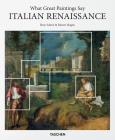
Surreptitious messages, concealed myths, and historical truths lie hidden in the great works of the Italian Renaissance, behind heavy gold leaf and religious symbology. Although often obscured by the archaic language of historical painting, careful analysis and expert interpretation bring these images to life. Discover masterpieces of the most beloved creative epoch in this fascinating art historical inquiry.
Images of war, romance, birth, and knowledge, works of the Italian Renaissance have much to say, when given a voice. Rose-Marie and Rainer Hagen do just that—pulling apart each of the 12 featured paintings with all the talent of true detectives to offer an illuminating portal to the past.
From Michelangelo’s The Creation of Adam to Ucello’s The Battle of San Romano, from Antonello da Messina’s St. Jerome in His Study to Pinturicchio’s Penelope with the Suitors, the artworks under investigation are a diverse representation of the period’s innovation and brilliance, sourced directly from some of the most impressive collections in the world, including the Uffizi, Prado, and National Gallery London.
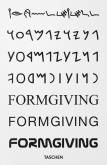
Formgiving. An Architectural Future History, the new book by BIG (Bjarke Ingels Group), is a visionary attempt to look at the horizon of time. The Danish word for “design” is “formgivning,” which literally means to give form to that which has not yet taken shape. In other words, to give form to the future. Using our power to give form, rather than allowing the future to take shape, is more important now than ever, as humankind’s impact on the planet continues to increase and pose ever greater challenges to all life forms. Architecture plays a special role by proposing spaces for our lives that are fragments of the future in the making. William Gibson’s words embody architecture’s role perfectly: “The future is already here—it’s just not evenly distributed.”
With Formgiving, BIG presents the third part of its TASCHEN trilogy, which began with Yes is More, one of the most successful architectural books of its generation, and continued with Hot to Cold. An Odyssey of Architectural Adaptation. The book is presented in a timeline, stretching from the Big Bang into the most distant future. Projects are structured around six strands of evolution—“Making,” “Sensing,” “Sustaining,” “Thinking,” “Healing,” and “Moving”—the multimedia-based, interdisciplinary concepts encompassing the building industry. Culture, climate, and landscape, as well as all the energies derived from the elements—the thermal mass of the ocean, the dynamics of currents, the energy and warmth of the sun, the power of the wind—are incorporated into these projects. Throughout more than 700 pages, Bjarke Ingels presents his personal selection of projects, including the 12,000-square-meter LEGO House in Denmark, the human-made ecosystems floating on oceans, the redesign of a World War II bunker into a contemplative museum, and the ski slope-infused power plant celebrating Copenhagen’s commitment to carbon neutrality. Through architecture and design, BIG gives shape to a sustainable and simultaneously colorful world.
Bjarke Ingels: “To feel that we have license to imagine a future different from today, all we have to do is look back ten years, a hundred years, a thousand years, to realize how radically different things were then than they are today. The same will be true if we can look ahead with the same clarity of vision. As we tackle the complexities of everyday life, these six evolutionary trajectories allow us to place a firm gaze on the horizon of time to prevent us from being derailed by the random distractions of today. Since we know from our past that our future is bound to be different from our present, rather than waiting for it to take shape on its own, we have the power to give it form.”
Formgiving is also a companion volume to the exhibition of the same name, which was conceived at the Danish Architecture Center in Copenhagen and will travel to other venues worldwide. More than 65 projects document BIG’s global work through the eyes of their users, from the drawing board to global construction sites and finished projects. Throughout the book are insights into developments that reach five, ten, or fifty years into the future, and evidence of BIG’s intransigence to reach beyond the ordinary, and beyond worlds, to contribute to the future with each project. Each step not only reveals a world that resembles our dreams but also already tries to realize these dreams pragmatically. We have the power to create the world of tomorrow!
Well before Andy Warhol’s rise to the pinnacle of Pop Art, he created and exhibited seductive drawings celebrating male beauty. Andy Warhol Love, Sex, & Desire: Drawings 1950-1962 features over three hundred drawings rendered primarily in ink on paper portraying young men, many of them nude, some sexually charged, and occasionally adorned with whimsical black hearts and delightful embellishments. They lounge or preen, proud of or even bored by their beauty, while the artist sketches them, rapt. They rarely engage with their keen observer, and likewise Warhol’s focus is on their form, their erotic qualities, and unbridled sexuality. If his subjects are content to revel in their attractiveness, so too is Warhol. His confident hand illustrates a multitude of colorful characters, yet also reveals much about this enigmatic artist.
Warhol was already a booming commercial illustrator when he exhibited studies from this body of work at the Bodley Gallery on New York’s Upper East Side in 1956.He mistakenly saw these illustrations as his way of breaking into the New York art scene, underestimating the pervading homophobia of the time. While he never saw through his plan to publish the drawings as a monograph, he did produce more than a thousand elegant, seemingly effortless drawings from life. This volume finally brings his project to fruition by gathering his most striking images, published here for the first time in a comprehensive book and chosen by the Andy Warhol Foundation for the Visual Arts. Edited and featuring an introduction by the Foundation’s Michael Dayton Hermann, and essays by Warhol biographer Blake Gopnik and art critic Drew Zeiba. The inclusion of poems by James Baldwin, Thom Gunn, Harold Norse, Essex Hemphill and Allen Ginsberg create moments of introspection, which expand on the themes and moods present in the drawings.
In style, the drawings evoke the sketches of Jean Cocteau and even Matisse: highly distilled and sure of line, yet loose. The sly voyeurism, meanwhile, is entirely Warhol’s own, and even the most risqué drawings contain a kind of droll humor—a sense of ironic detachment—that would become a Warhol trademark. His confident hand illustrates a multitude of colorful characters, yet also reveals much about this enigmatic artist.
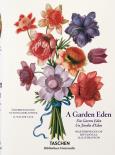
In pursuit of both knowledge and delight, the craft of botanical illustration has always required not only meticulous draftsmanship but also a rigorous scientific understanding. This new edition of a TASCHEN classic celebrates the botanical tradition and talents with a selection of outstanding works from the National Library of Vienna, including many new images.
From Byzantine manuscripts right through to 19th-century masterpieces, through peonies, callas, and chrysanthemums, these exquisite reproductions dazzle in their accuracy and their aesthetics. Whether in gently furled leaves, precisely textured fruits, or the sheer beauty and variety of colors, we celebrate an art form as tender as it is precise, and ever more resonant amid our growing awareness of our ecological surroundings and the preciousness of natural flora.
As special photographer on the sets and locations of Francis Ford Coppola’s The Godfather trilogy, Steve Schapiro had the remarkable experience of witnessing legendary actors giving some of their most memorable performances. Schapiro immortalized Marlon Brando, Al Pacino, Robert De Niro, James Caan, Robert Duvall, and Diane Keaton in photos that have since become iconic images, instantly recognizable and endlessly imitated.
Gathered together in this book are Schapiro’s finest photographs from all three Godfather films, lovingly reproduced from the original negatives. With contextual essays and interviews covering the trilogy in its entirety, this book contains over 300 color and black-and-white images. Schapiro’s images take us behind the scenes of this epic and inimitable cinematic saga, revealing the director’s working process, capturing the moods and personalities involved, and providing insight into the making of movie history.
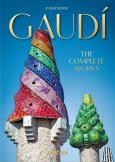
The life of Antoni Gaudí (1852–1926) was full of complexity and contradictions. As a young man he joined the Catalonian nationalist movement and was critical of the church; toward the end of his life he devoted himself completely to the construction of one single spectacular church, La Sagrada Família. In his youth, he courted a glamorous social life and the demeanor of a dandy. By the time of his death in a tram accident on the streets of Barcelona, his clothes were so shabby that passersby assumed he was a beggar.
Gaudí’s incomparable architecture channels much of this multifaceted intricacy. From the shimmering surface textures and skeletal forms of Casa Batlló to the Hispano-Arabic matrix of Casa Vicens, his work merged the influences of Orientalism, natural forms, new materials, and religious faith into a unique Modernista aesthetic. Today, his buildings enjoy global popularity and acclaim; his magnum opus, the Sagrada Família, is the most-visited monument in Spain and seven of his works are UNESCO World Heritage Sites.
Packed full of expert texts and hundreds of full-color illustrations, including new photography, this book presents Gaudí’s complete oeuvre. Like a personal tour through Barcelona, we explore his residential, religious, and public projects. We see how the “Dante of architecture” was a builder in the truest sense of the word, crafting extraordinary constructions out of minute and mesmerizing details, transforming fantastical visions into realities on the city streets.
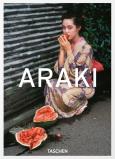
Decades’ worth of images have been distilled down to 512 pages of photographs in this ultimate retrospective collection of Nobuyoshi Araki's work, selected by the artist himself.
First published as a Limited Edition and now back in a new format to celebrate TASCHEN’s 40th anniversary, the curation delves deep into Araki’s best-known imagery: Tokyo street scenes; faces and foods; colorful, sensual flowers; female genitalia; and the Japanese art of kinbaku, or bondage. As girls lay bound but defiant and glistening petals assume suggestive shapes, Araki plays constantly with patterns of subjugation and emancipation, death and desire and with the slippage between serene image and shock.
Describing his bondage photographs as “a collaboration between the subject and the photographer”, Araki seeks to come closer to his female subjects through photography, emphasizing the role of spoken conversation between himself and the model. In his native Japan, he has attained cult status for many women who feel liberated by his readiness to photograph the expression of their desire.
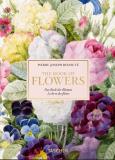
Flower painter Pierre-Joseph Redouté (1759–1840) devoted himself exclusively to capturing the diversity of flowering plants in watercolor paintings which were then published as copper engravings, with careful botanical descriptions. The darling of wealthy Parisian patrons including Napoleon’s wife Josephine, he was dubbed “the Raphael of flowers,” and is regarded to this day as a master of botanical illustration.
This collection brings our best-selling XL-sized edition to a smaller, more convenient format, still gathering some of the finest color engravings from Redouté’s illustrations of Roses, Lilies, and Choix des plus belles fleurs et quelques branches des plus beaux fruits (Selection of the Most Beautiful Blooms and Branches with the Finest Fruits). Offering a vibrant overview of Redouté’s admixture of accuracy and beauty, it is also a privileged glimpse into the magnificent gardens and greenhouses of a bygone Paris.
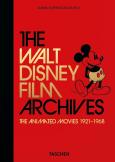
One of the most creative minds of the 20th century, Walt Disney created a unique and unrivaled imaginative universe. Like scarcely any other classics of cinema, his astonishing collection of animated cartoons revolutionized storytelling on screen and enchant to this day across geographies and generations.
This expansively illustrated publication on Disney animation gathers hundreds of images as well as essays by Disney experts, taking us to the beating heart of the studio’s “Golden Age of Animation.” We trace Disney’s complete animation journey from the silent film era, through his first full-length feature Snow White and the Seven Dwarfs (1937) and Fantasia (1940), right up to his last masterpieces Winnie the Pooh and the Honey Tree (1966) and The Jungle Book (1967).
With extensive research conducted through the historical collections of the Walt Disney Company, as well as private collections, editor Daniel Kothenschulte curates some of the most precious concept paintings and storyboards to reveal just how these animation triumphs came to life. Masterful cel setups provide highly detailed illustrations of famous film scenes while rare pictures taken by Disney photographers bring a privileged insider’s view to the studio’s creative process.
Each of the major animated features that were made during Walt’s lifetime—including Pinocchio, Fantasia, Dumbo, Bambi, Cinderella, Peter Pan, and One Hundred and One Dalmatians—is given its own focus chapter, without forgetting less-familiar gems such as the experimental short films of the Silly Symphonies series and under-appreciated episodic musical films such as Make Mine Music and Melody Time.
Realizing the Disney style was a collective project and, as much as the master himself, The Walt Disney Film Archives acknowledges the outstanding animators and designers who influenced the style of the studio, among them Albert Hurter, Gustaf Tenggren, Kay Nielsen, Mary Blair, Sylvia Holland, Tyrus Wong, Ken Anderson, Eyvind Earle, and Walt Peregoy.
Ten produkt jest zapowiedzią. Realizacja Twojego zamówienia ulegnie przez to wydłużeniu do czasu premiery tej pozycji. Czy chcesz dodać ten produkt do koszyka?