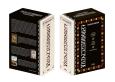
W tej strefie zapraszamy czytelników tak zwane artystyczne dusze po książki z kategorii Sztuka. Polecamy szereg publikacji o sztuce i jej historii,ciekawostki i portfolia artystów, eseje, albumy, książki o malarstwie, rzeźbiarstwie, architekturze oraz histoii fotografii. Biografie ciekawych artystów, książki i powieści przedstawiające fascynujące losy malarzy i osób uwiecznianych na obrazach. W tym dziale tylko ksiązki ze sztuka w tle.
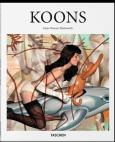
The creations of Jeff Koons (born 1955) are at once immediately accessible and eloquently art historical. From basketball tanks to flower puppies, his instantly recognizable work frolics with banal imagery as much as it integrates cultural references such as Surrealism and Pop Art.
Koons’ art revels in visual pleasure, but also in the power to affront. He has made his name as much for stainless-steel rabbits as he has with his sinister sculpture of Michael Jackson, or his sexually explicit photographic series with then-wife Cicciolina. The result is mega-artist status. An indisputable king of contemporary visual culture, Koons is lauded by collectors, institutions, and the public alike.
With landmark works and concise texts by Katy Siegel, Hans Werner Holzwarth, and Eckhard Schneider, this book offers the complete Koons at a glance, introducing an art world giant from his early inflatable flowers through to today.
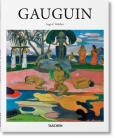
Paul Gauguin’s Pacific visions radiate with color and sunshine
Paul Gauguin (1848–1903) was not cut out for finance. Nor did he last particularly long in the French Navy, or as a tarpaulin salesman in Copenhagen who did not speak Danish. He began painting in his spare time in 1873 and in 1876 took part in the Paris Salon. Three years later, he was exhibiting alongside Pissarro, Degas, and Monet.
A querulous, hard-drinking individual, Gauguin often called himself a savage. His close but fraught friendship with the similarly temperamental Vincent van Gogh climaxed in a violent incident in 1888, when van Gogh purportedly confronted Gauguin with a razor blade, and later cut off his own ear. Shortly afterwards, following the completion of a midcareer masterpiece Vision After the Sermon (1888), Gauguin took himself to Tahiti, with the intention of escaping “everything that is artificial and conventional…”
On Tahiti, Gauguin’s unfettered joy in the island’s nature, native people, and figurative images soared, spurring a prolific output of paintings and prints. In works such as Woman with a Flower (Vahine no te Tiare, 1891) and Sacred Spring: Sweet Dreams (Nave Nave Moe, 1894), he developed a distinct, Primitivist style that positively oozed with sunshine and color. In the tradition of exotic sensuality, his thick, buttery lashings of paint lingered in particular over the curves of Tahitian women.
Gauguin died alone, on Tahiti’s neighboring Marquesas Islands, with many of his personal papers and belongings dispersed in a local auction. It was not until a smart art dealer began curating and showing Gauguin’s work in Paris that the artist’s profound influence began making itself felt, especially to the new breed of French avant-garde artists, such as Picasso and Matisse.This book offers the essential introduction the artist’s truly colorful life, from the Impressionist salons of 1870s Paris to his final days in the Pacific, productive and passionate to the end.
The painterly gestures of personal feelings
Hailed as the first American-born art movement to have a worldwide influence, Abstract Expressionism denotes the non-representational use of paint as a means of personal expression. It emerged in America in the 1940s, with lead protagonists including Jackson Pollock, Philip Guston, Robert Motherwell, Mark Rothko, and Willem de Kooning.
Abstract Expressionism spawned many different stylistic tendencies but two particularly prominent sub-categories: action painting, exemplified by de Kooning and Pollock, and color field painting, made most famous by Rothko. Throughout, Abstract Expressionists strove to convey emotions and ideas through the making of marks, through forms, textures, shades, and the particular quality of brushstrokes. The movement favored large-scale canvases, and embraced the role of accident or chance.
With featured works from 20 key Abstract Expressionist artists, this book introduces the movement which shifted the center of art gravity from Paris to New York and remains for many the golden moment of American art.
Portrait of an Artist
A comprehensive chronicle of David Hockney’s life and work
Pop artist, painter of modern life, landscape painter, master of color, explorer of image and perception—for six decades, David Hockney has been known as an artist who always finds new ways of exploring the world and its representational possibilities. He has consistently created unforgettable images: works with graphic lines and integrated text in the Swinging Sixties in London; the famous swimming pool series as a representation of the 1970s California lifestyle; closely observed portraits and brightly colored, oversized landscapes after his eventual return to his native Yorkshire. In addition to drawings in which he transfers what he sees directly onto paper, there are multiperspective Polaroid collages that open up the space into a myriad of detailed views, and iPad drawings in which he captures light using a most modern medium—testaments to Hockney’s enduring delight in experimentation.
This special edition has been newly assembled from the two volumes of the David Hockney: A Bigger Book monograph to celebrate TASCHEN’s 40th anniversary. Hockney’s life and work is presented year by year as a dialogue between his works and voices from the time period, alongside reviews and reflections by the artist in a chronological text, supplemented by portrait photographs and exhibition views. Together they open up new perspectives, page after page, revealing how Hockney undertakes his artistic research, how his painting develops, and where he finds inspiration for his multifaceted work.
Temporary Projects, Eternal Impressions
The XXL exploration, now in a condensed handbook
The works of Christo and Jeanne-Claude are monuments of transience. Gigantic in scale, they are always temporary, created to exist only for a limited time and to leave unique, unrepeatable impressions. “From the smallest of the Packages made in Paris in the early 1960s, to the delicate pattern of hundreds of branches embraced by a translucent fabric veil... in Christo and Jeanne-Claude’s works there is nothing abstract, nothing imagined; it is all there—corporeal and tangible.” (Lorenza Giovanelli)
Part biography, part critical analysis, part catalogue, this updated edition brings back TASCHEN’s best-selling Collector’s Edition. It spans Christo and Jeanne-Claude’s entire work, from early drawings and family photos to plans for future projects. Hundreds of photographs and original works trace the couple’s projects from the past 10 years, including The Floating Piers and The London Mastaba, as well as works in progress such as The Mastaba, Project for the United Arab Emirates and L’Arc de Triomphe Wrapped, Paris.
Together with the comprehensive photographic documentation by Wolfgang Volz this book is a celebration of the work of two artists whose imagination has affected the landscape of every continent.
Tadao Ando’s complete works from 1975 until today
Discover the unique aesthetic of Tadao Ando, the only architect ever to have won the discipline’s four most prestigious prizes: the Pritzker, Carlsberg, Praemium Imperiale, and Kyoto Prize.
This collection spans the breadth of Ando’s entire career, including such stunning new projects as the Shanghai Poly Grand Theater and the Roberto Garza Sada Center in Monterrey, Mexico. Each project is profiled through photographs and architectural drawings that explore Ando’s unprecedented use of concrete, wood, water, light, space, and natural forms.
Featuring designs from award-winning private homes, churches, museums, and apartment complexes to cultural spaces throughout Japan, South Korea, France, Italy, Germany, Mexico, and the USA, this compact edition brings you up close and personal with a Modernist master.
This striking and innovative collection of jazz covers presents the designs that defined a sound. Containing record covers from the 1940s through to the early 1990s, each reproduction is accompanied with essential background information. Spanning photographic and illustrative works, these album artworks are a marriage of music and design and a remarkable history of jazz.
All the best photos (and some tasty new ones) from the original Big Butt Book, ranging from petite Pam Anderson to robust Serena Williams, plus interviews with Coco Austin, Buffie the Body, Tinto Brass, John (Buttman) Stagliano, and Brazil's Watermelon Woman reconfigured into a chunky, 512-page Bibliotheca Universalis edition.
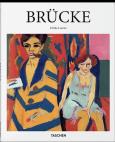
In the German city of Dresden on June 7, 1905, the foundation of the Die Brücke artists’ group (1905–1913) is widely regarded as the birth of Expressionism. Led by Ernst Ludwig Kirchner, Fritz Bleyl, Erich Heckel, and Karl Schmidt-Rottluff, the group sought to reject the limits of academia and, as their name suggested, to bridge the path to an artistic future. Their manifesto, printed with woodblock, insisted on absolute freedom from convention in their work as well as their lives.
This new, liberated art incorporated portraits, landscapes, and city scenes, but substituted an objective rendering of reality with an expression of interior geography. In paintings, as well as their favored wood and linocut prints, the artists of Die Brücke would fill pictorial space with jagged lines, crude forms, and clashing colors, all to express their subjective experience of the world. Like the Fauves, the artists took stylistic lead from non-Western traditions of Oceanic and African arts, while also reviving the print and painting techniques of Albrecht Dürer and Lucas Cranach the Elder.
This richly illustrated book introduces this essential expressionist movement. We examine Die Brücke’s key works and protagonists; its varied, international inspirations; and its crucial influence on later 20th century art. Along the way, we find candid nudes, crowded street views, and blissful bathing idylls, each of them vivid with energy and intent on a new kind of art.
In the 21st century photography has come of age as a contemporary art form. Almost two centuries after photographic technology was first invented, the art world has fully embraced it as a legitimate medium, equal in status to painting and sculpture. This book provides an introduction to the extraordinary range of contemporary art photography, from portraits of intimate life to highly staged, ‘directorial’ spectacle. The vast span of photographers whose work is reproduced includes established artists such as Isa Genzken, Jeff Wall, Sophie Calle, Thomas Demand, Nan Goldin and Sherry Levine, as well as emerging talents such as Sara VanDerBeek, Rashid Johnson, Viviane Sassen and Amalia Ulman. This new edition revitalizes previous discussion of works from the 2000s through dialogue with more recent practice. Adding to the wide selection featured of work, Cotton celebrates a new generation of artists, who are shaping photography as a culturally significant medium for our current socio-political climate.
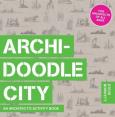
Following the success of Archidoodle, this new title focuses on the city. Filled with an array of beautiful and fun drawings, it poses 75 architectural challenges for the user: from building an underground community or designing your own imaginary city to creating a new park for New York, plus many more. Aimed at anyone who loves drawing buildings and cities, it encourages users to imagine their own creative solutions by sketching, drawing and painting in the pages of the book. In so doing, they will learn about a whole range of significant issues, such as the importance of transport, lighting and green spaces, the history of urban design and planning, and the use of monuments and symbols. The book also includes numerous examples of works and ideas by major architects to draw inspiration from and will appeal to everyone from children to students and professional architects.
In the past, writers and critics from Goethe to Clement Greenberg perpetuated particular ideas about art and even dictated them to artists. Since then, however, the artists have rebelled. They no longer have to follow one prevailing theory or head for any particular city. New York, London, Paris, Berlin and Beijing are all great places to make art, and none today has a stranglehold on creation.
The Global Art Compass demonstrates the author's belief that no single curator, critic or dealer can or should monopolize our view of what is happening in the art world today. Instead, he shows us how exciting and rewarding it is to navigate our own way through the art world by listening to the artists themselves.
Including extracts from interviews with artists as diverse as Laure Prouvost (France), Anri Sala (Albania), Gabriel Orozco (Mexico), Sandra Gamarra (Peru), Cai Guo-Qiang (China) and Nandan Ghiya (India), among many others, The Global Art Compass is a manifesto for how we might all discover our own inner art compass to help steer us towards the art that we find most meaningful and engaging.
The results show that the preoccupations of artists in the twenty-first century are largely universal: that ever-faster communications are balanced by a resistance to globalization; that while art is seen by many as a commodity, it also has the power to be a regenerative tool; and that, despite an increasing confidence in an ever-growing range of media, artists are often searching for simple stories that will reach out to bigger audiences and change their lives for the better.
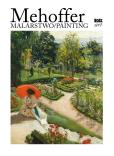
Józef Mehoffer jeden z czołowych przedstawicieli sztuki Młodej Polski, wybitny malarz, grafik, plakacista, projektant witraży i scenografii teatralnej. Minialbum Mehoffer. Malarstwo zawiera najważniejsze obrazy olejne, w tym piękne portrety żony, liczne projekty polichromii i witraży, a także monumentalne kartony do witraży. Bogactwo treści, głębia symboliki, piękno rysunku sprawiają, że dzieła Mehoffera na długo pozostają w pamięci. Album, zawierający ponad 50 prac pochodzących m.in. ze zbiorów Muzeum Narodowego w Krakowie stanowi syntetyczne zestawienie najważniejszych dzieł artysty.
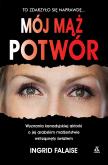
Wyznania kanadyjskiej aktorki o jej arabskim małżeństwie wstrząsnęły światem.
Miała osiemnaście lat, kiedy w rodzinnym Quebecu poznała pełnego uroku arabskiego studenta.
Wyjechała z nim w jego rodzinne strony do Afryki, na najwspanialszą wycieczkę życia.
Potem był ślub. Nie zauważyła, kiedy zdobył nad nią władzę, która zmieniła jej życie w piekło.
Jej ukochany okazał się potworem. Znęcał się nad nią fizycznie i psychicznie. A ona ciągle miała nadzieję... Zmusił ją do przerwania studiów, odciął od rodziny, przyjaciół i świata. Bił i więził w piwnicy obskurnego domu. Uciekała, jednak jej prześladowca potrafił ją odnaleźć. W końcu mogła się już tylko modlić, by kolejny atak skończył się jej śmiercią…
Jak długo można znosić katowanie i narażanie na śmierć przez ukochanego?
INGRID FALAISE znalazła w końcu siłę, by wyzwolić się od swego oprawcy. Teraz jest znaną aktorką. Publicznie opowiedziała swoją historię w autobiografii "Mój mąż potwór", która stała się bestsellerem i poruszyła opinię publiczną.
Ingrid ocalała. Ale ilu kobietom może zabraknąć jej determinacji i szczęścia?
Przez wieki geniusze sztuki ukrywali w swoich dziełach sekretne informacje, zbyt niewiarygodne, by przekazać je otwarcie. Sekrety osobiste i historyczne, artystyczne i ezoteryczne, a czasem nawet natury kryminalnej. Czy po upływie stuleci, po wielokrotnych zmianach kodów kulturowych jesteśmy w stanie wejść w buty dawnych twórców i odkryć sekretne drogowskazy pozostawiane przez geniuszy?Kod Michała Anioła dlaczego ludzki mózg namalowany jest na sklepieniu Kaplicy Sykstyńskiej?Ostatnia melodia muzyka zapisana pomiędzy postaciami Ostatniej Wieczerzy jako testament Leonardo da Vinci?UFO w XV-wiecznych Włoszech spotkanie z obcymi, uchwycone na renesansowym obrazie.Manuskrypt, którego od sześciuset lat nikomu nie udało się rozkodować. Enigma rękopisu Wojnicza.Człowiek, który wiedział jak Alfonso Ponce de Leon przewidział na obrazie swoją śmierć.Zakon, skarby i Chwarszczany z jakiego świata pochodzą dwie wieże w zachodniopomorskim kościele templariuszy?Ukryty język Matejki znaczenie symboli i historia złotego tronu.Raffaello Portret Młodzieńca tajemnice najcenniejszego dzieła ze zbiorów polskich, zaginionego podczas II wojny światowej.Drzwi Gnieźnieńskie, czy portal do praźródeł? dokąd naprawdę prowadzą słynne Drzwi z Gniezna?Każde dzieło jest tajemnicą. Nie trzeba wyjeżdżać do amazońskiej dżungli, by mierzyć się z tajemnicami godnymi Indiany Jonesa. Na tego, kto dokona wielkiego odkrycia w zakurzonym magazynie muzealnym, czeka nagroda emocje, olśnienie a nawet mistyczne objawienie. Jeden z bohaterów naszej książki właśnie takiego objawienia doświadczył. I czeka aż ktoś je przejmie od niego w wielkiej sztafecie pokoleń.
Oto 120 poruszających memów Marty Frej, które dotykają ważnych i aktualnych problemów społecznych, skłaniają do refleksji i odsłaniają trudną prawdę o polskiej rzeczywistości.Siebie i swoje poglądy można wyrażać na wiele sposobów, jednak tym, co do współczesnego człowieka przemawia najbardziej, jest obraz. Marta Frej, polska malarka, ilustratorka i animatorka kulturalna, opisuje dzisiejszą rzeczywistość i swój stosunek do niej za pomocą memów. W tych obrazach z błyskotliwymi, celnymi podpisami porusza wiele trudnych tematów dotyczących m.in. praw kobiet, feminizmu, nietolerancji wobec mniejszości seksualnych, ekspansji Kościoła katolickiego w życiu publicznym, wykluczenia, stereotypów Jej profil na Facebooku obserwuje ponad 200 tysięcy osób, a memy z prawdziwymi do bólu hasłami zna pewnie cała Polska.
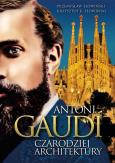
CZŁOWIEK, KTÓRY WYMYŚLIŁ ARCHITEKTURĘ DWUDZIESTEGO PIERWSZEGO WIEKU. WIZJONER. ARTYSTA. ŚWIĘTY.
Projekty stworzone przez Gaudiego sprawiają wrażanie jakby nie były poddane siłom grawitacji. Zdarzały mu się budynki, w których nie przewidział ani jednego kąta prostego. Sztuka była dla niego sposobem ewangelizacji. Twierdził, że artysta jest jedynie kontynuatorem dzieła Boga – „Wielkiego Architekta”.
Obiekty architektoniczne katalońskiego mistrza przypominają raczej żywe organizmy niż dzieła ludzkich rąk. Na początku swojej kariery, dla pieniędzy projektował dosłownie wszystko – od kiosków z papierosami do bram wjazdowych. Na wystawie światowej w Paryżu w 1878 roku Europa zachwyciła się projektami Gaudiego; osiedlami domków dla spółdzielni pracowniczej z Matar? i …witryną sklepu fabrykanta rękawiczek.
Barceloński przemysłowiec Eusebi Güell docenił geniusz Gaudiego i sfinansował wiele jego odważnych projektów. Choć za życia Gaudiego władze Barcelony nie potrafiły dogadać się z artystą, to właśnie jego prace po latach stały się najbardziej rozpoznawalnymi wizytówkami stolicy Katalonii. Żadna wycieczka nie ominie fantastycznego Ogrodu Güell, Casa Batlló i opus magnum artysty – bazyliki Sagrada Familia. Tej świątyni od 1914 roku Gaudi poświęcił się zupełnie, zamieszkał nawet na jej terenie.
Po tym jak wpadł pod tramwaj, sanitariusze nie rozpoznali go i przewieźli do hospicjum dla ubogich. Nikomu nie przyszło do głowy, że wielki architekt i wizjoner ubiera się jak włóczęga.
TWORZYŁ JAK GENIUSZ. ŻYŁ JAK ŚWIĘTY. ZMARŁ JAK ŻEBRAK. GAUDI
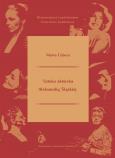
W książce przedstawiono badania dotyczące dorobku artystycznego AleksandryŚląskiej, ze szczególnym uwzględnieniem wizerunku zimnej aktorki specjalistki odról Niemek i arystokratek. Cel monografii sprowadza się do ukazania okolicznościsprzyjających kształtowaniu powstałego stereotypu oraz próby rozbiciapowszechnego wyobrażenia na temat Śląskiej poprzez prezentację jej mniej znanegooblicza zawodowego i prywatnego. Książka podzielona została na dziewięć części,poświęconych określonym kręgom tematycznym, którymi do pewnego stopnia rządziporządek chronologiczny. W pierwszej sekwencji przedstawiono rodzinne orazaktorskie korzenie Śląskiej. Niemało miejsca zajęły opisy studiów w PaństwowejSzkole Dramatycznej w Krakowie, pierwszych kroków stawianych na deskachMiejskich Teatrów Dramatycznych oraz fascynacji Juliuszem Osterwą. Drugasekwencja dotyczy samej Śląskiej cech jej charakteru, metod twórczych orazpoglądów na teatr i sztukę aktorską, z czego wyłonił się obraz wielkiej,momentami bezkompromisowej indywidualności. W kolejnym rozdziale wizerunek tenulega poszerzeniu o wątek przynależności artystki do pokolenia, które, tworzączjawiska polskiej szkoły słuchowiska, polskiej szkoły dubbingu oraz TeatruTelewizji, zasłużyło się dla rozwoju polskiej kultury w latach PRL-u. Dokonanorównież przeglądu kreacji aktorskich Śląskiej mogących wywoływać największezdziwienie, gdyż najbardziej odległych od powszechnego wyobrażenia na tematŚląskiej a mianowicie ról kobiet perwersyjnych, znerwicowanych, o demonicznejnaturze, a także wcieleń z repertuaru komediowego. W ostatnich odsłonach książkiukazano naturalne konsekwencje artystycznej drogi, która doprowadziła Śląską dopodjęcia reżyserskich wyzwań oraz długoletniej pracy pedagogicznej. PowrótŚląskiej do szkoły miał wymiar symboliczny, pokazywał, jak historia zatoczyłakoło. Oddając się wychowaniu młodego pokolenia ludzi sztuki, spłacała dług swymwielkim mistrzom.
Pakiet zawiera książki: ,,Łemkowszczyzna po obu stronach Karpat", ,, Łemkowszczyzna. Czas wojny i pokoju"; ,,Łemkowszczyzna nieutracona"
Łemkowszczyzna – fascynująca i tajemnicza kraina, o której niewielu Polaków słyszało, a przecież leży w Polsce. Stało się tak, bowiem zasłoną milczenia okryły ją władze PRL. Została wyparta ze świadomości, po tym jak w latach 1945–1947 wysiedlono stąd niemal wszystkich Łemków. Nieliczni turyści, którzy tu trafiali, wędrując po Beskidach, ze zdumieniem odkrywali przepiękne cerkwie, kryte słomą chyże i nagrobki z cyrylickimi inskrypcjami. Czasem, jak w Bartnem czy Olchowcu, można było spotkać tamtejszych mieszkańców mówiących innym językiem. Jednak po 1989 r. Łemkowie dali o sobie znać. Założyli własne organizacje, spotykają się na corocznych Watrach. Mają własnych naukowców badających i kodyfikujących ich język. Spontanicznie zakładane zespoły kultywują folklor muzyczny Łemków, a młodzież od kilku lat zdaje maturę po łemkowsku.
Ten produkt jest zapowiedzią. Realizacja Twojego zamówienia ulegnie przez to wydłużeniu do czasu premiery tej pozycji. Czy chcesz dodać ten produkt do koszyka?