Tytuł: „Dziewczyny idą na wojnę. Historia Przysposobienia Wojskowego Kobiet”
Autor: Anna Pawlicka
Seria: Prace Historyczne 22
Wydawca: Wydawnictwo inforteditions
ISBN: 978-83-65982-39-1
EAN: 9788365982391
Ilość stron: 76
Oprawa: miękka
Format: 155x214 mm
Miejsce i rok wydania: Zabrze – Tarnowskie Góry 2019
Spis treści:
Wstęp
I I wojna światowa – kobiety-legionistki w wojsku polskim
II Ochotnicza Legia Kobiet – historia organizacji
III Organizacja Przysposobienia Kobiet do Obrony Kraju – historia organizacji
IV Wrzesień 1939 i losy powojenne Organizacji
V Służba w OLK – problem ze społeczną recepcją i problemy wewnętrzne
VI Pewiaczki w oczach własnych i społeczeństwa
VII Działalność społeczna PWK. Koła Lokalne i Drużyny Pracy Społecznej
VIII Życie wewnętrzne Organizacji
IX Obozy letnie PWK
X Umundurowanie PWK i spojrzenie na nie pewiaczek
Zakończenie
Bibliografia
O książce:
Książka Dziewczyny idą na wojnę. Historia Przysposobienia Wojskowego Kobiet ukazuje historię organizacji założonej przez kobiety-patriotki, która miała przygotowywać polskie dziewczęta do służby pomocniczej przy wojsku polskim. Ochotniczki uczyły się obrony przeciwgazowej, pierwszej pomocy, podstaw medycyny, przetrwania, strzelectwa i wielu innych. Organizacja wywodzi się z lwowskiej Ochotniczej Legii Kobiet, której historia również została nakreślona w tej publikacji. Kronikę PWK przeplata relacja jej byłej uczestniczki, pani Haliny Wiśniewskiej, oraz zdjęcia z archiwalnych numerów „Dla Przyszłości” – pisma wydawanego przez same dziewczęta.
O autorze:
Anna Pawlicka – (ur. 1993) magister historii Uniwersytetu Jagiellońskiego. Ukończyła specjalizację – antropologia historyczna. Interesuje się ukazywaniem historii z perspektywy lokalnej i osobistej. Chętnie wykorzystuje wywiady ze świadkami historii, uznając, że ich słowa – poparte źródłami pisanymi – najlepiej ożywiają dawne dzieje. Od wielu lat uczestniczy w rekonstrukcji historycznej – odtwarza sylwetkę ochotniczki PWK przy Grupie Rekonstrukcyjnej 84 Pułku Strzelców Poleskich.
W publikacji podjęto temat skutków konfliktów zbrojnych, które przetoczyły się przez ziemie polskie w latach 1914 – 1920 (I wojna światowa, walki polsko-ukraińskie z lat 1917-1918, wojna polsko-bolszewicka), dla dóbr kultury zgromadzonych na obszarze I Rzeczypospolitej. W okresie ponad siedmiu lat nieprzerwanych walk w Galicji, na Podolu i Wołyniu, a także na terenach Litwy, Białorusi i Ukrainy oraz Królestwa Polskiego ponieśliśmy straty ludzkie i materialne. Dotkliwe zniszczenia objęły mienie kulturalne, z takim trudem chronione w czasach zaborów. W okresie wojennego i rewolucyjnego zamętu, w sposób niepowetowany przetrzebiona została przede wszystkim spuścizna kulturalna i naukowa, w tym archiwa i biblioteki. Zagłada nie ominęła dzieł sztuki, zabytków architektury oraz pomników historycznych. Część ocalałych wówczas dóbr kultury znalazła się w 1918 roku poza granicami kraju.
Już w 1914 roku rozpoczęto rejestrację ponoszonych strat mienia kulturalnego, także wywożonego przez ewakuujących się zaborców do Rosji, gdzie polskie organizacje społeczne starały się je chronić oraz inwentaryzować. W ten sposób przygotowano się do przyszłej akcji rewindykacyjnej.
Losy dóbr kultury są przedmiotem niesłabnącego zainteresowania, zatem publikacja może zainteresować różne grupy czytelników, gdyż jest kompendium wiedzy na temat losów polskiego dziedzictwa kulturowego w pierwszych konfliktach zbrojnych XX wieku.
Poznaj ponad sto zabawnych opowieści o tym, jak można skorzystać z buddyjskiej mądrości. I to niezależnie od wyznania! Dzięki nim dowiesz się, dlaczego nigdy nie wolno się poddawać, poznasz moc medytacji oraz nauczysz się świadomie modyfikować własne nastawienie. Opowieści, które zmienią Twoje życie na lepsze!
Joanna Beretta Molla to wyjątkowa i dzielna święta! Żona, matka, lekarz... oddała swoje życie,żeby jej najmłodsze dziecko mogło pojawić się na świecie.Możemy uczyć się od nie odwagi i pogody ducha. Zajrzyjcie końiecznie do tej książki.
Weaving together the great ideas of science, in this, his magnum opus, Brian Clegg builds up reality piece by piece, from space, to time, to matter, movement, the fundamental forces, life, and the massive transformation that life itself has wrought on the natural world. He reveals that underlying it all is not, as we might believe, a system of immovable absolutes, but the ever-shifting, amorphous world of relativity. From religion to philosophy, humanity has traditionally sought out absolutes to explain the world around us, but as science has developed, relativity has swept away many of these certainties, leaving only a handful of unchangeable essentials - such as absolute zero, nothingness, light - leading to better science and a new understanding of the essence of being human. This is an Ascent of Man for the 21st century, the gripping story of modern science that will fill you with wonder and give you a new insight into our place in the universe.
Covering such inscrutable characters as Martin Heidegger, Michel de Montaigne, Karl Popper, and Claude Lévi-Strauss (apparently not just a designer of jeans), writer Hubert van den Bergh—author of the best-selling How to Sound Clever—and journalist Thomas W. Hodgkinson offer you a wry look inside the mirrored palaces of high culture.
Read this book and you'll never again mistake Hegel for Engels, you'll know when precisely to drop Foucault's name into a conversation and how to pronounce "Borgesian," and you'll learn many more essential pointers for the intellectual life.
The bestselling classic that redefined our view of the relationship between beauty and female identity
Every day, women around the world are confronted with a dilemma – how to look. In a society embroiled in a cult of female beauty and youthfulness, pressure on women to conform physically is constant and all-pervading. In this iconic, gripping and frank exposé, Naomi Wolf exposes the tyranny of the beauty myth through the ages and its oppressive function today, in the home and at work, in literature and the media, in relationships between men and women, between women and women. With pertinent and intelligent examples, she confronts the beauty industry and its advertising and uncovers the reasons why women are consumed by this destructive obsession.
What begins as the record of W. G. Sebald’s own journey on foot through coastal East Anglia, from Lowestoft to Bungay, becomes the conductor of evocations of people and cultures past and present. From Chateaubriand, Thomas Browne, Swinburne and Conrad, to fishing fleets, skulls and silkworms, the result is an intricately patterned and haunting book on the transience of all things human.
‘A novel of ideas with a difference: it is nothing but ideas… Formally dexterous, fearlessly written (why shouldn't an essay be a novel?), and unremittingly arcane; by the end I was in tears’ Teju Cole, Guardian
Collins brings the Queen of Crime, Agatha Christie, to English language learners.
Agatha Christie is the most widely published author of all time and in any language. Now Collins has adapted her famous detective novels for English language learners. These readers have been carefully adapted using the Collins COBUILD grading scheme to ensure that the language is at the correct level for an intermediate learner. This book is Level 5 in the Collins ELT Readers series. Level 5 is equivalent to CEF level B2+ with a word count of 22,000 – 30,000 words.
Each book includes:
• Full reading of the adapted version available for free online
• Helpful notes on characters
• Cultural and historical notes relevant to the plot
• A glossary of the more difficult words
• Free online resources for students and teachers at
www.collinselt.com/readers
The plot:
Rex Fortescue, the boss of a financial empire, was sipping tea in his office, when he suffered a painful and sudden death. When the police checked the victim’s pockets, they found grain. Miss Marple knows one of the servants in Rex Fortescue’s house and comes to help solve the mystery. She soon starts to suspect that she is dealing with a case of crime by rhyme.
Collins brings Agatha Christie, the Queen of Crime, to English language learners.
These carefully adapted versions are shorter than the originals with the language graded for upper-intermediate learners.
Each title includes:
notes on characters, history and culture
a glossary of the more difficult words
CD with a full reading of the adapted story
Online language activities and support for teachers
Collins brings the Queen of Crime, Agatha Christie, to English language learners.
Agatha Christie is the most widely published author of all time and in any language. Now Collins has adapted her famous detective novels for English language learners. These readers have been carefully adapted using the Collins COBUILD grading scheme to ensure that the language is at the correct level for an intermediate learner. This book is Level 5 in the Collins ELT Readers series. Level 5 is equivalent to CEF level B2+ with a word count of 22,000 – 30,000 words.
Each book includes:
• Full reading of the adapted version available for free online
• Helpful notes on characters
• Cultural and historical notes relevant to the plot
• A glossary of the more difficult words
• Free online resources for students and teachers at
www.collinselt.com/readers
The plot:
Late one night, two teachers investigate a mysterious light in the school Sports Pavilion. Among the tennis racquets and lacrosse sticks, they find the body of the unpopular games mistress – shot through the heart. Schoolgirl Julia Upjohn knows too much, and begins to worry that she might be the next victim. Can detective Hercule Poirot find the killer before the ‘cat’ strikes again?
Collins brings Agatha Christie, the Queen of Crime, to English language learners.
These carefully adapted versions are shorter than the originals with the language graded for upper-intermediate learners.
Each title includes:
Notes on characters, history and culture
A glossary of the more difficult words
CD with a full reading of the adapted story
Online language activities and support for teachers
This unforgettable account of his rise and self-creation, told by a Pullitzer Prize-winning writer, places Ali in a heritage of great American originals.
KING OF THE WORLD takes us back to the days when his life was a series of battles, inside the ring and out. A master storyteller at the height of his powers, David Remnick has written a book worthy of America's most dynamic moden hero.
From logos to flags to punctuation marks, symbols are all around us. But we're so used to seeing them that we never question why, for instance, the heart symbol is anatomically incorrect - and why it represents love - or why the Bluetooth symbol is named after a tenth-century Danish king in need of dental work.
Bristling with inspired observations and wild anecdotes, this collection offers unique insight into the voice and mind of the inimitable Hunter S. Thompson, as recorded over the decades in the pages of Playboy, the Paris Review, Esquire, in various lectures, and in television appearances, many in print for the first time.
Fearless and unsparing, the interviews detail some of the most storied episodes of Thompson’s life: his savage beating at the hands of the Hell’s Angels, his talking football with Nixon on the 1972 Campaign Trail (‘the only time in twenty years of listening to the treacherous bastard that I knew he wasn’t lying’); his razor-sharp insight into the Bush–Cheney administration, his unlikely run for Sheriff of Aspen, and his successful public battle, during the last years of his life, to free an innocent woman from prison. In addition, Hunter Thompson’s passionate tirades about journalism, culture, drugs, guns, and the law showcase his singular voice at its fiercest.
Complete with an exclusive introduction by author, journalist, and cultural critic Christopher Hitchens, Ancient Gonzo Wisdom genuinely embraces the brilliance of Hunter S. Thompson – his life, his voice, and his legacy – to provide an enduring portrait of the great gonzo journalist.
'Everyone who cares about freedom and justice for women should read The Second Sex' Guardian
Simone de Beauvoir famously wrote, 'One is not born, but rather becomes, woman'. In this groundbreaking work of feminism she examines the limits of female freedom and explodes our deeply ingrained beliefs about femininity. Liberation, she argues, entails challenging traditional perceptions of the social relationship between the sexes and, crucially, in achieving economic independence.
Drawing on sociology, anthropology and biology, The Second Sex is as important and relevant today as when it was first published in 1949.
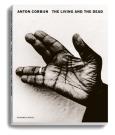
Anton Corbijn’s most recent publication goes back to his roots featuring his autobiographic series a. somebody; an early series of tombs, Cemetery; and eighty iconic portraits of musicians and bands from his career of 40 years.
Schirmer/Mosel. Catalogue Bucerius Kunst Forum, Hamburg. Ed by Anton Corbijn and Franz Wilhelm Kaiser. With texts by Franz Wilhelm Kaiser, Marie-Noël Rio and Daria Dittmeyer-Hössl. 220 pages, 119 colour and duotone plates. Size: 22.5 x 28 cm, softcover. English/German edition.
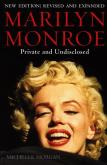
Meticulously researched and full of new insights into the private life of a very public superstar, Michelle Morgan tells the story of a movie actress whose fame never fades. In public, Marilyn Monroe was feted and loved, but in her private life there were controversies, conspiracies and unsolved puzzles.
Including rare and previously unseen images from the star's life, this book reveals a different side of Marilyn from the celluloid invention and is based on the author's extensive interviews with the main players in Monroe's life - family and friends, as well as work colleagues and more casual acquaintances.
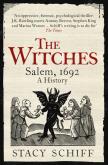
‘An oppressive, forensic, psychological thriller: J.K. Rowling meets Antony Beevor, Stephen King and Marina Warner … Schiff’s writing is to die for’ THE TIMES
It began in 1692, over an exceptionally raw Massachusetts winter, when a minister’s niece started to scream and convulse. It ended less than a year later, but not before panic had infected the entire colony, nineteen men and women had been hanged, and a band of adolescent girls had brought Massachusetts to its knees.
Vividly capturing the dark, unsettled atmosphere of seventeenth-century America, Stacy Schiff’s magisterial history draws us into this anxious time. She shows us how quickly the epidemic of accusations, trials, and executions span out of control. Above all, Schiff’s astonishing research reveals details and complexity that few other historians have seen.
Ten produkt jest zapowiedzią. Realizacja Twojego zamówienia ulegnie przez to wydłużeniu do czasu premiery tej pozycji. Czy chcesz dodać ten produkt do koszyka?