W tej strefie proponujemy bardzo szeroką ofertę z dziedziny psychologii oraz dziedzin powiązanych: astronomii i astrofizyki, ekologii, filozofii, kultury, podróżnictwa, religii, socjologii, sztuki. Szczególnie polecamy z tej kategorii bestseller pt. Księga Urantii. Księga Urantii podaje jasną i zwięzłą integracją nauki, filozofii i religii. Ci, którzy ją czytali i zgłębiali, wierzą, że Księga Urantii może wnieść bardzo wiele wartości do religijnej i filozoficznej myśli ludzi tego świata.
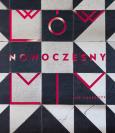
Lwów nowoczesny to pierwszy tak obszerny album poświęcony zupełnie nieznanemu obliczu międzywojennego modernizmu znad Pełtwi. Na przeszło 150 współczesnych fotografiach, przygotowanych specjalnie na potrzeby tego wydawnictwa, zaprezentowano ikoniczne realizacje polskich, ukraińskich i żydowskich architektów: budynki hoteli, banków, biur, sklepów, kin, kamienic, willi, ale również obiektów sakralnych, teatrów, szpitali i szkół. Uzupełnieniem wydawnictwa są często publikowane po raz pierwszy archiwalne zdjęcia i plany pochodzące z polskich i ukraińskich zbiorów.Lwów, mimo konsekwencji I wojny światowej i wielkiego kryzysu gospodarczego z 1929 roku, prężnie i dynamicznie się rozwijał, stawiając na modernizację i kreatywność. Miasto wyróżniało się jako siedziba cenionej Politechniki Lwowskiej kuźni architektury i ważnego ośrodka kształcenia inżynierów, konstruktorów i planistów. Działający tu twórcy interesowali się koncepcjami innych modernistów w Europie i przede wszystkim w Stanach Zjednoczonych, co nie oznaczało ich bezrefleksyjnego naśladownictwa.Przedwojenny Lwów inspirował i zajmował istotne miejsce na mapie nie tylko II Rzeczypospolitej, ale także całej Nowej Europy. Zrealizowano tu wiele wybitnych dzieł modernizmu, które wyznaczały nowe kierunki rozwoju miasta. Architektoniczna nowoczesność stała się częścią lwowskiego genius loci, dawała nowy impuls i co najważniejsze, nie była skierowana przeciw tradycji miasta o wielowiekowej i wielonarodowej historii.
Okno na przeszłość. Szkice z historii wizualnej, t.2 jest wartościowym i potrzebnym wydawnictwem na naszym rynku książek naukowych. Co ciekawe i ważne, nie jest pierwszą publkikacją w tym zakresie, gdyz stanowi kontynuacje tomu wydanego w 2014 r., zatytułowanego identycznie, zredagowanego samodzielnie przez Dorotę Skotarczak. Została włączona do serii wydawniczej "Histtoria w Mediach", prowadzonej przez Jacka Szymalę, której wcześniejszy etap wyznacza tom Film a historia. Szkice z dziejow wizualnych. Książka znacząco poszerzy repertuar publikacji na temat historii wizualnej.
dr hab. Jacek Nowakowski, prof. UAM
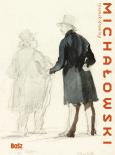
Piotr Michałowski malarz i rysownik, najwybitniejszy przedstawiciel romantyzmu w polskiej sztuce. W malarstwie znany z uwieczniania scen batalistycznych i przedstawień koni, tym razem pokazany został od strony rysunkowej. Artysta zwykle nie rozstawał się ze swoim szkicownikiem, który towarzyszył mu w okresie studenckim, jak również podczas późniejszych podróży w sumie pozostawił po sobie ponad 1000 szkiców. Album, który słowem wstępnym opatrzyła znawczyni twórczości Michałowskiego, historyk sztuki Anna Zeńczak, zawiera najciekawsze rysunki artysty.
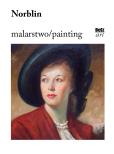
Stefan Norblin, właśc. Juliusz Stefan Norblin de la Gourdaine (18921952), praprawnuk Jeana Pierre'a Norblina, francuskiego malarza przełomu XVIII i XIX wieku. Ten niezwykle utalentowany i wszechstronny artysta, nazywany malarzem maharadży, w okresie międzywojennym odnosił w Polsce ogromne sukcesy zarówno jako grafik i projektant. Po wybuchu II wojny światowej opuścił ojczyznę i przedostał się do Iraku, gdzie malował portrety rodziny królewskiej. Jednak kariera malarska artysty rozkwitła dopiero w Indiach, przynosząc mu sławę i prestiż. Stworzył tam niezwykłe malowidła w pałacach maharadży i rezydencjach arystokracji. Czerpał motywy z religii hinduskiej, lecz nadawał im nowoczesną formę o bogatych kolorach i z wieloma elementami dekoracyjnymi, łącząc przy tym europejską secesję z indyjskimi tradycjami.
Wieki średnie coś szarego, ciemnego, noc ducha. Tak określa się je w zwykłym pojęciu. W politycznej historii to czasy feudalne, wojny krzyżowe, państwo rzymskie, walka z duchowną władzą, a przed oczyma stają klasztory, mnisi etc. Obraz szary, bez wyraźniejszych konturów. Ale tylko wtedy, gdy patrzymy z dala. Gdy bliżej, widzimy mnóstwo szczegółów. Pominąwszy polityczną stronę, życie duchowe bardzo rozbudzone. Wielkie wysiłki w celu uchwycenia tego, co często nieuchwytne. Po sobie następują szkoły, systemata, wre walka w łonie samego duchowieństwa, prądy ścierają się nie gorzej niż dziś. Prawda, że nad wszystkim góruje religia, później teologia, ale jest ona jakby ramą, w granicach której najrozmaitsze obrazy. A i poza tymi ramami jest jeszcze coś: filozofowie arabscy i żydowscy, a w Bizancjum również filozofują po swojemu. Co w starożytności płynęło kilkoma wybitnymi rzekami, to teraz z jednej strony się rozlewa w tysięczne strumyczki, w których zwierciadle odbija się myśl ta sama: myśl teologiczna. Dlatego też historia filozofii średniowiecznej nie jest tylko historią samej filozofii, lecz musi tykać się teologii. Podobnie, jak historia pism jest związana z historią języków. Ale ten brak ścisłej granicy nie jest przeszkodą, mylą się też ci, którzy nie uznają filozofii w wiekach średnich. Jest ona zależna od teologii, związana z nią, ale jest. Gdybyśmy tu nawet mówili o upadku filozofii, to i epoki upadku mają swoją historię.
Druga część biografii Romana Witolda Ingardena Jestem filozofem świata obejmuje lata 19391970. Omawia ciekawy, ale także niełatwy etap w życiu filozofa. Wojna była czasem, w którym walka o przetrwanie własne i rodziny, pod dwiema okupacjami, stanowiła największe wyzwanie. Przebywał wówczas z rodziną we Lwowie, gdzie uczestniczył w tajnym nauczaniu. Po zakończeniu wojny nastąpiło zderzenie z komunistyczną rzeczywistością, zmagania o reaktywację ośrodków akademickich, czasopism i towarzystw filozoficznych, zabiegi o realizację kariery naukowej, obrona autonomii polskiej nauki oraz dorobku Szkoły Lwowskiej. W pierwszej połowie lat pięćdziesiątych, z inspiracji Adama Schaffa pod pretekstem zwalczania reakcyjnej filozofii marksiści zainicjowali kampanię przeciwko uczniom Kazimierza Twardowskiego, mającą na celu wyeliminowanie ich z życia akademickiego. Zadanie światopoglądowego prześladowania Ingardena powierzono jego byłemu uczniowi ze Lwowa, marksistowskiemu neoficie, Tadeuszowi Krońskiemu. Efektem tych działań było odsunięcie od nauczania akademickiego oraz zakaz publikacji. Ingarden, z gronem wykluczonych filozofów, skupił się na pracy redakcyjnej i tłumaczeniach w ramach Biblioteki Klasyków Filozofii. Powrócił do nauczania akademickiego dopiero w roku 1957. Pomimo niesprzyjających warunków dla naukowego rozwoju filozof napisał i opublikował wówczas bardzo ważne prace, m.in. Spór o istnienie świata, Studia z estetyki, Wykłady i dyskusje z estetyki, Z badań nad filozofią współczesną, Wstęp do fenomenologii Husserla, Wykłady z etyki i Książeczkę o człowieku.
W biblijnych tekstach nie znajdujemy wykładu z kosmologii ani naukowego opisu procesu stwarzania świata; żaden świadek nie był przecież obecny, gdy powstawały niebo i ziemia. Pierwsze rozdziały Księgi Rodzaju to pewnego rodzaju refleksja teologiczna, odpowiadająca na pytanie: Kto stworzył świat? Kto stoi za powstaniem człowieka? Skąd na świecie wzięło się zło? Istniało ono od początku, czy pojawiło się dopiero w określonym momencie? Na skutek czego ogarnęło świat? Na te i podobne pytania Biblia daje odpowiedź.Książka, którą trzymacie w rękach, stanowi owoc głębokiego dialogu wiary toczonego w konkretnej wspólnocie ludzi wierzących i duszpasterzy, którzy w ramach rekolekcji lectio divina głoszonych dla rodzin pochylali się nad tekstami Księgi Rodzaju i poszukiwali światła dla swojego życia, sposobów rozwiązywania istotnych problemów codziennej egzystencji. Są to poszukiwania ludzi wierzących, którzy uznając autorytet Boga Stwórcy, pytają Go: Jak żyć?Mam nadzieję, że strony te będą dla Ciebie, Czytelniku, teo-logią, czyli słowem, które zakotwiczone w Słowie, pomoże spojrzeć w nowy sposób na własne życie. Rzucić światło na współczesną historię, a także na konkretne wydarzenia Twojego życia. Prawdziwa mądrość jest bowiem poznaniem, które angażuje i pozwala porządkować życie, przechodzić stopniowo od chaosu do kosmosu, cieszyć się poczuciem sensu rodzącym wolność, której źródła nie znajdujemy w samym sobie.
Often imitated but never equaled, Jan van Eyck (c. 1390-1441) left an indelible impression on Renaissance art and paved the way for future realist painters. With its unprecedented precision and masterful use of color, Arnolfini Double Portrait, depicting the wedding of a young couple, is testament to the mastery of the Flemish painter and leader of the Early Netherlandish school. Van Eyck painted both secular and religious subject matter, emphasizing a naturalism and realism that moved seamlessly between 15th-century everyday life and poetic, heavenly settings. Working with oil paint, he innovated the medium, allowing for great intensity and depth of color.
Trace the artist’s impressive oeuvre in this hardcover survey of his work, including altarpieces, religious figures, and commissioned portraits. Featuring enlarged details and close analyses of masterpieces like the Ghent Altarpiece, this publication also offers a chronology of van Eyck’s production, including the output of his workshop which continued even after his death.
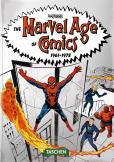
It was an age of mighty heroes, misunderstood monsters, and complex villains. With the publication of Fantastic Four No. 1 in November 1961, comics giant Marvel inaugurated a transformative era in pop culture. Through the next two decades, the iconic Hulk, Spider-Man, Iron Man, and the X-Men leapt, darted, and towered through its pages. Captain America was resurrected from his 1940s deep-freeze and the Avengers became the World’s Greatest Super Heroes. Daredevil, Doctor Strange, and dozens more were added to the pantheon, each with their own rogues’ gallery of malevolent counterparts. Nearly 60 years later, these thrilling characters from the 1960s and ’70s are more popular than ever, fighting the good fight in comics, toy aisles, and blockbuster movies around the world.
In The Marvel Age of Comics 1961–1978, legendary writer and editor Roy Thomas takes you to the heart of this seminal segment in comic history—an age of triumphant character and narrative innovation that reinvented the super hero genre. With more than 500 images and insider insights, the book traces the birth of champions who were both epic in their powers and grounded in a world that readers recognized as close to their own; relatable heroes with the same problems, struggles, and shortcomings as everyone else. By the ’70s, we see how the House of Ideas also elevated horror, sword and sorcery, and martial arts in its stable of titanic demigods, introducing iconic characters like Man-Thing, Conan, and Shang-Chi and proving that their brand of storytelling could succeed and flourish outside of the capes and tights.
Behind it all, we get to know the extraordinary Marvel architects whose names are almost as familiar as the mortals (and immortals!) they brought to life—Stan “The Man” Lee, Jack “King” Kirby, and Steve Ditko, along with a roster of greats like John Romita, John Buscema, Marie Severin, Jim Steranko, and countless others. The result is a behind-the-scenes treasure trove and a jewel for any comic fan’s library, brimming with the innovation and energy of an invincible era for Marvel and its heroes alike.
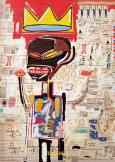
The legend of Jean-Michel Basquiat is as strong as ever. Synonymous with 1980s New York, the artist first appeared in the late 1970s under the tag SAMO, spraying caustic comments and fragmented poems on the walls of the city. He appeared as part of a thriving underground scene of visual arts and graffiti, hip hop, post-punk, and DIY filmmaking, which met in a booming art world. As a painter with a strong personal voice, Basquiat soon broke into the established milieu, exhibiting in galleries around the world.
Basquiat’s expressive style was based on raw figures and integrated words and phrases. His work is inspired by a pantheon of luminaries from jazz, boxing, and basketball, with references to arcane history and the politics of street life—so when asked about his subject matter, Basquiat answered “royalty, heroism and the streets.” In 1983 he started collaborating with the most famous of art stars, Andy Warhol, and in 1985 was on the cover of The New York Times Magazine. When Basquiat died at the age of 27, he had become one of the most successful artists of his time.
First published in an XXL edition, this unprecedented insight into Basquiat’s art is now available in a compact, accessible volume in celebration of TASCHEN’s 40th anniversary. With pristine reproductions of his most seminal paintings, drawings, and notebook sketches, it offers vivid proximity to Basquiat’s intricate marks and scribbled words, further illuminated by an introduction to the artist from editor Hans Werner Holzwarth, as well as an essay on his themes and artistic development from curator and art historian Eleanor Nairne. Richly illustrated year-by-year chapter breaks follow the artist’s life and quote from his own statements and contemporary reviews to provide both personal background and historical context.
Star Wars exploded onto our cinema screens in 1977, and the world has not been the same since. After watching depressing and cynical movies throughout the early 1970s, audiences enthusiastically embraced the positive energy of the Star Wars galaxy as they followed moisture farmer Luke Skywalker on his journey through a galaxy far, far away, meeting extraordinary characters like mysterious hermit Obi-Wan Kenobi, space pirates Han Solo and Chewbacca, loyal droids C-3PO and R2-D2, bold Princess Leia Organa and the horrific Darth Vader, servant of the dark, malevolent Emperor.
Writer, director, and producer George Lucas created the modern monomyth of our time, one that resonates with the child in us all. He formed Industrial Light & Magic to develop cutting-edge special effects technology, which he combined with innovative editing techniques and a heightened sense of sound to give audiences a unique sensory cinematic experience.
In this first volume, made with the full cooperation of Lucasfilm, Lucas narrates his own story, taking us through the making of the original trilogy—Episode IV A New Hope, Episode V The Empire Strikes Back, and Episode VI Return of the Jedi—and bringing fresh insights into the creation of a unique universe. Complete with script pages, production documents, concept art, storyboards, on-set photography, stills, and posters, this is the authoritative exploration of the original saga as told by its creator.
W trzecim tomie dialogów Neale przechodzi od kwestii natury jednostkowej (tom 1) i globalnej (tom 2) do „prawd uniwersalnych”, które stosują się do wszystkich poziomów bytu od mikro- po makrokosmos, rozważając między innymi takie pytania jak: Co dzieje się po śmierci? Czym faktycznie jest czas? Czy jesteśmy sami w kosmosie?
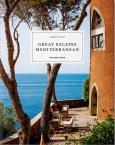
The Mediterranean is surrounded by three continents – Europe, Africa and Asia – and even though the cultures around this sea are highly diverse, they harmoniously share a pleasant climate, distinctive flora and fauna, and not least the intense blue of the water.
Angelika Taschen set out in search of the most beautiful hotels on a great variety of coasts, islands and beaches, taking you on a journey to the luxurious Hotel du Cap-Eden-Roc and the ultra-chic Les Roches Rouges on the Côte d’Azur, to the little-known Pardini’s Hermitage on the Italian island of Giglio, which is only accessible by boat or on foot, and to Bodrum in Turkey, where the elegant Amanruya resort lies hidden in one of the most stunning bays in the Mediterranean. She also presents new hotel concepts, great architecture and creative design – for example the finca Menorca Experimental on the Balearic Islands, the modernist Villa Dubrovnik in Croatia and Dexamenes on the Peloponnese, where new life was breathed into decommissioned wine tanks.
Further highlights are the brand-new, stylishly designed Mezzatorre on Ischia and the Torre di Cala Piccola with its enchanting private beach on the Argentario peninsula in Tuscany, an almost unknown location that possesses the aura of 1960s Italy. Another real gem is La Locanda del Barbablù, with just five rooms in the shadow of the mythical volcano on Stromboli. Look forward to staying at the Nord-Pinus in Tangier with its fantastic view of the Strait of Gibraltar, and the charming Coco-Mat Eco Residences on Serifos, or experiencing the originality of Ammos on Crete, where the art and design are as essential as the sun and the beach!
As special photographer on the sets and locations of Francis Ford Coppola’s The Godfather trilogy, Steve Schapiro had the remarkable experience of witnessing legendary actors giving some of their most memorable performances. Schapiro immortalized Marlon Brando, Al Pacino, Robert De Niro, James Caan, Robert Duvall, and Diane Keaton in photos that have since become iconic images, instantly recognizable and endlessly imitated.
Gathered together in this book are Schapiro’s finest photographs from all three Godfather films, lovingly reproduced from the original negatives. With contextual essays and interviews covering the trilogy in its entirety, this book contains over 300 color and black-and-white images. Schapiro’s images take us behind the scenes of this epic and inimitable cinematic saga, revealing the director’s working process, capturing the moods and personalities involved, and providing insight into the making of movie history.
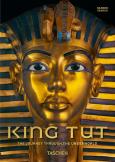
Buried in the 14th century BC but unearthed by Howard Carter in 1922, the objects entombed with Tutankhamun are an invaluable window into a long-extinct belief system. Seen today, they create an intricate picture of how the ancient Egyptian people viewed the perilous journey to paradise, a utopian Egypt that could only be entered following the final judgment.
When acclaimed photographer Sandro Vannini started his work in Egypt in the late ’90s, a technological revolution was about to unfold. Emerging technologies enabled him to document murals, tombs, and artifacts in unprecedented detail. Using the time-consuming and strenuous multi-shot technique, Vannini produced complete photographic reproductions that revealed colors in their original tones with vivid intensity. Through these extraordinary images, we discover the objects’ quintessential features alongside the sophisticated and cleverly hidden details.
This comprehensive guide marks the centenary of Carter’s first excavations in the Valley of the Kings. These inestimable works endure through Vannini's photographs in their full, timeless splendor. From offerings and rituals to Osiris and eternal life, Vannini’s portfolio covers all facets of ancient Egyptian culture—but it is Tutankhamun’s unique legacy that dominates these images. With texts by the photographer, captions by specialist Mohamed Megahed, and chapter introductions from scholars in the field, King Tut. The Journey through the Underworld puts much-debated mysteries to rest. The learned yet accessible forewords come from distinguished Egyptologists including Salima Ikram and David P. Silverman. Insightful narratives, resplendent images, and a contemporary standpoint make this title a fitting tribute to the Boy King’s odyssey, illuminating an epoch that spanned an unimaginable 4,000 years.
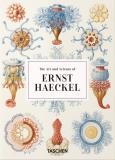
Ernst Haeckel (1834–1919) was a German-born biologist, naturalist, evolutionist, artist, philosopher, and doctor who spent his life researching flora and fauna from the highest mountaintops to the deepest ocean. A vociferous supporter and developer of Darwin’s theories of evolution, he denounced religious dogma, authored philosophical treatises, gained a doctorate in zoology, and coined scientific terms which have passed into common usage, including ecology, phylum, and stem cell.
At the heart of Haeckel’s colossal legacy was the motivation not only to discover but also to explain. To do this, he created hundreds of detailed drawings, watercolors, and sketches of his findings which he published in successive volumes, including several marine organism collections and the majestic Kunstformen der Natur (Art Forms in Nature), which could serve as the cornerstone of Haeckel’s entire life project. Like a meticulous visual encyclopedia of living things, Haeckel’s work was as remarkable for its graphic precision and meticulous shading as for its understanding of organic evolution. From bats to the box jellyfish, lizards to lichen, and spider legs to sea anemones, Haeckel emphasized the essential symmetries and order of nature, and found biological beauty in even the most unlikely of creatures.
In this book, we celebrate the scientific, artistic, and environmental importance of Haeckel’s work, with a collection of 300 of his finest prints from several of his most important tomes, including Die Radiolarien, Monographie der Medusen, Die Kalkschwämme, and Kunstformen der Natur. At a time when biodiversity is increasingly threatened by human activities, the book is at once a visual masterwork, an underwater exploration, and a vivid reminder of the precious variety of life.
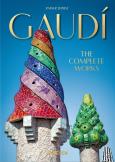
The life of Antoni Gaudí (1852–1926) was full of complexity and contradictions. As a young man he joined the Catalonian nationalist movement and was critical of the church; toward the end of his life he devoted himself completely to the construction of one single spectacular church, La Sagrada Família. In his youth, he courted a glamorous social life and the demeanor of a dandy. By the time of his death in a tram accident on the streets of Barcelona, his clothes were so shabby that passersby assumed he was a beggar.
Gaudí’s incomparable architecture channels much of this multifaceted intricacy. From the shimmering surface textures and skeletal forms of Casa Batlló to the Hispano-Arabic matrix of Casa Vicens, his work merged the influences of Orientalism, natural forms, new materials, and religious faith into a unique Modernista aesthetic. Today, his buildings enjoy global popularity and acclaim; his magnum opus, the Sagrada Família, is the most-visited monument in Spain and seven of his works are UNESCO World Heritage Sites.
Packed full of expert texts and hundreds of full-color illustrations, including new photography, this book presents Gaudí’s complete oeuvre. Like a personal tour through Barcelona, we explore his residential, religious, and public projects. We see how the “Dante of architecture” was a builder in the truest sense of the word, crafting extraordinary constructions out of minute and mesmerizing details, transforming fantastical visions into realities on the city streets.
Decades’ worth of images have been distilled down to 512 pages of photographs in this ultimate retrospective collection of Nobuyoshi Araki's work, selected by the artist himself.
First published as a Limited Edition and now back in a new format to celebrate TASCHEN’s 40th anniversary, the curation delves deep into Araki’s best-known imagery: Tokyo street scenes; faces and foods; colorful, sensual flowers; female genitalia; and the Japanese art of kinbaku, or bondage. As girls lay bound but defiant and glistening petals assume suggestive shapes, Araki plays constantly with patterns of subjugation and emancipation, death and desire and with the slippage between serene image and shock.
Describing his bondage photographs as “a collaboration between the subject and the photographer”, Araki seeks to come closer to his female subjects through photography, emphasizing the role of spoken conversation between himself and the model. In his native Japan, he has attained cult status for many women who feel liberated by his readiness to photograph the expression of their desire.
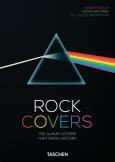
Album art is indelibly linked to our collective musical memories; when you think of your favorite albums, you picture the covers. Many photographers, illustrators, and art directors have become celebrities from their album artworks—the best examples of which will go down in history as permanent fixtures in popular culture.
Paying tribute to this art form, Rock Covers brings you a compilation of more than 750 remarkable album covers, from legendary to rare record releases. Artists as varied as Elvis Presley, The Beatles, The Sex Pistols, Pink Floyd, The Cure, Iron Maiden, and Sonic Youth are gathered together in celebration of the cover art that defined their albums and their cult status. Each cover is accompanied by a fact sheet listing the art director, photographer or illustrator, year, label, and more, while nearly 250 records that marked particular turning points for a band, an artist, or the music genre, are highlighted with short descriptions.
This far-reaching catalog of visualized rock is contextualized with insider interviews with professionals who shaped the history of rock, and by top-10 record lists from ten leading rock collectors.
Flower painter Pierre-Joseph Redouté (1759–1840) devoted himself exclusively to capturing the diversity of flowering plants in watercolor paintings which were then published as copper engravings, with careful botanical descriptions. The darling of wealthy Parisian patrons including Napoleon’s wife Josephine, he was dubbed “the Raphael of flowers,” and is regarded to this day as a master of botanical illustration.
This collection brings our best-selling XL-sized edition to a smaller, more convenient format, still gathering some of the finest color engravings from Redouté’s illustrations of Roses, Lilies, and Choix des plus belles fleurs et quelques branches des plus beaux fruits (Selection of the Most Beautiful Blooms and Branches with the Finest Fruits). Offering a vibrant overview of Redouté’s admixture of accuracy and beauty, it is also a privileged glimpse into the magnificent gardens and greenhouses of a bygone Paris.
Ten produkt jest zapowiedzią. Realizacja Twojego zamówienia ulegnie przez to wydłużeniu do czasu premiery tej pozycji. Czy chcesz dodać ten produkt do koszyka?