W tej strefie proponujemy bardzo szeroką ofertę z dziedziny psychologii oraz dziedzin powiązanych: astronomii i astrofizyki, ekologii, filozofii, kultury, podróżnictwa, religii, socjologii, sztuki. Szczególnie polecamy z tej kategorii bestseller pt. Księga Urantii. Księga Urantii podaje jasną i zwięzłą integracją nauki, filozofii i religii. Ci, którzy ją czytali i zgłębiali, wierzą, że Księga Urantii może wnieść bardzo wiele wartości do religijnej i filozoficznej myśli ludzi tego świata.
In every crisis situation, children are the greatest victims. Physically weak, they are often the first to succumb to hunger, disease, and dehydration. Innocent to the workings and failings of the world, they are unable to understand why there is danger, why there are people who want to hurt them, or why they must leave, perhaps quite suddenly, and abandon their schools, their friends, and their home.
In this companion series to Exodus, Sebastião Salgado presents 90 portraits of the youngest exiles, migrants, and refugees. His subjects are from different countries, victims to different crises, but they are all on the move, and all under the age of 15. Through his extensive refugee project, what struck Salgado about these boys and girls was not only the implicit innocence in their suffering but also their radiant reserves of energy and enthusiasm, even in the most miserable of circumstances. From roadside refuges in Angola and Burundi to city slums in Brazil and sprawling camps in Lebanon and Iraq, the children remained children: they were quick to laugh as much as to cry, they played soccer, splashed in dirty water, got up to mischief with friends, and were typically ecstatic at the prospect of being photographed.
For Salgado, the exuberance presented a curious paradox. How can a smiling child represent circumstances of deprivation and despair? What he noticed, though, was that when he asked the children to line up, and took their portraits one by one, the group giddiness would fade. Face to face with his camera, each child would become much more serious. They would look at him not as part of a noisy crowd, but as an individual. Their poses would become earnest. They looked into the lens with a sudden intensity, as if abruptly taking stock of themselves and their situation. And in the expression of their eyes, or the nervous fidget of small hands, or the way frayed clothes hung off painfully thin frames, Salgado found he had a refugee portfolio that deserved a forum of its own.
The photographs do not try to make a statement about their subjects’ feelings, or to spell out the particulars of their health, educational, and housing deficits. Rather, the collection allows 90 children to look out at the viewer with all the candor of youth and all the uncertainty of their future. Beautiful, proud, pensive, and sad, they stand before the camera for a moment in their lives, but ask questions that haunt for years to come. Will they remain in exile? Will they always know an enemy? Will they grow up to forgive or seek revenge? Will they grow up at all?
Sebastião Salgado began his career as a professional photographer in Paris in 1973 and subsequently worked with the photo agencies Sygma, Gamma, and Magnum Photos. In 1994 he and his wife Lélia Wanick Salgado created Amazonas Images, which exclusively handles his work. Salgado’s photographic projects have been featured in many exhibitions as well as books, including Sahel, L'Homme en détresse (1986), Other Americas (1986), Workers (1993), Terra (1997), Migrations (2000), The Children (2000), Africa (2007), Genesis (2013), The Scent of a Dream (2015), and Kuwait, A Desert on Fire (2016).
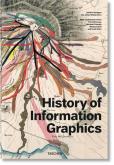
In the age of big data and digital distribution, when news travel ever further and faster and media outlets compete for a fleeting slice of online attention, information graphics have swept center stage. At once nuanced and neat, they distill abstract ideas, complex statistics, and cutting-edge discoveries into succinct, compelling, and masterful designs. Cartographers, programmers, statisticians, designers, scientists, and journalists have developed a new field of expertise in visualizing knowledge.
This XL-sized compendium explores the history of data graphics from the Middle Ages right through to the digital era. Curated by Sandra Rendgen, some 400 milestones span astronomy, cartography, zoology, technology, and beyond. Across medieval manuscripts and parchment rolls, elaborate maps, splendid popular atlasses, and early computer-based information design, we systematically break down each work’s historical context, including such highlights as Martin Waldseemüller’s famous world map, the meticulous nature studies of Ernst Haeckel, and many unknown treasures.
Hot on the heels of the best-selling Information Graphics and Understanding the World, this third volume fills the gap as an unprecedented reference book for data freaks, designers, historians, and anyone thirsty for knowledge. An enthralling exploration into the teachings, research, and lives of generations past.
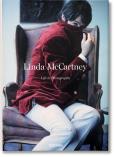
In 1966, during a brief stint as a receptionist for Town and Country magazine, Linda Eastman snagged a press pass to a very exclusive promotional event for the Rolling Stones aboard a yacht on the Hudson River. With her fresh, candid photographs of the band, far superior to the formal shots made by the band’s official photographer, Linda secured her name as a rock ’n’ roll photographer. Two years later, in May 1968, she entered the record books as the first female photographer to have her work featured on the cover of Rolling Stone with her portrait of Eric Clapton. She went on to capture many of rock’s most important musicians on film, including Aretha Franklin, Jimi Hendrix, Bob Dylan, Janis Joplin, Simon & Garfunkel, The Who, The Doors, and the Grateful Dead.
In 1967, Linda went to London to document the "Swinging Sixties," where she met Paul McCartney at the Bag O’Nails club and subsequently photographed The Beatles during a launch event for the Sgt. Pepper’s Lonely Hearts Club Band album. Paul and Linda fell in love, and were married on March 12, 1969. For the next three decades, until her untimely death, she devoted herself to her family, vegetarianism, animal rights, and photography.
From her early rock ’n’ roll portraits, through the final years of The Beatles, to raising four children with Paul, Linda captured her whole world on film. Her shots range from spontaneous family pictures to studio sessions with Stevie Wonder and Michael Jackson, as well as encounters with artists Willem de Kooning and Gilbert and George. Always unassuming and fresh, her work displays a warmth and feeling for the precise moment that captures the essence of any subject. Whether photographing her children, celebrities, animals, or a fleeting moment of everyday life, she did so without pretension or artifice.
This retrospective volume is a lasting and deeply personal testament to Linda's talent, produced in close collaboration with the McCartney family, with forewords by Paul, Stella, and Mary McCartney.
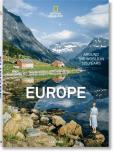
For over five generations, National Geographic magazine has dazzled and educated its readers with incredible photography and gripping stories spanning the four corners of the earth and the deepest oceans. Inspired by our monumental Around the World in 125 Years, this volume curates over 200 captivating images, sourced directly from the National Geographic historical archives, including almost 40 new photographs. Traversing travel, history, culture, social documentary, and conservation, this compendium is in equal parts a breathtaking homage to the spirit and diversity of Europe, and a unique tribute to the world’s most famous photography magazine.
National Geographic pioneered the aesthetic of the photo essay, while continually pushing the medium's technical boundaries, to both entertain and enlighten its millions of loyal readers. Our trans-continental journey through time and space spans across all corners of Europe, from the snow-capped peaks of Finland to the frothy foam parties of Ibiza, from the serene blue waters of the Greek Islands to the Lascaux cave paintings of Southern France. We witness the hair-rising eruption of Surtsey in Iceland, where lightning rips through the volcano’s clouds in otherworldly hues of purple; lose ourselves among flowers and babushka-wrapped heads in Russia’s Volgograd marketplace; and tread carefully behind climbers across a crevasse in the Bernese Oberland. Along the way, we absorb the culture of the some of the world’s greatest cities including Paris, Rome, Berlin, London, Vienna, Stockholm, Moscow, and many others.
National Geographic: Europe leaves no stone unturned in its ultimate voyage through the precious jewels and hidden facets of the European continent. From evocative early black-and-white pictures to autochromes, from the golden age of Kodachromes to digital, this is both a celebration of the power of photography and a unique trip to the soul of Europe.
The notoriously exclusive Pirelli Calendar, featuring glamorous shots of beautiful women, was first published in 1964. Reserved for important clients and VIPs, the calendar has since grown into a legend of its own, showcasing the beauty of models such as Alessandra Ambrosio, Gisele Bündchen, Naomi Campbell, Laetitia Casta, Cindy Crawford, Penélope Cruz, Milla Jovovich, Heidi Klum, Angela Lindvall, Sophia Loren, and Kate Moss.
In celebration of the 50th anniversary of the now-legendary institution that is the Pirelli Calendar, TASCHEN brings you a retrospective volume reproducing the complete calendars, photographed by Richard Avedon, Peter Beard, Patrick Demarchelier, Nick Knight, Karl Lagerfeld, Inez van Lamsweerde and Vinoodh Matadin, Annie Leibovitz, Peter Lindbergh, Sarah Moon, Uwe Ommer, Terry Richardson, Herb Ritts, Mario Sorrenti, Bert Stern, Mario Testino, Bruce Weber, and many more.
Bonus features include rarely and never-before-seen behind-the-scenes images of the shoots, the unpublished 1963 calendar, and a selection of "censored" images deemed too risqué by the editors of the time. With an introduction by Philippe Daverio and an interview with art directors Derek Forsyth and Martyn Walsh.
The author
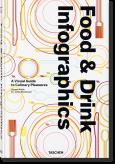
Amid our ever-growing consumption of data visualization, nothing makes for tastier morsels than the fine art of food and dining. Ushering the cookbook into the future, this volume gathers together the best infographics of all things eating, drinking, and cuisine, from measurement conversion charts and recipes for cookies and cocktails to stress-free party planning.
A must-have for every 21st-century foodie, this is gastro-guidance at its most visually appealing as much as expert. Want to master sashimi? Know the secret to perfectly grilled steak? Wow guests with your own dry martini? Food & Drink Infographics has all the answers and more, using the best culinary graphics to answer kitchen conundrums in lively, simple, and memorable form.
You’ll find infographics on all the food groups, from grains and pulses to fruit and vegetables, to fish, meat, and poultry. Recipe ideas include soups, sandwiches, snacks, sweet treats, and just-right dressings. Other sections cover flavor pairings, baking, cooking tools and techniques, and alcohols, coffee, and tea.
The book opens with a foreword by cooking author Michael Ruhlman, followed by a historic survey of food imagery examining how and where pictures have been used to enjoy, prepare, and serve food and drink, from Egyptian tomb paintings showing flatbread being made to 19th-century classics such as Mrs Beeton’s Book of Household Management. Slick, smart, and packed full of perfect nuggets of advice, Food & Drink Infographics rounds up a delightful visual exploration of food and dining as much as an indispensable collection of everyday tips, techniques, and temptations.
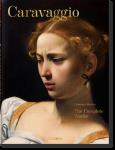
Caravaggio, or more accurately Michelangelo Merisi da Caravaggio (1571–1610), was always a name to be reckoned with. Notorious bad boy of Italian painting, the artist was at once celebrated and controversial: Violent in temper, precise in technique, a creative master, and a man on the run.
This work offers a comprehensive reassessment of Caravaggio’s entire œuvre with a catalogue raisonné of his works. Each painting is reproduced in large format, with recent, high production photography allowing for dramatic close-ups with Caravaggio's ingenious details of looks and gestures.
Five introductory chapters analyze Caravaggio's artistic career from his early struggle to make a living, through his first public commissions in Rome, and his growing celebrity status. They look at his increasing daring with lighting and with a boundary-breaking naturalism which allowed even biblical events to unfold with an unprecedented immediacy before the viewer.
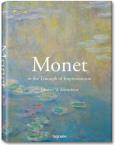
No other artist, apart from J. M. W. Turner, tried as hard as Claude Monet (1840–1926) to capture light itself on canvas. Of all the Impressionists, it was the man Cézanne called “only an eye, but my God what an eye!” who stayed true to the principle of absolute fidelity to the visual sensation, painting directly from the object.
It could be said that Monet reinvented the possibilities of color. Whether it was through his early interest in Japanese prints, his time as a conscript in the dazzling light of Algeria, or his personal acquaintance with the major painters of the late 19th century, the work Monet produced throughout his long life would change forever the way we perceive both the natural world and its attendant phenomena. The high point of his explorations was the late series of water lilies, painted in his own garden at Giverny, which, in their approach toward almost total formlessness, are really the origin of abstract art.
This biography does full justice to this most remarkable and profoundly influential artist, and offers numerous reproductions and archive photos alongside a detailed and insightful commentary.
This is the big one, True Believers! The mostly true tale of Stan Lee: a Giant-Size extravaganza, nearly ten years in the making, about the one and only Godfather of Comics. From his childhood in Depression-era New York, to transforming Marvel into the number one comics publisher in the world, to his 21st-century reinvention as Chief Creative Officer of global entertainment company POW! Entertainment, Stan “the Man” Lee stands the test of time as the most legendary name in comicbook history.
Stanley Lieber began working at Timely Comics in 1940 at the age of 17 and found himself at the helm of the bullpen as its top editor just two years later. But it wasn’t until 1961 that he ignited a revolution known as the “Marvel Age of Comics.” With a legendary stable of art partners including Jack Kirby, Steve Ditko, John Romita, and Jim Steranko, Lee unleashed a dizzying cascade of seminal comicbook creations—the Fantastic Four, Hulk, Spider-Man, Thor, Iron Man, the X-Men, and the Avengers to name a few. After moving to Hollywood in 1980, he did it again, developing TV and film projects that laid the groundwork for the “Marvel movie.” Stan’s constant cameo presence in these billion-dollar worldwide events is a testament to his influence. As the man behind POW! Entertainment, he became a master of all media—working with rock stars and professional sports leagues, movie mavens and reality TV shows—reinforcing his creative stature the world over.
First published as a signed Collector’s Edition and sold out within a week, the book was written and edited with Lee himself. His tale is told by his successor at Marvel, renowned comics writer, editor, and historian Roy Thomas, who brings “you are there” insights and wide-eyed clarity to key moments of Lee’s journey to pop culture immortality. Featuring hundreds of treasures of comicbook art, intimate photographs sourced straight from his family archives, a foreword written by Lee himself, a novel-length essay and new epilogue by Thomas, and an appendix with complete reprints of Stan’s comics from throughout the decades, this is a titanic tribute worthy of the Man.
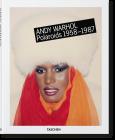
Andy Warhol was a relentless chronicler of life and its encounters. Carrying a Polaroid camera from the late 1950s until his death in 1987, he amassed a huge collection of instant pictures of friends, lovers, patrons, the famous, the obscure, the scenic, the fashionable, and himself. Created in collaboration with the Andy Warhol Foundation, this book features hundreds of these instant photos.
Portraits of celebrities such as Mick Jagger, Alfred Hitchcock, Jack Nicholson, Yves Saint Laurent, Pelé, Debbie Harry are included alongside images of Warhol’s entourage and high life, landscapes, and still lifes from Cabbage Patch dolls to the iconic soup cans. Often raw and impromptu, the Polaroids document Warhol’s era like Instagram captures our own, offering a unique record of the life, world, and vision behind the Pop Art maestro and modernist giant.
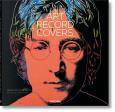
Since the dawn of modernism, visual and music production have had a particularly intimate relationship. From Luigi Russolo’s 1913 Futurist manifesto L’Arte dei Rumori (The Art of Noise) to Marcel Duchamp’s 1925 double-sided discs Rotoreliefs, the 20th century saw ever more fertile exchange between sounds and shapes, marks and melodies, and different fields of composition and performance.
In Francesco Spampinato’s unique anthology of artists’ record covers, we discover the rhythm of this particular cultural history. The book presents 500 covers and records by visual artists from the 1950s through to today, exploring how modernism, Pop Art, Conceptual Art, postmodernism, and various forms of contemporary art practice have all informed this collateral field of visual production and supported the mass distribution of music with defining imagery that swiftly and suggestively evokes an aural encounter.
Along the way, we find Jean-Michel Basquiat’s urban hieroglyphs for his own Tartown record label, Banksy’s stenciled graffiti for Blur, Damien Hirst’s symbolic skull for the Hours, and a skewered Salvador Dalí butterfly on Jackie Gleason’s Lonesome Echo. There are insightful analyses and fact sheets alongside the covers listing the artist, performer, album name, label, year of release, and information on the original artwork. Interviews with Tauba Auerbach, Shepard Fairey, Kim Gordon, Christian Marclay, Albert Oehlen, and Raymond Pettibon add personal accounts on the collaborative relationship between artists and musicians.
The Legendary Philanthropist Tackles the Dangers We Must Face for the Survival of Civilisation
'Soros has become a standard bearer for liberal democracy' - Financial Times
George Soros - universally known for his philanthropy, progressive politics and investment success, and now under sustained attack from the far right, nationalists, and anti-Semites around the world - gives an impassioned defence of his core belief in open society.
George Soros is among the world's most prominent public figures. He is one of the history's most successful investors and his philanthropy, led by the Open Society Foundations, has donated over $14 billion to promote democracy and human rights in more than 120 countries. But in recent years, Soros has become the focus of sustained right-wing attacks in the United States and around the world based on his commitment to open society, progressive politics and his Jewish background.
In this brilliant and spirited book, Soros offers a compendium of his philosophy, a clarion call-to-arms for the ideals of an open society: freedom, democracy, rule of law, human rights, social justice, and social responsibility as a universal idea. In this age of nationalism, populism, anti-Semitism, and the spread of authoritarian governments, Soros's mission to support open societies is as urgent as it is important.
„No.24” to album zarejestrowany podczas koncertu wybitnego wirtuoza skrzypiec Mariusza Patyry z towarzyszeniem własnego kwintetu smyczkowego. Mariusz Patyra jest jedynym Polakiem, który zwyciężył w prestiżowym konkursie „Premio Niccolo Paganini (2001r. Genua, Włochy).
Na program „No.24” składają się utwory z nowego albumu artysty. Dobór repertuaru ukazuje niezwykłą wrażliwość artysty, kunszt wirtuozerii oraz radość gry, które pozostawiają z pewnością niezapomniane wrażenie na słuchaczach.
Mariusz Patyra o płycie:
„Repertuar na płycie, którą dzisiaj oddaję w Państwa ręce, jest ucieczką od świata pełnego zgiełku, zabiegania, chaosu, przesłaniających to, co piękne, czyste i wartościowe. Utwory, które znalazły się na tej płycie, to esencja wiolinistyki. Są przepełnione liryzmem, nostalgią, tkliwością, wirtuozerią na najwyższym poziomie, miłością?. Za każdym razem, gdy wykonuję program nagrany na tej płycie, publiczność nagradza mnie owacjami. Podchodzą do mnie ludzie ze łzami wzruszenia i uśmiechem na twarzy, zarówno koneserzy muzyki klasycznej, jak i laicy. To właśnie reakcje ludzi będących na moich koncertach skłoniły mnie do nagrania tego albumu, a płyta jest najpiękniejszą pamiątką tych wzniosłych, bezcennych chwil...”
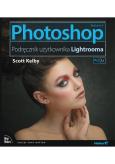
Lightroom jest dla wielu fotografów podstawowym narzędziem do edycji zdjęć. Istnieją jednak techniki, które w tym programie nie są dostępne, a bardzo rozszerzyłyby możliwości jego użytkowników. Wtedy przydałby się Photoshop... Jest tylko jeden problem: Photoshop to rozbudowany program z ogromem narzędzi, filtrów i opcji. W porównaniu z Lightroomem wydaje się bardzo skomplikowanym systemem, którego opanowanie musi zabrać mnóstwo czasu i kosztować wiele wysiłku!
Ta pozycja jest najlepszą propozycją dla osób, które chcą połączyć swoje umiejętności w posługiwaniu się Lightroomem z niezwykłymi możliwościami Photoshopa. Napisana w charakterystycznym dla autora stylu, przystępnie, zabawnie, a zarazem angażująco, wyjaśnia krok po kroku poszczególne techniki edycji zdjęć. Zaczyna się znakomitym wprowadzeniem do Photoshopa. Dalej znajdziesz omówienie wielu przydatnych narzędzi dostępnych w tym programie oraz ćwiczenia, dzięki którym sprawdzisz ich działanie w praktyce. Łatwo i szybko nauczysz się zaawansowanych technik retuszu portretów, usuwania niepożądanych obiektów z kadru czy dodawania efektów do zdjęć krajobrazowych.
Dzięki tej książce dowiesz się:
które narzędzia Photoshopa są najbardziej przydatne i jak ich używać
które techniki sprawdzają się najlepiej, a których warto unikać
jak pracować z warstwami
jak profesjonalnie retuszować portrety i dodawać efekty specjalne do zdjęć
jak tworzyć realistyczne fotomontaże
Lubisz Lightrooma? Zostań mistrzem Photoshopa!
O autorze
Scott Kelby w 2009 roku po raz piąty z rzędu otrzymał tytuł najlepszego autora książki informatycznej, przyznawanej przez amerykańskie Nielsen BookScan.
Scott Kelby jest redaktorem naczelnym pisma Photoshop User, przewodniczącym stowarzyszenia NAPP, skupiającego profesjonalnych użytkowników Photoshopa, dyrektorem szkoleniowym seminarium Adobe Photoshop Seminar Tour i jednym z najlepszych instruktorów tego programu w Ameryce. Jest współgospodarzem cotygodniowego talk-show na żywo dla fotografów The Grid oraz wykładowcą, nauczającym fotografii cyfrowej na warsztatach i seminariach organizowanych na całym świecie
Kelby jest również wielokrotnie nagradzanym autorem bestsellerowych książek; imponująca lista opracowanych przez niego tytułów sięga ponad 60 pozycji -- wiele z nich przyniosło mu światową sławę i zapewniło pierwsze miejsce na liście najpoczytniejszych autorów książek komputerowych na świecie. Poruszana w nich tematyka dotyczy przede wszystkim Photoshopa, edycji fotografii cyfrowych oraz nowoczesnych technologii związanych m.in. z przetwarzaniem obrazu.
„Malowała powoli, z przejęciem, a portrety robiła wprost latami. Model się zestarzał, wyłysiał, ożenił, okocił, schudł (…) musiał pozować, chciał czy nie chciał, chyba że umarł”.
ZOFIA STRYJEŃSKA O OLDZE BOZNAŃSKIEJ
Olga Boznańska. Najwybitniejsza polska malarka przełomu XIX i XX wieku. Obywatelka świata.
Kraków ją ograniczał, zafascynowało Monachium, Paryż przyjął do grona artystycznej bohemy. Przez trzydzieści lat malowała w pracowni przy Boulevard Montrparnasse. Ci, którzy przekraczali jej próg, czuli, że przekraczają granice teraźniejszości. Portrety Boznańskiej intrygowały, niepokoiły, obnażały duszę malowanej osoby. Nie uznawała banalnego piękna. Charakter, emocje, uczucia były dla niej ważniejsze niż uroda modeli.
Po Paryżu chodziła w sukni gipiurowej z trenem pełnym falban i plis. Wzbijał się za nią tuman kurzu. Drobna, delikatna, wyglądała jak posąg wyjęty na chwilę z ciemności piramidy.
„W chwili, kiedy nie będę mogła malować,
powinnam przestać żyć”
- mówiła. I dla sztuki była gotowa poświęcić wszystko – miłość, bogactwo, dobrą opinię i święty spokój.
AUDIOBOOK W INTERPRETACJI DANUTY STENKI
Twierdza wewnętrzna"" to więcej niż książka. To cudowny symbol tajemnicy człowieka. To dusza jej autorki Teresy od Jezusa, która przemieszcza się i wznosi od mieszkania do mieszkania. To program - kobiecy, a zarazem bojowy - duchowego życia chrześcijanina. To również ostatnia książka napisana przez św.Teresę od Jezusa, która pięć lat przed śmiercią złożyła w niej to, co najlepsze ze swojej wiedzy.
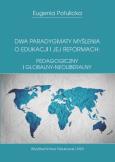
W monografii przedstawiono analizę aksjologicznych aspektów edukacji neoliberalnej: jej podstawowych wartości, wizji człowieka oraz skutków formowania uczniów, studentów i społeczeństwa przez ekonomizm. Ukazany jest wpływ BŚ, MFW, ŚOH, OECD i UE na systemy szkolne oraz ich reformy. Bardzo dużo miejsca adwokaci neoliberalnej edukacji poświęcają edukacji obywatelskiej. Jest to pozorny paradoks w sytuacji, gdy doktryna ta milcząco odchodzi od roli obywateli w społeczeństwie. Ich aktywność koncentruje się na polu ekonomicznym. Cywilne prawa niegdyś przysługujące tylko obywatelom przyznaje się megakorporacjom ponadnarodowym. Jednak kluczowe pojęcia związane z edukacją obywatelską są zupełnie odmiennie rozumiane w różnych dyskursach dotyczących tej problematyki: generalnie neoliberalizm zmienia język pedagogiczny na język ekonomii. Aktualnym priorytetem polityki oświatowej neoliberałów jest globalna edukacja obywatelska: "Obywatel globalny jest niezbędny jako jednostka wolna od przymusu i polityki państwa". W neoliberalnej polityce oświatowej bardzo dużo kontrowersji wzbudza przygotowywanie nauczycieli do zawodu. Światowe rozwiązania w tym zakresie są krańcowo odmienne - od szkolenia kandydatów do zawodu bezpośrednio w szkołach w Anglii i Walii, po tworzenie Szkoły Globalnej i hubu edukacyjnego w Singapurze. OECD wprowadziło tzw. "zwrot porównawczy" jako naukowe podejście do podejmowania decyzji politycznych. Stanowi on nową formę zarządzania państwami członkowskimi - zarządzanie przez liczby i standardy, także w edukacji.
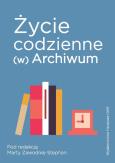
Książka jest efektem projektu „Archiwum Badań nad Życiem Codziennym”, w ramach którego powstało internetowe archiwum gromadzące materiały z badań poświęconych życiu codziennemu w Polsce w ostatnich stu latach. Publikacja stanowi zapis tego, co było najważniejsze dla przedsięwzięcia: refleksję nad codziennością, nad tworzeniem archiwum i nad sposobami korzystania z niego. W pierwszej części opisano, w jaki sposób doszło do pojawienia się badań and codziennością w naszym kraju, jak rozwijały się one od PRL-u, jaki jest dzisiaj ich status oraz jaka może być ich przyszłość. W drugiej części przedstawiono, jak powstało i jak funkcjonuje ABnŻC oraz jakich informacji o polskich badaniach codzienności dostarcza już dzisiaj to ciągle powiększające się archiwum. Trzecia część prezentuje różne sposoby korzystania z Archiwum na podstawie umieszczonych tam materiałów, np. przedstawiających tematykę relacji między ludźmi a zwierzętami, czy emocji opisanych w pamiętnikach mieszkańców Ziem Zachodnich.
Ten produkt jest zapowiedzią. Realizacja Twojego zamówienia ulegnie przez to wydłużeniu do czasu premiery tej pozycji. Czy chcesz dodać ten produkt do koszyka?