W tej strefie proponujemy bardzo szeroką ofertę z dziedziny psychologii oraz dziedzin powiązanych: astronomii i astrofizyki, ekologii, filozofii, kultury, podróżnictwa, religii, socjologii, sztuki. Szczególnie polecamy z tej kategorii bestseller pt. Księga Urantii. Księga Urantii podaje jasną i zwięzłą integracją nauki, filozofii i religii. Ci, którzy ją czytali i zgłębiali, wierzą, że Księga Urantii może wnieść bardzo wiele wartości do religijnej i filozoficznej myśli ludzi tego świata.
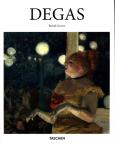
Most commonly associated with the birth of the Impressionist movement in mid-19th-century Paris, Edgar Degas (1834–1917) in fact defied easy categorization and instead developed a unique style, strongly influenced by Old Masters, the body in motion, and everyday urban life.
The elder scion of a wealthy family, Degas cofounded a series of exhibitions of “Impressionist” art, but soon disassociated himself from the group in pursuit of a more realist approach. His subjects centered on the teeming, noisy streets of Paris, as well as its leisure entertainments, such as horse racing, cabarets, and, most particularly, ballet. With often ambitious, off-kilter vantage points, his images of ballerinas numbered approximately 1,500 works, all deeply invested in the physicality and the discipline of dance.
Through illustrations of Foyer de la Danse (1872), Musicians in the Orchestra (1872), and many more, this book provides an essential overview of the artist who created a category all his own, a world of classical resonance, bold compositions, and an endless fascination with movement, which together produced some of the most striking and influential works of the era.
Ernst Ludwig Kirchner (1880–1938) is regarded as one of the key figures in 20th-century European art. A Modernist to his bones, he sent seismic waves through the art world with his hard-edged, intensely colored paintings and disseminated his ideas through Die Brücke art movement and the MUIM-Institut school of modernist painting, both of which he cofounded.
Kirchner’s work reconciled past and present through an Expressionist prism, reflecting the latest avant-garde ideas in art, while exploring traditional academic approaches and subjects. His works tackled social, moral, and emotional questions with a fierce intensity. Distorted perspectives, rough lines, and unusual colors were mainstays of his practice, as well as a recurring interest in capturing the human form, whether in frenetic city vistas such as Berlin Street Scene (1913) or in his famously decadent studio.
In this introductory book, we explore the stretch of Kirchner’s career through Germany and Switzerland, including his founding of Die Brücke, and his inclusion in the Nazis’ infamous “degenerate art” exhibition in 1937. Along the way, we’ll encounter vivid landscapes, stark nudes, intense urban settings, and, above all, a persistent emphasis on the emotional experience of painter and viewer.
After flirtations with Realism, Impressionism, and Symbolism, Kiev-born Kazimir Malevich (1878–1935) found his métier in dissolving literal, representational figures and landscapes into pure emotionally-charged abstraction. In 1915, he created what is widely lauded as the first and ultimate abstract artwork: Black Square, a black rectangle on a white background, hailed as the “zero point of painting,” a seminal moment for modern and abstract practice.
In this book, we follow Malevich’s key innovations and ideas and place his groundbreaking achievements within the context of both the Russian and global avant-garde. Through rich illustrations of his work, we explore the artist’s theory of Suprematism, based on severe geometric abstraction and “the supremacy of pure feeling in creative art”; his leading role in the development of Constructivism; as well as his interests in philosophy, literature, Russian folk art, and the fourth dimension.
In a fleeting fourteen year period, sandwiched between two world wars, Germany’s Bauhaus school of art and design changed the face of modernity. With utopian ideals for the future, the school developed a pioneering fusion of fine art, craftsmanship, and technology to be applied across painting, sculpture, design, architecture, film, photography, textiles, ceramics, theatre, and installation.
As much an intense personal community as a publicly minded collective, the Bauhaus was first founded by Walter Gropius (1883–1969), and counted Josef and Anni Albers, Wassily Kandinsky, Paul Klee, Oskar Schlemmer, Gunta Stölzl, Marianne Brandt and Ludwig Mies van der Rohe among its members. Between its three successive locations in Weimar, Dessau and Berlin, the school fostered charismatic and creative exchange between teachers and students, all varied in their artistic styles and preferences, but united in their idealism and their interest in a “total” work of art across different practices and media.
This book celebrates the adventurous innovation of the Bauhaus movement, both as a trailblazer in the development of modernism, and as a paradigm of art education, where an all-encompassing freedom of creative expression and cutting-edge ideas led to functional and beautiful creations.
Problem obrazu Boga u osób katechizowanych jest podejmowany przez wielu współczesnych autorów. Refleksja ks. Andrzeja Jasnosa zachowuje jednak swoją oryginalność, gdyż Autor zawęża zakres badań do młodzieży maturalnej. To wyjątkowy okres w rozwoju młodzieży, kiedy podejmowane są decyzje co do dalszego życia. Należy więc szczególnie docenić badania naukowe dotyczące tego etapu w życiu młodzieży. [...] Autor omawia problem opierając się na przeprowadzonych przez siebie badaniach empirycznych. Dzięki temu teoria została poddana konfrontacji z praktyką. Dotychczas brakowało takiego studium katechetycznego, którego Autor, wykorzystując wyniki własnych badań, przybliżały temat roli obrazu Boga w religijności maturzystów.
Z recenzji bp dr hab. Wojciecha Osiala (PWT w Warszawie)
Rozwijająca się dziś ekonomia, zmierzająca do wskazania optymalnych sposobów pomnażania zasobności narodów i szukająca skutecznych dróg zarządzania wytworzonym bogactwem, potrzebuje refleksji etycznej, która wskaże szanse i zagrożenia twórczego zaangażowania człowieka w przetwarzanie świata. Fundamentem refleksji etycznej i jej punktem odniesienia jest prawdziwa koncepcja osoby, która ma swoje najgłębsze zakorzenienie w Objawieniu odwiecznej prawdy i miłości przyniesionym przez Jezusa Chrystusa. Z tym większą radością trzeba powitać nową książkę Adama Zadrogi, która jest owocem jego poszukiwań z zakresu teologii moralnej społecznej.
Z recenzji o. prof. dra hab. Andrzeja Derdziuka OFMCap
Oryginalną myślą Adama Zadrogi w recenzowanej książce jest postulat rozważania problematyki ekonomicznej w duchu teologii personalistycznej z jednoczesną krytyką dominującego w gospodarce od czasów nowożytnych utylitaryzmu. Według Autora - mimo iż gospodarka rozwija się w otoczeniu rynku i w określonym środowisku społecznym - to właśnie zasady moralne pozwalają chronić zarówno rynek, jak i społeczeństwo przed nadużyciami ekonomii utylitarystycznej. Chodzi więc nie tylko o wizję ekonomii wydajnej i użytecznej, ale takiej, która by służyła człowiekowi. Dlatego Autor stara się promować bogate doświadczenie nauczania społecznego Kościoła na gruncie nauk ekonomicznych. Poszukuje zatem wspólnej płaszczyzny w obszarze badań gospodarującego człowieka tak dla ekonomii, jak i dla katolickiej nauki społecznej. Adresatami niniejszej książki [...] są zarówno ekonomiści poszukujący nowego spojrzenia na gospodarkę w świetle zasad katolickiej nauki społecznej, jak i teologowie zainteresowani interdyscyplinarnym spojrzeniem na związki ekonomii z moralnością.
Z recenzji ks. dra hab. Krzysztofa Kietlińskiego, prof. UKSW
Ten produkt jest zapowiedzią. Realizacja Twojego zamówienia ulegnie przez to wydłużeniu do czasu premiery tej pozycji. Czy chcesz dodać ten produkt do koszyka?