Against the backdrop of nineteenth century Dublin, a boy becomes a man: his mind testing its powers, obsessions taking hold and loosening again, the bonds of family, tradition, nation and religion transforming from supports into shackles; until the young man devotes himself to the celebration of beauty, and reaches for independence and the life of an artist.
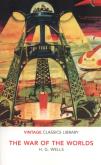
No one would have believed in the last years of the nineteenth century that this world was being watched keenly and closely by intelligences greater than man's; that as men busied themselves about their various concerns they were scrutinised and studied. Yet across the gulf of space, intellects vast and cool and unsympathetic regarded this earth with envious eyes, and slowly and surely drew their plans against us.
Then, late one night, in the middle of the English countryside, they landed.
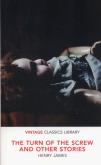
A young governess is sent to a great country house to care for two orphaned children. To begin with Flora and Miles seem to be model pupils but gradually the governess starts to suspect that something is very wrong with them. As she sets out to uncover the corrupt secrets of the house she becomes more and more convinced that something evil is watching her.
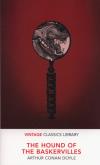
The Baskerville family curse tells of how a terrifying, supernatural hound roams the moors around Baskerville Hall and preys on members of the family in revenge for a ghastly crime committed by one of their ancestors. When Sir Charles Baskerville is found dead in the grounds, with a large animal footprint near his lifeless body, the locals are convinced that the hound is back. It is up to Sherlock Holmes and Dr Watson to uncover the truth and keep the new heir to the hall safe from danger.
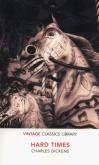
'Facts alone are wanted in life': the children at Mr Gradgrind's school are sternly ordered to stifle their imaginations and pay attention only to cold, hard reality. They live in a smoky, troubled industrial town so entertainment is hard to come by and resentments run deep. The effects of Gradgrind's teaching on his own children, Tom and Louisa, are particularly profound and leave them ill-equipped to deal with the unpredictable desires of the human heart. Luckily for them they have a friend in Sissy Jupe, the child of a circus clown, who retains her warm-hearted, compassionate nature despite the pressures around her.
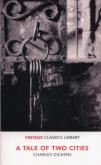
Lucie Manette has been separated from her father for eighteen years while he languished in Paris's most feared prison, the Bastille. Finally reunited, the Manettes' fortunes become inextricably intertwined with those of two men, the heroic aristocrat Darnay and the dissolute lawyer Carton. Their story, which encompasses violence, revenge, love and redemption, is grippingly played out against the backdrop of the terrifying brutality of the French Revolution.
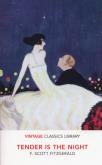
It is the French Riviera in the 1920s. Nicole and Dick Diver are a wealthy, elegant, magnetic couple. A coterie of admirers are drawn to them, none more so than the blooming young starlet Rosemary Hoyt. When Rosemary falls for Dick, the Diver's calculated perfection begins to crack. As dark truths emerge, Fitzgerald shows both the disintegration of a marriage and the failure of idealism. Tender is the Night is as sad as it is beautiful.
Edgar Allan Poe was a writer of uncommon talent; in The Murders in the Rue Morgue he created the genre of detective fiction while his genius for finding the strangeness lurking within us all has been an influence on everyone from Freud to Hollywood. This complete collection of all his short stories and novellas contains well-known tales 'The Pit and the Pendulum' and 'The Tell-Tale Heart' alongside hidden gems that both unsettle and enthrall the reader.
When Ishmael sets sail on the whaling ship Pequod one cold Christmas Day, he has no idea of the horrors awaiting him out on the vast and merciless ocean. The ship's strange captain, Ahab, is in the grip of an obsession to hunt down the famous white whale, Moby Dick, and will stop at nothing on his quest to annihilate his nemesis
In this powerfully influential series of short stories, James Joyce captures uneasy souls, shabby lives and innocent minds in the dark streets and homes of his native city. In doing so, he conjures uncertainties and desires, illumines moments of joy and sorrow otherwise lost in private memory, and pierces the many mysteries at the heart of things.
When a tornado crashes through Kansas city, Dorothy and her dog Toto are whisked far away, over the rainbow, to a strange land called Oz. How will they ever get home? And what is at the end of the yellow brick road? Plucky Dorothy and Toto embark on a magical adventure to search for the Wizard of Oz and along the way encounter the Tin Woodman, the Scarecrow and the Cowardly Lion.
This much loved tale has enchanted generations of children and adults alike.
'It's lovely to live on a raft. We had the sky up there, all speckled with stars, and we used to lay on our backs and look up at them'
Huck Finn spits, swears, smokes a pipe and never goes to school. With his too-big clothes and battered straw hat, Huck is in need of 'civilising', and the Widow Douglas is determined to take him in hand. And wouldn't you know, Huck's no-good Pap is also after him and he locks Huck up in his cabin in the woods. But Huck won't stand too much of this, and after a daring escape, he takes off down the Mississppi on a raft with an runaway slave called Jim. But plenty of dangers wait for them along the river - will they survive and win their freedom?
‘Fifteen men on the dead man's chest-Yo-ho-ho and a bottle of rum!’ Treasure Island is a tale of pirates and villains, maps, treasure and shipwreck, and is perhaps the best adventure story ever written.
When young Jim Hawkins finds a packet in Captain Flint's sea chest, he could not know that the map inside it would lead him to unimaginable treasure. Shipping as cabin boy on the Hispaniola, he sails with Squire Trelawney, Captain Smollett, Dr Livesey, the sinister Long John Silver and a frightening crew to Treasure Island. There, mutiny, murder and mayhem lead to a thrilling climax.
The exploits of Tom Sawyer, a consummate prankster with a quick wit, captivate children of all ages. Yet through the novel's humorous escapades, from the episodes of the whitewashed fence and the ordeal in the cave to the trial of Injun Joe, Mark Twain explores deeper themes within the adult world Tom will one day join. These include the baser human instincts of dishonesty and superstition, murder and revenge, starvation and slavery.
Robinson Crusoe runs away from home to join the navy. After a series of adventures at sea, he is shipwrecked in a devastating storm, and finds himself alone on a remote desert island. He remains there many years, building a life for himself in solitude, until the day he discovers another man's footprint in the sand...
In this vivid portrait of one day in a woman's life, Clarissa Dalloway is preoccupied with the last-minute details of party she is to give that evening. As she readies her house she is flooded with memories and re-examines the choices she has made over the course of her life.
Dr Jekyll has been experimenting with his identity. He has developed a drug which separates the two sides of his nature and allows him occasionally to abandon himself to his most corrupt inclinations as the monstrous Mr Hyde. But gradually he begins to find that the journey back to goodness becomes more and more difficult, and the risk that Mr Hyde will break free entirely from Dr Jekyll's control puts all of London in grave peril.
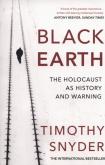
We have come to see the Holocaust as a factory of death, organised by bureaucrats. Yet by the time the gas chambers became operation more than a million European Jews were already dead: shot at close range over pits and ravines. They had been murdered in the lawless killing zones created by the German colonial war in the East, many on the fertile black earth that the Nazis believed would feed the German people.
It comforts us to believe that the Holocaust was a unique event. But as Timothy Snyder shows, we have missed basic lessons of the history of the Holocaust, and some of our beliefs are frighteningly close to the ecological panic that Hitler expressed in the 1920s. As ideological and environmental challenges to the world order mount, our societies might be more vulnerable than we would like to think.
Timothy Snyder’s Bloodlands was an acclaimed exploration of what happened in eastern Europe between 1933 and 1945, when Nazi and Soviet policy brought death to some 14 million people. Black Earth is a deep exploration of the ideas and politics that enabled the worst of these policies, the Nazi extermination of the Jews. Its pioneering treatment of this unprecedented crime makes the Holocaust intelligible, and thus all the more terrifying.
The Curious Incident of the Dog in the Night-Time is a murder mystery novel like no other. The detective, and narrator, is Christopher Boone. Christopher is fifteen and has Asperger's Syndrome. He knows a very great deal about maths and very little about human beings. He loves lists, patterns and the truth. He hates the colours yellow and brown and being touched. He has never gone further than the end of the road on his own, but when he finds a neighbour's dog murdered he sets out on a terrifying journey which will turn his whole world upside down.
The phenomenal global and Sunday Times bestseller from the author of Sapiens
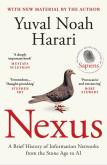
For the last 100,000 years, we Sapiens have accumulated enormous power. But despite all our discoveries, inventions and conquests, we now find ourselves in an existential crisis. The world is on the verge of ecological collapse. International and political tensions are rising. And we are rushing headlong into the age of AI – an alien information network that threatens to annihilate us. For all that we have accomplished, why are we so self-destructive?
Nexus looks through the long lens of human history to consider how the flow of information has brought us here. Taking us from the Stone Age through the canonisation of the Bible, the invention of print, the rise of mass media and the recent resurgence of populism, Yuval Noah Harari asks us to consider the complex relationship between information and truth, bureaucracy and mythology, wisdom and power. He explores how systems like the Roman Empire, the Catholic Church and the Soviet Union have wielded information to achieve their goals, for good and ill. And he addresses the urgent choices we face as non-human intelligence threatens our very existence.
Information is not the raw material of truth, nor is it a mere weapon. Nexus explores the hopeful middle ground between these extremes and, in doing so, rediscovers our shared humanity.
Ten produkt jest zapowiedzią. Realizacja Twojego zamówienia ulegnie przez to wydłużeniu do czasu premiery tej pozycji. Czy chcesz dodać ten produkt do koszyka?