This stunning and elegiac novel by the author of the internationally acclaimed Wind-Up Bird Chronicle has sold over 4 million copies in Japan and is now available to American audiences for the first time. It is sure to be a literary event.
Toru, a quiet and preternaturally serious young college student in Tokyo, is devoted to Naoko, a beautiful and introspective young woman, but their mutual passion is marked by the tragic death of their best friend years before. Toru begins to adapt to campus life and the loneliness and isolation he faces there, but Naoko finds the pressures and responsibilities of life unbearable. As she retreats further into her own world, Toru finds himself reaching out to others and drawn to a fiercely independent and sexually liberated young woman.
A poignant story of one college student's romantic coming-of-age, Norwegian Wood takes us to that distant place of a young man's first, hopeless, and heroic love.
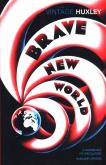
Far in the future, the World Controllers have created the ideal society. Through clever use of genetic engineering, brainwashing and recreational sex and drugs all its members are happy consumers. Bernard Marx seems alone harbouring an ill-defined longing to break free. A visit to one of the few remaining Savage Reservations where the old, imperfect life still continues, may be the cure for his distress...
Huxley's ingenious fantasy of the future sheds a blazing light on the present and is considered to be his most enduring masterpiece.
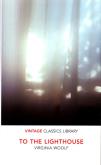
To the Lighthouse is at once a vivid impressionistic depiction of a family, the Ramseys, whose annual summer holiday in Scotland falls under the shadow of war, and a meditation on marriage, on parenthood and childhood, on grief, tyranny and bitterness. The novel's use of stream of consciousness, reminiscence and shifting perspectives gives it an intimate, poetic essence, and at the time of publication in 1927 it represented an utter rejection of all that had gone before.
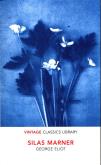
Wrongly accused of theft and exiled from a religious community many years before, the embittered weaver Silas Marner lives alone in Raveloe, living only for work and his precious hoard of money. But when his money is stolen and an orphaned child finds her way into his house, Silas is given the chance to transform his life. His fate, and that of the little girl he adopts, is entwined with Godfrey Cass, son of the village Squire, who, like Silas, is trapped by his past. Silas Marner, George Eliot's favourite of her novels, combines humour, rich symbolism and pointed social criticism to create an unsentimental but affectionate portrait of rural life.
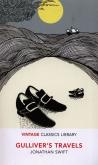
'Among the six indispensable books in world literature' George Orwell
In the course of his famous travels, Gulliver is captured by miniature people who wage war on each other because of religious disagreement over how to crack eggs, is sexually assaulted by giants, visits a floating island, and decides that the society of horses is better than that of his fellow man. Swift's tough, filthy and incisive satire has much to say about the state of the world today and is presented here in its unexpurgated entirety.
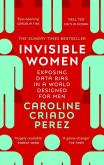
Imagine a world where your phone is too big for your hand, where your doctor prescribes a drug that is wrong for your body, where in a car accident you are 47% more likely to be seriously injured, where every week the countless hours of work you do are not recognised or valued.
If any of this sounds familiar, chances are that you're a woman.
Invisible Women shows us how, in a world largely built for and by men, we are systematically ignoring half the population. It exposes the gender data gap – a gap in our knowledge that is at the root of perpetual, systemic discrimination against women, and that has created a pervasive but invisible bias with a profound effect on women’s lives.
From government policy and medical research, to technology, workplaces, urban planning and the media, Invisible Women reveals the biased data that excludes women.
Award-winning campaigner and writer Caroline Criado Perez brings together for the first time an impressive range of case studies, stories and new research from across the world that illustrate the hidden ways in which women are forgotten, and the impact this has on their health and well-being. In making the case for change, this powerful and provocative book will make you see the world anew.
Isherwood's short, poignant novel is a tender and wistful love story
Celebrated as a masterpiece from its first publication, A Single Man is the story of George, an English professor in suburban California left heartbroken after the death of his lover, Jim. With devastating clarity and humour, Isherwood shows George's determination to carry on, evoking the unexpected pleasures of life as well as the soul's ability to triumph over loneliness and alienation.
'A virtuoso piece of work...courageous...powerful' Sunday Times
'This mix of humour and stoicism in the face of pent-up grief is essential Isherwood' Guardian
Discover the dark and decadent novella that inspired Cabaret.
Set in the 1930s, Goodbye to Berlin evokes the glamour and sleaze, excess and repression of Berlin society. Isherwood shows the lives of people under threat from the rise of the Nazis: a wealthy Jewish heiress, Natalia Landauer, a gay couple, Peter and Otto, and an English upper-class waif, the divinely self-indulgent Sally Bowles.
'Brilliant sketches of a society in decay' George Orwell
'Isherwood is a master of the emotionally cathartic moment, funny and perspicacious' Evening Standard
Sonoko Kakiuchi is a cultured Osaka lady in an uninspiring marriage. When she decides to take an art class in town she meets the extraordinary Mitsuko, a woman as beautiful and charismatic as she is cunning. They begin a passionate affair and Sonoko soon finds herself infatuated by Mitsuko, and ensnared in a web of sex, humiliation and deceit.
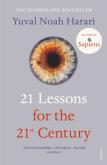
In twenty-one bite-sized lessons, Yuval Noah Harari explores what it means to be human in an age of bewilderment.
How can we protect ourselves from nuclear war, ecological cataclysms and technological disruptions? What can we do about the epidemic of fake news or the threat of terrorism? What should we teach our children?
Yuval Noah Harari takes us on a thrilling journey through today’s most urgent issues. The golden thread running through his exhilarating new book is the challenge of maintaining our collective and individual focus in the face of constant and disorienting change. Are we still capable of understanding the world we have created?
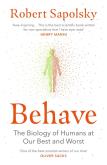
Why do human beings behave as they do?
We are capable of savage acts of violence but also spectacular feats of kindness: is one side of our nature destined to win out over the other?
Every act of human behaviour has multiple layers of causation, spiralling back seconds, minutes, hours, days, months, years, even centuries, right back to the dawn of time and the origins of our species.
In the epic sweep of history, how does our biology affect the arc of war and peace, justice and persecution? How have our brains evolved alongside our cultures?
This is the exhilarating story of human morality and the science underpinning the biggest question of all: what makes us human?
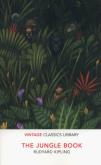
Mowgli, the man-cub who is brought up by wolves in the jungles of Central India, is one of the greatest literary myths ever created. As he embarks on a series of thrilling escapades, Mowgli encounters such unforgettable creatures as Bagheera, the graceful black panther, and Shere Khan, the tiger with the blazing eyes. Other animal stories range from the simple heroism found in 'Rikki-tikki-tavi' to the macabre comedy 'The Undertakers'. A rich and complex fable of human life, Kipling's enduring classic dazzles the imagination with its astonishing descriptive powers and lively sense of adventure.
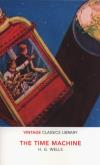
In the Time Traveller's miraculous new machine, we will be carried from a Victorian dinner table to 802,701 AD, when the Earth is divided between the gentle, ineffective Eloi, and the ape-like Morlocks; forward again by a million years or so to glimpse a dying world of blood-red beaches and menacing shapes; and on again to the last days of our planet, a remote twilight where nothing moves but darkness and a cold wind.
Brilliantly imaginative fiction or the shape of things to come? H.G. Wells's masterpiece still retains its power to provoke and enthral.
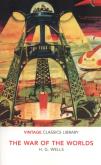
No one would have believed in the last years of the nineteenth century that this world was being watched keenly and closely by intelligences greater than man's; that as men busied themselves about their various concerns they were scrutinised and studied. Yet across the gulf of space, intellects vast and cool and unsympathetic regarded this earth with envious eyes, and slowly and surely drew their plans against us.
Then, late one night, in the middle of the English countryside, they landed.
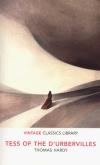
Tess is an innocent young girl until the day she goes to visit her rich 'relatives', the D'Urbervilles, in hope that they might help her alleviate her own family's poverty. Her encounter with her manipulative cousin, Alec, leads her onto a path that is beset with suffering and betrayal. When she falls in love with another man, Angel Clare, Tess sees a potential escape from her past, but only if she can tell him her shameful secret...
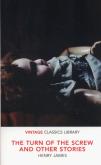
A young governess is sent to a great country house to care for two orphaned children. To begin with Flora and Miles seem to be model pupils but gradually the governess starts to suspect that something is very wrong with them. As she sets out to uncover the corrupt secrets of the house she becomes more and more convinced that something evil is watching her.
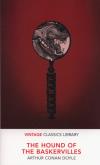
The Baskerville family curse tells of how a terrifying, supernatural hound roams the moors around Baskerville Hall and preys on members of the family in revenge for a ghastly crime committed by one of their ancestors. When Sir Charles Baskerville is found dead in the grounds, with a large animal footprint near his lifeless body, the locals are convinced that the hound is back. It is up to Sherlock Holmes and Dr Watson to uncover the truth and keep the new heir to the hall safe from danger.
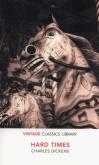
'Facts alone are wanted in life': the children at Mr Gradgrind's school are sternly ordered to stifle their imaginations and pay attention only to cold, hard reality. They live in a smoky, troubled industrial town so entertainment is hard to come by and resentments run deep. The effects of Gradgrind's teaching on his own children, Tom and Louisa, are particularly profound and leave them ill-equipped to deal with the unpredictable desires of the human heart. Luckily for them they have a friend in Sissy Jupe, the child of a circus clown, who retains her warm-hearted, compassionate nature despite the pressures around her.
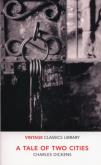
Lucie Manette has been separated from her father for eighteen years while he languished in Paris's most feared prison, the Bastille. Finally reunited, the Manettes' fortunes become inextricably intertwined with those of two men, the heroic aristocrat Darnay and the dissolute lawyer Carton. Their story, which encompasses violence, revenge, love and redemption, is grippingly played out against the backdrop of the terrifying brutality of the French Revolution.
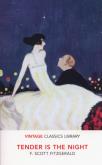
It is the French Riviera in the 1920s. Nicole and Dick Diver are a wealthy, elegant, magnetic couple. A coterie of admirers are drawn to them, none more so than the blooming young starlet Rosemary Hoyt. When Rosemary falls for Dick, the Diver's calculated perfection begins to crack. As dark truths emerge, Fitzgerald shows both the disintegration of a marriage and the failure of idealism. Tender is the Night is as sad as it is beautiful.
Ten produkt jest zapowiedzią. Realizacja Twojego zamówienia ulegnie przez to wydłużeniu do czasu premiery tej pozycji. Czy chcesz dodać ten produkt do koszyka?