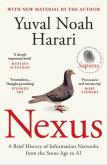
The phenomenal global and Sunday Times bestseller from the author of Sapiens
For the last 100,000 years, we Sapiens have accumulated enormous power. But despite all our discoveries, inventions and conquests, we now find ourselves in an existential crisis. The world is on the verge of ecological collapse. International and political tensions are rising. And we are rushing headlong into the age of AI – an alien information network that threatens to annihilate us. For all that we have accomplished, why are we so self-destructive?
Nexus looks through the long lens of human history to consider how the flow of information has brought us here. Taking us from the Stone Age through the canonisation of the Bible, the invention of print, the rise of mass media and the recent resurgence of populism, Yuval Noah Harari asks us to consider the complex relationship between information and truth, bureaucracy and mythology, wisdom and power. He explores how systems like the Roman Empire, the Catholic Church and the Soviet Union have wielded information to achieve their goals, for good and ill. And he addresses the urgent choices we face as non-human intelligence threatens our very existence.
Information is not the raw material of truth, nor is it a mere weapon. Nexus explores the hopeful middle ground between these extremes and, in doing so, rediscovers our shared humanity.
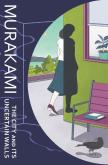
The breathtaking new novel about the boundaries between worlds and individuals, from the internationally bestselling author of 1Q84.
A love story, a quest, an ode to books and to the libraries that house them, The City and Its Uncertain Walls is a parable for these strange times.
STEP INTO THE CITY. . .
When a young man’s girlfriend mysteriously vanishes, he sets his heart on finding the imaginary city where her true self lives. His search will lead him to take a job in a remote library with mysteries of its own.
When he finally makes it to the walled city, a shadowless place of horned beasts and willow trees, he finds his beloved working in a different library – a dream library. But she has no memory of their life together in the other world and, as the lines between reality and fantasy start to blur, he must decide what he’s willing to lose.
A love story, a quest, an ode to books and to the libraries that house them, The City and Its Uncertain Walls is a parable for these strange times.
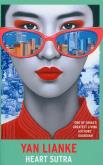
Prizewinning Yan Lianke returns with a campus novel like no other following a young Buddhist as she journeys through worldly temptation
Yahui is a young Buddhist at university. But this is no ordinary university. It is populated by every faith in China: Buddhists, Daoists, Catholics, Protestants and Muslims who jostle alongside one another in the corridors of learning, and whose deities are never far from the classroom.
Her days are measured out making elaborate religious papercuts, taking part in highly charged tug-of-war competitions between the faiths and trying to resist the daily temptation to return to secular life and abandon the ascetic ideals that are her calling. Everything seems to dangle by a thread. But when she meets a Daoist student called Mingzheng, an inexorable romance of mythic proportions takes hold of her.
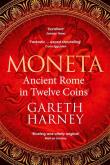
HOLD THE POWER AND GLORY OF ANCIENT ROME IN THE PALM OF YOUR HAND.
A wild she-wolf tenderly nurses infant twins Romulus and Remus.
Marcus Junius Brutus looks out over chaos and conflict, flaunting the bloodied daggers with which he murdered Julius Caesar.
Trumpets blare, crowds roar, gladiators enter the grand Colosseum. Let the games begin.
Frescoes fade and books vanish, but the story of Rome’s epic rise and fall survives in scenes struck in gold, silver and bronze. Told through the lives of twelve remarkable coins, this is ancient Rome as you’ve never seen it before.
* A Financial Times Book of the Year * A Sunday Times and Mail on Sunday Summer Read *
A husband and wife each write in their diary, never knowing if it is being read by the other.
Ikuko and her husband are deeply in love but have grown physically apart, each unsure of the other’s desires. When Ikuko finds the key to her husband’s diary she ignores it, but she does begin to keep a diary of her own. Both parties start to set down in writing the evolution of their sex life and their deepest, most private desires. Who is reading whose diary? Who knows what? So begins an extended erotic game of lust, jealousy and manipulation.
‘A story about sex and marriage that is as explicit as any novel on the theme since Lady Chatterley's Lover’ The Times
'Sensational and serious' New York Times
Two or three times a day I think to myself: maybe I’ll die today.
While recovering from a stroke, seventy-seven-year-old Utsugi turns to his diary to wryly record his struggle with his ageing body. Though impotent and in pain he notes down his growing desire for his beautiful daughter-in-law Satsuko, a chic, Westernised dancer with a shady past. Written when the author himself was an old man and shining with self-effacing humour, Tanizaki’s last novel is a tragicomedy about desire and the will to survive.
‘Lightly comic, lyrically evocative and savagely cruel’ New York Times
‘An artistic masterpiece’ Irish Times
"Hey! Cheeses, what an idea! I kill your wife and you kill my father! We meet on a train, see, and nobody knows we know each other! Perfect alibis! Catch?"
From this moment, almost against his conscious will, Guy Haines is trapped in a nightmare of shared guilt and an insidious merging of personalities. The psychologists would call it folie a deux...
Strangers on a Train was Patricia Highsmith's first novel, and adapted into a classic film by Alfred Hitchcock.
'A true original in crime fiction' The Times
She’s living a perfect life – so why does Laurence feel so torn?
Weekends in the country, weekdays in Paris – Laurence’s life features all the trappings of 1960s French bourgeoisie. She has money, a handsome husband, two daughters and a lover. She also has a successful career as an advertising copywriter, though her mind writes copy while she’s at home, and dreams of domesticity in the office.
All her life she has strived to meet the expectations of others. But when her 10-year-old daughter, Catherine, starts to vocalise her despair about the unfairness of the world, Laurence must finally grapple with a life that prizes image over truth.
Slim but powerful, this is a classic story of womanhood and its oppressors, parents and their children, and the quest for personal truth – by the iconic feminist Simone de Beauvoir.
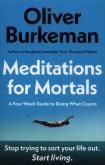
Stop trying to sort your life out. Start living.
Our lives can feel defined by the struggle with overwhelm, endless decisions and striving to be productive. Wouldn’t it be good to stop doing all that? What if we could find freedom – and get more of the important things done – by embracing our limitations, and by letting things happen instead of forcing them?
Meditations for Mortals begins with the reality in which we actually find ourselves, not with fantasies of an ideal existence. Reflecting on ideas from philosophy, religion, psychology and self-help, it offers us a powerful and practical new way to do what counts: a guiding outlook Oliver Burkeman calls ‘imperfectionism’.
This book is a profound and liberating crash course in living more fully. It overturns much familiar advice and opens a gateway to a saner, freer and more enchantment-filled life.
One day at a time.
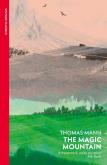
A brief visit to a Swiss sanatorium becomes a life-altering seven-year odyssey.
Hans Castorp arrives at a sanatorium in the Swiss Alps to visit his cousin, intending to stay for just three weeks. But when he falls ill, he remains and is drawn in by the introspection and erudition that define life in the mountains. As his stay extends to seven transformative years, Hans falls in love and becomes intoxicated with the ideas he hears at the clinic - ideas which will strain and crack apart in a world on the verge of the First World War.
'Magnificent... a beautiful, feverish account of obsessive love' Jonathan Coe, Guardian
'The greatest German novelist of the 20th century' Spectator
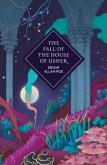
A beautiful deluxe gift edition of Poe's most macabre and irresistible stories with foiled covers, marbled endpapers, sprayed edges, beautiful paper and finished with a silk ribbon.
Edgar Allan Poe's stories uncover the deeply unnerving strangeness lurking within us all. His genius for horror and suspense went on to influence the world, from Freud to Hollywood. This complete collection of his best short stories contains the well-known works 'The Pit and the Pendulum' and 'The Tell-Tale Heart' alongside a wide range of delightfully terrifying tales to unsettle and enthrall.
This hardback is part of VINTAGE COLLECTOR’S CLASSICS, a series of luxurious books especially crafted for collectors and fans of beautiful special editions. Sumptuous design meets the highest quality production. Discover timeless classics beautifully bound for every bookshelf.
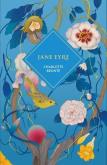
A beautiful deluxe gift edition of Charlotte Bronte’s masterpiece with foiled covers, marbled endpapers, sprayed edges, beautiful paper and finished with a silk ribbon.
As an orphan, Jane's childhood is full of trouble, but her stubborn independence and sense of self help her to steer through the miseries inflicted by cruel relatives and a brutal school. A position as governess at the Thornfield Hall promises a kind of freedom. But Thornfield is a house full of secrets, its master a passionate, tormented man, and before long Jane faces her greatest struggle in a choice between love and self-respect.
This hardback is part of VINTAGE COLLECTOR’S CLASSICS, a series of luxurious books especially crafted for collectors and fans of beautiful special editions. Sumptuous design meets the highest quality production. Discover timeless classics beautifully bound for every bookshelf.
A beautiful deluxe gift edition of Jane Austen's beloved novel with foiled covers, marbled endpapers, sprayed edges, beautiful paper and finished with a silk ribbon.
Emma is young, rich and independent. She has decided not to get married and instead spends her time organising her acquaintances' love affairs. Her plans for the matrimonial success of her new friend Harriet, however, lead her into complications that ultimately test her own detachment from the world of romance.
This hardback is part of VINTAGE COLLECTOR’S CLASSICS, a series of luxurious books especially crafted for collectors and fans of beautiful special editions. Sumptuous design meets the highest quality production. Discover timeless classics beautifully bound for every bookshelf.
TRANSLATED AND INTRODUCED BY DAVID LUKE
Death in Venice is a story of obsession. Gustave von Aschenbach is a successful but ageing writer who travels to Venice for a holiday. One day, at dinner, Aschenbach notices an exceptionally beautiful young boy who is staying with his family in the same hotel. Soon his days begin to revolve around seeing this boy and he is too distracted to pay attention to the ominous rumours that have begun to circulate about disease spreading through the city.
Discover Mann's Nobel Prizewinning semi-autobiographical and sweeping family epic.
The Buddenbrook clan is everything you'd expect of a nineteenth-century German merchant family - wealthy, esteemed, established. Four generations later, a tide of twentieth-century modernism has gradually disintegrated the bourgeois values on which the Buddenbrooks built their success.
In this, Mann's first novel, his astounding, semi-autobiographical family epic, he portrays the transition of genteel Germanic stability to a very modern uncertainty.
'Perhaps the first great novel of the 20th century' New York Times
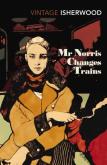
After a chance encounter on a train the English teacher William Bradshaw starts a close friendship with the mildly sinister Arthur Norris. Norris is a man of contradictions; lavish but heavily in debt, excessively polite but sexually deviant. First published in 1933 Mr Norris Changes Trains piquantly evokes the atmosphere of Berlin during the rise of the Nazis.
A deliberate historical parable. Prater Violet resembles episodes in Goodbye to Berlin and keeps up the same high level of excellence' - Edmund Wilson
An impatient phone call from the temperamental Austrian director, Friedrich Bergmann, introduces a young Christopher Isherwood to the film industry. Isherwood's job is to rescue the script of an idiotic love story set in nineteenth-century Vienna, a film called Prater Violet. In the real Vienna of 1934 the Austrian Right crushes a socialist uprising. Bergmann is distraught and his prophecy of the coming war goes unheeded. As tensions on set grow, studio intrigues and competing egos threaten to derail the whole project.
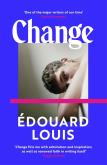
The major new novel from the once-in-a-generation author of The End of Eddy
The major new novel from the once-in-a-generation author of The End of Eddy
'One of the most important, politically vital and morally bracing writers of his generation’ Keiran Goddard, Guardian
‘Change fills me with admiration and inspiration, as well as renewed faith in writing itself’ Maggie Nelson
‘One of the major writers of our time' Garth Greenwell
‘A mesmeric novel’ Daily Mail
Édouard Louis longs for a life beyond the poverty, discrimination and violence in his working-class hometown - so he sets out to study in Amiens, and, later, at university in Paris. He sheds the provincial 'Eddy' for an elegant new name, determined to eradicate every aspect of his past. He reads incessantly; he dines with aristocrats; he spends nights with millionaires and drug dealers alike.
Everything he does is motivated by a single obsession: to become someone else. Change is at once a personal odyssey, a story of dreams, friendship and the perils of leaving the past behind, and a profound portrait of a society divided by class, inequality and power.
Life on our planet as you've never seen it before
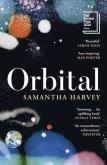
A team of astronauts in the International Space Station collect meteorological data, conduct scientific experiments and test the limits of the human body. But mostly they observe. Together they watch their silent blue planet, circling it sixteen times, spinning past continents and cycling through seasons, taking in glaciers and deserts, the peaks of mountains and the swells of oceans. Endless shows of spectacular beauty witnessed in a single day.
Yet although separated from the world they cannot escape its constant pull. News reaches them of the death of a mother, and with it comes thoughts of returning home. They look on as a typhoon gathers over an island and people they love, in awe of its magnificence and fearful of its destruction.
The fragility of human life fills their conversations, their fears, their dreams. So far from earth, they have never felt more part - or protective - of it. They begin to ask, what is life without earth? What is earth without humanity?
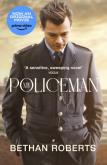
**NOW A MAJOR FILM STARRING HARRY STYLES**This love is all-consuming It is in 1950s' Brighton that Marion first catches sight of the handsome and enigmatic Tom. He teaches her to swim in the shadow of the pier and Marion is smitten - determined her love will be enough for them both. A few years later in Brighton Museum Patrick meets Tom.
Patrick is besotted with Tom and opens his eyes to a glamorous, sophisticated new world. Tom is their policeman, and in this age it is safer for him to marry Marion. The two lovers must share him, until one of them breaks and three lives are destroyed.
'A sensitive, sweeping novel' VOGUE 'Tense, romantic, smart...I loved it. Devoured it!' RUSSELL T. DAVIES 'A powerful story of forbidden love, regret, and living as your true self' VANITY FAIR 'A moving story of longing and frustration' OBSERVER
Ten produkt jest zapowiedzią. Realizacja Twojego zamówienia ulegnie przez to wydłużeniu do czasu premiery tej pozycji. Czy chcesz dodać ten produkt do koszyka?