W tej strefie zapraszamy czytelników tak zwane artystyczne dusze po książki z kategorii Sztuka. Polecamy szereg publikacji o sztuce i jej historii,ciekawostki i portfolia artystów, eseje, albumy, książki o malarstwie, rzeźbiarstwie, architekturze oraz histoii fotografii. Biografie ciekawych artystów, książki i powieści przedstawiające fascynujące losy malarzy i osób uwiecznianych na obrazach. W tym dziale tylko ksiązki ze sztuka w tle.
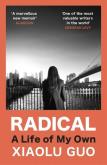
The new memoir from prize-winning writer and filmmaker Xiaolu Guo - playful, provocative and original, it's her deeply personal take on striving for a life of her own
'When it comes to spinning light and shadow on the complexities of living, loving and language, Xiaolu Guo is one of the most valuable writers in the world' DEBORAH LEVY
The world can seem strange and lonely when you step away from your family and everything you have tried to call your own. Yet beauty may also appear. In the autumn of 2019 Xiaolu travelled to New York to take up her position as a visiting professor for a year, leaving her child and partner behind in London. The encounter with American culture and people threatens her sense of identity and throws her into a crisis - of meaning, desire, obligation and selfhood.
This is a memoir about separation - by continents, by language, and from people. It's about being an outsider and the desperate longing to connect. Xiaolu uses her exploration of language (one of the meanings of the word 'radical' is the graphic component, or root, of Chinese characters), and her own life, to create this unique text. At once a memoir, a dictionary, and an ardent love letter, it is an expression of her fascination with Western culture and her nostalgia for Eastern landscapes, and an attempt to describe the space in between. An archive of an artist's search for creative freedom, it is above all else an intimate account of her efforts to carve out a life of her own.
'Radical in angle of attack, smart and brave' IAIN SINCLAIR, author of The Gold Machine
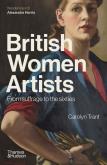
The story of modern British art history told through the stories of its women.
Consider for a moment the history of modern art in Britain; you may struggle to land on a narrative that features very many women. On this journey through a fascinating period of social change, artist Carolyn Trant fills in some of the gaps in traditional art histories. Introducing the lives and works of a rich network of neglected women artists, British Women Artists sets these alongside such renowned presences as Barbara Hepworth, Laura Knight and Winifred Nicholson. In an era of radical activism and great social and political change, women forged new relationships with art and its institutions. Such change was not without its challenges, and with acerbic wit Trant delves into the gendered make-up of the ‘avant-garde’, and the tyranny of artistic ‘isms’.
In the decades after women won the vote in Britain, the fortunes of women artists were shaped by war, domesticity, continued oppressions and spirited resistance. Some succeeded in forging creative careers; others were thwarted by the odds stacked against them. Weaving devastating individual stories with playful critique, British Women Artists reveals this hidden history.
"Śladami Apolonii Szczęsnej. Gerson - Słupski - Stefański - Prószyński - Białoszewski. Szkice o komunikowaniu artystycznym" to książka, która przedstawia twórczość polskiej malarki. Autorka, dr hab. n. hum. Anita Monika Frankowiak, w ciekawy sposób opisuje życie i twórczość Apolonii Szczęsnej, ukazując jej unikalne podejście do malarstwa oraz jej inspiracje artystyczne. Książka zawiera wiele reprodukcji obrazów Szczęsnej, które przybliżają nam jej artystyczny świat. To pozycja obowiązkowa dla miłośników sztuki oraz dla tych, którzy chcą poznać sylwetkę jednej z ciekawszych postaci polskiego malarstwa.
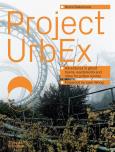
A thrilling photographic adventure around an offbeat selection of the world’s abandoned buildings, captured by one of the videogame industry’s most beloved creatives.
Project UrbEx documents a multitude of abandoned spaces – from decaying hotels and ex-military sites to disued factories to haunted hospitals -all seen through the eyes of the much-loved videogame creative Ikumi Nakamura. Much more than a photographic album, the book combines playful and humorous travel writing, videogame design theory, survival horror aesthetics and even manga comic illustrations – Project UrbEx offers a truly unique global adventure.
Project UrbEx features a foreword by videogame-designer-turned-photographer Liam Wong, one of Thames & Hudson’s most popular photobook authors and now part of Nakamura’s new videogame studio UNSEEN.
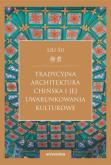
Tradycyjna architektura chińska i jej uwarunkowania kulturowe to erudycyjna opowieść o architekturze chińskiej osadzona w bardzo szerokim kontekście cywilizacyjnym. Autor – szanowany badacz – ze swadą i ogromną pewnością siebie porusza się po historii budownictwa i urbanistyki w Chinach, pokazując, jak losy tych dziedzin aktywności ludzkiej odzwierciedlają różne aspekty chińskiej tożsamości kulturowej. Książka obfituje w ciekawostki, błyskotliwe syntezy i oryginalne porównania. Czytelnicy z lektury wynoszą więc nie tyle szczegółową wiedzę o historii architektury, ile pogłębione zrozumienie rozmaitych niuansów cywilizacji chińskiej, odnoszących się do tego, jak budowano i mieszkano w Chinach na przestrzeni wieków. Autor nie szczędzi przy tym krytycznych uwag dotyczących modernizacji kraju i niewystarczającego szacunku do zabytków oraz ich odpowiedniej konserwacji w czasach współczesnych.
dr hab. Marcin Jacoby
sinolog, profesor Uniwersytetu SWPS
Liu Su urodził się w 1956 roku. Jest szeroko znanym badaczem chińskiej architektury tradycyjnej. Ukończył japoński Uniwersytet w Kagoshimie, pracuje na stanowisku profesora uczelni w Szkole Architektury Uniwersytetu Hunańskiego w Changsha w ChRL. Jest autorem 14 publikacji książkowych oraz kilkudziesięciu artykułów poświęconych architekturze, publikowanych w Chinach, Japonii, Korei Południowej i Tajwanie. Wykładowca akademicki. Aktywny popularyzator wiedzy o chińskiej architekturze tradycyjnej i jej ochronie oraz członek licznych gremiów naukowych i specjalistycznych związanych z tą problematyką.
Piotr Karpiński urodził się w 1978 roku. Absolwent stosunków międzynarodowych oraz sinologii na Uniwersytecie Warszawskim. Ukończył studia podyplomowe z zakresu historii sztuki PAN. Tłumacz języka chińskiego, od lat aktywnie zaangażowany w kreowanie przyjaznego środowiska rozwoju relacji polsko-chińskich. Autor opracowań wspierających promocję Polski w Chinach, współpracownik mediów singapurskich. Propagator wiedzy o Chinach, pilot wycieczek i przewodnik.
Diese wunderschöne Ausgabe ist eines der berühmtesten naturkundlichen Bücher aller Zeiten.
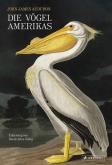
John James Audubons Die Vögel Amerikas, zwischen 1827 und 1838 erstmals publiziert, ist eines der bekanntesten naturwissenschaftlichen Bücher überhaupt. Mit seinen im Original lebensgroßen Aquarellen von den Vögeln Nordamerikas handelt es sich bei dem Band um das Meisterwerk von Audubon und um ein Werk, an dem alle naturwissenschaftlichen Illustrationen gemessen werden. Heute gibt es noch weniger als 120 Exemplare der großformatigen Originalausgabe, die sich in Museen oder Privatsammlungen auf der ganzen Welt befinden. Für die vorliegende Ausgabe wurde eines der zwei Exemplare, die sich im Natural History Museum in London befinden, ausgebunden und die 435 von Hand kolorierten Drucke nach den originalen Aquarellen Audubons wurden nach neuestem digitalen Standard abfotografiert.
Ob es sich um einen Säbelschnäbler, der in einem Teich jagt, oder eine Trauertaube, die auf einem blühenden Ast sitzt, handelt: Jeder der von Audubons dargestellten Vögel wird mit der Anmut und Schönheit eines Tieres in seiner natürlichen Umgebung dargestellt. Als begeisterter Naturmensch und -forscher bereiste Audubon ganz Nordamerika, um die Tiere zu studieren und zu sammeln. The Birds of America, das Kunst und Naturwissenschaft in einem Werk verbindet, faszinierte im 19. Jahrhundert das Publikum auf der ganzen Welt. Heute erinnert das Buch an die spektakuläre Biodiversität des nordamerikanischen Kontinents und an den Pioniergeist Audubons.
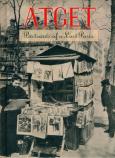
Atget's charming postcard portraits of Paris tradespeople were his only publications during his lifetime.
Few places on Earth have been as lovingly, almost fanatically, documented as Paris. Despite extraordinary growth and change, the Paris of the world’s imagination is still, to a remarkable degree, the Paris of the turn of the 20th century?the Paris captured by Eug?ne Atget.
The postcards in this book, which were more or less Atget’s only publications during his lifetime, were created near the beginning of his career, long before he was “discovered” in the 1920s and raised to the status of the poetic chronicler of the fragility of time and place. This postcard series is atypical of his later work and its exact origins remain something of a mystery. Its images, which depict Paris’ “little trades,” were meant to capture the ephemeral color of life. In them, Atget presents the market stands, the odd jobs, the cobbled-together shops and the informal entertainment that gave Paris its piquancy and eternally renewing liveliness.
This book presents the cards in sequence, along with an introduction that explains Atget’s participation in his own period’s photographic trends and his influence on later photography. With exquisitely reproduced images and elegantly translated captions, Atget – Postcards of a Lost Paris provides a peek at a disappearing way of life, and at Atget before he was Atget.
Frank Stella (*1936) situates his oeuvre not only in the present. Abstraction or representation, simulacrum, sign, and ornament, as well as questions of surface and space have fascinated him anew time and again.
The publication presents the following phases in his oeuvre in the context of the Museum Wiesbaden’s collection: the early works, the stripe paintings attributed to minimalism, the departure into space, and thus from the picture to the relief, as well as the use of ornament and arabesque. In interplay with current sculptures by the artist, not only the rigorousness of his oeuvre but also the relevance of his work until today is thus shown.
This book begins with both contexts: it explores how Ando unites Japanese tradition with a contemporary Western architectural idiom.
By analyzing systematically and chronologically the roots and sources that have influenced the thinking of the Pritzker Prize–winning architect, the author communicates the principles and constants to which Ando’s buildings can be traced back, and at the same time he places them in the appropriate context within the architect’s characteristic ideas and intentions.
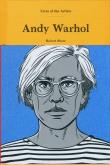
King of Pop Art Andy Warhol is one of the greatest artists of all time. Rarely venturing into public without his camera and tape recorder, Warhol was a great observer and documentarist of the American social scene. Somewhere within the iconic images, carefully-made personae, star-studded milieu, million-dollar price tags and famous quotes lies the real Andy Warhol.
But who was he?With Andy Warhol,Robert Shore unfolds the multi-dimensional Warhol, dissecting his existence as undisputed art-world hotshot, recreating the amazing circle that surrounded him, and tracing his path to stardom back through his early career and his awkward and unusual youth. After Warhol, nothing would be the same - he changed art forever. Find out how with his remarkable story
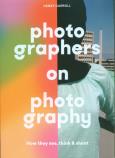
Think you know photography? Think again. Through a carefully curated selection of quotes and images, this book reveals what matters most to the masters of photography.
With 50 iconic images and accompanying text by Henry Carroll, author of the internationally bestselling Read This If You Want To Take Great Photographs series, you'll learn what photography actually means to the giants of the genres and how they developed their distinctive visual styles.
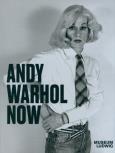
"Andy Warhol Now" is the catalogue for the retrospective at the Musem Ludwig in Cologne, which impressively illustrates his status as a Pop Art icon with 100 works, but includes his migrant background and homosexuality with a contemporary view.
As an underground art star, Andy Warhol was the antidote to the macho American postwar art scene who redefinded the language of painting, sculpture and film. This humanistic re-visioning explores his background as a child of an emigrant family, his ideas about death and religion and his queer perspective, revealing an artist who both succeeded and failed in equal measure and whose work marked a period of cultural transformation that still resonated today. Exploring Warhol's knowing flirtation with the commercial world of celebrity alongside his advocacy of alternative lifestyles, it presents his work within the the context of his time in a way that connects to contemporary concerns.
Including a unique contribution from writer Olivia Laing, an artist's response from Martine Sims and an exclusive interview with former Factory insider, Bob Colacello, this book returns Warhol to the shifting creative and political landscape in which he lived, and highlights how he and his work marked a period of cultural transformation.
Contributors include Kenneth Brummel, Stephan Diederich, Diedrich Diederichsen, Olivia Laing, Fiontán Moran, Gregor Muir, Charlie Porter, Martine Syms
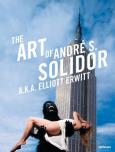
Elliot Erwitt's nom de plume, André S. Solidor, is all about the gratuitous and over-the-top, with the same tongue-in-cheek humor that is applied to Erwitt's more traditional work.
In the persona of André S. Solidor, veteran photographer Elliott Erwitt plunges deeply into the kookier excesses of contemporary photography.
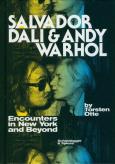
Few figures tower over twentieth-century art like Salvador Dali and Andy Warhol. Their works were ground-breaking and incalculably influential, yet at the same time both artists were wildly popular in their lifetime and have only become more so in the decades since their deaths. Despite the striking differences in their art and personalities, the two men nonetheless had a lot in common the most obvious being a strong sense of the power of publicity and an affinity for eccentricity and extravagance.
They also shared a love of New York, which both men made the heart of their social lives; it was there, in the 1960s, that they met for the first time. This book offers the first-ever direct juxtaposition of Dali and Warhol as personalities and artists. Torsten Otte builds his account through perceptive analyses of similarities in their lives and work, and reconstructs their many encounters based on first-hand accounts by some 120 people who knew and worked with the men.
Around sixty images, many of them published here for the first time, by eminent photographers such as Richard Avedon, David Bailey, Philippe Halsman, Christopher Makos, Man Ray, or Robert Whitaker, round out the book.
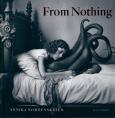
This is an incredible selection of images, created through promtography. The artist Annika Nordenskiold has used AI as a tool to portray her dreams and inner fantasies. None of the places, people or creatures in this book exist in the physical realm. Instead, they are conjured from the sum of human experience in our deep collective well. "I press enter and four versions of an image start appearing in the darkness. I have prompted deliberately, starting with characters and themes, the mood, and what matters most. Adding lesser details towards the end. I do not reference any existing work or artist, but I am specific with the time and setting. Slowly layers are added, and shapes are taking form." The result is a book that is both beautiful and intriguing.
Leopold Tyrmand, prekursor jazzu w Polsce, odpowiada na pytanie: co to jest jazz!
Książka ta nie ma charakteru ani formy podręcznika, leksykonu lub jakiegokolwiek vademecum w sprawach jazzu. Ma charakter eseju wypełnionego rozważaniami, zawierającego nieco informacji i dużo zupełnie osobistych impresji. Jest pochyleniem się nad problemem. Zagadnienie rozlewa się szeroko, obejmuje obszar ogromny, omywa różne dziedziny współczesnej kultury, wiąże się nierozerwalnie z codziennością — tak jak obyczaj i sztuka przenikają się we współczesności ze zjawiskiem trudnym i socjologicznie mało zbadanym, a zwanym na co dzień życiem rozrywkowym.
Czy książka ta odpowie generalnie na pytanie: co to jest jazz?
Chyba nie, chociaż jej ambicją jest zawarcie i przekazanie czytelnikowi pewnego kompendium. Powstaje jednak zagadnienie, czy w ogóle można na takie pytanie odpowiedzieć.
Powyższy opis pochodzi od wydawcy.
Głównym tematem 44 numeru „Studiów Filmoznawczych” jest fenomen seriali streamingowych – wśród analizowanych tytułów znalazły się zarówno produkcje polskie („Ślepnąć od świateł”, „Gang zielonej rękawiczki”), jak i zagraniczne („Biały Lotos”, „Squid Game”, „Riverdale”). W kilkunastu tekstach Autorzy i Autorki przyglądają się wybranym tytułom z różnorodnych perspektyw: narratologicznej, antropologicznej, intertekstualnej czy dyskursywnej.
Obok segmentu tematycznego w numerze opublikowano także dział Varia, a w nim analizy poświęcone konkretnym filmom (seria „Mad Max”, „Życie na podsłuchu”, „Jańcio Wodnik”) oraz zagadnieniom przedwojennej i współczesnej kultury filmowej.
Książka jest pokłosiem międzynarodowej konferencji naukowej „Między filmem a teatrem III. Na granicy: środkowoeuropejska przestrzeń kulturowa”, która odbyła się w Instytucie Filologii Polskiej Uniwersytetu Wrocławskiego. Tom został podporządkowany pięciu dominantom i podzielony na pięć rozdziałów; każdy z nich jest zbiorem tekstów jawnie z sobą dialogujących bądź będących autonomicznymi studiami przypadku.
A visual and cultural history of hip hop, charting its meteoric rise from underground trailblazer to global tastemaker
To tell the story of contemporary American culture is to tell the story of hip hop. From its humble, underground origins, hip hop transcended the confines of rap music and spread its influence across a broad spectrum of American life – fashion, film, art, sports, politics, language – to become a cultural movement of profound influence.
Rapper’s Deluxe is a critical contribution to America’s cultural canon, shining a light on hip hop’s ability to redefine and influence culture, through: photographs; fine art; advertisements; book, magazine, and album covers; film stills; and more. Organized chronologically from the 1970s to the present, image-rich and dynamic layouts show the people, places, events, objects, outfits, and inspirations that redefined the world as we know it – from fur-coated fans lining up for a Muhammad Ali fight at Madison Square Garden to a legendary party in the “Boogie Down” Bronx, through the hoods of South Los Angeles and the trap houses of Atlanta to the extravagant red carpet looks of the Met Gala.
Drawing on a broad range of curated examples, Dr. Todd Boyd re-examines hip hop’s legacy and how the genre remixes ‘high’ and ‘low’ culture, past and present, to come up with a style that is uniquely its own. Filled with original insights and clever wordplay, Rapper’s Deluxe is a tale of transformation, following hip hop’s arduous, but always triumphant, journey as it rose up to dominate the game.
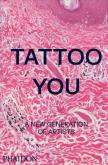
A cutting-edge illustrated survey of 75 contemporary tattoo artists from around the world who are pushing the boundaries of their art form
With nearly 700 images, Tattoo You: A New Generation of Artists showcases 75 rising stars who are redefining the industry. The first book of its kind, Tattoo You features artists curated by a global panel of experts, including some of tattooing’s most important names, such as Grace Neutral, Claudia De Sabe, Matt McCormick, Tamara Santibañez, Lal Hardy, Marisa Kakoulas, Matt Lodder, Tann Koga (Ink the Diaspora), and Jay Freestyle.
Each artist is accompanied by a selection of images illustrating their work, alongside an in-depth profile that delves into their influences, creative process, and how they are transforming the tattoo world. From minimal, blackwork, and Neo-Traditional tattoos to stick-and-poke and cultural and Indigenous practices, Tattoo You spans all styles and techniques, offering an inside look into how artists around the world work today, while simultaneously providing glimpses of tattooing’s future as an innovative, accessible, and revolutionary art form.
Ten produkt jest zapowiedzią. Realizacja Twojego zamówienia ulegnie przez to wydłużeniu do czasu premiery tej pozycji. Czy chcesz dodać ten produkt do koszyka?