Polecamy całą serię najlepszych książek psychologicznych. Znajdziecie tu najciekawsze i najbardziej popularne poradniki i podręczniki. Setki tytułów, do których chętnie się wraca. Polecamy szczególnie książkę psychiatry Viktora Frankla, która opisuje jego traumatyczne przeżycia z obozów koncentracyjnych podczas II wojny światowej oraz podstawy jego metody leczenia zaburzeń psychicznych. To jedna z najbardziej wpływowych książek w literaturze psychiatrycznej. Ponadto proponujemy również słynną książkę autorstwa Cialdini Robert B.To znakomita książka z dziedziny psychologii społecznej, prezentująca techniki wywierania wpływ na ludzi.
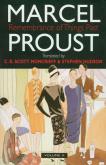
Marcel Proust (1871-1922) spent the last fourteen years of his life writing "A la recherche du temps perdu". It is an intimate epic, an excavation of the self, and a comedy of manners by turns and all at once. Proust is the twentieth century's Dante, presenting us with a unique, unsettling picture of ourselves as jealous lovers and unmitigated snobs, frittering our lives away, with only the hope of art as a possible salvation. He offers us a form of redemption for a sober and secular age.
Scott Moncrieff's delightful translation was for many years the only access to Proust in English. A labour of love that took him nearly as many years as Proust spent writing the original. Moncrieff's translation strives to capture the extraordinary blend of muscular analysis with poetic reverie that typifies Proust's style. It remains a justly famous classic of translation.
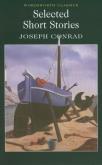
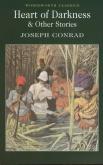
This specially commissioned selection of Conrad's short stories includes favourites such as Youth, a modern epic of the sea; The Secret Sharer, a thrilling psychological drama; An Outpost of Progress, a blackly comic prelude to Heart of Darkness; Amy Foster, a moving story of a shipwrecked, alienated Pole; and The Lagoon and Karain, two exotic, exciting Malay tales. Il Conde and The Tale are subtle portrayals of bewildered outrage; An Anarchist and The Informer are sardonic depictions of revolutionaries; and Prince Roman is a tale of magnificent, doomed heroism set in Conrad's native Poland during the Uprising of 1831. Both those new to Conrad's work and those familiar with his novels will delight in this wide-ranging collection.
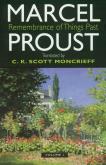
Marcel Proust (1871-1922) spent the last fourteen years of his life writing "la recherche du temps perdu". It is an intimate epic, an excavation of the self, and a comedy of manners by turns and all at once. Proust is the twentieth century's Dante, presenting us with a unique, unsettling picture of ourselves as jealous lovers and unmitigated snobs, frittering our lives away, with only the hope of art as a possible salvation. He offers us a form of redemption for a sober and secular age.
Scott Moncrieff's delightful translation was for many years the only access to Proust in English. A labour of love that took him nearly as many years as Proust spent writing the original. Moncrieff's translation strives to capture the extraordinary blend of muscular analysis with poetic reverie that typifies Proust's style. It remains a justly famous classic of translation.
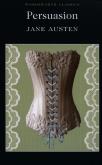
What does persuasion mean - a firm belief, or the action of persuading someone to think something else? Anne Elliot is one of Austen's quietest heroines, but also one of the strongest and the most open to change. She lives at the time of the Napoleonic wars, a time of accident, adventure, the making of new fortunes and alliances.
A woman of no importance, she manoeuvres in her restricted circumstances as her long-time love Captain Wentworth did in the wars. Even though she is nearly thirty, well past the sell-by bloom of youth, Austen makes her win out for herself and for others like herself, in a regenerated society.
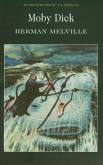
"Moby-Dick" is the story of Captain Ahab's quest to avenge the whale that 'reaped' his leg. The quest is an obsession and the novel is a diabolical study of how a man becomes a fanatic. But it is also a hymn to democracy. Bent as the crew is on Ahab's appalling crusade, it is equally the image of a co-operative community at work: all hands dependent on all hands, each individual responsible for the security of each. Among the crew is Ishmael, the novel's narrator, ordinary sailor, and extraordinary reader. Digressive, allusive, vulgar, transcendent, the story Ishmael tells is above all an education: in the practice of whaling, in the art of writing.
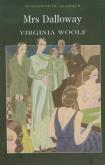
Virginia Woolf's singular technique in Mrs Dalloway heralds a break with the traditional novel form and reflects a genuine humanity and a concern with the experiences that both enrich and stultify existence.
Society hostess, Clarissa Dalloway is giving a party. Her thoughts and sensations on that one day, and the interior monologues of others whose lives are interwoven with hers gradually reveal the characters of the central protagonists. Clarissa's life is touched by tragedy as the events in her day run parallel to those of Septimus Warren Smith, whose madness escalates as his life draws toward inevitable suicide.
The delicate artistry and lyrical prose of Woolf?s fourth novel have established her as a writer of profound talent.
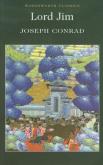
First published in 1900, Lord Jim established Conrad as one of the great storytellers of the twentieth century. Set in the Malay Archipelago, the novel not only provides a gripping account of maritime adventure and romance, but also an exotic tale of the East. Its themes also challenge the conventions of nineteenth-century adventure fiction, confirming Conrad's place in literature as one of the first 'modernists' of English letters.
Lord Jim explores the dilemmas of conscience, of moral isolation, of loyalty and betrayal confronting a sensitive individual whose romantic quest for an honourable ideal are tested to the limit. In this novel, Conrad draws on his background as Polish emigré, as well as his first-hand experience as a seaman, to experiment radically with the presentation of human frailty and doubt in the modern world.
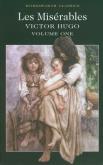
One of the great classics of western literature, Les Misérables is a magisterial work which is rich in both character portrayal and meticulous historical description.
Characters such as the absurdly criminalised Valjean, the street urchin Gavroche, the rascal Thenardier, the implacable detective Javert, and the pitiful figure of the prostitute Fantine and her daughter Cosette, have entered the pantheon of literary dramatis personae.
The reader is also treated to the unforgettable descriptions of the Battle of Waterloo and Valjean’s flight through the Paris sewers.
Volume 1 of 2
Generally regarded as the pre-eminent work of Conrad's shorter fiction, Heart of Darkness is a chilling tale of horror which, as the author intended, is capable of many interpretations. Set in the Congo during the period of rapid colonial expansion in the 19th century, the story deals with the highly disturbing effects of economic, social and political exploitation of European and African societies and the cataclysmic behaviour this induced in some individuals.
The other two stories in this book – Youth and The End of the Tether – concern the sea and those who sail upon it, a genre in which Conrad reigns supreme.
With an Introduction and Notes by Professor Len Platt, Professor of Modern Literatures, Head of Goldsmiths Learning Enhancement Unit, Goldsmiths, University of London,New Cross, London SE14 6NW.
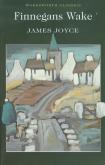
Finnegans Wake is the book of Here Comes Everybody and Anna Livia Plurabelle and their family - their book, but in a curious way the book of us all as well as all our books. Joyce's last great work, it is not comprised of many borrowed styles, like Ulysses, but, rather, formulated as one dense, tongue-twisting soundscape.
This ‘language’ is based on English vocabulary and syntax but, at the same time, self-consciously designed to function as a pun machine with an astonishing capacity for resisting singularity of meaning. Announcing a ‘revolution of the word’, this astonishing book amounts to a powerfully resonant cultural critique - a unique kind of miscommunication which, far from stabilizing the world in meaning, constructs a universe radically unfixed by a wild diversity of possibilities and potentials. It also remains the most hilarious, ‘obscene’, book of innuendos ever to be imagined.
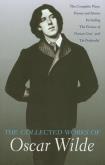
Wilde's works are suffused with his aestheticism, brilliant craftsmanship, legendary wit and, ultimately, his tragic muse. He wrote tender fairy stories for children employing all his grace, artistry and wit, of which the best-known is The Happy Prince. Counterpoints to this were his novel The Picture of Dorian Gray, which shocked and outraged many readers of his day, and his stories for adults which exhibited his fascination with the relations between serene art and decadent life. Wilde took London by storm with his plays, particularly his masterpiece The Importance of Being Earnest.
His essays - in particular De Profundis- and his Ballad of Reading Gaol, both written after his release from prison, strikingly break the bounds of his usual expressive range. His other essays and poems are all included in this comprehensive collection of the works of one of the most exciting writers of the late nineteenth century.
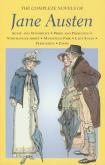
Jane Austen is without question, one of England's most enduring and skilled novelists. With her wit, social precision, and unerring ability to create some of literature's most charismatic and believable heroines, she mesmerises her readers as much today as when her novels were first published.
Whether it is her sharp, ironic gaze at the Gothic genre invoked by the adventures of Catherine Morland in Northanger Abbey; the diffident and much put-upon Fanny Price struggling to cope with her emotions in Mansfield Park; her delightfully paced comedy of manners and the machinations of the sisters Elinor and Marianne in Sense and Sensibility; the quiet strength of Anne Elliot in Persuasion succeeding in a world designed to subjugate her very existence; and Emma - 'a heroine whom no one but myself will like' teased Austen - yet another irresistible character on fire with imagination and foresight. Indeed not unlike her renowned creator.
Jane Austen is as sure-footed in her steps through society's whirlpools of convention and prosaic mores as she is in her sometimes restrained but ever precise and enduring prose.
Crime and Punishment is one of the greatest and most readable novels ever written. From the beginning we are locked into the frenzied consciousness of Raskolnikov who, against his better instincts, is inexorably drawn to commit a brutal double murder.
From that moment on, we share his conflicting feelings of self-loathing and pride, of contempt for and need of others, and of terrible despair and hope of redemption: and, in a remarkable transformation of the detective novel, we follow his agonised efforts to probe and confront both his own motives for, and the consequences of, his crime.
The result is a tragic novel built out of a series of supremely dramatic scenes that illuminate the eternal conflicts at the heart of human existence: most especially our desire for self-expression and self-fulfilment, as against the constraints of morality and human laws; and our agonised awareness of the world's harsh injustices and of our own mortality, as against the mysteries of divine justice and immortality.
Wybór Zofii to powieść opublikowana w 1979 roku, która przyniosła autorowi, amerykańskiemu pisarzowi Wiliamowi Styronowi, światowa sławę.
Opowiada historię pełnego namiętności trójkąta: Zofii - polskiej imigrantki, Natana - amerykańskiego Żyda oraz Stingo - początkującego pisarza z Południa, który jest jednocześnie narratorem.
Bolesna przeszłość kładzie się cieniem na teraźniejszości i popycha bohaterów do określonych działań, a uczucia, które łączą te osoby, prowadzą do szekspirowskiego wręcz, tragicznego finału.
Czyta Zbigniew Moskal
Twoje życie, Twój czas, tylko od Ciebie zależy jak go wykorzystasz.
Książka napisana przez zwykłego człowieka, takiego jak Ty, skierowana zwłaszcza do ludzi młodych, zastanawiających się "co ja tu robię?".
To studium samotności młodego, zagubionego człowieka, próbującego odnaleźć się w szarym, a niekiedy i pięknym świecie.
Książka na pograniczu thrillera i dramatu psychologicznego ? historia dysfunkcyjnej rodziny rozgrywająca się pośród elit manhattańskiego Upper East Side.
Anna Wietzman wyjeżdża z ukochanym mężem Jessiem, ambitnym brytyjskim dyplomatą, do Nowego Jorku. Życie na placówce okazuje się znacznie ciekawsze niż to, które pozostawili w Londynie. Nieodłącznym elementem nowojorskiej rzeczywistości Anny staje się Nancy, wiecznie snująca intrygi macocha Jessiego, znana bywalczyni salonów i filantropka. Pewnego dnia w domu Wietzmanów dochodzi do pozornie niegroźnego incydentu z udziałem ich syna. Im bardziej zacieśniają się stosunki Nancy i Jessiego, tym gorsze rzeczy przytrafiają się jego żonie?
Współczesna wersja "Dziecka Rosemary" ? trzymająca w napięciu fabuła z punktem kulminacyjnym, który rzuci was na kolana.
Daily Mail
Historia kobiety, której wyśnione życie zamieniło się w mroczną walkę o wszystko, co kochała.
?The Times?
Shireen Jilla jest dziennikarką ?Evening Standard? i ?The Sunday Times?. Jej imię oznacza po persku słodycz. Podobnie jak jej bohaterka, Jilla spędziła wiele lat na emigracji. Obecnie mieszka w Londynie, gdzie pracuje nad drugą książką.
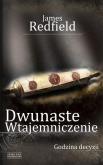
21 grudnia 2012 roku kończy się kalendarz Majów, w czym wielu widzi znak końca świata. Ale czy rzeczywiście mają rację? Może to tylko symboliczna data końca starego świata i początku nowej epoki, epoki prawdziwej duchowości… W Dwunastym Wtajemniczeniu, długo oczekiwanej najnowszej książce autora światowych bestsellerów Dziesiąte Wtajemniczenie i Niebiańska Przepowiednia, odbywamy wraz z bohaterami niezwykłą duchową podróż, której zwieńczeniem ma być przemiana całej ludzkości. Do znanego z poprzednich książek Redfielda narratora zgłasza się jego przyjaciel Wil, który odnalazł fragment nieznanego wcześniej nikomu manuskryptu. Ten starożytny dokument opisuje tajemniczą duchowość, która niezauważenie ujawni się w drugiej dekadzie dwudziestego pierwszego wieku. Nikt nie zna całości manuskryptu, w różnych regionach świata ujawniają się jedynie jego fragmenty. Aby zrozumieć w pełni jego znaczenie dla ludzkości, Wil i jego towarzysz rozpoczynają poszukiwania brakujących części. Kiedy zrozumieją siłę, jaką daje Synchroniczność i wagę kolejnych informacji zawartych w manuskrypcie, na drodze stają im religijni ekstremiści i agenci tajnych organizacji, którzy chcą poznać tajemnice ukryte w dokumencie dla swych własnych celów.
Odkryłem, że Dwunaste Wtajemniczenie nie było tylko teorią. To był nowy poziom istnienia, który mógł być odkryty i przeżyty przez ludzi różnych kultur i religii. Jeśli świadomość obecności Najwyższego będzie nam towarzyszyła przez cały czas, a pozostaniemy czujni i gotowi na poświęcenie, to świat stanie się lepszy.
Wiedziałem, że prawdziwym problemem w utrzymaniu świadomości jest powszechne przywiązanie do materializmu. Słyszymy ze wszystkich stron, że świat jest zły i bezwzględny, a kierowanie się w życiu zasadami duchowymi prawie niemożliwe. Jest to prawda, ale tylko wtedy, kiedy myślimy, że nikt nas nie rozumie i jesteśmy samotni we wszechświecie. Ale tak nie jest. Możemy pozostać w ustawieniu i udowodnić, że żyjemy po to, aby zmienić otaczający nas świat.
Dwa dni później, kiedy przybyłem do Sedony, natychmiast udałem się na lotnisko Vortex, wspiąłem się na skały, aby popatrzeć na zachód słońca. Nie byłem sam. Siadłem prawie na samym szczycie i zamknąłem oczy, czując ciepło promieni słonecznych na swojej twarzy.
Nagle ktoś usiadł obok mnie. Obejrzałem się i zobaczyłem uśmiechniętą twarz Tommyego.Spis Treści
Dwunaste wtajemniczenie
Podziękowania 9
Podtrzymywanie synchroniczności Świadoma rozmowa 38
Wkroczenie w ustawienie 70
Ideologia rozpoznawania 99
Boskie połączenie 123
Wielkie zlecenie 144
Sztuka nastawienia się 172
Zgodność intencji 193
Otwarcie na spostrzeżenie 218
Co wiedzą niebiosa 242
Wzrost wpływu 266
Powrót 287
Zakończenie 304
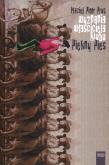
Książka Macieja Piotra Prusa nie jest jedynie opowieścią o Pięknym Psie, pierwszym spośród kultowych krakowskich pubów. Owszem, znajdziecie w niej opisy szalonych imprez w Psie i portrety malowniczych gości tegoż klubu: Rodziny Patologicznej, Poety Ogórka, telewizyjnych gwiazd i ciem barowych. Znajdziecie przygotowane specjalnie do tej książki rysunki bywalców m.in. Wilhelma Sasnala, Marcina Maciejowskiego czy Marcina Świetlickiego. Jednak Wyznania? to przede wszystkim studium opętania. Powieść o demonie alkoholu. Historia zmęczonego diabła, kapłana, karczmarza.
W związku z zamknięciem klubu ?Piękny Pies?, drugie wydanie ?Wyznań właściciela klubu Piękny Pies? zostało poszerzone o epilog oraz o słowniczek wyrazów, pojęć i nazwisk.
Subtelny, a zarazem druzgocący portret niewinnej dziewczynki zdanej na łaskę zdeprawowanego społeczeństwa. Pierwsze polskie wydanie!
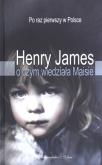
Rodzice sześcioletniej Maisie rozstali się w nienawiści, a dziewczynka jak zabawka przerzucana jest z rąk samolubnej matki w ramiona próżnego ojca. Dla obojga stała się wyłącznie argumentem w zajadłej walce. Kiedy rodzice dziewczynki powtórnie stają przed ołtarzem z nowymi partnerami, Maisie – samotna, wrażliwa i nad wiek dojrzała – zostaje po raz kolejny wrzucona w zagmatwany świat dorosłych – pozbawiony zasad, pełen intryg i zdrady.
Powieść opublikowano po raz pierwszy w 1897 roku, kiedy Henry James eksperymentował z techniką narracyjną i był zafascynowany pomysłem przedstawienia fabuły z perspektywy dziecka.
Opowieść o trudnym dorastaniu i burzliwych związkach. Dzięki psychologicznej wnikliwości Jamesa nadal niezwykle trafna, a wręcz współczesna. Paul Theroux
Henry James (1843–1916) – wybitny amerykański pisarz, krytyk i teoretyk literatury, reprezentant realizmu psychologicznego. W swoich znakomitych powieściach zgłębiał mentalność Amerykanów w zderzeniu z kulturą europejską.
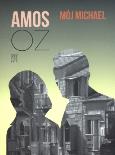
Małżeństwo z początkującym naukowcem, poszukiwanie szczęścia, walka z rzeczywistością odbiegają od wcześniejszych wyobrażeń Chany - głównej bohaterki i narratorki powieści. Zaczyna ona stawiać sobie pytanie: "Dlaczego nam właśnie nie wyszło". Amos Oz, dociekliwy psycholog i mistrz pióra, wcielając się w role swoich protagonistów, opisuje rozpad małżeństwa. Jednocześnie kreśli w tle bogaty obraz Jerozolimy lat pięćdziesiątych. Opublikowana w 1968 roku powieść Amosa Oza szybko zyskała światowy rozgłos i została przetłumaczona na ponad trzydzieści języków. Na jej podstawie powstał także film fabularny. Krytycy okrzyknęli ją izraelską Madame Bovary, a jej autor wszedł na trwałe do kanonu literatury i od wielu lat jest wymieniany wśród kandydatów do Nagrody Nobla.
Michael wychodzi z domu, a mnie dławią łzy. Zadaję sobie pytanie, skąd ten żal. Z jakiej przeklętej nory wychynął, żeby mi zmącić błękit tego poranka. Szperam w stercie kruszących się wspomnień. Jak buchalterka sprawdzam każdą cyfrę w kolumnach długiego rachunku. Gdzie kryje się błąd? Czy to złudzenie? Zdawało mi się, że widzę głupią pomyłkę, ale gdzie?
Na ulicach Jerozolimy czysty poranek. Pogodne głosy. Stary dorożkarz rozsiadł się na koźle i śpiewa na całe gardło. Uczniowie religijnej szkoły dla chłopców Tachkemoni noszą berety na bakier. Stoją na przeciwległym chodniku, naśmiewają się ze starego dorożkarza, prowokują go. Dorożkarz macha do nich, jakby odpowiadał na przyjazny gest, uśmiecha się i śpiewa dalej wielkim głosem.
Ten produkt jest zapowiedzią. Realizacja Twojego zamówienia ulegnie przez to wydłużeniu do czasu premiery tej pozycji. Czy chcesz dodać ten produkt do koszyka?