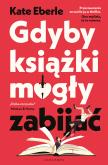
Ta kategoria dedykowana jest współczesnym czytelniczkom literatury kobiecej. Bardzo szeroki wybór romansów, kryminałów, powieści obyczajowe, poruszająca literatura kobieca, erotyki, harlequiny polskich i zagranicznych autorów. Każda lubiąca czytać kobieta znajdzie coś szczególnego dla siebie.
Polecamy literaturę Sergiusza Piaseckiego, Stanisława Srokowskiego, Diany Palmer czy w końcu Blanki Lipińskiej.
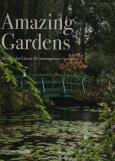
From the gardens of the Palace of Versailles to Beatrix Potter’s garden in the Lake District, from Monet’s garden in France to the Tivoli Gardens in Rome, from the Japanese garden in Portland, Oregon, to city gardens in Tokyo, Amazing Gardens is a wide-ranging celebration of all types of gardens around the globe.
Including formal French gardens and English landscape gardens, famous botanical gardens and little-known curiosities, Iranian and Persian gardens, grand, country house gardens and inner-city gardens, Zen gardens, strolling Japanese gardens and Chinese gardens, medicinal gardens and one poison garden, knot gardens and Roman gardens, the book explores a huge variety of the approaches and uses of gardening around the world over millennia.
In telling the stories of these places, the book touches on the lives of the people who worked in them, designed them and owned them – people such as Prince Charles, Capability Brown, Gertrude Jekyll, Edith Wharton and Agatha Christie.
Illustrated with more than 200 outstanding colour photographs and expert captions, Amazing Gardens not only champions the splendour of the world’s most magnificent gardens but also reveals many fascinating stories about the history of these places and the people who created them.
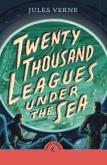
Rediscover the Puffin Classics collection and bring the best-loved classics to a new generation - including this epic edition of Twenty Thousand Leagues Under the Sea.
A mission to rid the seas of a monstrous creature becomes a terrifying nightmare when Professor Aronnax, Conseil and Ned Land are thrown overboard. The huge marine animal which has haunted the water is no living beast, but a spectacular manufactured vessel, and the three men find themselves the helpless prisoners of Captain Nemo. Resigned to their fate, they begin a miraculous journey on the submarine ship which can travel through waters never before explored. For the Professor, at least, this voyage is one he would not have missed for the world.
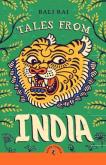
Rediscover the Puffin Classics collection and bring the best-loved classics to a new generation - including this magical edition of Tales from India.
A collection of 20 stories from India's rich folklore heritage. From wicked magicians to wise old priests, charming princes and beautiful princesses, to greedy tigers and wily jackals, these magical tales are full of adventure and trickery, and infused with deeper messages about morality, life and the world around us.
Founded on the work of folklorist Joseph Jacob, and from tales from India's Mughul period, award-winning author Bali Rai's lively retellings are a delight for readers of all ages.
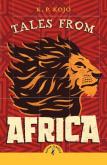
Rediscover the Puffin Classics collection and bring the best-loved classics to a new generation - including this legendary edition of Tales from Africa.
Find out how selfish Lion gets his comeuppance, go to a Frog wedding in the Sky Kingdom, discover the days when the earth's creatures were all mixed up and much more in these brilliantly crafted tales which reflect the very best and the very worst of human nature.
Rich in the folklore of the many different countries of Africa, Ghanaian author, K. P. Kojo brings each story to life with humour and rhyme, making them perfect for sharing and reading aloud to children of all ages.
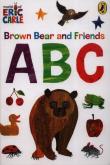
Learn the alphabet with Brown Bear and Friends in this sweet forest adventure!
In the forest, looking for a treat! What will Brown Bear find to eat? Apple, Berries, Cherries, Deee-licious!
Explore everything there is to see, taste, and discover in the forest as Brown Bear delights in each letter from A to Z in this charming alphabet book.
With rhythmic, rhyming, read-aloud text, and Eric Carle's bright, distinctive artwork, each letter introduces foods, animals, sounds, and so much more.
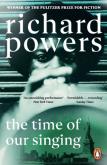
Jonah, Ruth, and Joseph are the children of mixed-race parents who aspire to raise them beyond the constraints of time and identity, immersing them in a world of song. However, they cannot shield them from the realities of the outside world forever.
Jonah, a talented young tenor, finds that the opera world remains preoccupied with his race. Ruth, rejecting classical music, disappears instead into a life dedicated to activism and a new relationship. Over the years, Joseph - the middle child, a pianist, and our narrator - struggles not only to stay connected to his siblings but also to carve out a future on his own.
A powerful story of a tragedy of race in America, The Time of Our Singing is an enthralling, harrowing novel about the lives of choices of one family at the crossroads of identity.
In 1957, brilliant biologist Stuart Ressler sets out to crack the genetic code. Yet his efforts are sidetracked by other, more complex codes - social, moral, musical, and spiritual - as he falls in love with a member of his research team.
Years later, another young man and woman investigate a different mystery: why did the promising Ressler suddenly vanish from the world of science?
Strand by strand, these two love stories intertwine in a double helix of desire in an enthralling tale about new love and the mysteries of science.
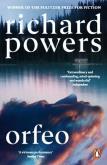
Seventy-year-old avant-garde composer Peter Els opens the door one evening to find the police on his doorstep. His home microbiology lab - where he is conducting the latest experiment in his lifelong attempt to find musical patterns in surprising places - has aroused the suspicions of Homeland Security.
Panicked by the raid, Els turns fugitive, earning him the moniker 'Bioterrorist Bach'. He hatches a daring plan to transform this disastrous collision with the security state into an unforgettable work of art that will reawaken its audience to the sounds all around it.
A gripping escape narrative filled with lyrical wonder, Orfeo is both a portrait of a creative, obsessive man, and a reflection on finding melodies in everyday life.
In the paediatrics ward of a public hospital, a group of sick children gather, their lives brightened only by the power of imagination. The surrogate parents of this group - Kraft, a tired, overworked surgical resident, and Espera, a dedicated therapist - are charged with prolonging their lives using storytelling and make-believe alone.
Using the boundless reach of imagination, Operation Wandering Soul is a novel that celebrates the wonder of childhood. Both social indictment and emotional account of intimate needs, it asks how we might keep alive a little longer the enduring magic of childhood dreams.
'A vivid and compelling picture of the broader fashion landscape between 1960 and the present day. Anecdotes? The book is full of them.' The Times
'Dazzling from start to finish.' Joanna Lumley
In this insightful memoir, Zandra shares her life story for the first time. Told through a variety of mementos collected over the years, it is a vibrant account filled with rockstars and royalty, of life-changing friendships and poignant reflections on her personal triumphs and tragedies, as well as the fears, sacrifices and pressures that come with being an era-defining designer.
Full of poignant reflections and life lessons on achieving success while defying convention, Zandra recounts being inspired by her avant-garde mother to her time at the Royal College alongside David Hockney; from a road trip to Rome with Ossie Clark and Celia Birtwell, to opening her first London store thanks to a loan from Vanessa Redgrave with Joe Cocker singing With a Little Help From My Friends to the assembled crowd of London's 1960s fashion scene; from hanging out with Andy Warhol and Halston in New York's Studio 54 to lifelong friendships with legends such as Karl Lagerfeld and Diana Vreeland; from designing for everyone from Freddie Mercury to Diana Ross, Princess Diana to Barbra Streisand to founding the Fashion and Textile Museum.
Capturing the rich and unexpected life of a British icon, this memoir explores what it is to defy the norm.
‘Zandra Rhodes has changed the course of fashion history.' Suzy Menkes, fashion journalist
Zapomniana matka boomu latynoamerykańskiego po raz pierwszy po polsku.Ostateczna mgła rozpoczyna się w dniu ślubu bezimiennej narratorki z Danielem mężczyzną, którego nie kocha. Żyjąca w emocjonalnej pustce bohaterka obsesyjnie wraca do wspomnień nocy spędzonej w mieście z tajemniczym kochankiem. Wiedziona niezaspokojonymi pragnieniami próbuje za wszelką cenę uciec od codziennej monotonii, podczas gdy granica między rzeczywistością a urojeniem coraz bardziej się zaciera. W Kobiecie w całunie zmarła Ana Mara spogląda na swoje życie z perspektywy otwartej trumny. Nareszcie wolna od społecznych konwenansów, w szczerym monologu konfrontuje się z niespełnioną miłością, macierzyństwem i samotnością. W opowiadaniach Bombal znajdziemy zatopiony statek piratów, wyspy wyłaniające się z jezior z dnia na dzień czy postaci tajemniczych femmes fatales w zagadkowy sposób związanych z siłami natury.To pełne napięcia opowieści o namiętności i odosobnieniu, przesiąknięte fascynacją i lękiem przed tym, co nieludzkie, a zarazem głęboko cielesne, rozpięte między chłodnym realizmem codzienności a nieomal fantastycznymi światami.
Go deeper with the Ravenhood Legacy in this second installment of the sizzling, darkly seductive, internationally bestselling series spin-off. Here, at last and in his own words, is Tyler’s story . . .
Once upon a time . . .
There lived an ambitious boy determined to become a man before his time. And a woman, a battered soldier who recognized the scars that marred his soul – scars that mirrored her own.
Determined to help shape the warrior within him, it was their inexplicable bond that would for ever alter his heart . . . And the loss of that love that would redefine his destiny. After all, nothing has ever been fair in love and war.
Severed Hearts is the second novel in the Ravenhood Legacy series, the prequel romance of fan favourites Tyler and Delphine. Kate Stewart's the Ravenhood Legacy series is an irresistibly edgy spin-off series shedding a new light on the secret, morally-grey brotherhood from Robin Hood-inspired Ravenhood Trilogy.
'Jane Austen's Emma is her masterpiece, mixing the sparkle of her early books with a deep sensibility' Observer
Emma is young, rich and independent. She has decided not to get married and instead spends her time organising her acquaintances' love affairs. Her plans for the matrimonial success of her new friend Harriet, however, lead her into complications that ultimately test her own detachment from the world of romance.
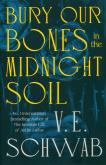
This is a story about hunger.
1532. Santo Domingo de la Calzada.
A young girl grows up wild and wily - her beauty is only outmatched by her dreams of escape. But María knows she can only ever be a prize, or a pawn, in the games played by men. When an alluring stranger offers an alternate path, María makes a desperate choice. She vows to have no regrets.
This is a story about love.
1827. London.
A young woman lives an idyllic but cloistered life on her family’s estate, until a moment of forbidden intimacy sees her shipped off to London. Charlotte’s tender heart and seemingly impossible wishes are swept away by an invitation from a beautiful widow - but the price of freedom is higher than she could have imagined.
This is a story about rage.
2019. Boston.
College was supposed to be her chance to be someone new. That’s why Alice moved halfway across the world, leaving her old life behind. But after an out-of-character one-night stand leaves her questioning her past, her present, and her future, Alice throws herself into the hunt for answers . . . and revenge.
This is a story about life . . .
how it ends, and how it starts again.
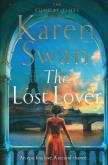
Young Flora MacQueen has always dreamt of more than life on the small Scottish island of St Kilda. So, when she catches the eye of visiting adventurer and wealthy businessman James Callaghan, her future seems brighter.
Winter seas separate the lovers but the island’s evacuation the following summer promises to reunite them – until tragedy strikes.
Heartbroken and needing to support her family on the mainland, a chance meeting offers hope. Soon Flora is the toast of glamorous Paris; fame and fortune are hers for the taking. But at a high price.
When a scandal erupts back home, she is implicated, along with her friends, Effie and Mhairi. But then a deception comes to light that will change everything . . .
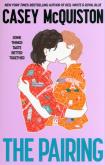
Theo and Kit have been childhood best friends, crushes, lovers and, after a brutal breakup four years ago, estranged exes.
It’s not until Theo and Kit are trapped on board a tour bus that they discover that they’ve each had the same idea: to take their dream European food and wine tour – alone. And now they’re stuck with each other for three weeks of the most romantic sights and sensuous flavours of France, Spain, and Italy. But it’ll be fine. They’re absolutely over each other.
So, when Theo suggests a friendly wager to see who can sleep with their hot Italian tour guide first, Kit is game. In fact, why stop there? Why not a full-on European hookup competition?
But sometimes a taste of everything only makes you crave what you can’t have.
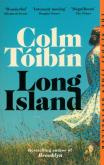
The love story of the century
A man with an Irish accent knocks on Eilis Fiorello’s door on Long Island and in that moment everything changes. Eilis and Tony have built a secure, happy life here since leaving Brooklyn - perhaps a little stifled by the in-laws so close, but twenty years married and with two children looking towards a good future.
And yet this stranger will reveal something that will make Eilis question the life she has created. For the first time in years she suddenly feels very far from home and the revelation will see her turn towards Ireland once again. Back to her mother. Back to the town and the people she had chosen to leave behind. Did she make the wrong choice marrying Tony all those years ago? Is it too late now to take a different path?
Ten produkt jest zapowiedzią. Realizacja Twojego zamówienia ulegnie przez to wydłużeniu do czasu premiery tej pozycji. Czy chcesz dodać ten produkt do koszyka?