„Malowała powoli, z przejęciem, a portrety robiła wprost latami. Model się zestarzał, wyłysiał, ożenił, okocił, schudł (…) musiał pozować, chciał czy nie chciał, chyba że umarł”.
ZOFIA STRYJEŃSKA O OLDZE BOZNAŃSKIEJ
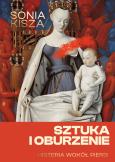
Olga Boznańska. Najwybitniejsza polska malarka przełomu XIX i XX wieku. Obywatelka świata.
Kraków ją ograniczał, zafascynowało Monachium, Paryż przyjął do grona artystycznej bohemy. Przez trzydzieści lat malowała w pracowni przy Boulevard Montrparnasse. Ci, którzy przekraczali jej próg, czuli, że przekraczają granice teraźniejszości. Portrety Boznańskiej intrygowały, niepokoiły, obnażały duszę malowanej osoby. Nie uznawała banalnego piękna. Charakter, emocje, uczucia były dla niej ważniejsze niż uroda modeli.
Po Paryżu chodziła w sukni gipiurowej z trenem pełnym falban i plis. Wzbijał się za nią tuman kurzu. Drobna, delikatna, wyglądała jak posąg wyjęty na chwilę z ciemności piramidy.
„W chwili, kiedy nie będę mogła malować,
powinnam przestać żyć”
- mówiła. I dla sztuki była gotowa poświęcić wszystko – miłość, bogactwo, dobrą opinię i święty spokój.
AUDIOBOOK W INTERPRETACJI DANUTY STENKI
W książce Rafała Mazura zostały przedstawione najistotniejsze teorie dotyczące proporcji w architekturze oraz zostały zdefiniowane podstawowe pojęcia, których znaczenie jest często odmiennie interpretowane, co stanowi jedną z ważniejszych przeszkód w dyskusjach na temat estetyki. Autorską koncepcją pracy jest przywołanie zasady jedności przeciwieństw i według nich analiza sensu proporcji dokonywana na bazie siedmiu par antynomicznych pojęć: porządek – złożoność, subiektywizm – obiektywizm, abstrakcja – empatia, niewymierność – miara, kultura – natura, nowatorstwo – kanon, inżynieria – sztuka. Praca nie jest zamknięciem lub podsumowaniem tematu, lecz ciekawą propozycją nowego rodzaju dyskusji o proporcjach.
Tool to zespół wielce enigmatyczny. „Parabola” jest jego pierwszą biografią, ułatwiającą rozwikłanie tajemnic i dezinformacji. Nowa edycja książki, w dwukrotnie większej objętości, zawiera historię grupy do płyty „Fear Inoculum”, przegląd projektów dodatkowych, omówienia wszystkich utworów i zakulisowy wgląd w polskie wątki związane z muzykami.
Wielki Gombrowicz prywatnie.Nowe wydanie listów genialnego pisarza do rodziny.Gombrowicz przyzwyczaił czytelników do tego, że jego główną artystyczną bronią są zaskoczenie i prowokacja. W listach do członków rodziny także zaskakuje, ale nie dlatego, że prowadzi z czytelnikami albo adresatami listów perfidną literacką grę, wręcz odwrotnie. Korespondencja jest zaskakująca, ponieważ wielki Gombro odsłania tu swoje mniej znane oblicze: nie prowokatora czy skandalisty, ale wrażliwego, skromnego człowieka, czułego brata i kochającego syna, który wspiera duchowo i materialnie zubożałą rodzinę pozostawioną w kraju.Listy do rodziny dają też czytelnikowi wgląd w niewesołą codzienność pisarza, którego historia skazała na emigrację, a co za tym idzie na zapomnienie i biedę. Gombrowicz w listach ostrą linią oddziela to, co prywatne, od tego, co literackie. To cięcie równie dużą moc ma jedynie w słynnym Kronosie.
The bestselling author of Team of Teams dismantles the Great Man theory of leadership, by profiling leaders whose real stories defy their legends.
In Leaders, retired four-star general Stan McChrystal explores what leadership really means, debunking the many myths that have surrounded the concept. He focuses on thirteen great leaders, showing that the lessons we commonly draw from their lives are seldom the correct ones.
Leaders featured in the book include:
Founders: Walt Disney and Coco Chanel
Zealots: Maximilien Robespierre and Abu Musab Zarkawi
Powerbrokers: Margaret Thatcher and Boss Tweed
And other leaders profiled include geniuses Albert Einstein and Leonard Bernstein, reformers Martin Luther and Martin Luther King, Jr., and heroes Harriet Tubman and Zheng He.
Ultimately, McChrystal posits that different environments will require different leaders, and that followers will choose the leader they need. Aspiring leaders will be best served not by cultivating a standard set of textbook leadership qualities, but by learning to discern what is required in each situation.
The five laws that confirm our worst fears: stupid people can and do rule the world.
Since time immemorial, a powerful dark force has hindered the growth of human welfare and happiness. It is more powerful than the Mafia or the military. It has global catastrophic effects and can be found anywhere from the world’s most powerful boardrooms to your local pub. This is the immensely powerful force of human stupidity.
Seeing the shambolic state of human affairs, and sensing the dark force at work behind it, Carlo M. Cipolla, the late, noted professor of economic history at the University of California, Berkeley, created a vitally important economic model that would allow us to detect, know and neutralise this threat: The Basic Laws of Human Stupidity.
If you've ever found yourself despairing at the ubiquity of stupidity among even the most 'intellectual' of people, then this hilarious, timely and slightly alarming little book is for you. Arm yourself in the face of baffling political realities, unreasonable colleagues or the unbridled misery of Christmas day with the in-laws with the first and only economic model for stupidity.
The final collection of essays from the internationally acclaimed and bestselling author of The Name of the Rose and The Prague Cemetery, on the subjects of art and culture.
In this collection of essays we find Umberto Eco’s perennial areas of interest explored in a lively and engaging style, accompanied by beautiful reproductions of the art he discusses. In these wide-ranging pieces he explores the roots of our civilization, changing ideas of beauty, our obsession with conspiracies and the emblematic heroes of the great narrative, amongst other fascinating topics.
Umberto Eco was one of the most influential, and entertaining, intellectuals of the last century, as well as being a critically acclaimed and bestselling writer of both fiction and non-fiction.
One of the last surviving members of the futurist generation, Bruno Munari's Design as Art is an illustrated journey into the artistic possibilities of modern design translated by Patrick Creagh published as part of the 'Penguin on Design' series in Penguin Modern Classics.
'The designer of today re-establishes the long-lost contact between art and the public, between living people and art as a living thing'
Bruno Munari was among the most inspirational designers of all time, described by Picasso as 'the new Leonardo'. Munari insisted that design be beautiful, functional and accessible, and this enlightening and highly entertaining book sets out his ideas about visual, graphic and industrial design and the role it plays in the objects we use everyday. Lamps, road signs, typography, posters, children's books, advertising, cars and chairs - these are just some of the subjects to which he turns his illuminating gaze.
How do we see the world around us? The Penguin on Design series includes the works of creative thinkers whose writings on art, design and the media have changed our vision forever.
Bruno Munari (1907-1998), born in Milan, was the enfant terrible of Italian art and design for most of the twentieth century, contributing to many fields of both visual (paint, sculpture, film, industrial design, graphics) and non-visual arts (literature, poetry). He was twice awarded the Compasso d'Oro design prize for excellence in his field.
If you enjoyed Design as Art, you might like John Berger's Ways of Seeing, also available in Penguin Modern Classics.
'One of the most influential designers of the twentieth century ... Munari has encouraged people to go beyond formal conventions and stereotypes by showing them how to widen their perceptual awareness'
International Herald Tribune
The World of Sex is Henry Miller's most important essay, the manifesto in which he explains why sex matters and why he wrote his famously banned novels, Tropic of Cancer and Tropic of Capricorn. Seeking to set the record straight, Miller argues that there is no contradiction between his salacious prose and his philosophy. In the kind of raw language his readers know so well, he narrates his escapades and formulates his philosophical conclusions. Sexuality for Miller is a mysterious realm - exploring it is what leads to self-liberation and self-realisation.
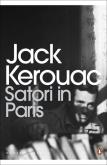
This semi-autobiographical tale of Kerouac's trip to France, to trace his ancestors and explore his own understanding of the Buddhism that came to define his beliefs, contains some of Kerouac's most lyrical descriptions. From his reports of the strangers he meets and the all-night conversations he enjoys in seedy bars in Paris and Brittany, to the moment in a cab when he experiences Buddhism's satori - a feeling of sudden awakening - Kerouac's affecting and revolutionary writing transports the reader.
Published at the height of his fame, Satori in Paris is a hectic tale of philosophy, identity and the powerful strangeness of travel.
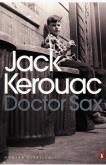
Jack Kerouac called Doctor Sax, the enigmatic figure who haunted his boyhood imagination, 'my ghost, personal angel, private shadow, secret lover'. In this extraordinary autobiographical account of growing up in Lowell, Massachussetts, told through his fictional alter ego Jack Duluoz, he mingles real people and events with fantastical figures to capture the accents, scents, sights and texture of his childhood: playing among the river weeds and railroad tracks, going to church, witnessing life and death on the street corners. Written when he was staying with William Burroughs in Mexico in 1952, Doctor Sax was Kerouac's favourite of all his books: a dark, vivid and magical evocation of a boy's vibrant inner life.
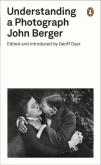
ohn Berger's writings on photography are some of the most original of the twentieth century. This selection contains many groundbreaking essays and previously uncollected pieces written for exhibitions and catalogues in which Berger probes the work of photographers such as Henri Cartier-Bresson and W. Eugene Smith - and the lives of those photographed - with fierce engagement, intensity and tenderness.
The selection is made and introduced by Geoff Dyer, author of the award-winning The Ongoing Moment.
How do we see the world around us? This is one of a number of pivotal works by creative thinkers whose writings on art, design and the media have changed our vision for ever.
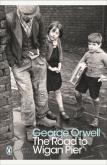
A searing account of George Orwell's observations of working-class life in the bleak industrial heartlands of Yorkshire and Lancashire in the 1930s, The Road to Wigan Pier is a brilliant and bitter polemic that has lost none of its political impact over time. His graphically unforgettable descriptions of social injustice, cramped slum housing, dangerous mining conditions, squalor, hunger and growing unemployment are written with unblinking honesty, fury and great humanity. It crystallized the ideas that would be found in Orwell's later works and novels, and remains a powerful portrait of poverty, injustice and class divisions in Britain.
Published with an introduction by Richard Hoggart in Penguin Modern Classics.
'It is easy to see why the book created and still creates so sharp an impact ... exceptional immediacy, freshness and vigour, opinionated and bold ... Above all, it is a study of poverty and, behind that, of the strength of class-divisions'
Richard Hoggart
Wspomnienia jednej z najbardziej znanych postaci świata nauki. Prof. Waltoś to niezwykła osobowość - prawdziwy erudyta, człowiek renesansu. Autorytet z zakresu postępowania karnego i historii sztuki. Na jego podręczniku "Proces karny. Zarys systemu" wychowały się pokolenia prawników. A Muzeum Collegium Maius, którego był dyrektorem w latach 1977–2011, odwiedziły miliony turystów. Na książkę składa się 9 esejów, w których ze swadą i humorem opisuje swoje wspomnienia z różnych obszarów życia prywatnego i naukowego.
Czyta Stanisław Biczysko
O Hondurasie, małym środkowoamerykańskim państwie, wiemy niewiele, lub nie wiemy nic. Niektórym kojarzy się z Wojną futbolową, którą niegdyś znakomicie opisał Ryszard Kapuściński. W podróży po zakamarkach Hondurasu Alfredo Arce, dziennikarz i wydawca hiszpańskojęzycznej wersji The New York Times, nie prowadzi nas przez polityczne salony. Podąża ścieżkami, które większość turystów woli omijać. Tam nie spotkamy folkloru i zabytków, kurortów i pięknych plaż. Znajdziemy biedę, upokorzenie, przemoc i śmierć. Tę książkę trzeba przeczytać, żeby zrozumieć dlaczego tysiące mieszkańców Hondurasu, przeważnie kobiet i dzieci, podejmuje marsz na północ w poszukiwaniu chleba i bezpieczeństwa, a przede wszystkim nadziei.
Although 'continually and bitterly ashamed' that the Arabs had risen in revolt against the Turks as a result of fraudulent British promises of self-rule, Lawrence led them in a triumphant campaign which revolutionized the art of war.
Seven Pillars of Wisdom recreates epic events with extraordinary vividness. In the words of E. M. Forster, 'Round this tent-pole of a military chronicle, T. E. has hung an unexampled fabric of portraits, descriptions, philosophies, emotions, adventures, dreams'. However flawed, Lawrence is one of the twentieth century's most fascinating figures. This is the greatest monument to his character and achievements.
When Betty Friedan produced The Feminine Mystique in 1963, she could not have realized how the discovery and debate of her contemporaries' general malaise would shake up society. Victims of a false belief system, these women were following strict social convention by loyally conforming to the pretty image of the magazines, and found themselves forced to seek meaning in their lives only through a family and a home. Friedan's controversial book about these women - and every woman - would ultimately set Second Wave feminism in motion and begin the battle for equality.
This groundbreaking and life-changing work remains just as powerful, important and true as it was forty-five years ago, and is essential reading both as a historical document and as a study of women living in a man's world.
In this remarkable collection of 100 manifestos from the last 100 years, Alex Danchev presents the cacophony of voices of such diverse movements as Futurism, Dadaism, Surrealism, Feminism, Communism, Destructivism, Vorticism, Stridentism, Cannibalism and Stuckism, taking in along the way film, architecture, fashion, and cookery.
Artists' manifestos are nothing if not revolutionary. They are outlandish, outrageous, and frequently offensive. They combine wit, wisdom, and world-shaking demands. This collection gathers together an international array of artists of every stripe, including Kandinsky, Mayakovsky, Rodchenko, Le Corbusier, Picabia, Dalí, Oldenburg, Vertov, Baselitz, Kitaj, Murakami, Gilbert and George, together with their allies and collaborators - such figures as Marinetti, Apollinaire, Breton, Trotsky, Guy Debord and Rem Koolhaas. Edited with an Introduction by Alex Danchev
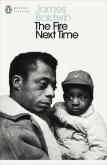
We, the black and the white, deeply need each other here if we are really to become a nation'
James Baldwin's impassioned plea to 'end the racial nightmare' in America was a bestseller when it appeared in 1963, galvanising a nation and giving voice to the emerging civil rights movement. Told in the form of two intensely personal 'letters', The Fire Next Time is at once a powerful evocation of Baldwin's early life in Harlem and an excoriating condemnation of the terrible legacy of racial injustice.
'Sermon, ultimatum, confession, deposition, testament, and chronicle ... all presented in searing, brilliant prose' The New York Times Book Review
'Baldwin writes with great passion ... it reeks of truth, as the ghettoes of New York and London, Chicago and Manchester reek of our hypocrisy' Sunday Times
Ten produkt jest zapowiedzią. Realizacja Twojego zamówienia ulegnie przez to wydłużeniu do czasu premiery tej pozycji. Czy chcesz dodać ten produkt do koszyka?