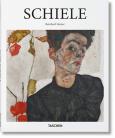
W tej strefie proponujemy bardzo szeroką ofertę z dziedziny psychologii oraz dziedzin powiązanych: astronomii i astrofizyki, ekologii, filozofii, kultury, podróżnictwa, religii, socjologii, sztuki. Szczególnie polecamy z tej kategorii bestseller pt. Księga Urantii. Księga Urantii podaje jasną i zwięzłą integracją nauki, filozofii i religii. Ci, którzy ją czytali i zgłębiali, wierzą, że Księga Urantii może wnieść bardzo wiele wartości do religijnej i filozoficznej myśli ludzi tego świata.
In a fleeting fourteen year period, sandwiched between two world wars, Germany’s Bauhaus school of art and design changed the face of modernity. With utopian ideals for the future, the school developed a pioneering fusion of fine art, craftsmanship, and technology to be applied across painting, sculpture, design, architecture, film, photography, textiles, ceramics, theatre, and installation.
As much an intense personal community as a publicly minded collective, the Bauhaus was first founded by Walter Gropius (1883–1969), and counted Josef and Anni Albers, Wassily Kandinsky, Paul Klee, Oskar Schlemmer, Gunta Stölzl, Marianne Brandt and Ludwig Mies van der Rohe among its members. Between its three successive locations in Weimar, Dessau and Berlin, the school fostered charismatic and creative exchange between teachers and students, all varied in their artistic styles and preferences, but united in their idealism and their interest in a “total” work of art across different practices and media.
This book celebrates the adventurous innovation of the Bauhaus movement, both as a trailblazer in the development of modernism, and as a paradigm of art education, where an all-encompassing freedom of creative expression and cutting-edge ideas led to functional and beautiful creations.
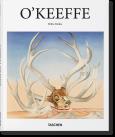
Georgia O’Keeffe (1887–1986) was a major figure in modern American art for some seven decades. Importantly, her fame was not associated with shifting art styles and trends, but rather with her own unique vision, based on finding essential and abstract forms in nature.
O’Keeffe’s primary subjects were landscapes, flowers, and bones, each explored in successive series over several years. Certain works went on for decades, producing 12 or more variations of an original image. Among these, O’Keeffe’s magnified pictures of calla lilies and irises are her most famous. Enlarging the tiniest petals to fill an entire canvas, O’Keeffe created a proto-abstract vocabulary of shapes and lines, earning her the moniker “mother of American modernism.” In 1946, O’Keeffe became the first female artist to be given a solo show at the MoMA in New York.
This introductory book from TASCHEN Basic Art 2.0 traces O’Keeffe’s long and luminous career through key paintings, contemporary photographs, and portraits taken by Alfred Stieglitz, to whom O’Keeffe was married. We follow the artist through her pioneering innovations, major breakthroughs, and her travels and inspirations in Southeast Asia, India, the Middle East, and, above all, New Mexico, where she was particularly inspired by the majestic landscapes, vivid colors and exotic vegetation.
Niniejsza książka stanowi propozycję procesualnego podejścia do ludzkiego doświadczenia w zamglonym antropoce-nie. Chodzi tu o powołaną przez autora do istnienia epokę w dziejach Ziemi, w której mamy do czynienia tyleż z kryzysem ekologicznym, ile z poważnym kryzysem epistemologicznym. Jego konsekwencje często umykają badaczom zainteresowanym społeczno-politycznymi i ekonomicznymi implikacjami antropogenicznych zmian środowiska. Zamglony antropocen jest więc spekulacją na temat tego, jak mógłby wyglądać świat, w którym osłabieniu uległa dominacja wzroku jako narzędzia orientacji, czyli tego zmysłu, który - jak chcieli Nowocześni -gwarantuje uzyskanie najpewniejszej wiedzy o świecie.
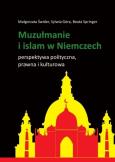
Niniejsza publikacja podejmuje kwestię islamu oraz polityki wyznaniowej w RFN zarówno z perspektywy historycznej, jak i współczesnego dyskursu politycznego. Podstawowym celem monografii, którą oddajemy w ręce czytelników, jest ukazanie na wielu różnych płaszczyznach relacji państwa niemieckiego z islamem/muzułmanami, mając na względzie wieloaspektowość poruszanego zagadnienia. Jak kształtują się relacje Niemiec z islamem i muzułmanami, zarówno w perspektywie historycznej, jak i współczesnej? Jak Niemcy postrzegają islam i muzułmanów? Jak w kraju, w którym drugą co do wielkości religią jest islam, kształtuje się politykę religijną? Jak radzi sobie z islamem najbardziej katolicki land w RFN – Bawaria? To kilka głównych pytań, na które próbują odpowiedzieć autorki niniejszej publikacji – trzy badaczki zajmujące się zarówno kwestiami niemieckimi, jak i religijnymi: Małgorzata Świder z Uniwersytetu Pedagogicznego im. KEN w Krakowie, Sylwia Góra z Akademii Pomorskiej w Słupsku i Beata Springer z Uniwersytetu Zielonogórskiego.
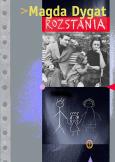
Słynna książka Magdy Dygat-Dudzińskiej Historia rodzinna, a zarazem barwny obraz życia artystycznego lat 50., 60. i 70. XX wieku Wśród wielu pojawiających się na rynku książek wspomnieniowych Rozstania Magdy Dygat-Dudzińskiej są pozycją wyjątkową i oryginalną. Autorka - córka zmarłego w 1978 roku znanego pisarza Stanisława Dygata - opowiada bowiem niełatwą historię rodzinną, układając ją nie tylko z własnych przeżyć i przemyśleń, ale także z bezpośrednich świadectw osób, które w tej historii brały udział. Bohaterowie dramatu - Dygat, matka Magdy - aktorka Władysława Nawrocka i druga żona pisarza - Kalina Jędrusik - żyją na kartach książki w dużej mierze dzięki swoim słowom. Obszerne fragmenty bardzo nieraz osobistych i zaskakujących listów krążących między Stanisławem Dygatem a jego rodzicami, pierwszą żoną, córką, przyjaciółmi mówią tak dużo, że powierzchowna warstwa książki - opowieść o dorastaniu małej Magdy w domu dwojga zajętych sobą artystów, potem o rozwodzie rodziców, małżeństwie ojca z Kaliną Jędrusik, jej zabiegach, by zniechęcić go do córki - to tylko pomost do zrozumienia istoty ich skomplikowanych związków. Temu samemu służą też cytaty z utworów Dygata, jak również z jego prywatnych notatników. Korespondencja z Kazimierzem Brandysem, Tadeuszem Brezą, Markiem Hłaską, listy Adolfa Rudnickiego, Sławomira Mrożka, Romana Polańskiego, Andrzeja Wajdy, Jerzego Stempowskiego dostarczają barwnych szczegółów dotyczących samego Dygata, a ponadto kreślą ciekawy obraz życia polskich środowisk twórczych lat 50., 60. i 70. Magda Dygat nie boi się ani powagi i wzruszeń, ani zabawnych anegdot, w jej relacji ciepło sąsiaduje z ironią, określenia zaś dalekie są od czarno-białego wartościowania. Każdy dzień to inny pryzmat, przez który patrzeć można na przeszłość i rzeczywistość.
Książka Grażyny Michałowskiej wypełnia dotkliwą lukę w dotychczasowej literaturze przedmiotu i może liczyć na stosunkowo szeroki krąg czytelników. Zaspokaja bowiem oczekiwania studentów stosunków międzynarodowych, a ponadto wychodzi naprzeciw potrzebom wielu specjalistów z dziedziny oświaty, nauki, kultury, komunikowania i informacji, profesjonalnie zainteresowanych różnymi aspektami funkcjonowania UNESCO. Zaciekawi też osoby zajmujące się działalnością tytułowej organizacji z uwagi na realizowane w Polsce programy pod jej auspicjami, w których uczestniczą uczelnie i instytucje oraz ściśle współpracujące z nią resorty oświaty i kultury.
z recenzji prof. zw. dr. hab. Janusza Symonidesa
Grażyna Michałowska – profesor doktor habilitowana w Katedrze Dyplomacji i Instytucji Międzynarodowych na Wydziale Nauk Politycznych i Studiów Międzynarodowych Uniwersytetu Warszawskiego. Specjalizuje się w międzynarodowych stosunkach kulturalnych, prawie międzynarodowym i międzynarodowej ochronie praw człowieka. Prowadzi też dydaktykę w tych dziedzinach. Autorka licznych publikacji, takich jak: Zmienność i instytucjonalizacja międzynarodowych stosunków kulturalnych (Warszawa 1991), Ochrona praw człowieka w Radzie Europy i Unii Europejskiej (Warszawa 2007), Problemy ochrony praw człowieka w Afryce (Warszawa 2008) oraz Kultura w stosunkach międzynarodowych (współred. nauk., t. I i II – Warszawa 2013, 2014).
Termin „marginalizacja” przyjęty w tytule pracy został zainspirowany pośrednio pracami Z. Baumana wprowadzającego kategorię „ludzi odpadów”. Określenie to jest dość dosadne, trudne do oswojenia, ale jednocześnie staje się klamrą spinającą te sytuacje, w których może się znaleźć każda jednostka i grupa, często z przyczyn niezawinionych, wynikających z mechanizmów funkcjonowania w epoce ponowoczesnej. Patrząc z tej perspektywy, zmarginalizowanym będzie ubogi, bezrobotny, imigrant, uchodźca, kredytobiorca mający problemy ze spłatą kredytu i zagrożony zabraniem mu całego dorobku przez bank, ale i osoba niepełnosprawna czy każdy, kto z różnych przyczyn znalazł się poza nawiasem społecznym, bez względu na pochodzenie, wykształcenie czy status społeczny i ekonomiczny.
Ze wstępu
Książka jest próbą odpowiedzi na pytanie, czym jest marginalizacja społeczna, a także jak jej przeciwdziałać. Jest wartościowa zarówno ze względu na przytoczone zagadnienia definicyjne, jak i z uwagi na dobre umiejscowienie tematyki w socjologicznej teorii problemów społecznych i kryminologicznej koncepcji profilaktyki społecznej.
dr hab. Eugeniusz Moczuk, prof. PRz
Autorki wykazały się erudycją, pracowitością i systematycznością w prezentacji swojej wizji zagadnienia marginalizacji (...). Praca z pewnością wzbogaci wiedzę o marginalizacji potrzebną decydentom, politykom społecznym i politykom miejskim, planistom społecznym i studentom.
dr hab. Krzysztof Czekaj, prof. ndzw. UP
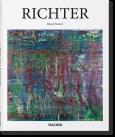
An encounter with Gerhard Richter, the German artist who widened horizons in the relationship between painting and reality. From early photographic paintings, along with his famous RAF cycle, to late abstract paintings, experiencing Richter’s work always offers us the unexpected and unseen. Where he once set out to liberate the medium from ideological ballast, today, faced with the overwhelming presence of digital images, he shows us the unsurpassed impact and intensity of painting. A definitive introduction to one of the greatest artists of our time spanning not only his entire career, but also 50 years of cultural, economic, and political events.
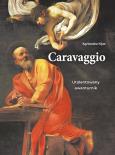
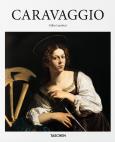
Michelangelo Merisi da Caravaggio (1571 1610) was always a name to be reckoned with. Notorious bad boy of the Italian Baroque, the artist was at once celebrated and controversial, violent in temper, precise in technique, a creative master, and a man on the run.
Though famed for his dramatic use of color, light, and shadow, it was above all Caravaggio's boundary-breaking naturalism which scorched his name into the annals of art history. From the dirtied soles of feet to the sexualised languor of bare flesh, the artist allowed even sacred and biblical scenes to unfold with a startling, often visceral humanity. This vivid pictorial world was accompanied by an equally intense personal biography, scored by gambling, debts, drunken brawls, and even a murder charge.
This book brings together Caravaggio's most famous and revolutionary works to explain why this artist is now considered the most important painter of the early Baroque period and one of the defining influences of art history, without whom Ribera, Vermeer, Rembrandt, Delacroix, Courbet, and Manet could never have painted the way they did.
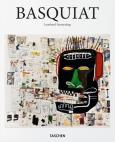
An icon of 1980s New York, Jean-Michel Basquiat (1960-1988) first made his name under the graffiti tag "SAMO," before establishing his studio practice and catapulting to fast fame at the age of 20. Although his career lasted barely a decade, he remains a cult figure of artistic social commentary, and a trailblazer in the mediation of graffiti and gallery art. Basquiat's work drew upon diverse sources and media to create an original and urgent artistic vocabulary, biting with critique against structures of power and racism. His practice merged abstraction and figuration, poetry and painting, while his influences spanned Greek, Roman, and African art, French poetry, jazz,and the work of artistic contemporaries such as Andy Warhol and Cy Twombly. The results are vivid, visceral mixtures of words, African emblems, cartoonish figures, daubs of bold color, and beyond. This book presents Basquiat's short but prolific career, his unique style, and his profound engagement with ever-relevant issues of integration and segregation, poverty and wealth.
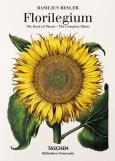
A magnificent pictorial document of the flowers grown in the greatest German garden of its time, the Hortus Eystettensis is in a class of its own when it comes to the range of flowers engraved.
First published in 1613, the 367 copperplate engravings by Basilius Besler (1561 1629) capture the spectacular diversity of the palatial gardens of Prince-Bishop Johann Konrad von Gemmingen (1593/95 1612) in Eichstätt, Bavaria, Germany. The meticulous illustrations are organized according to the four seasons, and, following the classification system used today, show plants belonging to a total of 90 families and covering 340 genera. The whole collection is regarded as one of the finest treasures of botanical literature, described by Carl Linnaeus, the legendary 18th-century botanist and zoologist, as an incomparable work .
Besler's pictorial catalog long outlived the gardens, which were destroyed in 1634 by invading Swedish troops. In auction, the asking price for a first-edition copy of Hortus Eystettensis is now more than half a million dollars. With this edition, TASCHEN opens up the garden to a much wider audience: A rich and beautiful record, destined to keep the garden's beauty in bloom.
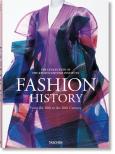
Clothes define people. A person’s attire, whether it’s a sari, kimono, or business suit, is an essential code to his or her culture, class, personality, even faith. Founded in 1978, the Kyoto Costume Institute recognizes the importance of understanding clothes from sociological, historical, and artistic perspectives. With one of the world’s most extensive clothing collections, the KCI has amassed a wide range of historical garments, underwear, shoes, and fashion accessories dating from the 18th century to the present day.
Showcasing the Institute’s vast collection, Fashion History is a fascinating excursion through the last three centuries of clothing trends. Featuring impeccable photography of clothing expertly displayed and arranged on custom-made mannequins, it is a testimony to attire as “an essential manifestation of our very being” and to the Institute's passion for fashion as a complex and intricate art form.
They say that in life, there are winners and there are losers. Though the movies we selected for this two-volume collection are winners indeed, those that didn’t make the cut aren’t losers. We just didn’t like them quite as much. It was a tough, soul-searching process, but after much debate and deliberation TASCHEN settled on what we believe to be the 100 finest examples of 20th-century filmmaking.
From horror to romance, noir to slapstick, adventure to tragedy, epic to musical, Western to new wave, all genres are represented in this wide-ranging and devilishly fun compendium. Metropolis? Check. Modern Times? Yep. Citizen Kane, The Seven Samurai? Of course. La dolce vita, Psycho, A Clockwork Orange? You bet. Plus The Godfather, Annie Hall, Blue Velvet, Pulp Fiction... and so many more cinematic gems including lesser-known masterpieces like Buñuel’s The Young and the Damned. Think of this collection as a celebration of contrasts, an homage to the seventh art, a gathering of greats, and a nostalgic romp through celluloid history.
Chronological entries each include a synopsis, cast/crew listings, technical information, actor/director bios, trivia, and lists of awards, as well as film stills, production photos, and the original poster for each film. The chapter for each decade begins with an introduction exploring the historical and social context of films made in that era.
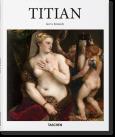
Immerse yourself in the rich shades and textures of Tiziano Vecellio (c. 1490–1576), commonly known as Titian, and the figurehead of 16th-century Venetian painting. With his bold approach to form and startling, opulent colors, Titian worked with a number of prestigious commissions and left behind an astonishing repertoire of portraits, mythological scenes, altarpieces, and landscapes that remains one of the most important legacies of Renaissance art.
This dependable artist introduction traces Titian’s complete career and its trailblazing influence on successive generations of artists, from Diego Velázquez to van Dyck. From the rippling sensuality of Venus of Urbino (c. 1538) to the airborne dynamism of Bacchus and Ariadne (1520–1523), all the major works are here, charting the artist’s stylistic experimentation over time as well as his consistent and unique ability to work across genres and to bring a defining new level of emotional and spiritual aspect to his subjects.
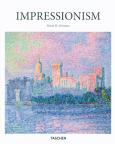
Discover how scenes of daily life and delicate dabs of color shocked the art world establishment. In this TASCHEN Basic Art introduction to Impressionism, we explore the artists, subjects, and techniques that first brought the easel out of the studio and shifted artistic attention from history, religion, or portraiture to the evanescent ebb and flow of modern life. As we tour the theaters, bars, and parks of Paris and beyond, we take in the movement's radical innovations in style and subject, from the principle of plein air painting to the rapid, broken brushwork that allowed the Impressionists to emphasize spontaneity, movement, and the changing qualities of light. We take a close look at their unusual new perspectives and their fresh palette of pure, unblended colors, including many vividly bright shades that brought a whole new level of chromatic intensity to the canvas. Along the way, we recognize Impressionism's established greats, such as Edgar Degas, Claude Monet, Berthe Morisot, and Camille Pissarro, as well as many associated artists worthy of closer attention, including Marie Bracquemond, Medardo Rosso, and Fritz von Uhde.
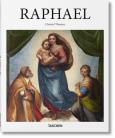
Divine forms: The heavenly grace and human grandeur of a supreme Renaissance master In art history, we tend to be on first name terms only with the most revered of masters. The Renaissance painter and architect Raphael Santi(1483 1520) is one such star. The man we call simply Raphael has for centuries been hailed as a supreme Renaissance artist. For some, he even outstrips his equally famous, equally first-named, contemporaries, Leonardo and Michelangelo.From 1500 to 1508, Raphael worked throughout central Italy, particularly in Florence where he secured his reputation as a painter of portraits and beautifully rendered Madonnas, archetypical icons within the Catholic faith. In 1508 he was summoned to Rome by Pope Julius II and later embarked on an ambitious mural scheme for theStanza della Segnaturain the Vatican. Within this room, Raphael sThe School of Athensis considereda paradigm of the High Renaissance, merging Classical philosophy with perfected perspectival space, animated figures, and a composition of majestic balance.This essential introduction explores how in just two decades of work, Raphael painted his way to legendary greatness. With highlights from his prolific output, it presents the mastery of figures and forms that secured his place not only in the trinity of Renaissance luminaries but also among the most esteemed artists of all time. About the series: Each book in TASCHEN s Basic Art series features: a detailed chronological summary of the life and oeuvre of the artist, covering his or her cultural and historical importance a concise biography approximately 100 illustrations with explanatory captions
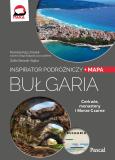
Cerkwie, monastyry i Morze CzarneGotowe pomysły na idealne wakacje!MONASTYR RILSKI symbol BułgariiNESEBYR miasto-zabytekWIELKIE TYRNOWO miasto carówZŁOTE PIASKI czarnomorski kurortPamela Kaczmarek pół-Polka, pół-Bułgarka. Podróżniczka i fotografka, autorka bloga Bułgaria poza szlakiem. Podróżuje z ojcem Krzysztofem, alpinistą i slacklinerem.Zofia Siewak-Sojka z wykształcenia slawistka, autorka przewodników i książek o religiach i kulturach różnych krajów, bajek dla dzieci, redaktorka, tłumaczka literatury hiszpańskojęzycznej i rosyjskiej.Twój inspirator zaprowadzi cię w każdy zakamarek Bułgarii. Nic cię nie ominie!Rankingi atrakcjiKnajpki, w których jedzą miejscowiRekomendacje autorówIntuicyjna nawigacja
Ten produkt jest zapowiedzią. Realizacja Twojego zamówienia ulegnie przez to wydłużeniu do czasu premiery tej pozycji. Czy chcesz dodać ten produkt do koszyka?





![Okładka książki Szkoła przetrwania [o edukacji]. Płomienie](https://dobreksiazki.pl/Photos/7/MEDIUM/000080/szkola-przetrwania-o-edukacji-plomienie.jpg "Szkoła przetrwania [o edukacji]. Płomienie. Autor: Justyna Drath. Dobreksiazki.pl")