W tej strefie proponujemy bardzo szeroką ofertę z dziedziny psychologii oraz dziedzin powiązanych: astronomii i astrofizyki, ekologii, filozofii, kultury, podróżnictwa, religii, socjologii, sztuki. Szczególnie polecamy z tej kategorii bestseller pt. Księga Urantii. Księga Urantii podaje jasną i zwięzłą integracją nauki, filozofii i religii. Ci, którzy ją czytali i zgłębiali, wierzą, że Księga Urantii może wnieść bardzo wiele wartości do religijnej i filozoficznej myśli ludzi tego świata.
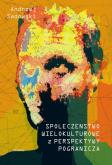
Monografia wypełnia poważną lukę w refleksji o wielokulturowości, oferując spójną propozycję teoretyczną i refleksję krytyczną na jej temat. Autor nie tylko przeprowadza dyskusję z najważniejszymi ujęciami wielokulturowości funkcjonującymi w socjologicznej literaturze przedmiotu, uwzględniając najważniejszych autorów i koncepcje, ale również wiele miejsca poświęca kłopotliwości tej kategorii. Społeczeństwo wielokulturowe z perspektywy pogranicza to wysokiej próby synteza dotychczasowej refleksji nad wielokulturowością oraz wynikająca z jej krytycznego odczytania propozycja własnej, rozbudowanej i uwzględniającej wiedzę na temat specyfiki procesów narodotwórczych w Europie Środkowo-Wschodniej, koncepcji teoretycznej wielokulturowej triady, eksponującej proces przeobrażania się społeczności zróżnicowanych kulturowo w pluralistyczne, które zmierzają ku wielokulturowym.
Książka powinna być obowiązkową lekturą dla wszystkich, którzy na jakichkolwiek forach (naukowych, publicystycznych, towarzyskich) chcą formułować sądy o wielokulturowości. W jednym miejscu odnaleźć można krytyczny przegląd przypadków, które opisuje się z wykorzystaniem pojęcia wielokulturowości i które napełniają ją jakże odmiennymi treściami – Autor rozpoczyna od Kanady, Australii, Stanów Zjednoczonych, by odnieść te przykłady do Europy Zachodniej i ŚrodkowoWschodniej. Mimo uzasadnionej ostrożności w opowiadaniu o wielokulturowości europejskiej Autor wyraża przekonanie, że możliwe jest pojawienie się narodów wielokulturowych również i w tej części świata. Książka ta jest wielkim dowodem i głosem na rzecz konieczności prowadzenia badań nad wielokulturowością wobec nieuchronności przemian społecznych współczesnego świata.
Andrzej Sadowski, profesor socjologii związany z Uniwersytetem w Białymstoku – pracownik i wieloletni dyrektor Instytutu Socjologii, dziekan Wydziału Historyczno-Socjologicznego w latach 2005– –2012, członek Komitetu Socjologii PAN (2016–2019). Redaktor naczelny ukazującego się od 1992 roku czasopisma „Pogranicze. Studia Społeczne”. Autor ponad trzystu publikacji naukowych, w tym trzydziestu trzech monografii autorskich i redagowanych, poświęconych tematyce ruralizacji, pogranicza, wielokulturowości, narodu i grup etnicznych, ze szczególnym uwzględnieniem mniejszości białoruskiej i tożsamości mieszkańców Podlasia oraz specyfiki kapitału społecznego Białegostoku. Wśród nich m.in.: Narody wielkie i małe. Białorusini w Polsce; Procesy ruralizacji. Ludność wiejska w mieście; Pogranicze polsko-białoruskie. Tożsamość mieszkańców; Białystok. Kapitał społeczny mieszkańców miasta.
Monografia jest II edycją rozprawy habilitacyjnej autora. Książka stanowi oryginalne, oparte na etnograficznych badaniach terenowych studium, obejmujące występujące na Kaszubach rytuały i wierzenia związane ze śmiercią i pogrzebem. Szybki zanik tradycyjnego modelu "dobrej śmierci" sprawia, że drugie wydanie książki może pomóc wniknąć - już kolejnej generacji Kaszubów - w piękny i bogaty świat religijności przodków.
Pierwsza tak obszerna monografia poświęcona kolędowaniu i grupom kolędniczym na Kaszubach.
Zamiast długiego wstępu.
Rozdział I Kolędowanie – czyli kto, kiedy, gdzie i dlaczego?
Rozdział II Słów kilka o dotychczasowych badaniach kaszubskich kolędników.
Rozdział III Gwiȏzdka, gvåzdka, gvåzdorë, gvižǯe, gwizduchy, panëški, kṷezłë - czyli nieco o nazewnictwie.
Rozdział IV Nieco precyzyjniej o terminach kolędowania gwiȏzdek.
Rozdział V Zasady organizacji i funkcjonowania gwiȏzdek.
Rozdział VI Skład zespołu – czyli różnie bywało.
Rozdział VII Stroje, maski, maszkarony i inne akcesoria.
Rozdział VIII Chceta wa lëdzë gwiȏzdkã widzec?7
Rozdział IX A wczora z wieczora – czyli o śpiewie, instrumentach i oracjach.
Zakończenie czyli - dze Gwiȏzdka chòdzy tam djobeł nie szkòdzy
Spis wykorzystanych fotografii
Wolność, przygoda i nieokiełznana radość z obcowania z dziką przyrodą! Właśnie to oraz dużo, dużo więcej przeżyli Maciej i Monika Szafrańscy z trójką dzieci (Dominikiem, Mikołajem i Tosią), decydując się na podróż do krajów nordyckich. W ciągu trzech tygodni przejechali 7 000 km!
Kamperem po Skandynawii jest odtworzeniem zapisów z dziennika pokładowego, który prowadził Maciej na bieżąco z trasy przez Polskę, Litwę, Łotwę, Estonię, Finlandię, Norwegię, Szwecję i Danię. Znajdziecie tu nie tylko opisy fantastycznych miejsc, które trzeba odwiedzić, ale i praktyczne wskazówki, jakich nie serwują zwykłe przewodniki.
Otrzymacie szereg porad co do wypożyczania i ekwipunku kampera, a także informacje o warunkach panujących na skandynawskich kempingach.
Imagine walking into a room filled with the world’s finest contemporary erotic photographers, each with a portfolio of his or her best work. As you browse the photographs they discuss inspiration, censorship, how to find models, and how to make a living capturing beautiful women on film and in pixels.The New Erotic Photography is the room, and dozens of photographers from various countries are the hosts of this intimate gathering. In this 320-page volume you will meet Ralph Gibson, Jan Saudek, Terry Richardson, Natacha Merritt, Petter Hegre, Richard Kern, and the many fresh new talents currently redefining eroticism. Playful, provocative, and exuberantly sexy, these aren’t your granddad’s art nudes―this is The New Erotic Photograph
From the legendary Tank Girl to live-action animations with Gorillaz, a Chinese contemporary opera to an exhibition at the Saatchi Gallery, artist Jamie Hewlett is one of the most energetic figures of contemporary pop culture.
With influences ranging from hip hop to zombie slasher movies, Hewlett emerged in the mid-1990s as co-creator of the zeitgeist-defining Tank Girl comic. With then-roommate Damon Albarn, he went on to create the unique cartoon band Gorillaz, a virtual pop group of animated characters, who have recorded five albums and mounted breathtaking live spectacles.
Since then, Hewlett has continued to collaborate with Albarn on projects including an elaborate staging of the Chinese novel Monkey: Journey to the West by Wu Cheng’en, complete with circus acrobats, Shaolin monks, and Chinese singers. In 2006, he was named “Designer of the Year” by the Design Museum in London, and in 2009, Hewlett and Albarn won a BAFTA for their animated Monkey sequence for the Beijing Olympic Games. More recently, The Suggestionists, an exhibition of prints at the Saatchi Gallery in London, demonstrated an exciting new direction in Hewlett’s practice.
This TASCHEN edition, Hewlett’s first major monograph, illustrates his thrilling creative journey with more than 400 artworks from the Tank Girl era through Gorillaz and up to the present day. Through stories, characters, strips, and sketches, we trace Hewlett’s exceptional capacity for invention and celebrate a polymath artist who refuses to rest on his laurels, or to be pigeonholed into a particular practice.
The Book of Symbols combines original and incisive essays about particular symbols with representative images from all parts of the world and all eras of history. The highly readable texts and over 800 beautiful full-color images come together in a unique way to convey hidden dimensions of meaning. Each of the ca. 350 essays examines a given symbol’s psychic background, and how it evokes psychic processes and dynamics. Etymological roots, the play of opposites, paradox and shadow, the ways in which diverse cultures have engaged a symbolic image—all these factors are taken into consideration.
Authored by writers from the fields of psychology, religion, art, literature, and comparative myth, the essays flow into each other in ways that mirror the psyche’s unexpected convergences. There are no pat definitions of the kind that tend to collapse a symbol; a still vital symbol remains partially unknown, compels our attention and unfolds in new meanings and manifestations over time. Rather than merely categorize, The Book of Symbols illuminates how to move from the visual experience of a symbolic image in art, religion, life, or dreams to directly experiencing its personal and psychological resonance.
The Book of Symbols sets new standards for thoughtful exploration of symbols and their meanings, and will appeal to a wide range of readers: artists, designers, dreamers and dream interpreters, psychotherapists, self-helpers, gamers, comic book readers, religious and spiritual searchers, writers, students, and anyone curious about the power of archetypal images.
This book brings together the complete catalogue of Johannes Vermeer (1632–1675), presenting the calm yet compelling scenes so treasured in galleries across Europe and the United States into one monograph of utmost reproduction quality. With new photography of many works, Vermeer’s restrained but richly evocative repertoire of domestic actions—ranging from letter writing to music making to preparations in the kitchen—unfolds in generous format. Numerous details emphasize the artist’s remarkable ability not only to bear witness to the trends and trimmings of the Dutch Golden Age but also to encapsulate an entire story in just one transient gesture, expression, or look.
In his lifetime, Vermeer’s fame barely extended beyond his native Delft and a small circle of patrons. After his death, his name was largely forgotten, with works outside of Holland even misattributed to other artists. It was not until the mid-19th century that Vermeer came to the attention of the international art world, which suddenly looked upon his narrative minutiae, meticulous textural detail, and majestic planes of light, and spotted a forgotten master.
Today, Vermeer’s works have inspired a New York Times best seller and a film starring Scarlett Johansson and Colin Firth not to mention record visitor numbers at art institutions from Amsterdam to Washington, DC; and special crowd-control measures at the Mauritshuis, The Hague, where thousands flock to catch a glimpse of the enigmatic and enchanting Girl with a Pearl Earring, also known as the “Dutch Mona Lisa.”
Inventor, painter, sculptor, scientist, architect, and engineer Leonardo da Vinci (1452–1519) was nothing short of a quintessential Renaissance genius. No other artist of his generation has left behind such an extensive, authentic, and innovative oeuvre—yet Leonardo remains the most enigmatic of them all.
From the beguiling Last Supper to the showstopping Mona Lisa, discover the complete painted oeuvre of one of history’s most insatiable creative masters. This collection draws from our extensive best-selling XXL edition, one of the most complete explorations of Leonardo to date, to trace his life and work across 10 chapters. All known paintings are featured, gathering some of the finest treasures of the Louvre, Prado, and National Gallery, as well as works lost to time, but no less startling in their precision and poise.
This definitive volume is complete with crisp details, accessible essays situating Leonardo’s approach within its socio-cultural context and pictorial traditions of the time, the latest scientific insights, as well as an updated foreword that illuminates one of the most sensational art historical discoveries of our time: the record-breaking Salvator Mundi.
History is a complex business. Fortunes boom and bust, empires wax and wane, and change—whether social, political, or technological—has its winners, its losers, its advocates, and its enemies. Through all the turbulent passage of time, graphic design—with its vivid, neat synthesis of image and idea—has distilled the spirit of each age.
This book is an in-depth history of graphic design from the end of the 19th century to the ’50s. It traces the evolution of this creative field from its beginning as poster design to its further development into advertising, corporate identity, packaging, and editorial design. Organized chronologically, the volume features over 2,500 seminal designs from all over the world, 71 of which are profiled in detail besides 61 leaders in the field, including Alphonse Mucha (chocolate advertisements), Edward Johnston (London Underground logo and typeface), El Lissitzky (constructivist graphics), Herbert Matter (photomontage travel posters from Switzerland), Saul Bass (animated opening titles), and A. M. Cassandre (art deco posters).
With his sweeping knowledge of the field, author Jens Müller curates the standout designs for each year alongside a running sequence of design milestones. Meanwhile, in his introductory essay, David Jury situates graphic design from its point of origin in early printing, engraving, and lithography to striking creative developments in the 19th century. Each consecutive decade is then prefaced by a succinct overview as well as a stunning visual timeline, offering a vivid display of the variety of graphic production in each decade as well as the global landscape which it at once described and defined.
As we move on from and reflect upon the 20th century, this first volume examines the foundations of what would influence some of the fastest-changing creative fields. Combined with Volume Two—which spans from the 1960s until today—the tomes offer the most comprehensive exploration of graphic design to date and a long-overdue recognition of its enormous contribution to economics, politics, social causes, the arts, media, and the way we see the world.
A bird-monster devouring sinners, naked bodies in tantric contortions, a pair of ears brandishing a sharpened blade: with nightmarish details and fantastical painterly schemes, Netherlandish visionary Hieronymus Bosch (c. 1450–1516) secured his place as an art historical magnet. Five hundred years on from his death, his extraordinary works continue to enthrall scholars, artists, designers, and musicians.
This large-scale TASCHEN monograph presents the complete Bosch oeuvre, celebrating the artist’s staggering compositional scope and most bizarre and intricate details through full-page reproductions, abundant details, and a fold-out spread drawn from The Last Judgement. With guidance from art historian and Bosch expert Stefan Fischer, we explore the many compelling elements that populate each scene, from hybrid creatures of man and beast, to painterly assaults on the body, and a pictorial use of proverbs and idioms. Particular attention is given to Bosch’s most famous work, the mesmerizing, terrifying triptych The Garden of Earthly Delights.
“Bond, James Bond.” Since Sean Connery uttered those immortal words in 1962, the most dashing secret agent in the history of cinema has been charming and thrilling audiences worldwide. This impeccably British character created by author Ian Fleming has starred in 24 EON-produced films, played by six different actors over five decades.
In collaboration with EON Productions, this trade edition of The James Bond Archives includes all the same stunning imagery and behind-the-scenes knowledge as the original XL book, just with a smaller format and a softer price tag. The result is an affordable, compact yet comprehensive record of every single Bond film ever made, beginning with Dr. No (1962) and ending with Spectre (2015).
The wealth of on-set photos, unseen stills, set designs, storyboards, and production memos is supplemented by an oral history recounted by over 150 cast and crew members. From producers to stuntmen, directors to production designers, these personal narratives relate the true inside story from the Bond sets, offering outstanding insight into the personalities and processes behind the most successful and longest-running film franchise in cinema history.
In a fleeting 14-year period between two world wars, Germany’s Bauhaus School of Art and Design changed the face of modernity. With utopian ideas for the future, the school developed a pioneering fusion of fine art, craftsmanship, and technology, which they applied across media and practices from film to theater, sculpture to ceramics.
This book is made in collaboration with the Bauhaus-Archiv/Museum für Gestaltung in Berlin, the world’s largest collection on the history of the Bauhaus. Some 550 illustrations including architectural plans, studies, photographs, sketches, and models record not only the realized works but also the leading principles and personalities of this idealistic creative community through its three successive locations in Weimar, Dessau, and Berlin. From informal shots of group gymnastics to drawings guided by Paul Klee, from extensive architectural plans to an infinitely sleek ashtray by Marianne Brandt, the collection brims with the colors, materials, and geometries that made up the Bauhaus vision of a “total” work of art.
As we approach the Bauhaus centennial, this is a defining account of its energy and rigor, not only as a trailblazing movement in modernism but also as a paradigm of art education, where creative expression and cutting-edge ideas led to simultaneously functional and beautiful creations. Featured artists include Josef Albers, Marianne Brandt, Walter Gropius, Gertrud Grunow, Paul Klee, Ludwig Mies van der Rohe, and Lilly Reich.
Polaroids occupy a special place in photography, all the more so since the development of digital techniques. The instant print and absence of editing tools allows these one-of-a kind images a beguiling realness: In no other photographic medium does the moment find its material form with such sincerity and such speed.
Throughout his career, Helmut Newton used polaroids not just for their poetics but as a crucial tool for testing lighting and composition before a shoot began. Many photographers threw these tests away. Luckily for us, Newton kept his, allowing his widow June Newton to assemble this fascinating behind-the-scenes look at some of his greatest shoots, from the classic nudes in Milan to latex-clad shots in St. Tropez.
With images visible folds or handwriting, these snaps from the seventies, eighties, and nineties are akin to the preparatory sketches to masterpiece paintings. Offering fascinating insight into Newton’s creative direction and process, they stand as works of art in their own right, and as a historical testament to a bygone age of fashion photography.
Helmut Newton, master of late 20th-century fashion photography, always considered the printed page the most important factor in his work. It was, he explained, in the framework of an editorial or advertising commission, that he found his inspiration and produced his best shots.
Joining the prestigious roster of TASCHEN’s Helmut Newton titles, including Sex & Landscapes, World without Men, and the much coveted Helmut Newton SUMO, this fresh edition of Pages from the Glossies gathers the most eminent and interesting examples of Helmut Newton’s work for magazines across Europe and the United States. Facsimiles of more than 500 original spreads from the likes of Elle, Amica, and, above all, Vogue follow Newton’s ongoing ability to break the boundaries of his genre and explore the interaction of his unique, daring, pictures with typography and layout.
In lively personal anecdotes alongside the spreads, Newton talks through the inspirations and informal moments behind some of his most memorable images. We follow him scouting models, setting up a shot with the captain of a nuclear submarine, collaborating with Anna Wintour, and negotiating between different cultural attitudes towards the nude.
For more than half a century, Annie Leibovitz has been taking culture-defining photographs. Her portraits of politicians, performers, athletes, businesspeople, and royalty make up a gallery of our time, imprinted on our collective consciousness by both the singularity of their subjects and Leibovitz’s inimitable style.
The catalogue to an installation at the LUMA Foundation in Arles, France, Annie Leibovitz: The Early Years, 1970–1983 returns to Leibovitz’s origins. It begins with a moment of artistic revelation: the spontaneous shot that made Leibovitz think she could transition from painting to photography as her area of study at the San Francisco Art Institute. The meticulously and personally curated collection, including contact sheets and Polaroids, provides a vivid document both of Leibovitz’s development as a young artist and of a pivotal era.
Leibovitz’s reportage-like photo stories for Rolling Stone, which she began working for when she was still a student, record such heady political, cultural, and counter-cultural developments as the Vietnam War protests, the launch of Apollo 17, the presidential campaign of 1972, Richard Nixon’s resignation in 1974, and the Rolling Stones on tour in 1975. Then, as now, Leibovitz won the trust of the prominent and famous, and the book’s pages are animated by many familiar faces, among them Muhammad Ali, Mick Jagger, Keith Richards, Ken Kesey, Patti Smith, Bruce Springsteen, Joan Didion, and Debbie Harry, as well as John Lennon and Yoko Ono, captured in their now iconic embrace just hours before Lennon was assassinated.
Throughout the book, the portraits and reportage are linked to images of cars, driving, and even a series on California highway patrolmen. In many ways, it’s a celebration of life on the road—the frenetic rhythms, the chance encounters, the meditative opportunities. And with its rich archival aspects, it is also a tribute to an earlier time and a young photographer enmeshed in a culture that was itself in transition.
From Azzedine Alaïa, Cristóbal Balenciaga, and Coco Chanel to Alexander McQueen, Yves Saint Laurent, and Vivienne Westwood, a century’s worth of fashion greats from the permanent collection of The Museum at the Fashion Institute of Technology in New York City are celebrated in this fresh edition of Fashion Designers A–Z.
This accessibly priced and updated collection features photographs of approximately 500 garments selected from the Museum’s permanent collection. From an exquisitely embroidered velvet evening gown to Mondrian-style minimalist chic, each chosen piece is selected not only for its beauty but for its representative value, distilling the unique philosophy and aesthetics of each of the featured designers.
Texts by the museum’s curators explain why each designer is important in fashion history and what is special about the garments featured, complemented by 110 drawn portraits by Robert Nippoldt. In her introductory essay, director and chief curator Valerie Steele writes about the rise of the fashion museum, and the emergence of the fashion exhibition as a popular and controversial phenomenon.
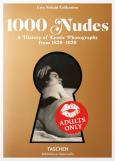
The history of nude photography is the history of people’s fascination with the topic. Indeed, the photographic depiction of the human body is the only subject that has enthralled photographers, theoreticians, and consumers over such a long period—more than 150 years. No other motif is as prevalent as this one during all the phases of development comprising the history of photography, no other is present, whatever the technique, and is a subject of discussion within the context of nearly all aesthetic movements. Nor has any other pictorial topic produced such a variety of specialities as the nude: from the ethnological interpretation of the body to the glamour shot, from nudist photography to the pin-up of today. No other photographic field of application has inspired as much desire as it has awakened official wrath.
1000 Nudes offers a cross section of the history of nude photography, ranging from the earliest nude daguerreotypes and ethnographic nude photographs to experimental nude photography. The period of time spanned by this work is from 1839 to roughly 1939, from the medium’s infancy to the end of the classic modernist period. Content-wise, the book pays tribute to the full range of pictorial approaches, from the manually elaborated artistic nudes of the turn of the century, enveloped in layers of theory, to the “obscene” postcard motifs which had not the slightest artistic pretension and were intended to exert a maximum effect on the buyer’s wallet.
All the pictures shown are taken from the late Uwe Scheid’s collection, one of the world’s largest and most important collections of erotic photography.
In 2007 TASCHEN released The New Erotic Photography, followed in 2012 by The New Erotic Photography 2. Each book featured hundreds of fresh and provocative images from the world's most intriguing erotic talents. Now the best of both books is available in The New Erotic Photography, featuring 62 photographers from 10 countries, exploring the global variations of erotic photography, as well as the evolution of photographic media over the last decade. We see film give way to digital, while those who persist with film are as likely to use Polaroids and primitive cameras like the Lomo and Holga as traditional SLRs.
Ten produkt jest zapowiedzią. Realizacja Twojego zamówienia ulegnie przez to wydłużeniu do czasu premiery tej pozycji. Czy chcesz dodać ten produkt do koszyka?