W tej strefie proponujemy bardzo szeroką ofertę z dziedziny psychologii oraz dziedzin powiązanych: astronomii i astrofizyki, ekologii, filozofii, kultury, podróżnictwa, religii, socjologii, sztuki. Szczególnie polecamy z tej kategorii bestseller pt. Księga Urantii. Księga Urantii podaje jasną i zwięzłą integracją nauki, filozofii i religii. Ci, którzy ją czytali i zgłębiali, wierzą, że Księga Urantii może wnieść bardzo wiele wartości do religijnej i filozoficznej myśli ludzi tego świata.
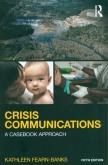
Crisis Communications: A Casebook Approach presents case studies of organizational, corporate, and individual crises, and analyzes the communication responses to these situations. Demonstrating how professionals prepare for and respond to crises, as well as how they develop communications plans, this essential text explores crucial issues concerning communication with the news media, employees, and consumers in times of crisis. Author Kathleen Fearn-Banks addresses how to choose the best possible words to convey a message, the best method for delivering the message, and the precise and most appropriate audience, in addition to illustrating how to avoid potential mismanagement.
The fifth edition of Crisis Communications includes updated cases that provide wider coverage of international crises and media technologies. It includes a new section on social media in crisis communication scenarios and includes additional comments from social media experts throughout various chapters. New case studies include "Police Departments and Community Trust," "The Oso Mudslide in Washington," "School Shootings: Communications To and For Children," and two additional international case studies - "Ebola Strikes Liberia: Firestone Strikes Ebola" and "Nut Rage and Korean Airlines." Previous case studies no longer in this edition can be found on the book’s companion website, which also includes the Instructor’s Manual with exercises in crisis responses, guidelines for crisis manual preparation, and other teaching tools: www.routledge.com/cw/fearn-banks.
Looking at both classic and modern cases in real-world situations, Crisis Communications provides students with real-world perspectives and insights for professional responses to crises. It is intended for use in crisis communications, crisis management, and PR case studies courses.
Also available for use with this text is the Student Workbook to Accompany Crisis Communications, providing additional discussion questions, activities, key terms, case exercises, and further content for each chapter.
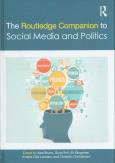
Social media are now widely used for political protests, campaigns, and communication in developed and developing nations, but available research has not yet paid sufficient attention to experiences beyond the US and UK. This collection tackles this imbalance head-on, compiling cutting-edge research across six continents to provide a comprehensive, global, up-to-date review of recent political uses of social media.
Drawing together empirical analyses of the use of social media by political movements and in national and regional elections and referenda, The Routledge Companion to Social Media and Politics presents studies ranging from Anonymous and the Arab Spring to the Greek Aganaktismenoi, and from South Korean presidential elections to the Scottish independence referendum. The book is framed by a selection of keystone theoretical contributions, evaluating and updating existing frameworks for the social media age.
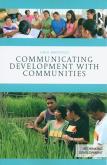
Development theory and practice are often taught in a manner that strips them of their historical context and obscures alternative intellectual assumptions and critical frameworks. This prevents students from acquiring a holistic understanding of the world and consequently, when it comes to development practice, most lack the skills to live and engage with people. It has become crucial to properly consider what it means to conceive and implement participatory development out in the field and not just in the boardroom.
Building on the work of Robert Chambers and Arturo Escobar, Communicating Development with Communities is an empirically grounded critical reflection on how the development industry defines, imagines and constructs development at the implementation level. Unpacking the dominant syntax in the theory and practice of development, the book advocates a move towards relational and indigenous models of living that celebrate local ontologies, spirituality, economies of solidarity and community-ness. It investigates how subaltern voices are produced and appropriated, and how well-meaning experts can easily become oppressors. The book propounds a pedagogy of listening as a pathway that offers a space for interest groups to collaboratively curate meaningful development with and alongside communities.
This is a valuable resource for academics and practitioners in the fields of Development Studies, Communication for Development, Communication for Social Change, Social Anthropology, Economic Development and Public Policy.
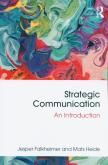
Strategic communication comprises different forms of goal-oriented communication inside and between organizations, their stakeholders and the society. Strategic communication is an emerging practice and research field integrating established disciplines such as public relations, organizational communication and marketing communication into a holistic framework. The field is based on an awareness of the fundamental importance of communication for the existence and performance of all organizations.
This textbook offers a broad insight into the field of strategic communication. The main aim of the book is to give a general overview of theories, concepts and methods in strategic communication. The book also aims to develop an understanding of different perspectives and the consequences each one has for practice. After reading the book the student or reader will be able to define and reflect upon strategic communication as an academic field and professional practice, describe relevant theories and apply these to communication problems.
The authors apply a reflective and practice-oriented approach meaning earlier research or theories are not only described, but also discussed from different critical perspectives. A practice-oriented approach means, in this book, that the authors strongly emphasize the role of contexts and situations—where strategic communication actually happens. This book will help business and communications students to not only define and understand a variety of strategic communications theories, but to use those theories to generate communication strategy and solutions.
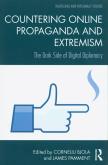
Exploring the ‘dark side’ of digital diplomacy, this volume highlights some of the major problems facing democratic institutions in the West and provides concrete examples of best practice in reversing the tide of digital propaganda.
Digital diplomacy is now part of the regular conduct of International Relations, but Information Warfare is characterised by the exploitation or weaponisation of media systems to undermine confidence in institutions: the resilience of open, democratic discourse is tested by techniques such as propaganda, disinformation, fake news, trolling and conspiracy theories. This book introduces a thematic framework by which to better understand the nature and scope of the threats that the weaponization of digital technologies increasingly pose to Western societies. The editors instigate interdisciplinary discussion and collaboration between scholars and practitioners on the purpose, methods and impact of strategic communication in the Digital Age and its diplomatic implications. What opportunities and challenges does strategic communication face in the digital context? What diplomatic implications need to be considered when governments employ strategies for countering disinformation and propaganda? Exploring such issues, the contributors demonstrate that responses to the weaponisation of digital technologies must be tailored to the political context that make it possible for digital propaganda to reach and influence vulnerable publics and audiences.
This book will be of much interest to students of diplomacy studies, counter-radicalisation, media and communication studies, and International Relations in general.
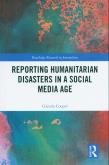
From the tsunami to Hurricane Sandy, the Nepal earthquake to Syrian refugees—defining images and accounts of humanitarian crises are now often created, not by journalists but by ordinary citizens using Twitter, Facebook, YouTube, Instagram and Snapchat. But how has the use of this content—and the way it is spread by social media—altered the rituals around disaster reporting, the close, if not symbiotic, relationship between journalists and aid agencies, and the kind of crises that are covered? Drawing on more than 100 in-depth interviews with journalists and aid agency press officers, participant observations at the Guardian, BBC and Save the Children UK, as well as the ordinary people who created the words and pictures that framed these disasters, this book reveals how humanitarian disasters are covered in the 21st century – and the potential consequences for those who posted a tweet, a video or photo, without ever realising how far it would go.
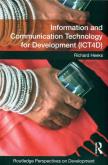
Mobile phones are close to ubiquitous in developing countries; Internet and broadband access are becoming commonplace. Information and communication technologies (ICTs) thus represent the fastest, broadest and deepest technical change experienced in international development. They now affect every development sector – supporting the work of hundreds of millions of farmers and micro-entrepreneurs; creating millions of ICT-based jobs; assisting healthcare workers and teachers; facilitating political change; impacting climate change; but also linked with digital inequalities and harms – with the pace of change continuously accelerating.
Information and Communication Technology for Development (ICT4D) provides the first dedicated textbook to examine and explain these emerging phenomena. It will help students, practitioners, researchers and other readers understand the place of ICTs within development; the ICT-enabled changes already underway; and the key issues and interventions that engage ICT4D practice and strategy.
The book has a three-part structure. The first three chapters set out the foundations of ICT4D: the core relation between ICTs and development; the underlying components needed for ICT4D to work; and best practice in implementing ICT4D. Five chapters then analyse key development goals: economic growth, poverty eradication, social development, good governance and environmental sustainability. Each chapter assesses the goal-related impact associated with ICTs and key lessons from real-world cases. The final chapter looks ahead to emerging technologies and emerging models of ICT-enabled development.
The book uses extensive in-text diagrams, tables and boxed examples with chapter-end discussion and assignment questions and further reading. Supported by online activities, video links, session outlines and slides, this textbook provides the basis for undergraduate, postgraduate and online learning modules on ICT4D.
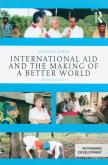
How can international aid professionals manage to deal with the daily dilemmas of working for the wellbeing of people in countries other than their own? A scholar-activist and lifelong development practitioner seeks to answer that question in a book that provides a vivid and accessible insight into the world of aid – its people, ideas and values against the backdrop of a broader historical analysis of the contested ideals and politics of aid operations from the 1960s to the present day.
Moving between aid-recipient countries, head office and global policy spaces, Rosalind Eyben critically examines her own behaviour to explore what happens when trying to improve people’s lives in far-away countries and warns how self-deception may construct obstacles to the very change desired, considering the challenge to traditional aid practices posed by new donors like Brazil who speak of history and relationships. The book proposes that to help make this a better world, individuals and organisations working in international development must respond self-critically to the dilemmas of power and knowledge that shape aid’s messy relations.
Written in an accessible way with vignettes, stories and dialogue, this critical history of aid provides practical tools and methodology for students in development studies, anthropology and international studies and for development practitioners to adopt the habit of reflexivity when helping to make a better world.
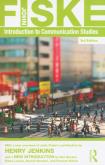
This revised edition of a now classic text includes a new introduction by Henry Jenkins, explaining ‘Why Fiske Still Matters’ for today’s students, followed by a discussion between former Fiske students Ron Becker, Elana Levine, Darrell Newton and Pamela Wilson on the theme of ‘Structuralism and Semiotics, Fiske-Style’. Both underline the continuing relevance of this foundational text in communication studies.
How can we study communication? What are the main theories and methods of approach?
This classic text provides a lucid, accessible introduction to the main authorities in the field of communication studies, aimed at students coming to the subject for the first time. It outlines a range of methods of analysing examples of communication, and describes the theories underpinning them. Thus armed, the reader will be able to tease out the latent cultural meanings in such apparently simple communications as news photos or popular TV programmes, and to see them with new eyes.
Niniejsza książeczka, podejmując jako swój problem centralny to, co wyłuszczone jest w jej tytule, tzn.relacje wzajemne między wiarą i rozumem, dotyczy tym samym, jak sądze jednego z problemów głównych nie tylko epoki starożytności chrześcijańskiej, czyli czasów Ojców Kościoła, lecz także naszej współczesności.
Niniejszy artykuł stanowi głos w dyskusji nad problemami postawionymi przez Tomasza Witkowskiego. Ponadto podejmujemy się krytyki dokonanej przez niego prowokacji oraz działań jej towarzyszących. Wskazujemy alternatywny sposób, w jaki można było osiągnąć zamierzony przez autora cel. Jednocześnie, zwracamy uwagę na negatywne zjawiska związane z kontrowersyjnym przedsięwzięciem Witkowskiego tj. złamanie wielu zasad etyki zawodowej, którego można było uniknąć. Demonstrujemy ułomności metodologiczne przeprowadzonych po prowokacji badań, ze względu na które wyciągnięte z nich wnioski są bezzasadne. Pokazujemy, w jaki sposób mistyfikator poprzez swoje działania mógł doprowadzić do podważenia zaufania do psychologii akademickiej, w tym również do psychoterapii opartych na empirii. W rezultacie, efekt przez niego osiągnięty może być wyłącznie odwrotny od zamierzonego. Zniechęcony do profesjonalnej psychologii pacjent stanowi bowiem łatwiejszy cel dla reklamujących się w atrakcyjny sposób szamanów.
Reguła św. Benedykta to fundament życia mniszego w Kościele zachodnim już od kilkunastu stuleci. Jednak w ciągu tak długiego czasu nic nie straciła na wartości. Następujące po sobie pokolenia mnichów i mniszek nadal dostrzegają w niej urzekający i zawsze aktualny sposób życia, realizację chrześcijańskiego ideału naśladowania Chrystusa przez postępowanie pełne umiaru, zaproponowane przez Mistrza odznaczającego się umiłowaniem Boga nade wszystko i głęboką, nadprzyrodzoną mądrością. Mistrzowie życia duchowego, zarówno znani z imienia, jak i anonimowi, pozostawili wiele reguł, ale żadna z nich nie zdobyła takiej popularności ani nie odegrała takiej roli jako żywa norma dla żywych ludzi. Reguła benedyktyńska „wyrasta” z doświadczenia wielkiego człowieka, który głęboko przeżył treść Ewangelii i pragnął podzielić się swym doświadczeniem z innymi, aby także oni osobiście zetknęli się z Chrystusem we wspólnocie zakonnej.
'You'll never look at your favourite movies and TV shows the same way again. And you shouldn't' Steven Soderbergh
'Insanely readable' Slavoj Zizek
'Your book was ... like a bag of pot, with me saying, 'I'm not gonna smoke.' But I was insatiable' Quentin Tarantino on Easy Riders, Raging Bulls
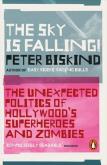
In The Sky is Falling! bestselling cultural critic Peter Biskind takes us on a dizzying ride across two decades of pop culture to show how the TV and movies we love - from Game of Thrones and 24 to Homeland and Iron Man - have taught us to love political extremism. Welcome to a darkly pessimistic, apocalyptic world where winter has come, the dead are walking, and ultra violence, revenge and torture are all in a day's work. Welcome to the new normal.
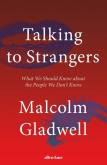
'I love this book . . . reading it will actually change not just how you see strangers, but how you look at yourself, the news - the world. Reading this book changed me' Oprah Winfrey
The highly anticipated new book from Malcolm Gladwell, No.1 international bestselling author of The Tipping Point, Blink, Outliers, What the Dog Saw and David and Goliath
The routine traffic stop that ends in tragedy. The spy who spends years undetected at the highest levels of the Pentagon. The false conviction of Amanda Knox. Why do we so often get other people wrong? Why is it so hard to detect a lie, read a face or judge a stranger's motives?
Through a series of encounters and misunderstandings - from history, psychology and infamous legal cases - Malcolm Gladwell takes us on an intellectual adventure into the darker side of human nature, where strangers are never simple and misreading them can have disastrous consequences.
No one challenges our shared assumptions like Malcolm Gladwell. Here he uses stories of deceit and fatal errors to cast doubt on our strategies for dealing with the unknown, inviting us to rethink our thinking in these troubled times.
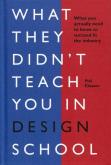
You'll appreciate this design career guide if:
You're a recent graduate and looking for a job as a designer
You want resume and interviewing advice, as well as tips for working in the design industry
You'd like to learn how to avoid common pitfalls of asserting yourself in the design industry
What They Didn't Teach You in Design School by Phil Cleaver provides advice on the stage from graduating, and getting into a studio and staying there as a valued designer, and explores best design practices. Though predominantly serving as a useful guide and bridge in the first year of your career as a designer, it should also be considered an essential tool that can be consulted when you're unsure of what to do next. Begin with the essentials of beginning your design career, like building your resume and portfolio, seeking out opportunities, and preparing for and securing interviews.
More than just helping you get a job, however, this career guide serves to help you succeed in whichever design position you land. Learn how to effectively work with other designers and your own clients, keep up to date with the industry, hone your business skills, and much more. From the day after graduation to the completion of your first year as a design professional, this career guide will help you stay on top of your game.
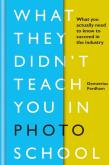
This book won't tell you how to take photographs. It will, though, teach you a much more difficult set of skills: how to be a photographer.
Passing on hard-earned lessons from a successful career in commercial, editorial and lifestyle photography, Demetrius Fordham shows how to snag the best internships and assistant roles, impress at an interview, develop an amazing portfolio, forge strong relationships with clients, and lay the foundations of your own successful career.
Illustrated throughout with Demetrius' own duotone photography, dramatically typeset to appeal to visual thinkers, and presented in an appealing handbook format, this is the book that will launch the careers of the next generation of photographers.
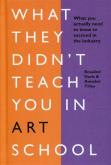
You have the artistic talent, but do you know how to make a success of it? The thing they don't teach you in art school is just how active and engaged you need to be; you'll have to become your own finance, business and marketing manager, as well as a researcher, curator and administrator. What They Didn't Teach You in Art School is the ultimate survival guide to life as an artist, and the perfect springboard for aspiring artists who haven't yet given up the day job. The book provides expert advice, tips and inspiration to help you build a successful career - giving you the opportunity to nurture your true talent.
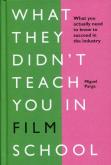
What you actually need to know to succeed in the film industry.
Packed with practical, hard-working tips and advice, this book is a no-nonsense guide on how to get the best out of your film-school education, how to navigate some of the most frustrating moments in an artist's life, and how to keep the inspiration going as you battle your way through the indie filmmaking world. With a fresh design and a grounded, practical approach, this is the crucial companion that will make you, and your work, stand out.
Najnowsza książka brytyjskiego filozofa Tima Crane’a to kamień milowy w dyskusji o wierze i ateizmie. Autor stawia sobie za cel zrozumienie fenomenu religii z punktu widzenia ateisty, czyni to jednak w zupełnie innym duchu niż wyznawcy „nowego ateizmu” – jak Richard Dawkins czy Daniel Dennet – którzy sprowadzają wiarę do ułudy ludzkiej wyobraźni. Wierzący nie rozpoznają siebie w stworzonym przez nich karykaturalnym obrazie. Tymczasem Crane jest świadom, że ani religia, ani ateizm nie przestaną być obecne w życiu ludzi, dlatego dialog jest konieczny. I to dialog na poziomie intelektualnym, poznawczym. Jego książka wskazuje filozoficzne obszary, gdzie ateista może spotkać się z wierzącym. Sens wiary jest pierwszą książką Tima Crane’a przełożoną na język polski.
Ten produkt jest zapowiedzią. Realizacja Twojego zamówienia ulegnie przez to wydłużeniu do czasu premiery tej pozycji. Czy chcesz dodać ten produkt do koszyka?