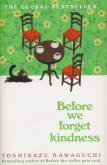
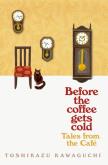
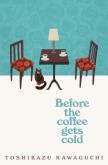
The enchanting fifth book in the multi-million-copy bestselling series about a cosy cafe that offers its visitors the chance to travel back in time. Translated from Japanese, in Before We Forget Kindness four new guests enter the mysterious Tokyo café, each with a secret wish, each hoping to go back in time to fulfil it as their coffee is poured . .
. - The father who could not allow his daughter to get married- A woman who couldn't give Valentine's Day chocolates to her loved one- A boy who wants to show his smile to his divorced parents- A wife holding a child with no name . .
. The incomparable Toshikazu Kawaguchi introduces us to the dreams, wishes and deeply emotional encounters of these four guests, all travelling back in time to find comfort, peace, and a newfound happiness. But, as ever, they must return before the coffee gets cold .
. . Catch up on the rest of the series with Before the coffee gets cold, Tales from the cafe, Before your memory fades and Before we say goodbye.
**Before I knew I loved you, the sixth book in the series, is available to pre-order now!**
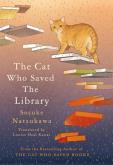
Nanami sees nothing wrong with a library and cat combination. But a talking cat is a whole other story.
Thirteen-year-old Nanami Kosaki loves reading. The local library is a home from home and books have become her best friends. When Nanami notices books disappearing from the library shelves, she’s particularly curious about a suspicious man in a grey suit whose furtive behaviour doesn’t feel right. Should she follow him to see what he’s up to?
When a talking tabby cat called Tiger appears to warn her about how dangerous that would be, together they’re brave enough to follow the frightening trail to find out where all the books have gone. Will Nanami and Tiger overcome the challenges of the adventure ahead?
Warm, wonderful and wise, Sosuke Natsukawa's The Cat Who Saved the Library is also a powerful lesson never to underestimate the value of great literature, and a reminder always to think for ourselves, no matter what our charismatic leaders might say.
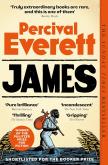
The Mississippi River, 1861. When the enslaved Jim overhears that he is about to be sold to a new owner in New Orleans and separated from his wife and daughter forever, he flees to nearby Jackson’s Island until he can formulate a plan. Meanwhile, Huck Finn has faked his own death to escape his violent father who recently returned to town.
So begins a dangerous and transcendent journey along the Mississippi River, towards the elusive promise of the free states and beyond. As James and Huck navigate the treacherous waters, each bend in the river holds the promise of both salvation and demise. And together, the unlikely pair embark on the most life-changing odyssey of them all . . .
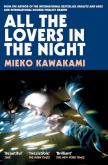
A deeply moving and insightful story set in contemporary Tokyo. From literary sensation and International Booker Prize-shortlisted author Mieko Kawakami, the bestelling author of Breasts and Eggs and Heaven, comes All the Lovers in the Night.
'A brief, compelling study of alienation and friendship; I binge-read it in one sitting' – Rebecca F. Kuang, author of Yellowface
Fuyuko Irie is a freelance proofreader in her thirties. Living alone in an overwhelming city and unable to form meaningful relationships, she has little contact with anyone other than her colleague, Hijiri. But a chance encounter with a man named Mitsutsuka awakens something new in her. Through their weekly meetings, Fuyuko starts to see the world in a different light and painful memories from her past begin to resurface.
As Fuyuko realizes she exists in a small world of her own making she begins to push at her own boundaries. But will she find the strength to bring down the walls that surround her?
Poetic, modern and shocking, this is an unforgettable novel from Japan’s most exciting writer.
‘Mieko Kawakami is a genius’ – Naoise Dolan, author of Exciting Times
All the Lovers in the Night is translated from the Japanese by Sam Bett and David Boyd.
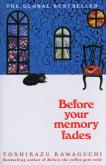
Toshikazu Kawaguchi?s touching Before Your Memory Fades, translated from Japanese by Geoffrey Trousselot, explores the age-old question: what would you do if you could travel back in time? More importantly, who would you want to meet, maybe for one last time?On the hillside of Mount Hakodate in northern Japan, Cafe Donna Donna is fabled for its dazzling views of Hakodate port. But that?s not all. Like the charming Tokyo cafe Funiculi Funicula, Cafe Donna Donna offers its customers the extraordinary experience of travelling through time.From the author of Before the Coffee Gets Cold and Tales from the Cafe comes another heartfelt story of lost souls hoping to take advantage of the cafe's time-travelling offer. Among some familiar faces, readers will also be introduced to:The daughter who begrudges her deceased parents for leaving her orphanedThe comedian who aches for his beloved and their shared dreamsThe younger sister whose grief has become all-consumingThe young man who realizes his love for his childhood friend too late . . .Featuring Kawaguchi's signature wistful storytelling, Before Your Memory Fades is full of heart and emotion.
If a man has lost a leg or an eye, he knows he has lost a leg or an eye; but if he has lost a self – himself – he cannot know it, because he is no longer there to know it.
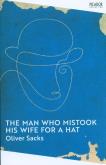
In this extraordinary book, Dr. Oliver Sacks recounts the stories of patients struggling to adapt to often bizarre worlds of neurological disorder. Here are people who can no longer recognize everyday objects or those they love; who are stricken with violent tics or shout involuntary obscenities, and yet are gifted with unusually acute artistic or mathematical talents.
If sometimes beyond our surface comprehension, these brilliant tales illuminate what it means to be human.
A provocative exploration of the mysteries of the human mind, The Man Who Mistook His Wife for a Hat is a million-copy bestseller by the twentieth century's greatest neurologist.
Part of the Picador Collection, a series showcasing the best of modern literature.
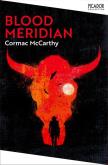
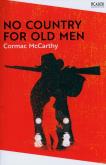
Brutally violent, Blood Meridian is the story of one teenage runaway in the nineteenth-century American South, as a sadistic gang unleashes its massacre across the desert land. It is the work that sealed Cormac McCarthy's reputation as one of the twentieth century's greatest writers – his magnum opus.
‘[A] brilliant, uncompromising work of fiction – imagine if the authors of the King James Bible, their hands guided by Satan, wrote a western’ – The Times
Through the hostile landscape of the Texas–Mexico border wanders the Kid, a fourteen year-old Tennessean who is quickly swept up in the relentless tide of blood.
A group known as the Glanton gang hunt Indigenous Americans, collecting scalps as their bloody trophies. At the centre of this violence stands Judge Holden: a massive, hairless man, mysterious if not supernatural, erudite and cold-blooded. He is singularly extreme in his sadistic violence.
But the apparent chaos is not without order – the Glanton gang, too, are stalked as prey.
Read as both a brilliant subversion of the Western novel and a blazing example of that form, it is a powerful, mesmerizing and savagely beautiful novel – and one of the most important works in American fiction of the last century.
‘In Blood Meridian, McCarthy reaches the peak of his style: spare and ornate at once, repetitious but endlessly readable’ – Guardian
THE SUNDAY TIMES BESTSELLER
Now on BBC Radio 4 'Book of the Week'
Winner of the 2021 Baillie Gifford Prize for Non-Fiction
Shortlisted for the 2021 Financial Times/McKinsey Business Book of the Year Award
One of Barack Obama’s Favorite Books of 2021
Shortlisted for the Crime Writers' Association Gold Dagger for Non-Fiction
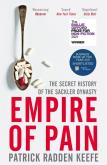
The gripping and shocking story of three generations of the Sackler family and their roles in the stories of Valium, OxyContin and the opioid crisis.
'One of those authors I will always read, no matter what the subject matter, which is why I gobbled up Empire of Pain . . . a masterclass in compelling narrative nonfiction.' – Elizabeth Day, The Guardian '30 Best Summer Reads'
‘You feel almost guilty for enjoying it so much’ – The Times
The Sackler name adorns the walls of many storied institutions – Harvard; the Metropolitan Museum of Art; Oxford; the Louvre. They are one of the richest families in the world, known for their lavish donations in the arts and the sciences. The source of the family fortune was vague, however, until it emerged that the Sacklers were responsible for making and marketing Oxycontin, a blockbuster painkiller that was a catalyst for the opioid crisis – an international epidemic of drug addiction which has killed nearly half a million people.
In this masterpiece of narrative reporting and writing, award-winning journalist and host of the Wind of Change podcast Patrick Radden Keefe exhaustively documents the jaw-dropping and ferociously compelling reality. Empire of Pain is the story of a dynasty: a parable of twenty-first-century greed.
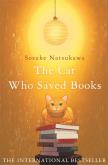
The Cat Who Saved Books is a heartwarming story about finding courage, caring for others – and the tremendous power of books.
'Enchanting' – Observer
__________
Grandpa used to say it all the time: Books have tremendous power. But what is that power really?
Natsuki Books was a tiny second-hand bookshop on the edge of town. Inside, towering shelves reached the ceiling, every one crammed full of wonderful books. Rintaro Natsuki loved this space that his grandfather had created. He spent many happy hours there, reading whatever he liked. It was the perfect refuge for a boy who tended to be something of a recluse.
After the death of his grandfather, Rintaro is devastated and alone. It seems he will have to close the shop. Then, a talking tabby cat called Tiger appears and asks Rintaro for help. The cat needs a book lover to join him on a mission. This odd couple will go on three magical adventures to save books from people who have imprisoned, mistreated and betrayed them. Finally, there is one last rescue that Rintaro must attempt alone . . .
Sosuke Natsukawa’s international bestseller, translated from Japanese by Louise Heal Kawai, is a story for those for whom bo
I like to dissect girls. Did you know I’m utterly insane?
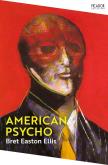
Patrick Bateman has it all: good looks, youth, charm, a job on Wall Street, and reservations at every new restaurant in town. He is also a psychopath. A man addicted to his superficial, perfect life, he pulls us into a dark underworld where the American Dream becomes a nightmare . . .
With an introduction by Irvine Welsh, Bret Easton Ellis’s American Psycho is one of the most controversial and talked-about novels of all time. A multi-million-copy bestseller hailed as a modern classic, it is a violent and outrageous black comedy about the darkest side of human nature.
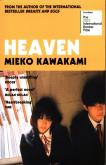
From the bestselling author of Breasts and Eggs and international literary sensation Mieko Kawakami comes a sharp and illuminating novel about a fourteen-year-old boy subjected to relentless bullying.
In Heaven, a fourteen-year-old boy is tormented for having a lazy eye. Instead of resisting, he chooses to suffer in silence. The only person who understands what he is going through is a female classmate, Kojima, who experiences similar treatment at the hands of her bullies. Providing each other with immeasurable consolation at a time in their lives when they need it most, the two young friends grow closer than ever. But what, ultimately, is the nature of a friendship when your shared bond is terror?
Unflinching yet tender, sharply observed, intimate and multi-layered, this simple yet profound novel stands as yet another dazzling testament to Mieko Kawakami’s uncontainable talent. There can be little doubt that it has cemented her reputation as one of the most important young authors at work today.
Breathtaking' – Haruki Murakami author of Norwegian Wood
A New York Times 'Notable Book of 2020' and one of Elena Ferrante's 'Top 40 Books by Female Authors'
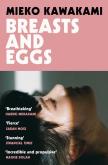
On a hot summer’s day in a poor suburb of Tokyo we meet three women: thirty-year-old Natsuko, her older sister Makiko, and Makiko’s teenage daughter Midoriko. Makiko, an ageing hostess despairing the loss of her looks, has travelled to Tokyo in search of breast enhancement surgery. She's accompanied by Midoriko, who has recently stopped speaking, finding herself unable to deal with her own changing body and her mother’s self-obsession. Her silence dominates Natsuko’s rundown apartment, providing a catalyst for each woman to grapple with their own anxieties and their relationships with one another.
Eight years later, we meet Natsuko again. She is now a writer and find herself on a journey back to her native city, returning to memories of that summer and her family’s past as she faces her own uncertain future.
In Breasts and Eggs Mieko Kawakami paints a radical and intimate portrait of contemporary working class womanhood in Japan, recounting the heartbreaking journeys of three women in a society where the odds are stacked against them. This is an unforgettable English language debut from a major new international talent.
'Bold, modern and surprising' – An Yu, author of Braised Pork
'Incredible and propulsive' – Naoise Dolan, author of Exciting Times
In a small back alley in Tokyo, there is a café which has been serving carefully brewed coffee for more than one hundred years. But this coffee shop offers its customers a unique experience: the chance to travel back in time . . .
From the author of Before the Coffee Gets Cold comes Tales from the Cafe, a story of four new customers each of whom is hoping to take advantage of Cafe Funiculi Funicula's time-travelling offer.
Among some faces that will be familiar to readers of Toshikazu Kawaguchi's previous novel, we will be introduced to:
The man who goes back to see his best friend who died 22 years ago
The son who was unable to attend his own mother’s funeral
The man who travelled to see the girl who he could not marry
The old detective who never gave his wife that gift . . .
This beautiful, simple tale tells the story of people who must face up to their past, in order to move on with their lives. Kawaguchi once again invites the reader to ask themselves: what would you change if you could travel back in time?
A beautiful, moving story about a small Japanese café that offers its visitors the chance to travel back in time, to find an answer to the question: what would you change if you could go back? For fans of The Guest Cat and If Cats Disappeared from the World.
The Sunday Times and New York Times Bestseller
A couple in their thirties live in a small rented cottage in a quiet part of Tokyo. They work at home as freelance writers. They no longer have very much to say to one another.
One day a cat invites itself into their small kitchen. She is a beautiful creature. She leaves, but the next day comes again, and then again and again. New, small joys accompany the cat; the days have more light and colour. Life suddenly seems to have more promise for the husband and wife; they go walking together, talk and share stories of the cat and its little ways, play in the nearby Garden. But then something happens that will change everything again.
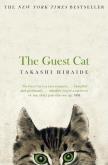
The Guest Cat is an exceptionally moving and beautiful novel about the nature of life and the way it feels to live it. Written by Japanese poet and novelist Takashi Hiraide, the book won Japan's Kiyama Shohei Literary Award, and was a bestseller in France and America.
A beautifully moving tale of loss and reaching out to the ones we love, of one man’s journey to discover what really matters in modern life.
Our narrator’s days are numbered. Estranged from his family, living alone with only his cat Cabbage for company, he was unprepared for the doctor’s diagnosis that he has only months to live. But before he can set about tackling his bucket list, the Devil appears with a special offer: in exchange for making one thing in the world disappear, he can have one extra day of life. And so begins a very bizarre week . . .
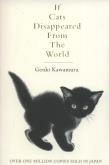
Because how do you decide what makes life worth living? How do you separate out what you can do without from what you hold dear? In dealing with the Devil our narrator will take himself – and his beloved cat – to the brink. Genki Kawamura's If Cats Disappeared from the World is a story of loss and reconciliation, of one man’s journey to discover what really matters in modern life.
This beautiful tale is translated from the Japanese by Eric Selland, who also translated The Guest Cat by Takashi Hiraide. Fans of The Guest Cat and The Travelling Cat Chronicles will also surely love If Cats Disappeared from the World.
A dazzling urban satire of modern human relations? An ironic, tragic insight into the demise of the nuclear family? Or the confused ramblings of a pissed thirty-something?
‘A brilliant evocation of life as a single girl in a certain time . . . reads like Anita Loos out of Jane Austen, and any woman who has ever had a job, a relationship or indeed a mother will read it and roar’ The Times
‘I cannot recommend a book more joyfully . . . Hilariously funny, miraculously observed, endlessly touching’ Daily Telegraph
‘Wild comedy . . . observed with merciless, flamboyant wit. A gloriously funny book’ Sunday Times
Walker is a D-Day veteran with post-traumatic stress disorder; he can’t return home to rural Nova Scotia, and looks instead to the city for freedom, anonymity and repair. As he moves from New York to Los Angeles and San Francisco we witness a crucial period of fracture in American history, one that also allowed film noir to flourish. The Dream had gone sour but – as those dark, classic movies made clear – the country needed outsiders to study and dramatize its new anxieties.
While Walker tries to piece his life together, America is beginning to come apart: deeply paranoid, doubting its own certainties, riven by social and racial division, spiralling corruption and the collapse of the inner cities.
Ten produkt jest zapowiedzią. Realizacja Twojego zamówienia ulegnie przez to wydłużeniu do czasu premiery tej pozycji. Czy chcesz dodać ten produkt do koszyka?