W tej strefie zapraszamy czytelników tak zwane artystyczne dusze po książki z kategorii Sztuka. Polecamy szereg publikacji o sztuce i jej historii,ciekawostki i portfolia artystów, eseje, albumy, książki o malarstwie, rzeźbiarstwie, architekturze oraz histoii fotografii. Biografie ciekawych artystów, książki i powieści przedstawiające fascynujące losy malarzy i osób uwiecznianych na obrazach. W tym dziale tylko ksiązki ze sztuka w tle.
In Halldor Laxness' novel Under the Glacier, the protagonist travels from Reykjavik to the mythical volcano at the Snaefellsjoekull glacier, a place in whose shadow "words cease to have even the slightest meaning." This could be a leitmotif for Jurgen Wettke's Iceland images. Whereas language can hardly convey the majesty and beauty of a landscape, the photographs in ICELAND - Nature of the North speak volumes in their eloquence. Wettke's photographic journey across the volcanic island is guided by nature's elemental forces: he shows us the diverse forms of fire, water, air, light, and earth. Whether the structures of lava flows, sculptural ice formations, or nature's artworks, aurora borealis, lighting up the sky-Jurgen Wettke's photography brings us closer to these wonders of nature. We discover Iceland in an entirely new and breathtaking way!
The rich collections of paintings and sculptures by women in the Louvre, Versailles, Fontainebleau, and other venerable French collections present an outstanding opportunity to explore the important contributions that women artists made in France between 1750 and 1848, a period that saw the waning of the ancien regime, the traumas of the French Revolution, the rise and fall of Napoleon, and the restoration of the monarchy.
Royalists to Romantics features some seventy-five paintings, sculptures, prints, and drawings by thirty-five French women artists of this era. These stunning works both illuminate their makers' careers and offer a new narrative about the art world of the Revolutionary period.
Published to accompany a major exhibition at the National Museum of Women in the Arts in Washington, DC, this beautifully illustrated book examines eighteenth-century French theories of sexual difference and their influence on the 'woman-artist question'; paradoxical Revolutionary attitudes toward women artists, who encountered as many new limitations as opportunities; and the complex ways that women marketed their reputations and managed their cultural positions in France's intricate social and artistic hierarchy.
Featuring major works from Caravaggio and his circle and the Italian Baroque period, this lavishly illustrated book looks at Rome as the center of European culture in the 17th century.
The National Galleries Barberini Corsini in Rome host one of the major collections of Italian Baroque paintings. This art has been admired all over Europe. The monarchs aimed to transfer the glamour of Roman Baroque to their courts. In the 18th century Frederick II of Prussia modeled the Palais Barberini in Potsdam, Germany, after the Barberini Palace in Rome. In January 2017 the newly founded Museum Barberini moved into the recently reconstructed Palais Barberini in Potsdam.
This book accompanies an exhibition in Potsdam of splendid 17th century works from the National Galleries Barberini Corsini in Rome. It provides not only a fitting background to Museum Barberini’s fascinating architectural history but also highlights the important role of the Barberini family and Pope Urban VIII as patrons and art collectors.
Featuring ancient Greek and Roman sculpture, this book explores the history and legacy of ancient statues of Olympian gods.
For people in ancient Greece, ornately and imposingly fashioned statues depicting the gods symbolized power or ideal beauty. During the Roman Empire, when sculptors copied Greek models, the sculptures conveyed an aura of education and scholarship.
This volume showcases antique sculptures that represent the most important Greek Olympian gods. Culled from the collection of the Staatliche Kunstsammlungen Dresden, one of the most important collections of antiquities, this book features objects ranging from the 6th century B.C.E. to the 4th century C.E. The sculptures express the Greek ideal of beauty and the remarkable creative powers of these artists as well as the evolving ways gods were portrayed?from solemn and religiously formal to natural and graceful figures.
In the 17th century, Amsterdam was a vibrant hub of the burgeoning European trade with Asia, Africa, and the Levant, importing copious amounts of foreign items that powerfully stimulated the imagination of numerous Dutch artists. This was notably the case with Rembrandt, whose curiosity and voraciousness as a collector were legendary in his time.
Throughout his prolific career, he drew on Eastern influences in genres as diverse as history painting and portraiture, including depictions in which he himself adopted Oriental styled attire. This lavishly illustrated book explores the inventive ways in which Rembrandt and his contemporaries accommodated Eastern imagery into their own repertoire, set within the wider context of Holland's rapidly expanding commercial and cultural exchange with its non-European trading partners.
The problematic term "Orient" was widely used in Rembrandt's time and will be discussed at great length in this catalogue.
From the moment it opened in 1977, Studio 54 celebrated spectacle and promised a never-ending parade of anything goes. Although it existed for only three years, it served as a catalyst that brought together some of the most famous, creative, and strangest people in the world. It quickly became known for its all-ages celebrity guest list and its uniquely chic clientele of superstars and freaks of all races and sexual preferences who would often show up half-dressed or in costume.
From the cutting-edge lighting displays and sound system to its elaborate sets that would change on a whim, altering the environment and ambiance, it was the beginning of nightclub as performance art.
On the heels of Walter Isaacson's beloved new biography (Fall 2017), and increased media attention (as 2019 marks the 500th anniversary of the artist's death), this book's appeal will extend beyond the devoted and numerous members of Leonardo's audience to reach a popular one.
The most comprehensive collection of Leonardo da Vinci's drawings provides an intimate look at the mind and hand of the genius.
Curated and edited by the artist Ina Otzko, 100 Norwegian Photographers is a magnificent volume of photos from today’s Norwegian photography scene.
Otzko gives one hundred contemporary photographers from her country the space to show their best images, including renowned figures such as Dag Alveng, Jonas Bendiksen, Knut Bry, Morten Krogvold, Annemor Larsen, Crispin Gurholt and Mikkel McAlinden. With several double pages for each photographer, the book is a vivid archive of Norwegian photography, uniting the most diverse genres, from landscapes to portraits, experimental photography to snapshots. It provides an extensive overview of the mysterious country in the north, the land of glaciers and fjords, showing it in brilliant facets—witty, absurd, poetic, political, special.
This is an accurate summation of the life of the British photographer (1815-1879), who took up the camera at age forty-eight and made more than a thousand images over the next fourteen years.
Living at the height of the Victorian era, Cameron was anything but conventional, experimenting with the relatively new medium of photography, promoting her art through exhibitions and sales, and pursuing the eminent men of her time as subjects for her lens.
A thematic exploration of Picasso's work in the 1910s and 1920s | Includes previously unpublished material from the archives of the Fundacion Almine y Bernard Ruiz-Picasso para el Arte (FABA) | An exhibition catalogue with 200 works and 80 archival images.
In light of a large selection of previously unpublished personal archives - documents, photographs and films - this title explores Picasso's 'Olga period' by contextualizing his work during this period and by questioning the contrast between the subject and its portrayal. A favorite model since their meeting in 1917, Olga Khokhlova, a Russian ballet dancer who married Picasso in July 1918, is the most represented female figure in the artist's work of the late 1910s and 1920s. Picasso renders the ambiguity of his first wife, her beauty, her Ingres-like contours, and her deep, pensive, melancholy, in many of his most famous portraits.
The exhibition that this book accompanies brings to light materials conserved by Olga's family until recently, including memorabilia of her life as a dancer, photos of Picasso, their son Paul, and their daily life together, and their travels to Barcelona, Naples, and Monte Carlo.
A stunning visual journey of the enduring legacy of fashion and couture icon Manfred Thierry Mugler.
Since launching his first fashion collection in 1973, Manfred Thierry Mugler has been celebrated for his fierce creative vision. Drawing inspiration from everything from architecture and theatre to Old Hollywood and futurism, Mugler not only designs his collections, but also stages his own shows, directs the advertising campaigns, and photographs his fantastical creations. Including both iconic and never-before-published images, this book is illustrated with more than 150 photographs from his captivating personal collection and includes a travel journal-inspired text that follows Mugler around the world on his shoots, offering a behind-the-scenes look at how the images came to be. Proving that Mugler's vision is best captured by his own extraordinary images, »Manfred Thierry Mugler Photographer« is a vibrant visual journey through the work of a singular talent.
Manfred Thierry Mugler is a legendary fashion designer, creating iconic ready-to-wear and haute couture collections since 1974. Mugler also works as a photographer, director, choreographer, and perfumer.
"Two Rivers" presents Joachim Brohm's photo series "Ruhr"(1980 to 1983) alongside "Sleeping by the Mississippi" (2000 to 2004) by Alec Soth. Other work groups on view in the catalogue, such as "Ohio", "Dessau Files" and "Culatra" by Joachim Brohm, and "Songbook" and "Niagara" by Alec Soth, represent fictitious places and allow for a broader view of the oeuvres of the two photographers. Also featured in the book is Brohm's portrait series "Flash Ohio" which will be published for the first time exactly 35 years after its creation and occupies a special position in his work.
This dazzling survey of 16th-century Venetian painting captures the striking colors and revolutionary characteristics of one of art history's greatest chapters. It is hard to imagine more profoundly influential artists than the Venetian painters of the 16th century. Whether creating sweeping devotional altarpieces or intimate portraits, the Venetian painters changed the way artists employed color and composition. These defining qualities are on brilliant display in this book that covers fascinating aspects of the work of Titian, Veronese, Tintoretto, Lorenzo Lotto, Jacopo Bassano, and many others. More than one hundred paintings, drawings, and prints are reproduced in stunning detail. Side-by-side comparisons draw readers into the conversations between Venetian artists as they tackled similar subjects and vied for commissions. The book opens with fascinating essays about the history of 16th-century Venice, the Venetian School of painting, and the techniques of the Venetian masters. As beautiful as it is informative, this book features all of the excitement and splendor of one of the most prolific and important chapters in the history of European art.
Fashion photographer Arthur Elgort has loved jazz since he was nine years old, when a childhood friend introduced him to the music; he soon found himself frequenting jazz clubs all over his native New York City.
The dynamic style that made Elgort such a sensation in fashion photography was directly informed by his love for jazz and dance. His talent as a photographer grew alongside his interest and knowledge of jazz. By the time he was a well-known working photographer, Elgort could parlay his influence into meetings with his boyhood idols, requesting to have his favorite musicians appear in both his fashion and personal work.
Countless jazz greats have appeared in front of Elgort's camera, including Illinois Jacquet, Dexter Gordon and Dorothy Donegan. Each sitting produced not only images but memorable stories: the time Elgort took Dorothy shopping at Chanel; what it was like to shoot Dexter in his Hell's Kitchen apartment; getting to know Illinois and his wife personally. Arthur Elgort: Jazz collects these moments and more, exploring for the first time the creative exchange between the photographer and his musical heroes.
A spectacular retrospective of the profoundly influential photographer Rankin s extraordinary thirty-year career on the cutting edge of fashion and pop culture.
Masterworks from the Brooklyn Museum Costume Collection at The Metropolitan Museum of Art. An alluring, opulent showcase of hundreds of beautiful historic clothing items and accessories.
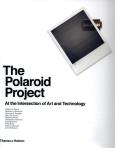
After losing himself in Taos, New Mexico, for 15 years, Dennis Hopper returned to Los Angeles in the mid-1980s. In 1987, Hopper began to use a Polaroid camera to document gang graffiti. He was particularly drawn to the abstract shapes of overlapping paint that appeared when graffiti had been covered up or written over, reminding him, he said, “that art is everywhere in every corner that you choose to frame and not just ignore and walk by.” The Polaroids presented for the first time in this book are proof of that. Hopper firmly considered himself an “Abstract Expressionist and action painter by nature, and a Duchampian finger pointer by choice.” Hopper transformed the instantaneous, disposable nature of Polaroid film into pictures as deliberate and final as images achieved by an artist painting on canvas, and these images represent the first part of his journey back to the world of photography, picking up where he had left off in the 1960s.
Aaron Rose— curator, film director, and the founder of the legendary Alleged Gallery in New York City—contributes a text, which is informed by his deep connection to the Beautiful Losers generation of artists, including Barry McGee, Mike Mills, Chris Johanson, Ari Marcopoulos, and Ed Templeton.
This book is a companion to Drugstore Camera (Damiani, 2015) also edited and designed by Michael Schmelling, which presented Hopper’s personal photographs taken in Taos, New Mexico.
Witness the rise of New York City through dozens of historic and contemporary aerial photographs that chart the city’s ever-changing skyline. From the ground, New York City can feel like a chaotic jumble of traffic, pedestrians, one-way streets, parks, and buildings of every shape and size. But above the city, away from the cacophony and the commotion, New York can be tranquil and awe-inspiring.
The city that never sleeps also never stops changing, which is why this phenomenal collection of historic maps and aerial photos is a fascinating way to explore New York’s evolution. The book opens with maps of 17th-century Manhattan, a quiet settlement with a ragged shoreline. A series of chronological illustrations show the city’s northward expansion, the establishment of its grid system, and the creation of Central Park. The next three chapters include aerial photographs that chart the city’s unbelievable expansion in every direction, including skyward.
As buildings rise, as the shoreline expands with ports and landfills, and as more sophisticated photographic techniques allow for breathtaking views of New York’s unmistakable skyline, this lush, oversized book captures a city that is truly alive. Author Peter Skinner’s commentaries on the photographs and maps will guide readers through what is certain to become a treasured book for all who love New York.
Unique Comic Book! Rembrandt as you have never seen him before in an absolute masterpiece by the Dutch illustrator and cartoonist Typex. For three years Typex lived with Rembrandt, obsessively, day after day, from dawn until deep into the night.
The result is a visually overwhelming graphic novel, in which Typex brings 'his' genius Rembrandt to life: petulant, vain, arrogant, crass, touchy, but also endearing, disarming and sometimes pathetic. This award-winning book is a virtuoso masterpiece to take up again and again.
An evocative celebration of the men of gypsy flamenco culture, from one of contemporary photography's most gifted artists.
Known for his edgy photographs, Ruven Afanador amazes again with another collection of images that will seduce and delight. Following up on Mil Besos - which focused on the women of flamenco - Afanador turns his powerful vision to the men of flamenco, with startling results.
Photographed in Andalusian Spain, these unique images present a universe inhabited by gypsies, musicians, and most of all the male flamenco dancers, full of beauty and bravado. Captured in arranged poses or in mid-dance, the dancers embody the wild, youthful passion inherent in the musical world of flamenco. As likely to be in gorgeous costumes as in the nude, these men exude gritty glamour, innate classicism, and a singularly charged eroticism.
Combining the surreal glamour of fashion with documentary photography, these striking black-and-white images will appeal to both the fashion crowd as well as the serious art photography audience.
Ten produkt jest zapowiedzią. Realizacja Twojego zamówienia ulegnie przez to wydłużeniu do czasu premiery tej pozycji. Czy chcesz dodać ten produkt do koszyka?