Do tego działu zapraszamy zwolenników medycyny konwencjonalnej. Jest bardzo wiele chorób, z którymi nie wygralibyśmy bez leków farmakologicznych, czy też radioterapii. Dlatego, aby zgłębić swją wiedzę z zakresu medycyny konwencjonalnej zapraszamy po podręczniki, poradniki, publikacje, altasy, literaturę medyczą dla uczniów, studentów, lekarzy i nie tylko. Chirurgia, terapia laserem, anatomia, piwrwsza pomoc, fizjologia i patofizjologia ambulatoryjna i kliniczna, diagnostyka neurologiczna, otolaryngologiczna, audiologiczna i radiologiczna i wiele innych.
Z okazji jubileuszu 20-lecia (2001–2021) Sekcji Wad Zastawkowych Serca Polskiego Towarzystwa Kardiologicznego (PTK) przygotowaliśmy niniejszy podręcznik pt. Kompendium Heart Valve Team. Wady zastawkowe serca: klinika, diagnostyka, interwencje dotyczący postępowania w wadach zastawkowych serca w kontekście kardiogrupy zastawkowej (Heart Valve Team).
Książka powstała pod patronatem Sekcji Wad Zastawkowych Serca PTK we współpracy z Sekcją Kardiochirurgii PTK i Asocjacją Interwencji Sercowo-Naczyniowych PTK. Jej autorami są eksperci z tych trzech struktur PTK, a także inni specjaliści. Pozwoliło to na unikatowe ujęcie tematyki wad zastawkowych serca. Monografia ma charakter dydaktyczny i praktyczny. Jest przeznaczona dla kardiologów, internistów, lekarzy specjalizujących się w dziedzinie kardiologii i interny, studentów medycyny oraz wszystkich lekarzy, którym mogłaby pomóc w codziennej praktyce. Dotyczy postępowania z pacjentami z podejrzeniem wady zastawkowej serca lub z już rozpoznaną wadą zastawkową serca w aspekcie klinicznym, diagnostycznym (zwłaszcza echokardiograficznym) i terapeutycznym.
Edyta Płońska-Gościniak
Nefrologia dziecięca w praktyce (od A do Z) Podręcznik dla nefrologów i pediatrów zainteresowanych nefrologią, zarówno specjalistów, jak i lekarzy w trakcie specjalizacji z nefrologii lub pediatrii. Napisany na podstawie aktualnych wytycznych oraz wiarygodnych badań klinicznych przez grono doświadczonych specjalistów z wiodących ośrodków nefrologii i urologii dziecięcej.Od epidemiologii i podstaw patofizjologicznych, przez objawy kliniczne i badania diagnostyczne, do szczegółowego omówienia poszczególnych chorób układu moczowego u dzieci i zasad postępowania.Przejrzysty układ, pomocne tabele, algorytmy postępowania, bogaty materiał ilustracyjny. Wszystko co musi wiedzieć dobry praktyk. Wydany pod patronatem Centrum Medycznego Kształcenia Podyplomowego.
Uważam, że książka Szpitalne oddziały ratunkowe kompendium dla profesjonalistów jest pozycją przydatną zarówno dla profesjonalistów pracujących na co dzień w SOR i Izbach Przyjęć, jak i wsparciem dla osób zaangażowanych w zarządzanie tego typu jednostkami.dr n. med. Maciej Cyran, prof. UM MSC,Uczelnia Medyczna im. Marii Skłodowskiej Curie w WarszawieTreści zawarte w książce porządkują całość działalności Szpitalnego Oddziału Ratunkowego i mogą stanowić nieocenione źródło informacji dla osób zarządzających jednostką. (...) mogę z pełnym przekonaniem zarekomendować recenzowaną książkę jako jedną z ważnych pozycji, która powinna znaleźć się na półce studenta, ratownika medycznego, pielęgniarki czy lekarza.dr n. med. Sylwia Jałtuszewska,Kierownik Zakładu Ratownictwa Medycznego, Akademia Pomorska w Słupsku,Konsultant Wojewódzki Województwa Pomorskiegow Dziedzinie Pielęgniarstwa ratunkowego
Lippincott® Connect Featured Title
Purchase the new print edition of this Lippincott® Connect title includes lifetime access to the digital version of the book, plus related materials such as videos and multiple-choice Q&A and self-assessments.
This updated ninth edition of the leading medical physical examination pocket guide available today provides concise, authoritative guidance on how to perform the patient interview, physical examination, and other core assessments. This trusted pocket-sized reference includes fully illustrated, step-by-step techniques, retaining the easy-to-follow two-column format that correlates examination techniques on the left and abnormalities (clearly indicated in red) with differential diagnoses on the right.
Now featuring an enhanced design, new content, and new student-friendly learning aids, Bates’ Pocket Guide to Physical Examination and History Taking, Ninth Edition, is the ideal quick-reference resource for today’s medical, PA, pharmacy, and nursing students.
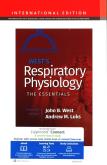
For more than 40 years, West’s Respiratory Physiology: The Essentials has remained a critical resource for medical and allied health students learning the basics of respiratory physiology as well as an effective, quick review for residents and fellows in pulmonary medicine, critical care, anesthesiology, and internal medicine as they prepare for licensing and other exams. The eleventh edition incorporates updates in many areas including blood-tissue gas exchange, mechanics, control of ventilation and the respiratory system under stress; all designed to aid clear understanding of pulmonary physiology.
Clinical vignettes with questions emphasize how the physiology described can be applied to clinical situations, reinforcing reasoning and critical thinking.
More than 100 USMLE-style multiple-choice questions with full explanations test reasoning skills for comprehension and exam preparation.
Additional learning objectives and chapter-opening content added to every chapter to improve understanding of key topics.
Appendices include important equations, answers to the multiple-choice questions, and discussions of the answers to the end-of-chapter clinical vignettes.
Online resources include animations that expand on and clarify challenging topics and an interactive question bank to allow self-testing and exam review.
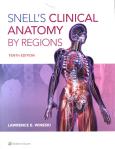
Praised for its clear and consistent organization, dynamic illustrations, and emphasis on clinical applications, Snell’s Clinical Anatomy by Regions pairs expert perspectives with a user-friendly approach to deliver a proven learning and teaching resource on the practical application of anatomy.
Ideal for medical, dental, allied health, and nursing programs, this trusted text guides students through the fundamentals of human anatomy, explaining the how and why behind each structure and offering readers the hands-on guidance they need to make sound clinical choices.
This edition has been completely reorganized to help students confidently navigate body regions from surface to deep structures, integrating basic anatomy, clinical information, surface and radiographic anatomy, as well as embryology. Colorful new illustrations and concise chapter summaries further reinforce understanding of key concepts and equip students for clinical success.
New organization guides students logically through body systems for greater understanding.
Updated content throughout the text reflects the most current approaches and relevant terminology in basic clinical anatomy, radiographic anatomy, and surface anatomy.
Enhanced illustrations clarify complex systems in vibrant detail.
New Key Concepts bulleted summaries reinforce important chapter content at a glance.
Chapter-opening cases and Clinical Notes highlight the clinical significance of anatomical information.
Embryology Notes simplify developmental anatomy concepts.
Chapter Outlines and Learning Objectives focus students on the most clinically relevant concepts and structures.
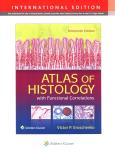
Master histology with idealized and actual photomicrography!
This thirteenth edition of Atlas of Histology with Functional Correlations (formerly diFiore’s ) provides a rich understanding of the basic histology concepts that medical and allied health students need to know. Realistic, full-color illustrations as well as actual photomicrographs of histologic structures are complemented by concise discussions of their most important functional correlations.
Illustrated histology images show the idealized view, while photomicrographs provide the actual view to help students hone their skills in identifying structures.
New and improved layout helps students connect the morphology of a structure with its function.
Updated and expanded Functional Correlations boxes integrated throughout chapters reflect new scientific information and interpretations.
NEW photomicrographs and electron micrographs provide views of microanatomy as experienced in practice.
Bulleted Chapter Summaries distill the most essential knowledge for rapid review.
NEW Additional Histologic Images sections round out each chapter with supplemental photomicrographs and electron micrographs.
NEW Chapter Review Questions allow students to assess their comprehension of each chapter with 375 questions and answers in the book and 250 more online in an Interactive Question Bank.
Lippincott® Connect Featured Title
Purchase the new print edition of this Lippincott® Connect title includes lifetime access to the digital version of the book, plus related materials such as videos and multiple-choice Q&A and self-assessments.
Reflecting the trusted expertise of Dr. John B. West and Dr. Andrew M. Luks, West’s Pulmonary Pathophysiology: The Essentials, Tenth Edition offers accessible explanations of disease processes that affect the respiratory system. This best-selling companion to West’s Respiratory Physiology: The Essentials, 11th Edition, has served generations of students and practitioners who work with respiratory patients, presenting vital knowledge in a concise, straightforward manner that’s easy to understand.
Building on this legacy of success, the tenth edition is updated throughout with the latest clinical perspectives, new images, clinical vignettes, and enhanced USMLE-style review questions to help students excel in today’s changing healthcare practice.
Handbook of Dialysis is now completely revised in its Fifth Edition. It continues to provide practical, accessible information on all aspects of dialysis with emphasis on day-to-day patient management. Authored by international experts, chapters provide complete coverage of hemodialysis, peritoneal dialysis, special problems in dialysis patients, and problems pertaining to various organ systems. This resource is designed for nephrologists, nephrology/renal nurses, family physicians and dialysis centers.
New for this edition:
Expanded coverage of vascular access placement and management
Drugs in end stage renal disorder
Full discussion on importance of dietary control of sodium and phosphate
New regulatory issues (CMS, Medical Director responsibilities)
Update on US reimbursement/financial issues, the effects of bundling
e prepared for the challenges of patients with complex cardiovascular disease!
Prepared by cardiologists at Massachusetts General Hospital and Brigham and Women’s Hospital, this supplement to the bestselling Pocket Medicine internal medicine handbook uses bulleted lists, tables, and algorithms to put key clinical information about a broad range of problems in cardiovascular medicine at your fingertips.
In-depth coverage of an extensive array of cardiovascular conditions beyond what it is Pocket Medicine , including comprehensive discussions of cardiomyopathies, advanced heart failure, cardiopulmonary exercise testing, peripheral artery, renovascular, and cerebrovascular disease, wide complex tachycardias, sudden cardiac death, and electrophysiology studies.
Apply the latest treatment options for major cardiovascular diseases with incorporation of more detailed diagnostic testing and sophisticated treatment algorithms.
Provide informed, effective patient care with current, evidence-based clinical recommendations, supported by key references to the most recent practice guidelines, high-tier reviews and important clinical trials.
Enjoy this portable, user-friendly reference by adding Pocket Cardiology to your Pocket Medicine .
This is content is spiral bound.
Established for more than 75 years, The Washington Manual of Medical Therapeutics, 36th Edition , provides concise, high-yield content that reflects today’s fast-changing advances in medical technology and therapeutics. In one convenient, portable resource, you’ll find complete coverage of every area of medicine and the core subspecialties—all at your fingertips for quick review and reference. Discover why housestaff and faculty worldwide depend on this best-selling resource for day-to-day clinical practice in internal medicine.
Offers brief, logical approaches to diagnosis and management of commonly encountered medical conditions, including new therapies that improve patient outcomes.
Presents valuable content in a concise, practical format that includes easy-to-follow guidelines, tables, diagrams, algorithms, dosing, and treatment information.
Provides a clear view of the challenges faced by residents, interns, medical students, and other practitioners, plus offers practical solutions, and expert guidance—all in one convenient and easily accessible source.
Edited by Internal Medicine Chief Residents from the Washington University School of Medicine and Barnes-Jewish Hospital in St. Louis.
The Washington Manual is a registered mark belonging to Washington University in St. Louis to which international legal protection applies. The mark is used in this publication by LWW under license from Washington University.
Accurate, reliable, objective, and comprehensive, Kaplan & Sadock’s Synopsis of Psychiatry has long been the leading clinical psychiatric resource for clinicians, residents, students, and other health care professionals both in the US and worldwide. Now led by a new editorial team of Drs. Robert Boland and Marcia L. Verduin, it continues to offer a trusted overview of the entire field of psychiatry while bringing you up to date with current information on key topics and developments in this complex specialty. The twelfth edition has been completely reorganized to make it more useful and easier to navigate in today’s busy clinical settings.
A revised table of contents moves the most clinically relevant material to the beginning of the book, including sections on diagnosis, psychopathology and psychiatric conditions, treatment across the lifespan, and therapy and other interventions.
Reformats clinical chapters to include clearer section headings and easy-to-digest summaries of important information, all with the goal of helping you find information quickly and easily locate answers to specific problems.
Includes numerous case studies to enhance the learning experience.
Presents the most current treatment methods including descriptions of all modern psychotherapeutic techniques.
Includes descriptive tables for all relevant DSM-5 and ICD-10 diagnoses and an up-to-date psychopharmacology section organized according to mechanisms of action.
Carries on the tradition of excellence established by Drs. Benjamin J. Sadock and Virginia A. Sadock, with Dr. Pedro Ruiz returning as Consulting Editor.
Updated with the latest clinical advances, Rowland and Tozer’s Clinical Pharmacokinetics and Pharmacodynamics, Fifth Edition , explains the relationship between drug administration and drug response, taking a conceptual approach that emphasizes clinical application rather than science and mathematics. Bringing a real-life perspective to the topic, the book simplifies concepts and gives readers the knowledge they need to better evaluate drug applications.
Key updates reflect advances in PK/PD as related to clinical decision making and drug research and development.
An emphasis on the clinical relevance of drugs makes the book especially applicable to pharmacy students preparing for a career in clinical practice.
Hundreds of graphs and tables provide visual representations of key pharmacokinetic/pharmacodynamic principles and effects.
More than 200 carefully written study questions , with answers and in-depth explanations, help readers enhance their conceptual understanding and learn and retain key information.
New and updated examples connect chapter content to real-world settings.
Interactive online simulations give students practice using different pharmacokinetic/pharmacodynamic models and parameters.
Lippincott® Connect Featured Title
Purchase the new print edition of this Lippincott® Connect title includes lifetime access to the digital version of the book, plus related materials such as videos and multiple-choice Q&A and self-assessments.
Now in its Sixth Edition, Clinical Epidemiology: The Essentials is a comprehensive, concise, and clinically oriented introduction to the subject of epidemiology. Written by expert educators, this approachable, informative text introduces students to the principles of evidence-based medicine that will help them develop and apply methods of clinical observation in order to form accurate conclusions.
The updated Sixth Edition reflects the most current approaches to clinical epidemiology, including the latest coverage of modeling and expanded insight on applying concepts to clinical practice, with updated, clinical vignette-style end-of-chapter questions to help strengthen students’ understanding and ensure a confident transition to clinical settings.
Updated content throughout reflects the latest practices in clinical epidemiology.
Increased emphasis on clinical judgment helps students confidently evaluate the effectiveness of guidelines and integrate them into practice.
Updated vignette-style end-of-chapter questions place concepts in a clinical context and reinforce students’ understanding.
Key Word Lists at the start of each chapter familiarize students with critical terminology for clinical competence.
Example boxes clarify the clinical implications of important concepts with relevant real-world patient care scenarios.
Appendix of Additional Readings highlights trusted resources for further review.
Providing fast access to the most relevant, evidence-based information in all areas of anesthesiology, Pocket Anesthesia, Fourth Edition, is a practical, up-to-date resource for residents, anesthesiologists, CRNAs, and medical students—both on the wards and in the operating room. This concise handbook, now spiralbound, is designed for portability and quick reference, with information presented in a bulleted, outline format throughout.
Includes a new appendix on COVID-19 considerations, updated content on ACC/AHA guideline changes, ASE/SCA views in comprehensive TEE exam, enhanced recovery after surgery (ERAS), the use of anti-coagulants and stents, new approaches to pain management, as well as a new chapter on point of care ultrasound (POCUS).
Covers drugs, intraoperative problems, differential diagnosis, common disease states, patient evaluation, and anesthetic considerations for each subspecialty.
Jam-packed with tables, diagrams, and treatment algorithms for easy access to key information.
The Pocket Notebook Series format is ideal for today's fast-paced health care environment. Information is presented in a schematic, outline format, with diagrams and tables for quick, easy reference.
Part of the popular Biopsy Interpretation Series, Biopsy Interpretation of the Lung, Second Edition, is a concise, practical resource with a strong focus on diagnosis and management-oriented ancillary testing. It provides superbly illustrated coverage of the full range of neoplasms and non-neoplastic entities arising within the lung. Focusing on the daily tasks and needs of the general pathologist, this updated Second Edition is an excellent bench reference for the interpretation of the most common lung biopsies and is also a helpful resource for surgical pathologists, pathology residents, pathology fellows, pulmonologists, pulmonology fellows, and thoracic surgeons.
Addresses both common and unusual issues that arise in the day-to-day interpretation of lung biopsies, providing a solid approach to formulating surgical and medical decisions.
Includes detailed chapters on interstitial lung disease, lung cancer, and neuroendocrine tumors.
Covers the major clinical aspects of the various disease processes, plus histopathologic features and use of ancillary diagnostic techniques such as special stains, immunohistochemistry, electron microscopy, and molecular pathology.
Discusses indications for different types of biopsies for various lesions, such as endoscopic vs. core needle vs. open/wedge biopsy.
Brings you up to date with recent changes in terminology, diagnostic criteria and the development of newer molecular techniques that have changed the practice of pulmonary pathology.
Features hundreds of new references, more than 500 color photomicrographs, and numerous tables that categorize lesions and present diagnostic criteria in a simple format.
Provides eBook access to 200 additional images and a multiple-choice test bank that is ideal for board exam preparation.
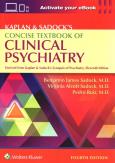
Compact and easy to use, Kaplan & Sadock's Concise Textbook of Clinical Psychiatry, Fourth Edition is an authoritative, affordable text that provides must-know information in clinical psychiatry. Containing the most relevant clinical material from the best-selling Kaplan and Sadock’s Synopsis of Psychiatry, Eleventh Edition , it offers step-by-step guidance on the clinical examination, the psychiatric report, medical assessment of the psychiatric patient, laboratory tests, and signs and symptoms, as well as all psychiatric and substance-related disorders, with special chapters on children, adolescents, and the elderly. It also covers special topics such as emergency psychiatry, forensic psychiatry, ethics, and palliative and end-of-life care.
Key Features:
Provides concise but thorough coverage of the entire field of clinical psychiatry, including biologic, psychologic, and sociologic factors in health and disease.
Contains real-world case histories throughout.
Includes thorough updates and revisions throughout, all consistent with the DSM-5.
Features new and extensively revised coverage of childhood disorders, gender dysphoria, issues affecting LGBT persons, reproductive medicine, physician-assisted suicide, PTSD, the effects of terrorism and torture, and much more.
Includes new chapters on public psychiatry and world aspects of psychiatry, as well as a new section on brain stimulation methods.
Features a unique, comprehensive glossary of psychiatric signs and symptoms, new to this edition.
Your book purchase includes a complimentary download of the enhanced eBook for iOS, Android, PC & Mac.
Now in four convenient volumes, Fields Virology remains the most authoritative reference in this fast-changing field, providing definitive coverage of virology, including virus biology as well as replication and medical aspects of specific virus families. This volume of Fields Virology: Emerging Viruses, Seventh Edition covers recent changes in emerging viruses, providing new or extensively revised chapters that reflect these advances in this dynamic field.
Bundled with the eBook, which will be updated regularly as new information about each virus is available, including coronavirus and COVID-19, this text serves as the authoritative, up-to-date reference book for virologists, infectious disease specialists, microbiologists, and physicians, as well as medical students pursuing a career in infectious diseases.
Covers both basic science and medical features of each virus, emphasizing viruses of medical importance and interest, while also including other viruses in specific cases where more is known about their mechanisms of replication or pathogenesis.
Covers virus evolution, as well as Coronoviridae, Picornaviridae, Enteroviruses, Caliciviridae, Hepatitis C Virus, Filoviridae, Henipaviruses, Orthomyxoviruses, Bunyavirales, Arenaviridae, and much more.
Features over 500 full-color illustrations, including key figures for use as lecture slides.
Provides quick, flexible access to current information both in print and in an improved eBook format, searchable across all volumes.
Discusses virus structure, virus entry, replication, and assembly, virus-host cell interactions, host immune responses and vaccines, antiviral therapeutics, virus evolution and immunization.
New and forthcoming Fields Virology volumes, available in print and eBook format, which are sold separately:
Emerging Viruses
DNA Viruses
RNA Viruses
Fundamental Viruses
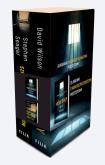
Książki Seagera i Wilsona to szczere, refleksyjne i porywające relacje doświadczeń z terapii prowadzonych w szpitalach psychiatrycznych i więzieniach o zaostrzonym ryzyku. Autorzy pozwalają nam zajrzeć do przerażającego świata zamieszkanego przez najgorszych psychopatów i morderców, do którego tylko nieliczni mają wstęp.To miejsca, w których panuje niewyobrażalna przemoc.
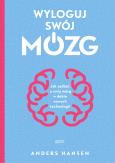
Czy mózg czeka przyśpieszony kurs technologiiJak korzystać z najnowszych aplikacji, by służyły naszemu dobru i nie były źródłem frustracji ani lęku? Książka szwedzkiego psychiatry i autora wieloletnich badań nad internetem odkrywa tajemnice działania mózgu w zderzeniu z nowymi technologiami i daje konkretne wskazówki.Wyłącz telefon komórkowy na jedną lub dwie godziny w ciągu dnia. Nawet kilka minut ruchu dziennie pozwoli ci zredukować stres i poprawić koncentrację, Wieczorem zmień obraz w telefonie na czarno-biały, ograniczy to wyzwalanie dopaminy i chęć przewijania wiadomości. Nie sprawdzaj służbowego maila tuż przed pójściem spać. W mediach społecznościowych staraj się obserwować tylko te osoby, z którymi naprawdę chcesz wchodzić w interakcję. To tylko przykłady skutecznych porad zawartych w tej książce.Dlaczego korzystanie z Instagrama uruchamia w mózgu te same obszary co niegdyś polowanie na dzikie zwierzęta? Co się dzieje z naszą pamięcią, kiedy podczas jazdy samochodem zdajemy się wyłącznie na GPS-a? Na czym polega cyfrowa zazdrość i czy internet może pozbawić nas empatii? Każdego dnia musimy wytrzymać informacyjne tsunami, a nasze neurony lustrzane w kontakcie z mediami społecznościowymi pobudzają mózg do ciągłego porównywania się z innymi.Poznaj ostatnie odkrycia naukowe i zadbaj o zdrowie swojego mózgu!Szwedzki bestseller nagrodzony prestiżową nagrodą The Health Award of the Year.Anders Hansen szwedzki lekarz, specjalista w dziedzinie psychiatrii w Instytucie Karolinska. W swojej najnowszej książce w zrozumiały sposób tłumaczy najnowsze odkrycia neurobiologii i wyjaśnia, jak możemy je wykorzystać w codziennym życiu.
Ten produkt jest zapowiedzią. Realizacja Twojego zamówienia ulegnie przez to wydłużeniu do czasu premiery tej pozycji. Czy chcesz dodać ten produkt do koszyka?