Few philosophers have had more influence on the shape of western philosophy after 1900 than Martin Heidegger. Basic Writings offers a full range of this profound and controversial thinker’s writings in one volume, including:
The Origin of the Work of Art
The introduction to Being and Time
What Is Metaphysics?
Letter on Humanism
The Question Concerning Technology
The Way to Language
The End of Philosophy
Featuring a foreword by Heidegger scholar Taylor Carman, this essential collection provides readers with a concise introduction to the groundbreaking philosophy of this brilliant and essential thinker.
In Bodies That Matter, renowned theorist and philosopher Judith Butler argues that theories of gender need to return to the most material dimension of sex and sexuality: the body. Butler offers a brilliant reworking of the body, examining how the power of heterosexual hegemony forms the "matter" of bodies, sex, and gender. Butler argues that power operates to constrain sex from the start, delimiting what counts as a viable sex. She clarifies the notion of "performativity" introduced in Gender Trouble and via bold readings of Plato, Irigaray, Lacan, and Freud explores the meaning of a citational politics. She also draws on documentary and literature with compelling interpretations of the film Paris is Burning, Nella Larsen's Passing, and short stories by Willa Cather.
'Richly documented and convincingly presented' -- New Society
Mods and Rockers, skinheads, video nasties, designer drugs, bogus asylum seeks and hoodies. Every era has its own moral panics. It was Stanley Cohen’s classic account, first published in the early 1970s and regularly revised, that brought the term ‘moral panic’ into widespread discussion. It is an outstanding investigation of the way in which the media and often those in a position of political power define a condition, or group, as a threat to societal values and interests. Fanned by screaming media headlines, Cohen brilliantly demonstrates how this leads to such groups being marginalised and vilified in the popular imagination, inhibiting rational debate about solutions to the social problems such groups represent. Furthermore, he argues that moral panics go even further by identifying the very fault lines of power in society.
Full of sharp insight and analysis, Folk Devils and Moral Panics is essential reading for anyone wanting to understand this powerful and enduring phenomenon.
Professor Stanley Cohen is Emeritus Professor of Sociology at the London School of Economics. He received the Sellin-Glueck Award of the American Society of Criminology (1985) and is on the Board of the International Council on Human Rights. He is a member of the British Academy.
One of the most talked-about scholarly works of the past fifty years, Judith Butler’s Gender Trouble is as celebrated as it is controversial.
Arguing that traditional feminism is wrong to look to a natural, 'essential' notion of the female, or indeed of sex or gender, Butler starts by questioning the category 'woman' and continues in this vein with examinations of 'the masculine' and 'the feminine'. Best known however, but also most often misinterpreted, is Butler's concept of gender as a reiterated social performance rather than the expression of a prior reality.
Thrilling and provocative, few other academic works have roused passions to the same extent.
Working after the war, Hayek's writing was very much against the tide of mainstream Keynesian economic thought. But in the 1970s and 1980s - the eras of Thatcherism and Reaganomics - he was championed as a prophet of neo-liberalism by those who were seeking to revolutionize the post-war social consensus. The Constitution of Liberty is crucial reading for all those seeking to understand ideas that have become the orthodoxy in the age of the globalized economy.
With a new foreword by Paul Kelly
'I regard Hayek's work as a new opening of the most fundamental debate in the field of political philosophy' – Sir Karl Popper
'This promises to be the crowning work of a scholar who has devoted a lifetime to thinking about society and its values. The entire work must surely amount to an immense contribution to social and legal philosophy' - Philosophical Studies
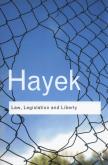
Law, Legislation and Liberty is Hayek's major statement of political philosophy and one of the most ambitious yet subtle defences of a free market society ever written. A robust defence of individual liberty, it is also crucial for understanding Hayek’s influential views concerning the role of the state: far from being an innocent bystander, he argues that the state has an important role to play in defending the norms and practices of an ordered and free society. His arguments had a profound influence on the policies of Thatcher in the 1980s and resonate today in visions of the ‘Big Society’.
First published in three separate volumes, this Routledge Classics edition makes one of his most important books available in a single volume. Essential reading for understanding the background to the recent world economic turmoil and financial crisis, it also foreshadows the subsequent heated debate about regulation and political governance if such disasters are to be avoided in the future.
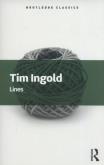
What do walking, weaving, observing, storytelling, singing, drawing and writing have in common? The answer is that they all proceed along lines. In this extraordinary book Tim Ingold imagines a world in which everyone and everything consists of interwoven or interconnected lines and lays the foundations for a completely new discipline: the anthropological archaeology of the line.
Ingold’s argument leads us through the music of Ancient Greece and contemporary Japan, Siberian labyrinths and Roman roads, Chinese calligraphy and the printed alphabet, weaving a path between antiquity and the present. Drawing on a multitude of disciplines including archaeology, classical studies, art history, linguistics, psychology, musicology, philosophy and many others, and including more than seventy illustrations, this book takes us on an exhilarating intellectual journey that will change the way we look at the world and how we go about in it.
This Routledge Classics edition includes a new preface by the author.
Książka wybitnego ukraińskiego pedagoga Wasyla Suchomlińskiego (1918–1970) prezentująca eksperyment pedagogiczny z dziećmi klas początkowych przeprowadzony w warunkach szkoły wiejskiej. Celem eksperymentu była realizacja indywidualnej, nowatorskiej koncepcji kształcenia wczesnoszkolnego. Pierwsze wydanie książki ukazało się we wschodnioberlińskim wydawnictwie Folk und Wissen w języku niemieckim w roku 1968. Od tego czasu do 2012 roku książka miała 50 wydań w 24 językach, w tym w języku angielskim, francuskim, japońskim, chińskim, ukraińskim, tamilskim, hindi i bengali. W języku polskim ukazały się dwa wydania: w 1978 w warszawskich Wydawnictwach Szkolnych i Pedagogicznych w przekładzie Mariana Bybluka i w 1979 roku w moskiewskim wydawnictwie Progres w przekładzie Marii Dolińskij. Autor za tę książkę otrzymał pośmiertnie (1974) I Nagrodę Państwową na Ukrainie w dziedzinie nauki i techniki.
Wasyl Suchomliński należy do najwybitniejszych ukraińskich pedagogów i pisarzy dziecięcych okresu radzieckiego. Jest twórcą oryginalnego systemu wychowania, którego główną ideą był szacunek dla osobowości dziecka. Z wykształcenia był filologiem ukraińskim, pracował jako nauczyciel języka ojczystego i dyrektor wiejskiej szkoły w Pawłyszu (obecnie obwód kropiwnicki). Opublikował 48 większych prac o tematyce pedagogicznej, ponad 600 artykułów, 1500 bajek i opowiadań dla dzieci, w ogólnym nakładzie 15 mln egzemplarzy. Pod koniec życia poddany został ostrej krytyce ze strony moskiewskich pedagogów za odstępstwa od wychowania komunistycznego. Na niepodległej Ukrainie jest powszechnie zaakceptowany przez nauczycieli, wychowawców i naukowców mimo posługiwania się retoryką obowiązującą w ZSRR. 39. Konferencja Generalnego Zgromadzenia UNESCO włączyła do swojego kalendarza pamiętnych dat uczczenie setnych urodzin Suchomlińskiego w 2018 roku.
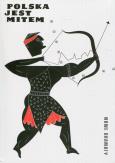
Niniejszy tom jest pokłosiem ostatniej edycji GND, ale wykracza poza ramy czysto dokumentacyjnego zapisu. Odnajdziemy tu sztukę ubiegłorocznego laureata, czyli Wracaj Przemysława Pilarskiego, zakwalifikowane do finału Metro Afganistan Łukasza Pawłowskiego oraz Wierną watahę duetu PiK, czyli Pawła Wolaka i Katarzyny Dworak, a także obecny w półfinale Język obcy stałej uczestniczki gdyńskiego konkursu Marii Wojtyszko. Stawkę uzupełniają inni półfinaliści - #ciemność Tomasza Kaczorowskiego oraz szczegółowa teoria życia i umierania Michała Zdunika [...] Sześć zamieszczonych w tej antologii sztuk jest zaproszeniem do rozmowy o nowej polskiej dramaturgii. Podsumować ich jednym zdaniem się nie da, bo tak są różne. Łączy je może przeświadczenie, iż rzeczywiście – Polska jest mitem. A może raczej wieloma mitami, które czasem chcą się ze sobą połączyć, a czasem istnieją całkiem osobno. Jednak zawsze warto próbować się do nich zbliżyć, poznać ich tajemnice.
- Jacek Wakar, Polska jest mitem
Książka autorstwa Davida A. Weintrauba to pozycja unikatowa na polskim rynku wydawniczym obszernie i przekrojowo przedstawiająca historię badań Marsa i poszukiwania na nim śladów i dowodów istnienia życia. W trakcie tej podróży przez niemal dwa stulecia poznajemy badaczy Czerwonej Planety, ich motywacje, osiągnięcia oraz popełniane przez nich błędy. Czytelnik znajdzie tu uzasadnienie dla pojawiających się na przestrzeni niemal dwóch wieków twierdzeń o odkryciu inteligentnego życia na Marsie, kanałów, roślinności, porostów czy też metanu, który w przekonaniu wielu dowodzi istnienia procesów biologicznych na Marsie. Jednocześnie dowiadujemy się jak te twierdzenia były weryfikowane i rewidowane na przestrzeni lat, doprowadzając nas w końcu o obecnego poziomu wiedzy.
„Mars” przypadnie do gustu zarówno miłośnikom astronomii na co dzień niezwiązanym ze światem nauki, jak i specjalistom pragnącym dowiedzieć się w jaki sposób doszliśmy do obecnego stanu wiedzy o Czerwonej Planecie. Chronologiczne przedstawienie kolejnych tez, badań i wniosków może być szczególnie wartościowe dla studentów, astronomii, geologii, planetologii, chcących dobrze zgłębić tajniki procesu badań naukowych.
Radosław Kosarzycki, „Puls Kosmosu”
………………
Książka mimo że pisana w formie narracji, bardzo rzetelnie oddaje stan najnowszych badań astronomicznych, odwołując się do oryginalnych prac naukowych. Zawiera mnóstwo szczegółów, które składają się na pasjonującą opowieść o badaniach astronomicznych.
Prof. dr hab. inż. Grzegorz Karwasz, Zakład Dydaktyki Fizyki Uniwersytetu Mikołaja Kopernika w Toruniu
………………
Czytając książkę, można wraz z autorem prześledzić chronologię powstawania i upadania teorii, dotyczących istnienia życia na Marsie, zwłaszcza od momentu, gdy okazało się, że ma on prawie takie samo nachylenie swojej osi obrotu do płaszczyzny orbity, jak Ziemia i że długość marsjańskiej doby niewiele różni się od naszej. Rozpaliło to wyobraźnię ówczesnych astronomów, a także ich następców. Z książki można dowiedzieć się, że astronomowie to też ludzie ze swoimi pragnieniami i słabościami, gdzie często szansa na zapisanie się w historii brała górę nad rzeczywistością i realnymi możliwościami badacza.
Ariel Majcher, Klub Astronomiczny Almukantarat Polskie Towarzystwo Miłośników Astronomii
………………
Zwrócenie uwagi na niebagatelną kulturotwórczą rolę Marsa, o której zapomina się często, to nieoczywista, a znacząca zaleta książki Weintrauba. Poza tym jest ona oczywiście bardzo cenna z tradycyjnego puntu widzenia miłośników astronomii. Zaawansowanym przyniesie sporą ilość trudnych do zdobycia w inny sposób informacji źródłowych i bibliograficznych. Dla niezaawansowanych będzie przedstawieniem tego, co o Marsie wiedzą naukowcy dziś i jak do tego dochodzili przez wieki. Jednym i drugim książka Weintrauba, być może, wskaże drogę i stanowić będzie inspirację dla dalszych studiów, kto wie.
Prof. Tadeusz Wibig, Zakład Astrofizyki Wydziału Fizyki i Informatyki Stosowanej UŁ
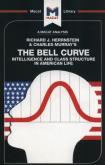
Herrnstein & Murray's The Bell Curve is a deeply controversial text that raises serious issues about the stakes involved in reasoning and interpretation.
The authors’ central contention is that intelligence is the primary factor determining social outcomes for individuals – and that it is a better predictor of achievement than income, background or socioeconomic status. One of the major issues raised by the book was its discussion of 'racial differences in intelligence,' and its contention that there is a link between the low observed test scores and social outcomes for African-Americans and their lack of social attainment.
While the authors produce and interpret a great deal of data to back up their contentions, they ultimately fail to tackle the problem that neither 'intelligence' nor 'race' have widely accepted definitions in biology, anthropology or sociology. In consequence, the book has been termed both ‘racist’ and ‘pseudoscientific’ thanks to what its critics see as both its faulty reasoning and its uncautious interpretation of evidence. The debate continues to this day, with academics on both sides engaged in fierce arguments over what can be argued from the data that Herrnstein and Murray used
When it was published in 2008, Richard Thaler and Cass Sunstein’s Nudge: Improving Decisions about Health, Wealth, and Happiness quickly became one of the most influential books in modern economics and politics. Within a short time, it had inspired whole government departments in the US and UK, and others as far afield as Singapore. One of the keys to Nudge’s success is Thaler and Sunstein’s ability to create a detailed and persuasive case for their take on economic decision-making. Nudge is not a book packed with original findings or data; instead it is a careful and systematic synthesis of decades of research into behavioral economics. The discipline challenges much conventional economic thought – which works on the basis that, overall, humans make rational decisions – by focusing instead on the ‘irrational’ cognitive biases that affect our decision making. These seemingly in-built biases mean that certain kinds of economic decision-making are predictably irrational. Thaler and Sunstein prove themselves experts at creating persuasive arguments and dealing effectively with counter-arguments. They conclude that if governments understand these cognitive biases, they can ‘nudge’ us into making better decisions for ourselves. Entertaining as well as smart, Nudge shows the full range of reasoning skills that go into making a persuasive argument.
Jacques Derrida’s Structure, Sign, and Play is one of the most controversial and influential philosophical texts of the 20th century. Delivered at a conference on structuralism at Johns Hopkins, the lecture took aim at the critical and philosophical fashions of the time and radically proposing a world in which meaning cannot be pinned down or traced to an origin, but instead is continuously shifting, fleeting, and open to play. Hailed by many as a watershed in philosophy and literary theory, Derrida’s lecture has shaped both disciplines. At once dense, brilliant, and humorous, it is a crucial read for anyone interested in questioning our natural assumptions about meaning in the world.
A key theme of Gayatri Spivak's work is agency: the ability of the individual to make their own decisions. While Spivak's main aim is to consider ways in which "subalterns" – her term for the indigenous dispossessed in colonial societies – were able to achieve agency, this paper concentrates specifically on describing the ways in which western scholars inadvertently reproduce hegemonic structures in their work.
Spivak is herself a scholar, and she remains acutely aware of the difficulty and dangers of presuming to "speak" for the subalterns she writes about. As such, her work can be seen as predominantly a delicate exercise in the critical thinking skill of interpretation; she looks in detail at issues of meaning, specifically at the real meaning of the available evidence, and her paper is an attempt not only to highlight problems of definition, but to clarify them.
What makes this one of the key works of interpretation in the Macat library is, of course, the underlying significance of this work. Interpretation, in this case, is a matter of the difference between allowing subalterns to speak for themselves, and of imposing a mode of "speaking" on them that – however well-intentioned – can be as damaging in the postcolonial world as the agency-stifling political structures of the colonial world itself. By clearing away the detritus of scholarly attempts at interpretation, Spivak takes a stand against a specifically intellectual form of oppression and marginalization.
Few stories are more captivating than the one told by Natalie Zemon Davis in The Return of Martin Guerre. Basing her research on records of a bizarre court case that occurred in 16th-century France, she uses the tale of a missing soldier – whose disappearance threatens the livelihood of his peasant wife – to explore complex social issues. Davis takes rich material – dramatic enough to have been the basis of two major films – and uses it to explore issues of identity, women's role in peasant society, the interior lives of the poor, and the structure of village society, all of them topics that had previously proved difficult for historians to grapple with.
Davis displays fine qualities of reasoning throughout – not only in constructing her own narrative, but also in persuading her readers of her point of view. Her work is also a fine example of good interpretation – practically every document in the case needs to be assessed for issues of meaning.
Despite having no formal training in urban planning, Jane Jacobs deftly explores the strengths and weaknesses of policy arguments put forward by American urban planners in the era after World War II. They believed that the efficient movement of cars was of more value in the development of US cities than the everyday lives of the people living there. By carefully examining their relevance in her 1961 book, The Death and Life of Great American Cities, Jacobs dismantles these arguments by highlighting their shortsightedness. She evaluates the information to hand and comes to a very different conclusion, that urban planners ruin great cities, because they don’t understand that it is a city’s social interaction that makes it great. Proposals and policies that are drawn from planning theory do not consider the social dynamics of city life. They are in thrall to futuristic fantasies of a modern way of living that bears no relation to reality, or to the desires of real people living in real spaces. Professionals lobby for separation and standardization, splitting commercial, residential, industrial, and cultural spaces. But a truly visionary approach to urban planning should incorporate spaces with mixed uses, together with short, walkable blocks, large concentrations of people, and a mix of new and old buildings. This creates true urban vitality.
In his 1997 work Guns, Germs and Steel, Jared Diamond marshals evidence from five continents and across 13,000 years of human history in an attempt to answer the question of why that history unfolded so differently in various parts of the globe. His results offer new explanations for why the unequal divisions of power and wealth so familiar to us today came into existence – and have persisted.
Balancing materials drawn from a vast range of sources, addressing core problems that have fascinated historians, anthropologists, biologists and geographers alike – and blending his analysis to create a compelling narrative that became an international best-seller and reached a broad general market – required a mastery of the critical thinking skill of reasoning that few other scholars can rival. Diamond’s reasoning skills allow him to persuade his readers of the value of his interdisciplinary approach and produce well-structured arguments that keep them turning pages even as he refocuses his analysis from one disparate example to another.
Diamond adds to that a spectacular ability to grasp the meaning of the available evidence produced by scholars in those widely different disciplines – making Guns, Germs and Steel equally valuable as an exercise in high-level interpretation.
Debt is one of the great subjects of our day, and understanding the way that it not only fuels economic growth, but can also be used as a means of generating profit and exerting control, is central to grasping the way in which our society really works.
David Graeber's contribution to this debate is to apply his anthropologists' training to the understanding of a phenomenon often considered purely from an economic point of view. In this respect, the book can be considered a fine example of the critical thinking skill of problem-solving. Graeber's main aim is to undermine the dominant narrative, which sees debt as the natural – and broadly healthy – outcome of the development of a modern economic system. He marshals evidence that supports alternative possibilities, and suggests that the phenomenon of debt emerged not as a result of the introduction of money, but at precisely the same time.
This in turn allows Graeber to argue against the prevailing notion that economy and state are fundamentally separate entities. Rather, he says, "the two were born together and have always been intertwined" – with debt being a means of enforcing elite and state power. For Graeber, this evaluation of the evidence points to a strong potential solution: there should be more readiness to write off debt, and more public involvement in the debate over debt and its moral implications.
The history of anthropology is, to a large extent, the history of differing modes of interpretation.
As anthropologists have long known, examining, analyzing and recording cultures in the quest to understand humankind as a whole is a vastly complex task, in which nothing can be achieved without careful and incisive interpretative work. Edward Evans-Pritchard’s seminal 1937 Witchcraft, Oracles, and Magic Among the Azande is a model contribution to anthropology’s grand interpretative project, and one whose success is based largely on its author’s thinking skills. A major issue in anthropology at the time was the common assumption that the faiths and customs of other cultures appeared irrational or illogical when compared to the “civilized” and scientific beliefs of the western world.
Evans-Pritchard sought to challenge such definitions by embedding himself within a tribal culture in Africa – that of the Azande – and attempting to understand their beliefs in their proper contexts. By doing so, Evans-Pritchard proved just how vital context is to interpretation. Seen within their context, he was able to show, the beliefs of the Azande were far from irrational – and magic actually formed a coherent system that helped mould a functional community and society for the tribe. Evans-Pritchard’s efforts to clarify meaning in this way have proved hugely influential, and have played a major part in guiding later generations of anthropologists from his day to ours.
In Outline of a Theory of Practice, Bourdieu questions the preeminent ideas of social anthropologists such as Levi-Strauss who stressed the structural principles governing human action rather than the actions themselves and, Bourdieu asserts, doesn’t account for all observable nuances of behaviour. Drawing on his fieldwork in Algeria, he expresses the need for a theory of practice focusing on the dynamic flow of human actions in the social world. Bourdieu coins the term ‘habitus’- a relational concept linking structures to the practice of agents. Outline is a significant and original contribution, providing an account of many of the issues Bourdieu continued to develop through his career.
Ten produkt jest zapowiedzią. Realizacja Twojego zamówienia ulegnie przez to wydłużeniu do czasu premiery tej pozycji. Czy chcesz dodać ten produkt do koszyka?