Ta kategoria dedykowana jest współczesnym czytelniczkom literatury kobiecej. Bardzo szeroki wybór romansów, kryminałów, powieści obyczajowe, poruszająca literatura kobieca, erotyki, harlequiny polskich i zagranicznych autorów. Każda lubiąca czytać kobieta znajdzie coś szczególnego dla siebie.
Polecamy literaturę Sergiusza Piaseckiego, Stanisława Srokowskiego, Diany Palmer czy w końcu Blanki Lipińskiej.
Unusually for Dickens, Hard Times is set, not in London, but in the imaginary mid-Victorian Northern industrial town of Coketown with its blackened factories, downtrodden workers and polluted environment. This is the soulless domain of the strict utilitarian Thomas Gradgrind and the heartless factory owner Josiah Bounderby. However human joy is not excluded thanks to 'Mr Sleary's Horse-Riding' circus, a gin-soaked and hilarious troupe of open-hearted and affectionate people who act as an antidote to all the drudgery and misery endured by the ordinary citizens of Coketown.
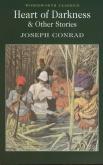
Generally regarded as the pre-eminent work of Conrad's shorter fiction, Heart of Darkness is a chilling tale of horror which, as the author intended, is capable of many interpretations. Set in the Congo during the period of rapid colonial expansion in the 19th century, the story deals with the highly disturbing effects of economic, social and political exploitation of European and African societies and the cataclysmic behaviour this induced in some individuals.
The other two stories in this book – Youth and The End of the Tether – concern the sea and those who sail upon it, a genre in which Conrad reigns supreme.
Russia in the 1840s. There is a stranger in town, and he is behaving oddly. The unctuous Pavel Chichikov goes around the local estates buying up 'dead souls'. These are the papers relating to serfs who have died since the last census, but who remain on the record and still attract a tax demand. Chichikov is willing to relieve their owners of the tax burden by buying the titles for a song. What he does not say is that he then proposes to take out a huge mortgage against these fictitious citizens and buy himself a nice estate in Eastern Russia. Will he get away with it? Who will rumble him? Does this narrative contain a deeper message about Russia itself or the spiritual health of humanity?
There is much interest and some suspense in considering these issues, but the real pleasure of this story lies elsewhere. It is an enjoyable comic romp through a retarded part of a backward country, a picaresque series of grotesque portraits, situations and conversations described with Gogolian humour based mainly on hyperbole. This is, quite simply, the funniest book in the Russian language before the twentieth century.
In 1869 a young Russian was strangled, shot through the head and thrown into a pond. His crime? A wish to leave small group of violent revolutionaries, from which he had become alienated. Dostoevsky takes this real-life catastrophe as the subject and culmination of Devils, a title that refers the young radicals themselves and also to the materialistic ideas that possessed the minds of many thinking people Russian society at the time.
The satirical portraits of the revolutionaries, with their naivety, ludicrous single-mindedness and readiness for murder and destruction, might seem exaggerated - until we consider their all-too-recognisable descendants in the real world ever since. The key figure in the novel, however, is beyond politics. Nikolay Stavrogin, another product of rationalism run wild, exercises his charisma with ruthless authority and total amorality. His unhappiness is accounted for when he confesses to a ghastly sexual crime - in a chapter long suppressed by the censor.
This prophetic account of modern morals and politics, with its fifty-odd characters, amazing events and challenging ideas, is seen by some critics as Dostoevsky's masterpiece.
Mr Dombey is a man obsessed with his firm. His son is groomed from birth to take his place within it, despite his visionary eccentricity and declining health. But Dombey also has a daughter, whose unfailing love for her father goes unreturned. 'Girls' said Mr Dombey, 'have nothing to do with Dombey and Son'. When Walter Gay, a young clerk in her father's office, rescues her from a bewildering experience in the streets of London, his unforgettable friends believe he is well on his way to receiving her hand in marriage and inheriting the company. It is to be a very different type of story.
Dickens wrote of David Copperfield: 'Of all my books I like this the best'. Millions of readers in almost every language on earth have subsequently come to share the author's own enthusiasm for this greatly loved classic, possibly because of its autobiographical form.
Following the life of David through many sufferings and great adversity, the reader will also find many light-hearted moments in the company of a host of English fiction's greatest stars including Mr Micawber, Traddles, Uriah Heep, Creakle, Betsy Trotwood, and the Peggoty family.
Few readers, arriving at the end of David Copperfield, will not wish to echo Thackeray’s famous praise, having read the first monthly part – ‘Bravo Dickens’.
De Profundis is Wilde's eloquent and bitter reproach from prison to his lover, Lord Alfred Douglas. He contrasts his behaviour with that of his close friend Robert Ross who became Wilde's literary executor. The Ballad of Reading Gaol is a deeply moving and characteristically generous poem on the horrors of prison life, which was published anonymously in 1898. This collection also includes the essay The Soul of Man under Socialism and two of his Platonic dialogues, The Decay of Lying and The Critic as Artist.
That is not dead that can eternal lie And with strange aeons even death may die Millenia ago, the Old Ones ruled our planet. Since that time, they have but slumbered. But when a massive sea tremor brings the ancient stone city of R'lyeh to the surface once more, the Old Ones awaken at last.
The Whisperer in Darkness brings together the original Cthulhu Mythos stories of the legendary horror writer H.P. Lovecraft. Included in this volume are several early tales, along with the classics 'The Call of Cthulhu', 'The Dunwich Horror' and 'At the Mountains of Madness'. Arm yourself with a copy of Abdul Alhazred's fabled Necronomican and prepare to face terrors beyond the wildest imaginings of all, save H.P. Lovecraft.
The story of Edmund Dantes, self-styled Count of Monte Cristo, is told with consummate skill. The victim of a miscarriage of justice, Dantes is fired by a desire for retribution and empowered by a stroke of providence. In his campaign of vengeance, he becomes an anonymous agent of fate. The sensational narrative of intrigue, betrayal, escape, and triumphant revenge moves at a cracking pace. Dumas' novel presents a powerful conflict between good and evil embodied in an epic saga of rich diversity that is complicated by the hero's ultimate discomfort with the hubristic implication of his own actions.
William Blake was an engraver, painter and visionary mystic as well as one of the most revolutionary of the Romantic poets. His writing attracted the astonished admiration of authors as diverse as Wordsworth, Ruskin, W.B.Yeats, and more recently beat poet Allen Ginsberg and the 'flower power' generation. He is one of England's most original artists whose works aim to liberate imaginative energies and subvert 'the mind-forged manacles' of restriction.
This volume contains many of his writings, including: 'Songs of Innocence', 'Songs of Experience', 'The Marriage of Heaven and Hell', and a generous selection from the Prophetic Books including 'Milton' and 'Jerusalem'.
Bleak House is one of Dickens' finest achievements, establishing his reputation as a serious and mature novelist, as well as a brilliant comic writer. It is at once a complex mystery story that fully engages the reader in the work of detection, and an unforgettable indictment of an indifferent society. Its representations of a great city's underworld, and of the law's corruption and delay, draw upon the author's personal knowledge and experience. But it is his symbolic art that projects these things in a vision that embraces black comedy, cosmic farce, and tragic ruin. In a unique creative experiment, Dickens divides the narrative between his heroine, Esther Summerson, who is psychologically interesting in her own right, and an unnamed narrator whose perspective both complements and challenges hers.
This collection of 100 of O Henry's finest stories is a showcase for the sheer variety of one of America's best and best-loved short story writers The variety of the storie is amazing; O Henry is as at home describing life south of the Rio Grande as he is chronicling the activities and concerns of 'the four million' ordinary citizens who inhabited turn-of-the-century New York. They are marked by coincidence and surprise endings as well as the compassion and high humour that have made O Henry's stories popular for the last century.
A Portrait of the Artist as a Young Man represents the transitional stage between the realism of Joyce's Dubliners and the symbolism of Ulysses, and is essential to the understanding of the later work.
This novel is a highly autobiographical account of the adolescence of Stephen Dedalus, who reappears in Ulysses, and who comes to realize that before he can become a true artist, he must rid himself of the stultifying effects of the religion, politics and essential bigotry of his background in late 19th century Ireland.
Written with a light touch, this is perhaps the most accessible of Joyce’s works.
Anna Karenina is one of the most loved and memorable heroines of literature. Her overwhelming charm dominates a novel of unparalleled richness and density. Tolstoy considered this book to be his first real attempt at a novel form, and it addresses the very nature of society at all levels of destiny, death, human relationships and the irreconcilable contradictions of existence. It ends tragically, and there is much that evokes despair, yet set beside this is an abounding joy in life's many ephemeral pleasures, and a profusion of comic relief.
Z nastaniem lat osiemdziesiątych setki tysięcy młodych Polaków opuściło ojczyznę, aby znaleźć lepsze jutro. Dla wielu jedynym drogowskazem był przypadek. Krok po kroku brnęli wytrwale do wymarzonego zachodniego szczęścia. Los wiódł każdego własnym szlakiem, często wyboistym, budując ich życiorys. ""Czy było warto?"" to współczesna odyseja, która wiedzie przez trzy kontynenty, a dzieje bohaterów są jak pociąg w podróży - jadą w nim osobliwi podróżni, mijają się, schodzą i rozchodzą życiowe drogi poszukiwaczy dobrobytu i sensu życia. To książka o Kolumbach lat 80. - ryzykantach, którzy mieli odwagę wystawić się na próbę i na własnej skórze sprawdzić famę o zachodnim świecie. Czy znaleźli to, czego szukali?
Toporska nie sięga po literacki eksperyment dla kultu eksperymentu czy pisarskiej ""nowoczesności"". Jeśli rozprzęga i rozbija opowiadanie, to nie w celu dekonstrukcji, a po to, żeby z rozproszonych i pod różne oświetlenie wziętych cząstek złożyła się panorama świata, który minął i społeczności, która zgrała się już w teatrze ludzkich dziejów. Autorka wierzy bowiem w powołanie i możliwości realistycznej literatury, która potrafi, łącząc wyobrażone z rzeczywistym, kreując własne i niepowtarzalne światy powiedzieć zarazem coś ważnego i prawdziwego o świecie realnym, choćby tym, który minął bezpowrotnie. Powieść ta scala się więc w wyobraźni odbiorcy w panoramę (i podzwonne) inteligencji polskiej, tej poszlacheckiej formacji społecznej, która odeszła w przeszłość wraz z upadkiem jej świata, wstrząśniętego pierwszą światową i bolszewicką rewolucją, ostatecznie pogrzebanego za sprawą politycznych skutków drugiej wojny światowej."" Wacław Lewandowski, Bez ""beletrystycznych udogodnień"", ""Nowe Książki"", styczeń 2009
Czyta Mirosław BakaOpowiadania.O babce, która wierzyła w duchy, o starym psie, pisarzu z Izdebek i przyjacielu, z którym złaził Grochów i przejechał pół Polski -- Stasiuk pisze o umieraniu i namacalności życia, o materialności wspomnień, o bliskości śmierci i jej wiecznej niedostępności. Bury kot zwija się w kłębek w cieple stygnącego ciała starej suki, babka, ,,cała w czerni, szczupła i spokojna"", przechodzi do świata, który zawsze był obok, Guścio choć niewiele już może powiedzieć, złośliwie pluje pestkami. A przyjaciel, ,,odlatując przez komin"", przynosi zapach pociągu do Łupkowa, dzikich jabłoni na ulicy Makowskiej i chłodnej wiosny w portowym Piranie. Cztery opowiadania Andrzeja Stasiuka to boleśnie piękna opowieść o śmierci, o zwyczajnej kropce na końcu życia.,,Kiedyś nas nie będzie. Są ludzie i zdarzenia, które pomagają nam przyzwyczaić się do tej myśli.Bo to w końcu przychodzi. I to tak jakoś szybko i zwyczajnie, jakby zawsze było obok"".Andrzej Stasiuk
Colas Breugnon to książka przepiękna, pełna szczerej i wielkiej radości życia, tchnąca nieustającym optymizmem.
Breugnon, bohater utworu, to piewca życia opartego na poczuciu humoru i szacunku dla bliźniego.
Święty Marcin pije wino,
Wodę pozostawia młynom.
Przysłowie francuskie z XVI w.
Czyta: Andrzej Szopa
A wszystko zaczyna się od kradzieży bochenka chleba!. Historia byłego galernika Jana Valjeana, komisarza Javera, Fantyny, Kozety i bojowników z paryskiej barykady staje się wielowątkową powieścią rozgrywającą się w XIX-wiecznej Francji. Stanowi zarówno wnikliwe spojrzenie na socjologiczne mechanizmy rządzące społeczeństwem, jak i zadziwiająco trafną analizę natury ludzkiej. Ale przede wszystkim jest pełną wartkiej akcji i przygód historią z pogranicza kryminału.
Zadziwia fakt, że ta powstała w drugiej połowie dziewiętnastego wieku powieść, ciągle króluje na listach bestsellerów, jest jedną z najczęściej komentowanych książek w historii literatury. O niesłabnącej popularności ?Nędzników? świadczą liczne musicale, adaptacje filmowe i animowane. Historia Jana Valjeana, Javerta i Kozety znana jest nie tylko dorosłemu czytelnikowi, ale i młodemu odbiorcy.
,,Myszy i ludzie"", powieść amerykańskiego pisarza, osadzona jest w latach trzydziestych XX wieku - okresie wielkiego kryzysu i wielkiej migracji zarobkowej.Powieść traktuje o przyjaźni, nierówności pomiędzy ludźmi, marzeniach i odpowiedzialności za drugą osobę. Jest to jednak nieprzewidywalna opowieść bez papierowych bohaterów i moralnie jednoznacznych postaw. Czas trwania: 3 godz. 6 min.Czyta: Adam Tkaczyk
Ten produkt jest zapowiedzią. Realizacja Twojego zamówienia ulegnie przez to wydłużeniu do czasu premiery tej pozycji. Czy chcesz dodać ten produkt do koszyka?