The works of French philosopher Alain Badiou range from novels, poems, ''romanopéras'' and popular political treatises to elaborate philosophical arguments engaging with mathematical theory.Badiou suggests that ''philosophy is always a biography of the philosopher'', and throughout all of his writing there is a staunch commitment to emancipatory politics and a radical yet faithful subjectivity. His famous, or infamous, philosophy of emancipation is firmly grounded in his fidelity to the universal idea of a collective life.Introducing Alain Badiou is an elegantly written and crisply illustrated guide to an essential contemporary thinker.
What makes philosophy on the continent of Europe so different and exciting? And why does it have such a reputation for being ''difficult''?Continental philosophy was initiated amid the revolutionary ferment of the 18th century, philosophers such as Kant and Hegel confronting the extremism of the time with theories that challenged the very formation of individual and social consciousness.Covering the great philosophers of the modern and postmodern eras - from Nietzsche, Heidegger, Derrida and Deleuze right to up Agamben and ?i?ek - and philosophical movements from German idealism to deconstruction and feminism - Christopher Kul-Want and Piero brilliantly elucidate some of the most thrilling and powerful ideas ever to have been discussed.
Illustrated guide to the controversial sociologist Jean Baudrillard, who died in 2007. Did the Gulf War take place? Is it possible to fake a bank robbery? Was sexual liberation a disaster? Jean Baudrillard has been hailed as one of France's most subtle and powerful theorists. But his provocative style and assaults on sociology, feminism and Marxism have exposed him to accusations of promoting a dangerous new orthodoxy - of being the 'pimp' of postmodernism.Introducing Baudrillard cuts beneath the controversy of this misunderstood intellectual to present his radical claims that reality has been replaced by a simulated world of images and events ranging from TV news to Disneyland. It provides a clear account of Baudrillard's work on obesity, pornography and terrorism and traces his development from critic of mass consumption to prophet of the apocalypse. Chris Horrocks' text and Zoran Jevtic?s artwork invite us to decide whether Baudrillard was a cure for the vertigo of contemporary culture - or one of its symptoms
What is beauty, and what is truth? These are some of the questions which aesthetics tries to answer. In our everyday life, we talk about the ''aesthetics'' of an artwork or a piece of design. But aesthetics goes beyond the simple experience of art. It is also a branch of philosophy concerned with the whole nature of experience itself, explored through our perceptions, feelings and emotions.
Plato is the most widely studied, and probably the greatest, philosopher of all time. He asked his contemporary Athenians for answers to all of the difficult and troubling questions that we now call philosophical, and then recorded their ideas in the form of lively dramatic debates. Plato also had his own distinct views about almost everything: the nature of knowledge and reality, politics, ethics, mathematics, economics, the size of the ideal city, and much else besides.
Introducing Plato begins by explaining how philosophers like Socrates and Pythagoras influenced Plato's thought. It provides a clear account of Plato's puzzling theory of knowledge, and explains how this theory then directed his provocative views on politics, ethics and individual liberty. It offers detailed critical commentaries on all of the key doctrines of Platonism, especially the very odd theory of Forms, and concludes by revealing how Plato's philosophy stimulated the work of important modern thinkers such as Karl Popper, Martha Nussbaum and Jacques Derrida.
A classic Introducing title which should be essential reading for any student - whether formally or not - of philosophy.
Our knowledge comes primarily from experience – what our senses tell us. But is experience really what it seems?
The experimental breakthroughs in 17th-century science of Kepler, Galileo and Newton informed the great British empiricist tradition, which accepts a ‘common-sense’ view of the world – and yet concludes that all we can ever know are ‘ideas’.
Dave Robinson, with the aid of Bill Mayblin’s brilliant illustrations, outlines the arguments of Locke, Berkeley, Hume, J.S. Mill, Bertrand Russell and the last British empiricist, A.J. Ayer. They also explore criticisms of empiricism in the work of Kant, Wittgenstein, Karl Popper and others, providing a unique overview of this compelling area of philosophy.
Aristotle was named the "master of those who know." He is a foundational thinker in almost every field of inquiry and for fifteen hundred years he remained the paradigm of knowledge itself. Even today, his contributions to, amongst many other areas, logic, metaphysics, rational psychology, political science, sociology, aesthetics, and ethics resonate in modern philosophy.
Bertrand Russell changed Western philosophy forever. He tackled many puzzles—how our minds work, how we experience the world, and what the true nature of meaning is. In Introducing Bertrand Russell we meet a passionate eccentric, active in world politics, who had outspoken views on sex, marriage, religion, and education.
Born in Vienna in 1882, Melanie Klein became a pioneer in child psychoanalysis and developed several ground-breaking concepts about the nature and crucial importance of the early stages of infantile development. Although she was a devoted Freudian, many of her ideas were seen within the psychoanalytic movement as highly controversial, and this led to heated conflicts, particularly with Freud's daughter, Anna. Introducing Melanie Klein brilliantly explains Klein's ideas, and shows the importance of her startling discoveries which raised such opposition at the time and are only now being recognized for their explanatory power. Her concepts of the depressive position and the paranoid-schizoid position are now in common usage and her work has to be taken seriously by psychoanalysts the world over. She is also now important in many academic fields within the human sciences.
llustrated guide to the crucial Italian philosopher and author of The Prince. 'Machiavellian' is a popular byword for treachery and opportunism. Machiavelli's classic book on statecraft, The Prince, published over 400 years ago, remains controversial to this day because of its electrifying frankness as a practical guide to power. Is it a how-to manual for dictators, a cynical philosophy of 'the end justifies the means', or a more complex and subtle analysis of successful government? Machiavelli was a loyal servant of the Florentine republic. His opposition to Medici despotism led him to torture on the rack and exile, and yet he chose as his model for the Prince the most notorious tyrant, Cesare Borgia. Introducing Machiavelli traces the colourful life of this paradoxical realist whose clear-sighted patriotism made him the first truly modern political scientist. Machiavelli is seen as central to the postmodern debate on Civil Society. This book brings the creative turbulence of Renaissance Italy to life, and presents a compelling portrait of a key figure of European political history.
Introducing Levi-Strauss is a guide to the work of the great French anthropologist Claude Levi-Strauss (1908-2009). The book brilliantly traces the development and influence of Levi-Strauss' thought, from his early work on the function of the incest taboo to initiate an exchange of women between groups, to his identification of a timeless "wild" or "primitive" mode of thinking - a pensee sauvage - behind the processes of human culture. Accessibly written by Boris Wiseman and beautifully illustrated by Judy Groves, Introducing Levi-Strauss also explores the major contribution that Levi-Strauss made to contemporary aesthetic history - his work on American-Indian mythology provides a key insight into the way in which art itself comes into being.
Epigenetics is the most exciting field in biology today, developing our understanding of how and why we inherit certain traits, develop diseases and age, and evolve as a species. This non-fiction comic book introduces us to genetics, cell biology and the fascinating science of epigenetics, which is rapidly filling in the gaps in our knowledge, allowing us to make huge advances in medicine. We'll look at what identical twins can teach us about the epigenetic effects of our environment and experiences, why certain genes are 'switched on' or off at various stages of embryonic development, and how scientists have reversed the specialization of cells to clone frogs from a single gut cell.
In Introducing Epigenetics, Cath Ennis and Oliver Pugh pull apart the double helix, examining how the epigenetic building blocks and messengers that interpret and edit our genes help to make us, well, us.
Sociology is interested in the ways people shape the society they live in, and the ways society shapes them. Simply, it is the study of what modern society is and how it functions.
In the series' inimitable style, Introducing Sociology traces the origins of sociology from industrialization, revolution and the Enlightenment through to globalization, neoliberalism and the fear of nationalism - introducing you to key thinkers, movements and concepts along the way.
You will develop insight into the world around you, as you engage your 'sociological imagination' and explore studies of the city, theories of power and knowledge, concepts of national, racial and sexual identity, and much more.
Popular culture often portrays the Holocaust as ahorrific drama played out between Nazi executioners and ghetto Jewish victims -in short, a single aberration of history. Introducingthe Holocaust is a powerful graphic guide that dissolves thisstereotype, explaining the causes and its relevance today.
It places theHolocaust where it belongs - at the centre of modern European and worldhistory. Haim Bresheeth and Stuart Hood - along with LitzaJansz's outstanding illustrations - bring a unique and unforgettable perspectiveto how we think about this most dark of shadows on human history.
Father of existentialism or the Eeyore of philosophy?
Known as the first modern theologian, Søren Kierkegaard was a prolific writer of the Danish ‘golden age’. A philosopher, poet and social critic, his key concepts of angst, despair, and the importance of the individual, influenced many 20th-century philosophers and literature throughout Europe.
Dave Robinson and Oscar Zarate’s brilliant graphic guide explains what Kierkegaard means by ‘anti-philosophy’, and tells an illuminating story of the strange life and ideas of a man tortured by his attempts to change the very priorities of Western thought.
Anthropology originated as the study of 'primitive' cultures. But the notion of 'primitive' exposes presumptions of 'civilized' superiority and the right of the West to speak for 'less evolved' others. With the fall of Empire, anthropology became suspect and was torn by dissension from within.
Did anthropology serve as a 'handmaiden to colonialism'? Is it a 'science' created by racism to prove racism? Can it aid communication between cultures, or does it reinforce our differences? "Introducing Anthropology" is a fascinating account of an uncertain human science seeking to transcend its unsavoury history. It traces the evolution of anthropology from its genesis in Ancient Greece to its varied forms in contemporary times. Anthropology's key concepts and methods are explained, and we are presented with such big-name anthropologists as Franz Boas, Bronislaw Malinowski, E.E.
Evans-Pritchard, Margaret Mead and Claude Levi-Strauss. The new varieties of self-critical and postmodern anthropologies are examined, and the leading question - of the impact of anthropology on non-Western cultures - is given centre-stage. "Introducing Anthropology" is lucid in its arguments, its good humour supported by apt and witty illustrations.
This book offers a highly accessible invitation into anthropology.
What is psychotherapy? How can we choose wisely from so much on offer?This book provides a valuable summary of the main therapies: the "talking cures" of psychoanalysis, behavioral and cognitive techniques, somatic solutions, humanist gestalt and existential approaches, and individual and group therapies.
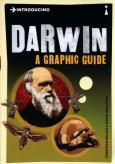
Progress in genetics today would not be possible without Darwin's revolution, but the mysterious man who laid the rational basis for undermining belief in God's creation was remarkable timid. He spent most of his life in seclusion; a semi-invalid, riddled with doubts, fearing the controversy his theories might unleash. In this brilliantly lucid book - a classic originally published in 1982 - Jonathan Miller unravels Darwin's life and his contribution to biology, and traces the path from his scientific predecessors to the later modifications that his own evolutionary theories required.
Introducing Darwin brings alive the difficult progress from pre-Darwinian thinking to modern genetics and the devastatingly important impact of one man on our fundamental understanding of biology, life and ourselves.
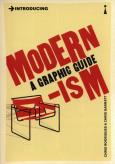
Modernism is usually thought of as a shock wave of innovations hitting art, architecture, music, cinema and literature - the work of Picasso, Joyce, Schoenberg, movements like Futurism and Dada, the architecture of Le Corbusier, T.S. Eliot's The Wasteland and the avant-garde theatre of Bertolt Brecht or Samuel Beckett. But what really defines modernism? Why did it begin and how long did it last? Is Modernism over now? Chris Rodriguez and Chris Garratt's brilliant graphic guide is a brilliant exploration of the last century's most thrilling artistic work - and what it's really all about.
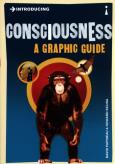
Introducing Consciousness provides a comprehensive guide to the current state of consciousness studies. It starts with the history of the philosophical relation between mind and matter, and proceeds to scientific attempts to explain consciousness in terms of neural mechanisms, cerebral computation and quantum mechanics. Along the way, readers will be introduced to zombies and Chinese Rooms, ghosts in machines and Erwin Schrodinger's cat.
Ten produkt jest zapowiedzią. Realizacja Twojego zamówienia ulegnie przez to wydłużeniu do czasu premiery tej pozycji. Czy chcesz dodać ten produkt do koszyka?