W tej strefie proponujemy bardzo szeroką ofertę z dziedziny psychologii oraz dziedzin powiązanych: astronomii i astrofizyki, ekologii, filozofii, kultury, podróżnictwa, religii, socjologii, sztuki. Szczególnie polecamy z tej kategorii bestseller pt. Księga Urantii. Księga Urantii podaje jasną i zwięzłą integracją nauki, filozofii i religii. Ci, którzy ją czytali i zgłębiali, wierzą, że Księga Urantii może wnieść bardzo wiele wartości do religijnej i filozoficznej myśli ludzi tego świata.
Po rytualnych modlitwach ksiądz Gianni zaczął czytać egzorcyzm Leona XIII, w czasie którego reszta grupy nałożyła ręce na opętaną, a ja, jak zwykle, skrapiałem jej twarz woda święcona. W pewnym momencie Lucyfer, wskazując w stronę tabernakulum, wykrzyknął: - Gdyby nie było Tego tam, popamiętalibyście! i wykonał taki gest rekami, jakby kogoś dusił. Od razu zrozumiałem, ze to Pan w swoim wielkim miłosierdziu dał mi odpowiedź na moje ukryte pytanie. On jest Królem i Stwórcą wszechświata, jego władza rozciąga się na każda rzecz i na każda żyjącą istotę, włącznie z diabłem.
An earthly delight not to be missed
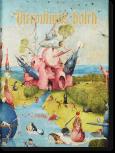
In the midst of the realist-leaning artistic climate of the Late Gothic and Early Renaissance, Netherlandish painter Hieronymus Bosch (c. 1450–1516) was more than an anomaly. Bosch’s paintings are populated with grotesque scenes of fantastical creatures succumbing to all manner of human desire, fantasy, and angst. One of his greatest inventions was to take the figural and scenic representations known as drolleries, which use the monstrous and the grotesque to illustrate sin and evil, and to transfer them from the marginalia of illuminated manuscripts into large-format panel paintings. Alongside traditional hybrids of man and beast, such as centaurs, and mythological creatures such as unicorns, devils, dragons, and griffins, we also encounter countless mixed creatures freely invented by the artist. Many subsidiary scenes illustrate proverbs and figures of speech in common use in Bosch’s day. In his Temptation of St Anthony triptych, for example, the artist shows a messenger devil wearing ice skates, evoking the popular expression that the world was “skating on ice”—meaning it had gone astray. In his pictorial translation of proverbs, in particular, Bosch was very much an innovator.
Bosch—whose real name was Jheronimus van Aken—was widely copied and imitated: the number of surviving works by Bosch’s followers exceeds the master’s own production by more than tenfold. Today only 20 paintings and eight drawings are confidently assigned to Bosch’s oeuvre. He continues to be seen as a visionary, a portrayer of dreams and nightmares, and the painter par excellence of hell and its demons.
Featuring brand new photography of recently restored paintings, this exhaustive book, published in view of the upcoming 500th anniversary of Bosch’s death, covers the artist’s complete works. Discover Bosch’s pictorial inventions in splendid reproductions with copious details and a huge fold-out spread, over 110 cm (43 in.) long, of The Garden of Earthly Delights. Art historian and acknowledged Bosch expert Stefan Fischer examines just what it was about Bosch and his painting that proved so immensely influential.
Surrealism meets Symbolism in Salvador Dalí’s tarot deck
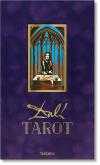
Legend has it that when preparing props for the James Bond film Live and Let Die, producer Albert Broccoli commissioned Surrealist maestro Salvador Dalí to create a custom deck of tarot cards. Inspired by his wife Gala, who nurtured his interest in mysticism, Dalí eagerly got to work, and continued the project of his own accord when the contractual deal fell through.
The work was published in a limited art edition in 1984 that has since long sold out, making Dalí the first renowned painter to create a completely new set of cards. Drawing on Western masterpieces from antiquity to modernity (including some of his own), Dalí seamlessly combined his knowledge of the arcane with his unmistakable wit. The result is a surreal kaleidoscope of European art history.
TASCHEN resurrects all 78 cards in a fresh celebration of Dalí’s inimitable custom set, complete with a booklet by renowned German tarot author Johannes Fiebig offering:
an introduction to Dalí’s life and the project’s making-of
a comprehensive explanation of each card’s composition, its meaning, and practical advice
step-by-step instructions on how to perform readings
a jargon-free approach simplifying tarot for the newcomer
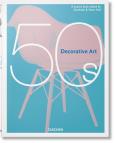
Design trends and styles of the 1950s
Published annually from 1906 until 1980, Decorative Art, The Studio Yearbook was dedicated to the latest currents in architecture, interiors, furniture, lighting, glassware, textiles, metalware, and ceramics. Since the publications went out of print, the now hard-to-find yearbooks have become highly prized by collectors and dealers.
TASCHEN’s Decorative Art 50s explores the spirit of optimism and the fervent consumerism of the decade. Technology and construction had been enervated by research during the war and these discoveries could now be applied in peacetime. The popularization of plastics, fiberglass, and latex literally shaped the decade. Rising incomes and postwar rebuilding on both sides of the Atlantic led to a massive housing boom in both the suburbs and inner cities, and these new homes reflected the new style. While European design was extraordinarily inventive, American design was looking to an idealized vision of the future—between them a modern idiom was developed that can be seen vividly on these pages. This overview of the decade includes the work of such famous innovators as Charles and Ray Eames, George Nelson, Hans Wegner, and Gio Ponti.
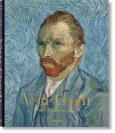
The genius and the angst of a tortured talent
Today, the works of Vincent van Gogh (1853–1890) are among the most well known and celebrated in the world. In paintings such as Sunflowers, The Starry Night, and Self-Portrait with Bandaged Ear, we recognize an artist uniquely dexterous in the representation of texture and mood, light and place.
Yet in his lifetime, van Gogh battled not only the disinterest of his contemporary audience but also devastating bouts of mental illness. His episodes of depression and anxiety would eventually claim his life, when, in 1890, he committed suicide shortly after his 37th birthday.
This comprehensive study of Vincent van Gogh offers a complete catalogue of his 871 paintings, alongside writings and essays, charting the life and work of a master who continues to tower over art to this day.
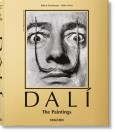
The essential reference on Salvador Dalí’s painted oeuvre
At the age of six, Salvador Dalí (1904–1989) wanted to be a cook. At the age of seven, he wanted to be Napoleon. “Since then,” he later said, “my ambition has steadily grown, and my megalomania with it. Now I want only to be Salvador Dalí, I have no greater wish.” Throughout his life, Dalí was out to become Dalí: that is, one of the most significant artists and eccentrics of the 20th century.
This weighty volume is the most complete study of Dalí’s painted works ever published. After years of research, Robert Descharnes and Gilles Néret located painted works by the master that had been inaccessible for years—so many, in fact, that almost half the featured illustrations appear in public for the first time in this book.
More than a catalogue raisonné, this book contextualizes Dalí’s oeuvre and its meanings by examining contemporary documents, from writings and drawings to material from other facets of his work, including ballet, cinema, fashion, advertising, and objets d’art. Without these crutches to support analysis, the paintings would simply be a series of many images.
The study is divided into two parts: the first examines Dalí’s beginnings as an unknown artist. We witness how the young Dalí deployed all the isms—Impressionism, Pointillism, Cubism, Fauvism, Purism and Futurism—with playful mastery, and how he would borrow from prevailing trends before ridiculing and abandoning them. The second part unveils the conclusions of Dalí’s lifelong inquiries, as well as the great legacy he left in works such as Tuna Fishing (1966/67) or Hallucinogenic Toreador (1970). It includes previously unpublished homages to Velázquez or Michelangelo, painted to the same end as the variations on past masters done by his contemporary, Picasso.
We discover how, motivated by the desire to tease out the secrets of great works and become a Velázquez of the mid-20th century, Dalí became Dalí.
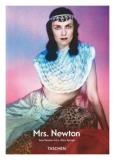
June Newton, renowned under her professional pseudonym Alice Springs, takes the reader on an extraordinary photographic journey from her childhood in Australia through work and travels with her husband, Helmut Newton. The photographs offer a wonderful mix of personal snapshots, editorial work for magazines like Elle, and portraits of such leading creative figures as Yves Saint Laurent, Gore Vidal, Balthus, Robert Mapplethorpe, Brassai, Nicole Kidman, and Anjelica Huston.
The pictures are accompanied by Newton's unpublished diary extracts and her own written commentaries, illuminating the pictures and the stories they tell with her particular blend of gentle irony, candor, and a photographer's eye for detail. Personal and engaging, this book combines iconic faces and places of the 20th century with privileged access into Newton's most intimate inner circle.
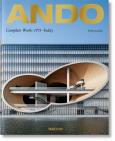
Tadao Ando’s complete works from 1975 until today
Discover the completely unique aesthetic of Tadao Ando, the only architect ever to have won the discipline’s four most prestigious prizes: the Pritzker, Carlsberg, Praemium Imperiale, and Kyoto Prize.
Philippe Starck defines him as a “mystic in a country which is no longer mystic.” Philip Drew calls his buildings “land art” as they “struggle to emerge from the earth.” His designs have been described as haiku crafted from concrete, water, light, and space. But to Ando, true architecture is not expressed in metaphysics or beauty, but rather through space that embodies physical wisdom.
This thoroughly updated edition spans the breadth of his entire career, including such stunning new projects as the Shanghai Poly Theater and the Clark Center at the Clark Art Institute in Williamstown, Massachusetts. Each project is profiled through photographs and architectural drawings to explore Ando’s unprecedented use of concrete, wood, water, light, space, and natural forms. Based on the massive XXL monograph, this edition brings the architect’s definitive career overview to an accessible format.
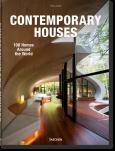
Innovative, intimate architecture from China to Chile
Designing private residences has its own very special challenges and nuances for the architect. The scale may be more modest than public projects, the technical fittings less complex than an industrial site, but the preferences, requirements, and vision of particular personalities becomes priority. The delicate task is to translate all the emotive associations and practical requirements of “home” into a workable, constructed reality.
This publication rounds up 100 of the world’s most interesting and pioneering homes designed in the past two decades, featuring a host of talents both new and established, including John Pawson,Shigeru Ban, Tadao Ando, Zaha Hadid, Herzog & de Meuron, Daniel Libeskind, Alvaro Siza, and Peter Zumthor. Accommodating daily routines of eating, sleeping, and shelter, as well as offering the space for personal experience and relationships, this is architecture at its most elementary and its most intimate.
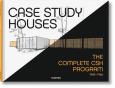
A monumental retrospective of the Case Study Houses program
The Case Study House program (1945–66) was an exceptional, innovative event in the history of American architecture and remains to this day unique. The program, which concentrated on the Los Angeles area and oversaw the design of 36 prototype homes, sought to make available plans for modern residences that could be easily and cheaply constructed during the postwar building boom.
The program’s chief motivating force was Arts & Architecture editor John Entenza, a champion of modernism who had all the right connections to attract some of architecture’s greatest talents, such as Richard Neutra, Charles and Ray Eames, and Eero Saarinen. Highly experimental, the program generated houses that were designed to redefine the modern home, and thus had a pronounced influence on architecture—American and international—both during the program’s existence and even to this day.
TASCHEN brings you a monumental retrospective of the entire program with comprehensive documentation, brilliant photographs from the period and, for the houses still in existence, contemporary photos, as well as extensive floor plans and sketches.
A century of great buildings and their creators
The architecture of the 20th century is distinguished by an astonishing diversity. Just as the clash of aesthetic and commercial ambitions nevertheless produced many a happy symbiosis, so the purist and the expressive, the monumental and the picturesque came face to face. From lofty “starchitects” to lesser-known names around the world, this chronological overview takes you to the heart of the ideas, trends, and transitions that defined the 1900s.
From Frank Lloyd Wright to Antoni Gaudí, Frank O. Gehry to Shigeru Ban and all the best stuff in-between, it’s all here. Organized chronologically, the 31 chapters put it all into perspective, illustrated by hundreds of large-format photos as well as a plenitude of drawings and floor plans. The biographical appendix covers all of the century’s greatest architects while celebrating today’s new talents, and the lavish illustrations include some of the best architectural photography in the modern era.
For anyone interested in the zeitgeist and building design of the 20th century, this is your be-all-end-all reference work. The collection covers not only the architects but also the groups, the movements, and the styles that defined an era of construction. A must for all lovers of architecture!
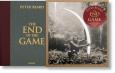
An essential, early portrait of Africa’s wildlife crisis
“The deeper the white man went into Africa, the faster the life flowed out of it, off the plains and out of the bush...vanishing in acres of trophies and hides and carcasses.” — Peter Beard
A landmark publication on Africa, The End of the Game combines Peter Beard’s salient text and remarkable photographs to document the overpopulation and starvation of tens of thousands of elephants, rhinos, and hippos in Kenya’s Tsavo lowlands and Uganda parklands in the 1960s and ’70s.
Researched and compiled over two decades, and updated several times since with new material, this is Beard’s essential book—a powerful and poignant testimony to the damage done by human intervention in Africa. His own images and writings are supplemented by historical photographs of, and quotations from, the enterprisers, explorers, missionaries, and big-game hunters whose quest for adventure and “progress” were to change the face of a continent: Theodore Roosevelt, Frederick Courteney Selous, Karen Blixen (Isak Dinesen), Philip Percival, J. A. Hunter, Ernest Hemingway, and J. H. Patterson.
This new edition includes an interview with conservationist Dr. Esmond Bradley Martin, as well as essays from previous editions by renowned writer Paul Theroux and ecologist Dr. Richard M. Laws, and contributions to the afterword by agronomist Dr. Norman Borlaug. Touching on such themes as distance from nature, density and stress, and loss of common sense, this seminal portrait is as resonant today, amid growing environmental crises, as it was a half century ago.
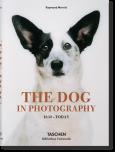
A photo tribute to our four-pawed friends
In celebration of the world’s favorite animal, we bring you over 400 photographs of or about dogs. With pictures from the 19th century to today, the collection includes works by Man Ray, Eric Fischl, Wolfgang Tillmans, Donna Ruskin, Fatima NeJame, Vincent Versace, and of course Elliott Erwitt and William Wegman. Together, their pictures, unique in style but united in canine affection, are testimony if ever there was one that dogs are not only best friends, but also pure photographic inspiration.
Forget #dogsofinstagram, this is real canine art, showing how the camera has been key witness to dogs in all their diversity, character, and friendship, from pensive pooch portraits to four-pawed action shots. As intellectually as it is visually stimulating, the book includes captivating essays tracing the presence of dogs in the history of photography and their relationship with humans across the decades.
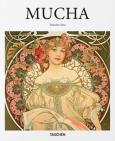
Delicate illustration that defined an era
With his instantly recognizable decorative style, Czech artist and Art Nouveau master Alphonse Mucha (1860–1939) defined the look of the fin-de-siècle. In evocative shades of peach, gold, ochre, and olive, his seductive compositions of patterns, flowers, and beautiful women became paradigms of the Belle Époque years.
Mucha’s work permeated illustration, posters, postcards, and the advertising designs of his day. His striking posters of star actress Sarah Bernhardt were particularly famous. Alongside this delicate decorative work, Mucha also harbored strongly felt political ideas. With his monumental cycle The Slav Epic, he expressed his staunch support for Pan-Slavism, promoting the political independence of the Czech and Slavic nations from the Austro-Hungarian Empire.
Compiled in association with the Mucha Foundation, this book presents key works and introduces the full reach of Mucha’s œuvre from patterned decoration to his book illustrations, posters, photographs and monumental paintings.
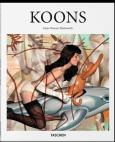
The creations of Jeff Koons (born 1955) are at once immediately accessible and eloquently art historical. From basketball tanks to flower puppies, his instantly recognizable work frolics with banal imagery as much as it integrates cultural references such as Surrealism and Pop Art.
Koons’ art revels in visual pleasure, but also in the power to affront. He has made his name as much for stainless-steel rabbits as he has with his sinister sculpture of Michael Jackson, or his sexually explicit photographic series with then-wife Cicciolina. The result is mega-artist status. An indisputable king of contemporary visual culture, Koons is lauded by collectors, institutions, and the public alike.
With landmark works and concise texts by Katy Siegel, Hans Werner Holzwarth, and Eckhard Schneider, this book offers the complete Koons at a glance, introducing an art world giant from his early inflatable flowers through to today.
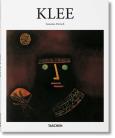
A unique language of symbols, literature, and light
With meticulous theories and many thousands of paintings, drawings, and watercolors, Paul Klee (1879–1940) is considered one of the most cerebral and prolific leaders of 20th-century European art. Though typically small in scale, his works are remarkable for their sophisticated thought and meticulous nuances of line, color, and tonality.
Klee’s stylistic formation was shaped by early affiliation with the German expressionist group Der Blaue Reiter and, in particular, by a 1914 trip to Tunisia which transformed his use of color. After the war, he taught at the esteemed Bauhaus school, where his lectures, like his emerging practice, emphasized the symbolic potential of shade, line, and geometry.
Klee was also inspired by Cubism, poetry, music, literature, language, and the simplistic power of children’s art. Famed for his simple stick figures, he often combined the appearance of untutored naïveté with rigorous composition and intellectual significance.
This book provides a selection of key Klee works to introduce his style and influence. From sun-drenched landscapes to enigmatic wordplay, discover a world at once simplistic, symbolic, and dazzlingly colorful.
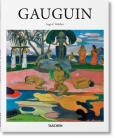
Paul Gauguin’s Pacific visions radiate with color and sunshine
Paul Gauguin (1848–1903) was not cut out for finance. Nor did he last particularly long in the French Navy, or as a tarpaulin salesman in Copenhagen who did not speak Danish. He began painting in his spare time in 1873 and in 1876 took part in the Paris Salon. Three years later, he was exhibiting alongside Pissarro, Degas, and Monet.
A querulous, hard-drinking individual, Gauguin often called himself a savage. His close but fraught friendship with the similarly temperamental Vincent van Gogh climaxed in a violent incident in 1888, when van Gogh purportedly confronted Gauguin with a razor blade, and later cut off his own ear. Shortly afterwards, following the completion of a midcareer masterpiece Vision After the Sermon (1888), Gauguin took himself to Tahiti, with the intention of escaping “everything that is artificial and conventional…”
On Tahiti, Gauguin’s unfettered joy in the island’s nature, native people, and figurative images soared, spurring a prolific output of paintings and prints. In works such as Woman with a Flower (Vahine no te Tiare, 1891) and Sacred Spring: Sweet Dreams (Nave Nave Moe, 1894), he developed a distinct, Primitivist style that positively oozed with sunshine and color. In the tradition of exotic sensuality, his thick, buttery lashings of paint lingered in particular over the curves of Tahitian women.
Gauguin died alone, on Tahiti’s neighboring Marquesas Islands, with many of his personal papers and belongings dispersed in a local auction. It was not until a smart art dealer began curating and showing Gauguin’s work in Paris that the artist’s profound influence began making itself felt, especially to the new breed of French avant-garde artists, such as Picasso and Matisse.This book offers the essential introduction the artist’s truly colorful life, from the Impressionist salons of 1870s Paris to his final days in the Pacific, productive and passionate to the end.
The painterly gestures of personal feelings
Hailed as the first American-born art movement to have a worldwide influence, Abstract Expressionism denotes the non-representational use of paint as a means of personal expression. It emerged in America in the 1940s, with lead protagonists including Jackson Pollock, Philip Guston, Robert Motherwell, Mark Rothko, and Willem de Kooning.
Abstract Expressionism spawned many different stylistic tendencies but two particularly prominent sub-categories: action painting, exemplified by de Kooning and Pollock, and color field painting, made most famous by Rothko. Throughout, Abstract Expressionists strove to convey emotions and ideas through the making of marks, through forms, textures, shades, and the particular quality of brushstrokes. The movement favored large-scale canvases, and embraced the role of accident or chance.
With featured works from 20 key Abstract Expressionist artists, this book introduces the movement which shifted the center of art gravity from Paris to New York and remains for many the golden moment of American art.
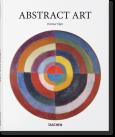
Making sense of revolutionary new forms
Abstraction shook Western art to its core. In the early part of the 20th century, it refuted the reign of clear, indisputable forms and confronted audiences instead with vivid visual poems devoid of conventional representational imagery and characterized by allegories of emotion and sensation.
This radical artistic adventure established new artistic means, as much as narratives. Expression became characterized by shocking juxtapositions of color, light, and line. Artists abandoned the conventions of brush and easel and played with new materials and methods of artistic gesture: commercial paints and housepainter’s brushes, working on unstretched and unprimed canvases, moving the canvas to the floor, and applying paint with hands.
This essential introduction spans the international breadth, conceptual depth, and seismic impact of abstract art with a thorough survey not only of the big names such as Picasso, Klee, Kline, Rothko, and Pollock, but also lesser-known figures who made equally significant contributions, including Antoni Tàpies, K. O. Götz, Ad Reinhardt, and Sophie Taeuber-Arp.
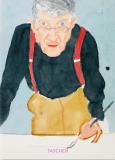
Portrait of an Artist
A comprehensive chronicle of David Hockney’s life and work
Pop artist, painter of modern life, landscape painter, master of color, explorer of image and perception—for six decades, David Hockney has been known as an artist who always finds new ways of exploring the world and its representational possibilities. He has consistently created unforgettable images: works with graphic lines and integrated text in the Swinging Sixties in London; the famous swimming pool series as a representation of the 1970s California lifestyle; closely observed portraits and brightly colored, oversized landscapes after his eventual return to his native Yorkshire. In addition to drawings in which he transfers what he sees directly onto paper, there are multiperspective Polaroid collages that open up the space into a myriad of detailed views, and iPad drawings in which he captures light using a most modern medium—testaments to Hockney’s enduring delight in experimentation.
This special edition has been newly assembled from the two volumes of the David Hockney: A Bigger Book monograph to celebrate TASCHEN’s 40th anniversary. Hockney’s life and work is presented year by year as a dialogue between his works and voices from the time period, alongside reviews and reflections by the artist in a chronological text, supplemented by portrait photographs and exhibition views. Together they open up new perspectives, page after page, revealing how Hockney undertakes his artistic research, how his painting develops, and where he finds inspiration for his multifaceted work.
Ten produkt jest zapowiedzią. Realizacja Twojego zamówienia ulegnie przez to wydłużeniu do czasu premiery tej pozycji. Czy chcesz dodać ten produkt do koszyka?