W tej strefie proponujemy bardzo szeroką ofertę z dziedziny psychologii oraz dziedzin powiązanych: astronomii i astrofizyki, ekologii, filozofii, kultury, podróżnictwa, religii, socjologii, sztuki. Szczególnie polecamy z tej kategorii bestseller pt. Księga Urantii. Księga Urantii podaje jasną i zwięzłą integracją nauki, filozofii i religii. Ci, którzy ją czytali i zgłębiali, wierzą, że Księga Urantii może wnieść bardzo wiele wartości do religijnej i filozoficznej myśli ludzi tego świata.
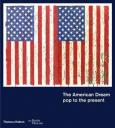
The American Dream: From Pop to present presents an overview of the development of American printmaking since 1960, paying particular attention to key figures such as Jasper Johns, Robert Rauschenberg and Andy Warhol. The 1960s was a period of change in the production, marketing and consumption of prints and the medium attracted a new generation of artists whose attitude towards making art had been conditioned by the monumentality and bold, eye-catching nature of popular imagery in postwar America, from advertising billboards to drive-in movies. Artists used to working on large canvases and huge sculptures created prints of an unprecedented ambition, scale and boldness in state-of-the-art workshops newly established on both the East and West coasts.
Prints also became a means for expressing opinions on the great social issues of the day, from civil rights to the overt and covert role of government. This has continued, with feminism, gender, the body, race and identity, all topics represented in prints in a variety of stylistic approaches across the decades. The changing nature of American society provides a core element of the narrative, with prints offering a fascinating insight into contemporary thinking and attitudes.
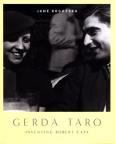
In Paris in 1934, a young and beautiful Jewish émigrée, Gerda Pohorylles, met a Hungarian political exile, André Friedmann. They reinvented themselves as the photographers Gerda Taro and Robert Capa – and he would become the most important photojournalist of his generation.
When Gerda was killed in the Spanish Civil war at the age of twenty-six, Robert Capa was her most notable mourner – his grief was beyond control. Her funeral drew crowds of thousands and she became a hero of the political left. Despite the legend that was built around her, she subsequently became a mere footnote in Capa's story. Seventy years after her death a long-lost suitcase was discovered in Mexico, containing thousands of negatives by Capa and Taro. Most astonishingly of all, the 'Mexican suitcase' showed that photographs that had been attributed previously to Capa were, in fact, the work of Taro.
Jane Rogoyska's book will trace Taro's life and reveal the depth of her relationship with Capa. Charismatic and extraordinary, they epitomised one of the most tumultuous periods of the century.
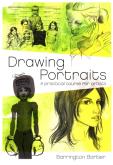
A portrait can reveal the likeness, personality, and even the mood of a person. In previous centuries, portraits were used to reveal someone's social standing, to manipulate the viewer's opinion of the subject, or to exaggerate and accentuate features.In Drawing Portraits, artist and teacher Barrington Barber shows you how to overcome common difficulties and introduces you to the techniques that will develop your perception of a subject.• Includes information on materials, techniques, and styles• Covers the basics of proportions, facial expressions, and poses• Teaches the art of group and animal portraits and caricatures• Contains step-by-step drawings and exercises to practise
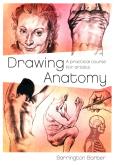
The ability to draw the human figure well is the sign of a good artist. So it is vital to appreciate the body's characteristics and how they influence posture and expression. Drawing Anatomy provides all the information you need to produce the most accurate representations of people.In Drawing Anatomy, teacher and artist Barrington Barber begins his exploration of this area of art by explaining what the body is made of and then reviews each section of the human figure in detail in separate chapters.• Includes information on Latin anatomical names and how they describe different parts of the body• Explains how the body changes with age• Teaches how features such as eyes and mouths can vary• Reveals how to portray the body in motion
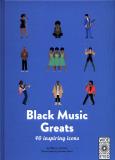
The biggest names... the coolest sounds... the 40 most inspirational movers, shakers and innovators in black music are here! In this fun, fact-packed book from the 40 Inspiring Icons series, learn how these black musicians changed music, from the creation of blues to the invention of rap.
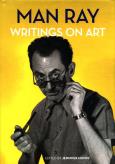
Man Ray (1890–1976) was a pioneer of the Dada movement in the United States and France and a central protagonist of Surrealism. Today he is one of the best-known American artists of the twentieth century, celebrated above all for his innovative and often seductively glamorous photography. Surprisingly, given Man Ray’s key role in the history of early-twentieth-century Modernism, a comprehensive collection of his writings on art has not been published in English until now.
‘Man Ray: Writings on Art‘ fills a conspicuous gap in scholarship on the artist and his period. It brings together his most significant writings, many of them published here for the first time. These occasionally quixotic texts, which include artist books, essays, interviews, letters, and visual poems, reveal the incredible scale of the artist’s output and the remarkable continuity of his aesthetic and political beliefs. This volume offers a long overdue vision of Man Ray as someone who used words both as a creative medium and as a means of articulating ideas about the nature and value of art. With richly reproduced illustrations, it provides powerful insight not only to scholars of art history and academics, but also to working artists and those who count themselves as Man Ray fans.
Jennifer Mundy is head of collection research at Tate, London.
Happily, we do not have to remain trapped by the past. His Holiness reveals how life-enhancing Buddhist practices, as relevant today as they have ever been, can help us break free from the cycles of suffering that ensnare us. He encourages us to broaden our outlook and to adjust our personal values.
And he gives us the tools to deal with any negative emotions we may experience in the process. Practical, step-by-step exercises, steeped in wisdom, show how to make the most of each moment; how to undo the negative effects of past deeds; and how you can enjoy spiritual growth and find deep inner happiness.
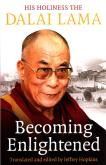
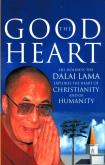
In this accessible book, His Holiness the Dalai Lama considers such well-known Gospel passages as the Sermon on the Mount, the Healing of the Sick and the Resurrection. He offers fresh perspectives on these familiar Christian sources of faith, and also considers such widespread concerns as inner transformation, meditation, ritual, and the ideas of reward and punishment, heaven and hell. His exploration of the similarities and differences between Buddhism and Christianity gives us a model of dialogue for the coming era of global spirituality, which will open the windows of understanding for the modern spiritual seeker of any faith
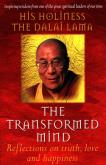
The Dalai Lama is one of the best-known religious leaders in the world, and one of the most respected. The Transformed Mind is a collection of talks he gave at a Tibetan Buddhist centre in Delhi during the 1990s. The history of Tibetan Buddhism is covered in a useful Introduction by Lama Thubten Zopa Rinpoche; in the transcribed talks the Dalai Lama explores many of its teachings. "The essence of Buddhist conduct and philosophy is non-violence and the theory of interdependence respectively." Non-violence has two directives: "If you can, help and serve other sentient beings; if you cannot, then at least do not harm others." Spiritual development, he says, comes from having "a good and compassionate heart [which] automatically brings inner strength and allows for less fear and less doubt." This isn't restricted to Buddhism; he has a great respect for believers in other religious traditions, and longs for greater harmony between religions. A refreshing honesty runs throughout this book, and also a delightful humour. When asked, "What is the best method to stop the population growth?" his response is "More monks and more nuns, of course! I call it non-violent birth control." One of the simplest and most useful pieces of advice in the book is that every morning we should create positive feelings by thinking, "I must have a meaningful day." Unlike his earlier book Ancient Wisdom, Modern World, this one is clearly primarily for followers of Buddhism. However, the warmth of the Dalai Lama's approach means that, though his style is sometimes discursive, his teachings are quite accessible by non-Buddhists. --David V Barrett
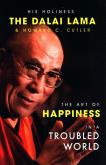
Following on from the internationally bestselling The Art of Happiness, the Dalai Lama and Howard Cutler bring us the inspiring The Art of Happiness in a Troubled World. This inspirational book brings the successful East-meets-West pairing together again to provide a practical application of Tibetan Buddhist spiritual values to the fast-paced, unpredictable, stressful and demanding world we all live in today. In this wise, insightful and practical book, the Dalai Lama shows us how to follow the path that will lead us to fulfilment, purpose and happiness, even in our troubled modern times.
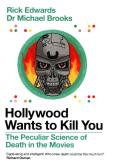
Asteroids, killer sharks, nuclear bombs, viruses, deadly robots, climate change, the apocalypse - why is Hollywood so obsessed with death and the end of the world? And how seriously should we take the dystopian visions of our favourite films? With wit, intelligence and irreverence, Rick Edwards and Dr Michael Brooks explore the science of death and mass destruction through some of our best-loved Hollywood blockbusters.
From Armageddon and Dr Strangelove to The Terminator and Contagion, they investigate everything from astrophysics to AI, with hilarious and captivating consequences. Packed with illustrations, fascinating facts and numerous spoilers, Hollywood Wants to Kill You is the perfect way into the science of our inevitable demise.
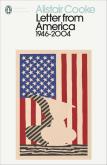
When Alistair Cooke retired in February 2004 he was acclaimed as one of the greatest broadcasters of all time. His Letter from America radio series, which began in 1946 and continued every week for fifty-eight years until his retirement, kept the world in touch with what was happening in America. Cooke's wry, humane and liberal style both informed and entertained his audience. The selection here, made largely by Cooke himself and supplemented by his literary executor, gives us the very best of these legendary broadcasts. It covers key moments from the assassination of Kennedy through to the Vietnam War and Watergate to 9/11, the Iraq War and anticipates the 2004 elections. It includes portraits of the great and the good from Charlie Chaplin to Martin Luther King, Jr, and topics as varied as civil rights, golf, jazz and the changing colours of a New England fall. Each Letter contributes to a captivating portrait of a nation - and of a man.
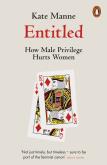
"Male entitlement takes many forms. To sex, yes, but more insidiously to admiration, bodily autonomy, knowledge, power, even care. In this urgent intervention, philosopher Kate Manne offers a radical new framework for understanding misogyny.
In clear-sighted, powerful prose, she ranges widely across the culture -- from the Kavanaugh hearings and 'Cat Person' to Harvey Weinstein and Elizabeth Warren -- to show how the idea that a privileged man is tacitly deemed to be owed something is a pervasive problem. Male entitlement can explain a wide array of phenomena, from mansplaining and the undertreatment of women's pain to mass shootings by incels and the seemingly intractable notion that women are 'unelectable'. The consequences for girls and women are often devastating.
As Manne shows, toxic masculinity is not just the product of a few bad actors; we are all implicated, conditioned as we are by the currents of our time. With wit and intellectual fierceness, she sheds new light on gender and power and offers a vision of a world in which women are just as entitled as men to be cared for, believed and valued."
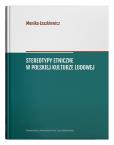
U podstaw pracy leży przekonanie, że język służy nie tylko do porozumiewania się, ale jest też narzędziem interpretowania rzeczywistości: w pewien sposób podsuwa obraz świata i utrwala wartości, magazynuje i przekazuje przyszłym pokoleniom wiedzę, doświadczenie i wartościowanie świata. Myślę, że jest to książka bardzo potrzebna społecznie i mimo bazowania głównie na materiale ludowym niezwykle aktualna, zwłaszcza w okresie tak znacznego wykorzystywania stereotypów do celów propagandowych i politycznych. W specyficzny sposób pozycja ta uzupełnia (i wzbogaca) rekonstrukcje stereotypów bazujące na materiale współczesnym. [...] Przyjmuję więc recenzowane opracowanie nie tylko jako językową analizę/rekonstrukcję stereotypów etnicznych, ale także jako próbę ukazania siły stereotypów, ich potężnej roli w budowaniu polskich wyobrażeń o świecie i jego mieszkańcach. To zaś na pewno łączy się z walorem edukacyjnym rozprawy i powiązane jest ze swoistą autorefleksją i budowaniem autoświadomości czytelnika. [...] Charakter zaś przedstawionych analiz (nie tylko historyczny) pozwala mi sądzić, że także czytelnik niebędący specjalistą zauważy tu niezwykle ciekawe refleksje dotyczące specyfiki ludzkiego myślenia o obcych, a więc wiedzy, która utrwalana jest w różnorodnych danych językowych i przez język przekazywana następnym generacjom (jak się okazuje, z sukcesem).Z recenzji dr hab. Marzeny Marczewskiej, prof. UJK
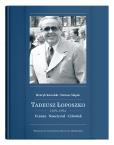
W 2019 roku minęła 90. rocznica urodzin i 25. rocznica śmierci prof. dra hab. Tadeusza Łoposzki, wybitnego znawcy i popularyzatora historii starożytnej i kultury antycznej, wieloletniego kierownika Zakładu Historii Starożytnej, Dyrektora Instytutu Historii, Dziekana Wydziału Humanistycznego, Prorektora ds. Studenckich Uniwersytetu Marii Curie-Skłodowskiej w Lublinie, a także Prezesa Związku Nauczycielstwa Polskiego w UMCS.
Był człowiekiem niepospolitym. Jako badacz historii społecznej starożytnego Rzymu był autorytetem znanym w kraju, a szanowanym i rozpoznawanym również poza jego granicami. Publikował artykuły w renomowanych czasopismach naukowych, między innymi w „Athenaeum” (Pawia), „Index. Quaderni camerti di studi romanistici ” (Camerino-Neapol), „Quaderni di Storia” (Bari), „Klio. Beiträge zur alten Geschichte” (Berlin), „Historia. Zeitschrift für Alte Geschichte” (Stuttgart). Z wielką pasją pisał o epoce schyłku republiki rzymskiej, ale jako jeden z nielicznych polskich badaczy z prawdziwym entuzjazmem oddawał się podróżom, morzu i żegludze starożytnej (np. Starożytne bitwy morskie, Gdańsk 1992). Był również wybitnym dydaktykiem i wychowawcą. Zasłynął w roli autora podręczników akademickich, wśród których szczególne uznanie wielu generacji studentów zdobyły: Historia społeczna republikańskiego Rzymu (Warszawa 1987) oraz Zarys dziejów społecznych cesarstwa rzymskiego (Lublin 1989).
Słynął ze swej otwartości, tolerancji i empatii, a Jego serdeczność, uczciwość, wrażliwość i uczynność zjednywały Mu powszechną sympatię i olbrzymi szacunek. W relacjach Kolegów i Przyjaciół oraz uczniów Profesora Tadeusz Łoposzko jawi się jako człowiek z krwi i kości, znany w środowisku nie tylko jako akademicki urzędnik, ale też iskrzący humorem rozmówca, pierwszej rangi facecjonista, kpiarz, kawalarz i bohater licznych anegdot.
Autorzy
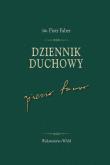
Piotr Faber (15061546) należał do grona pierwszych towarzyszy Ignacego Loyoli, z których wyłoniło się później Towarzystwo Jezusowe. Po studiach oddał się intensywnej pracy apostolskiej. Wędrował przez Italię, Niemcy, Francję, Hiszpanię i Portugalię. Służył jako doradca kardynałów, biskupów oraz dyplomatów. Bywał na dworze hiszpańskim i portugalskim. Głosił słowo Boże, prowadził wykłady, udzielał Ćwiczeń duchowych, spowiadał, podejmował się kierownictwa duchowego i zdobywał kandydatów do nowego zakonu.W ostatnich czterech latach życia zapisywał, zresztą nieregularnie, swoje refleksje i doświadczenia duchowe. Powstało z tych zapisków Memoriale, czyli Dziennik duchowy, który daje nam wgląd w duszę Piotra Fabera, w jego wewnętrzny świat przeżyć, w doświadczenie Boga, w patrzenie na zanurzoną w Nim rzeczywistość, w pragnienie służenia Kościołowi i człowiekowi.Papież Franciszek zapytany o to, dlaczego Piotr Faber jest mu tak bliski i co go uderza w jego postawie, odpowiedział: Dialog ze wszystkimi ludźmi, nawet z najbardziej zagorzałymi przeciwnikami, prosta pobożność i swego rodzaju naiwność, dyspozycyjność nieznosząca zwłoki oraz fakt, że w sposób stanowczy potrafił podejmować ważne i radykalne decyzje, a jednocześnie był bardzo łagodny.Bogusław Steczek SJ, Słowo od tłumacza
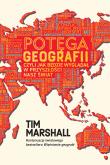
Najnowsza książka autora światowego bestsellera Więźniowie geografii
W swojej poprzedniej książce Tim Marshall przekonał czytelników, że żeby zrozumieć, co się dzieje na świecie, trzeba spojrzeć na mapę. I chociaż od czasu jej premiery geografia się nie zmieniła, uległ zmianom nasz świat. Tym razem Marshall próbuje zajrzeć w przyszłość i analizuje dziesięć regionów, które będą kształtować globalną politykę. Są to: Australia, Iran, Arabia Saudyjska, Wielka Brytania, Grecja, Turcja, Sahel, Etiopia, Hiszpania oraz… kosmos.
Z tej niezwykłej książki dowiesz się, dlaczego kryzys w Sahelu może wkrótce doprowadzić do kolejnej fali uchodźców do Europy; dlaczego kraje Bliskiego Wschodu nie powinny wiązać swojej przyszłości z ropą; dlaczego wschodnia część Morza Śródziemnego będzie jednym z najbardziej niebezpiecznych punktów zapalnych w XXI stuleciu; oraz dlaczego kolejne światowe starcie może rozegrać się nie na powierzchni Ziemi, lecz w przestrzeni pozaziemskiej.
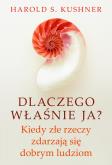
Jedna z najważniejszych książek o rozwoju duchowym, która stała się źródłem inspiracji dla milionów czytelników na całym świecie
Dlaczego uczciwi i przyzwoici ludzie cierpią?
Dlaczego nieszczęścia i nagła śmierć spotyka niewinnych?
Gdzie jest Bóg, kiedy cierpią i giną dobrzy ludzie?
Harold S. Kushner – amerykański teolog i rabin – sam musiał poradzić sobie z tymi trudnymi pytaniami, kiedy okazało się, że jego syn jest nieuleczalnie chory i będzie żył tylko do wczesnej młodości. Wiele lat później Kushner napisał tę książkę, żeby pomóc innym pokonać wątpliwości i lęki oraz zachować wiarę w obliczu tragedii. Jest to wnikliwa i mądra książka napisana z perspektywy duchownego i rodzica, która wskaże, jak znaleźć pocieszenie w chwilach smutku i zwątpienia.
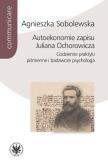
Autoekonomie zapisu Juliana Ochorowicza. Codzienne praktyki piśmienne i badawcze psychologa Książka jest pierwszą próbą całościowego zbadania i opisania codziennych praktyk piśmiennych polskiego psychologa Juliana Ochorowicza (1850–1917). Ponad sto zeszytów i notatników osobistych uczonego, dziś przechowywanych w archiwach biblioteki Zakładu im. Ossolińskich we Wrocławiu, stanowi niezwykłe i dotychczas niezbadane źródło wiedzy o intymnych praktykach piśmiennych autora Jak należy badać duszę?. Autorka dowodzi, że kluczowa dla psychologa metoda introspekcji, rozumiana jako ciągle ponawiane zwracanie się ku sobie, umożliwiła Ochorowiczowi wybór własnej drogi badawczej, a co za tym idzie – rezygnację z przetartych ścieżek rozwoju naukowego.
Julian Ochorowicz's Self-Economies of Writing. Everyday Writing and Research Practices of the Psychologist
The book is the first attempt to comprehensively examine and describe the daily writing practices of a Polish psychologist Julian Ochorowicz (1850–1917). More than one hundred notebooks of the scientist, now stored in the archives of the library of the Ossoliński Institute in Wrocław, constitute an extraordinary and so far unexplored source of knowledge about his intimate writing practices. The author proves that the method of introspection, crucial for the psychologist and understood as constantly repeated turning towards oneself, made it possible for Ochorowicz to choose his own research path and, consequently, to abandon the well-trodden paths of scientific development.
Ten produkt jest zapowiedzią. Realizacja Twojego zamówienia ulegnie przez to wydłużeniu do czasu premiery tej pozycji. Czy chcesz dodać ten produkt do koszyka?