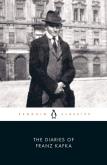
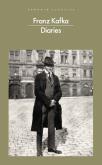
Dating from 1909 to 1923, Franz Kafka’s Diaries contains a broad array of writing, including accounts of daily events, assorted reflections and observations, literary sketches, drafts of letters, records of dreams, and unrevised texts of stories. This volume makes available for the first time in English a comprehensive reconstruction of Kafka’s handwritten diary entries and provides substantial new content, restoring all the material omitted from previous publications — notably, names of people and undisguised details about them, a number of literary writings, and passages of a sexual nature, some of them with homoerotic overtones.
By faithfully reproducing the diaries’ distinctive — and often surprisingly unpolished — writing as it appeared in Kafka’s notebooks, translator Ross Benjamin brings to light not only the author’s use of the diaries for literary invention and unsparing self-examination but also their value as a work of genius in and of themselves.
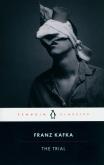
Kafka's gripping work of psychological horror, with a new introduction and notes by Carolin Duttlinger
A terrifying psychological trip into the life of one Joseph K., an ordinary man who wakes up one day to find himself accused of a crime he did not commit, a crime whose nature is never revealed to him. Once arrested, he is released, but must report to court on a regular basis--an event that proves maddening, as nothing is ever resolved. As he grows more uncertain of his fate, his personal life--including work at a bank and his relations with his landlady and a young woman who lives next door--becomes increasingly unpredictable. As K. tries to gain control, he succeeds only in accelerating his own excruciating downward spiral.
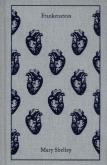
A stunning new clothbound edition of Mary Shelley's infamous work of horror fiction, designed by the award-winning Coralie Bickford-Smith. These delectable and collectible Penguin editions are bound in high-quality colourful, tactile cloth with foil stamped into the design
Obsessed by creating life itself, Victor Frankenstein plunders graveyards for the material to fashion a new being, which he shocks into life by electricity. But his botched creature, rejected by Frankenstein and denied human companionship, sets out to destroy his maker and all that he holds dear. This chilling gothic tale, begun when Mary Shelley was just nineteen years old, would become the world's most famous work of horror fiction, and remains a devastating exploration of the limits of human creativity.
This edition also includes 'A Fragment' by Lord Byron and 'The Vampyre: A Tale' by John Polidori, as well as an introduction and notes
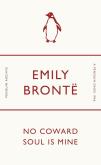
In this new selection of Emily Brontë’s heart-rending poems, we uncover a soul unafraid to confront mortality, tragedy and the wild cruelty – and beauty – of nature. These verses capture her profound passion and indomitable spirit, plumbing the depths of the human heart and revealing the raw power of Brontë’s poetic genius.
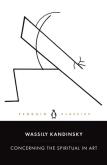
A seminal text in the history of modern art, from one of the most famous artists of the twentieth century
‘Art is the language that speaks to the soul’
Why do we make art? In Concerning the Spiritual in Art Wassily Kandinsky, one of the earliest and most famous abstract painters, argued against ‘art for art’s sake’. Exploring form and colour, spirituality and tradition, Kandinsky instead predicted a future for painting in its potential to redirect the attention of viewers away from the shallow materialism of the modern world toward the more profound intellectual and emotional concerns of their interior lives. His revolutionary work became a landmark in modern art history, helping to usher in the age of non-representational painting. This new translation also includes Kandinsky’s later essay, ‘The Question of Form’, in which he interrogates and sharpens many of his earlier ideas.
A new translation by Ruth Ahmedzai Kemp
With an introduction by Lisa Florman
An essential new translation of the author’s complete, uncensored diaries — revealing the idiosyncrasies and rough edges of one of the twentieth century’s most influential writers
Dating from 1909 to 1923, Franz Kafka’s Diaries contains a broad array of writing, including accounts of daily events, assorted reflections and observations, literary sketches, drafts of letters, records of dreams, and unrevised texts of stories. This volume makes available for the first time in English a comprehensive reconstruction of Kafka’s handwritten diary entries and provides substantial new content, restoring all the material omitted from previous publications — notably, names of people and undisguised details about them, a number of literary writings, and passages of a sexual nature, some of them with homoerotic overtones.
By faithfully reproducing the diaries’ distinctive — and often surprisingly unpolished — writing as it appeared in Kafka’s notebooks, translator Ross Benjamin brings to light not only the author’s use of the diaries for literary invention and unsparing self-examination but also their value as a work of genius in and of themselves.
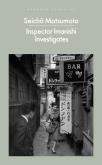
A thrilling crime classic, from the bestselling author of Tokyo Express
Tokyo, 1960. As the first rays of morning light hit the rails at Kamata Station, a man’s body is found on the tracks. With only two leads – a distinctive accent and a single word, ‘kameda’ – senior inspector Imanishi Eitaro is called in to solve the puzzle.
Setting aside his beloved bonsai and haikus, he must cross Japan in search of answers, from Osaka to Akita, accompanied by junior detective Yoshimura. At each new town, they encounter traces of the avant-garde Nouveau Group – young Tokyo artists who are bringing new ideas from the West. What to make of this modern collective? And how to stop another mysterious death occurring? Inspector Imanishi investigates…
A fascinating glimpse into Japanese society at a time of great change, this is one of Seicho Matsumoto’s best-loved novels – a riveting mystery from the master of Japanese crime.
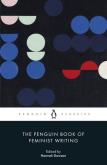
The Penguin Book of Feminist Writing rounds up the voices of women from across history to discuss the meaning and practice of feminism. This is a book that every person should read: the multiplicity of voices from various times and spaces allows women of the past alongside women of the present to be noisy about why feminism matters. It is a collective masterpiece' Helen Carr, BBC History, Books of the Year
'Bulging with brilliant and exciting writing. Its vast sweep takes us from the 15th century, when Christine de Pizan, a court writer in medieval France, imagined a City of Ladies where women would be safe from harassment, through to the present day, with work by Maggie Nelson, Eileen Myles, Rachel Cusk, Deborah Levy and Lola Olufemi' Rachel Cooke, Observer
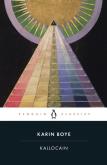
A pioneering work of dystopian fiction from one of Sweden's most acclaimed writers
Written midway between Brave New World and Nineteen Eighty-Four, as the terrible events of the Second World War were unfolding, Kallocain depicts a totalitarian 'World State' which seeks to crush the individual entirely. In this desolate, paranoid landscape of 'police eyes' and 'police ears', the obedient citizen and middle-ranking scientist Leo Kall discovers a drug that will force anyone who takes it to tell the truth. But can private thought really be obliterated? Karin Boye's chilling novel of creeping alienation shows the dangers of acquiescence and the power of resistance, no matter how futile.
Little Clothbound Classics: irresistible, mini editions of short stories, novellas and essays from the world's greatest writers, designed by the award-winning Coralie Bickford-Smith
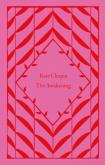
This candid portrayal of a woman who refuses to accept her allotted role as wife and mother caused an outcry when it was published in 1899.
It is the story of Edna Pontellier, who spends the summer on the Gulf of Mexico with her businessman husband and her two sons. When an illicit romance awakens unfamiliar ideas and longings in Edna, she discovers a new identity for herself, but cannot hope for understanding in the stifling attitudes of Louisiana society.
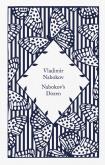
Thirteen ingeniously crafted stories make up Vladimir Nabokov's baker's dozen. In some of these stories shadowy people pass through, cooped up by life, with nowhere to escape. In others, elusive glimpses of fleeting happiness, which flutter away before they can be snatched, waylay their victims. Like the shimmer of the sea, the gleam of a glass caught by the sun, these stories sparkle brilliantly only to dissolve again.
Published when she was only eighteen, Françoise Sagan's astonishing novella, Bonjour Tristesse, became an instant bestseller. It tells the story of Cécile, who leads a carefree life with her widowed father and his young mistresses until, one hot summer on the Riviera, he decides to remarry - with devastating consequences.
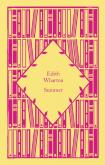
A novella regarded by Edith Wharton as one of her very best, Summer tells the tale of forbidden sexual passion and thwarted dreams set against the backdrop of a lush summer in rural Massachusetts. A sensation on first publication, its honest depiction of a young woman attempting to live on her own terms remains as vital today as it was in 1917.
Ten produkt jest zapowiedzią. Realizacja Twojego zamówienia ulegnie przez to wydłużeniu do czasu premiery tej pozycji. Czy chcesz dodać ten produkt do koszyka?