Ta kategoria dedykowana jest współczesnym czytelniczkom literatury kobiecej. Bardzo szeroki wybór romansów, kryminałów, powieści obyczajowe, poruszająca literatura kobieca, erotyki, harlequiny polskich i zagranicznych autorów. Każda lubiąca czytać kobieta znajdzie coś szczególnego dla siebie.
Polecamy literaturę Sergiusza Piaseckiego, Stanisława Srokowskiego, Diany Palmer czy w końcu Blanki Lipińskiej.
Transplanted to Europe from her native America, Isabel Archer has candour, beauty, intelligence, an independent spirit and a marked enthusiasm for life. An unexpected inheritance apparently gives her freedom, but despite all her natural advantages she makes one disastrous error of judgement and the result is genuinely tragic. Her tale, told with James inimitable poise, is of the widest relevance.
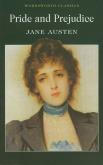
"Pride and Prejudice", which opens with one of the most famous sentences in English Literature, is an ironic novel of manners. In it, the garrulous and empty-headed Mrs Bennet has only one aim - that of finding a good match for each of her five daughters. In this, she is mocked by her cynical and indolent husband. With its wit, its social precision and, above all, its irresistible heroine, "Pride and Prejudice" has proved one of the most enduringly popular novels in the English language.
Our Mutual Friend, Dickens' last complete novel, gives one of his most comprehensive and penetrating accounts of Victorian society. Its vision of a culture stifled by materialistic values emerges not just through its central narratives, but through its apparently incidental characters and scenes. The chief of its several plots centres on John Harmon who returns to England as his father's heir. He is believed drowned under suspicious circumstances - a situation convenient to his wish for anonymity until he can evaluate Bella Wilfer whom he must marry to secure his inheritance. The story is filled with colourful characters and incidents - the faded aristocrats and parvenus gathered at the Veneering's dinner table, Betty Higden and her terror of the workhouse and the greedy plottings of Silas Wegg.
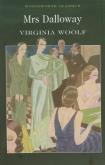
Virginia Woolf's singular technique in Mrs Dalloway heralds a break with the traditional novel form and reflects a genuine humanity and a concern with the experiences that both enrich and stultify existence.
Society hostess, Clarissa Dalloway is giving a party. Her thoughts and sensations on that one day, and the interior monologues of others whose lives are interwoven with hers gradually reveal the characters of the central protagonists. Clarissa's life is touched by tragedy as the events in her day run parallel to those of Septimus Warren Smith, whose madness escalates as his life draws toward inevitable suicide.
The delicate artistry and lyrical prose of Woolf?s fourth novel have established her as a writer of profound talent.
Set in the mid-19th century, and written from the author's first-hand experience, North and South follows the story of the heroine's movement from the tranquil but moribund ways of southern England to the vital but turbulent north. Elizabeth Gaskell's skilful narrative uses an unusual love story to show how personal and public lives were woven together in a newly industrial society.
This is a tale of hard-won triumphs - of rational thought over prejudice and of humane care over blind deference to the market. Readers in the twenty-first century will find themselves absorbed as this Victorian novel traces the origins of problems and possibilities which are still challenging a hundred and fifty years later: the complex relationships, public and private, between men and women of different classes.
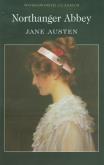
Northanger Abbey tells the story of a young girl, Catherine Morland who leaves her sheltered, rural home to enter the busy, sophisticated world of Bath in the late 1790s. Austen observes with insight and humour the interaction between Catherine and the various characters whom she meets there, and tracks her growing understanding of the world about her.
In this, her first full-length novel, Austen also fixes her sharp, ironic gaze on other kinds of contemporary novel, especially the Gothic school made famous by Ann Radcliffe. Catherine's reading becomes intertwined with her social and romantic adventures, adding to the uncertainties and embarrassments she must undergo before finding happiness.
Dickens had already achieved renown with The Pickwick Papers. With Oliver Twist his reputation was enhanced and strengthened. The novel contains many classic Dickensian themes - grinding poverty, desperation, fear, temptation and the eventual triumph of good in the face of great adversity.
Oliver Twist features some of the author's most enduring characters, such as Oliver himself (who dares to ask for more), the tyrannical Bumble, the diabolical Fagin, the menacing Bill Sikes, Nancy and 'the Artful Dodger'.
For any reader wishing to delve into the works of the great Victorian literary colossus, Oliver Twist is, without doubt, an essential title.
Castigated for offending against public decency, Madame Bovary has rarely failed to cause a storm. For Flaubert's contemporaries, the fascination came from the novelist's meticulous account of provincial matters. For the writer, subject matter was subordinate to his anguished quest for aesthetic perfection. For his twentieth-century successors the formal experiments that underpin Madame Bovary look forward to the innovations of contemporary fiction. Flaubert's protagonist in particular has never ceased to fascinate. Romantic heroine or middle-class neurotic, flawed wife and mother or passionate protester against the conventions of bourgeois society, simultaneously the subject of Flaubert's admiration and the butt of his irony - Emma Bovary remains one of the most enigmatic of fictional creations. Flaubert's meticulous approach to the craft of fiction, his portrayal of contemporary reality, his representation of an unforgettable cast of characters make Madame Bovary one of the major landmarks of modern fiction.
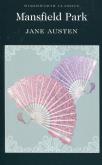
Adultery is not a typical Jane Austen theme, but when it disturbs the relatively peaceful household at Mansfield Park, it has quite unexpected results.
The diffident and much put-upon heroine Fanny Price has to struggle to cope with the results, re-examining her own feelings while enduring the cheerful amorality, old-fashioned indifference and priggish disapproval of those around her.
Middlemarch is a complex tale of idealism, disillusion, profligacy, loyalty and frustrated love. This penetrating analysis of the life of an English provincial town during the time of social unrest prior to the Reform Bill of 1832 is told through the lives of Dorothea Brooke and Dr Tertius Lydgate and includes a host of other paradigm characters who illuminate the condition of English life in the mid-nineteenth century.
Henry James described Middlemarch as a ‘treasurehouse of detail’ while Virginia Woolf famously endorsed George Eliot’s masterpiece as ‘one of the few English novels written for grown-up people.
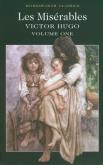
One of the great classics of western literature, Les Misérables is a magisterial work which is rich in both character portrayal and meticulous historical description.
Characters such as the absurdly criminalised Valjean, the street urchin Gavroche, the rascal Thenardier, the implacable detective Javert, and the pitiful figure of the prostitute Fantine and her daughter Cosette, have entered the pantheon of literary dramatis personae.
The reader is also treated to the unforgettable descriptions of the Battle of Waterloo and Valjean’s flight through the Paris sewers.
Volume 1 of 2
One of the great classics of western literature, Les Misérables is a magisterial work which is rich in both character portrayal and meticulous historical description.
Characters such as the absurdly criminalised Valjean, the street urchin Gavroche, the rascal Thenardier, the implacable detective Javert, and the pitiful figure of the prostitute Fantine and her daughter Cosette, have entered the pantheon of literary dramatis personae.
The reader is also treated to the unforgettable descriptions of the Battle of Waterloo and Valjean?s flight through the Paris sewers.
Considered by many to be Dickens' finest novel, Great Expectations traces the growth of the book's narrator, Philip Pirrip (Pip), from a boy of shallow dreams to a man with depth of character. From its famous dramatic opening on the bleak Kentish marshes, the story abounds with some of Dickens' most memorable characters. Among them are the kindly blacksmith Joe Gargery, the mysterious convict Abel Magwitch, the eccentric Miss Haversham and her beautiful ward Estella, Pip's good-hearted room-mate Herbert Pocket and the pompous Pumblechook. As Pip unravels the truth behind his own ‘great expectations’ in his quest to become a gentleman, the mysteries of the past and the convolutions of fate through a series of thrilling adventures serve to steer him towards maturity and his most important discovery of all - the truth about himself.
Unusually for Dickens, Hard Times is set, not in London, but in the imaginary mid-Victorian Northern industrial town of Coketown with its blackened factories, downtrodden workers and polluted environment. This is the soulless domain of the strict utilitarian Thomas Gradgrind and the heartless factory owner Josiah Bounderby. However human joy is not excluded thanks to 'Mr Sleary's Horse-Riding' circus, a gin-soaked and hilarious troupe of open-hearted and affectionate people who act as an antidote to all the drudgery and misery endured by the ordinary citizens of Coketown.
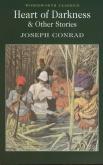
Generally regarded as the pre-eminent work of Conrad's shorter fiction, Heart of Darkness is a chilling tale of horror which, as the author intended, is capable of many interpretations. Set in the Congo during the period of rapid colonial expansion in the 19th century, the story deals with the highly disturbing effects of economic, social and political exploitation of European and African societies and the cataclysmic behaviour this induced in some individuals.
The other two stories in this book – Youth and The End of the Tether – concern the sea and those who sail upon it, a genre in which Conrad reigns supreme.
Russia in the 1840s. There is a stranger in town, and he is behaving oddly. The unctuous Pavel Chichikov goes around the local estates buying up 'dead souls'. These are the papers relating to serfs who have died since the last census, but who remain on the record and still attract a tax demand. Chichikov is willing to relieve their owners of the tax burden by buying the titles for a song. What he does not say is that he then proposes to take out a huge mortgage against these fictitious citizens and buy himself a nice estate in Eastern Russia. Will he get away with it? Who will rumble him? Does this narrative contain a deeper message about Russia itself or the spiritual health of humanity?
There is much interest and some suspense in considering these issues, but the real pleasure of this story lies elsewhere. It is an enjoyable comic romp through a retarded part of a backward country, a picaresque series of grotesque portraits, situations and conversations described with Gogolian humour based mainly on hyperbole. This is, quite simply, the funniest book in the Russian language before the twentieth century.
In 1869 a young Russian was strangled, shot through the head and thrown into a pond. His crime? A wish to leave small group of violent revolutionaries, from which he had become alienated. Dostoevsky takes this real-life catastrophe as the subject and culmination of Devils, a title that refers the young radicals themselves and also to the materialistic ideas that possessed the minds of many thinking people Russian society at the time.
The satirical portraits of the revolutionaries, with their naivety, ludicrous single-mindedness and readiness for murder and destruction, might seem exaggerated - until we consider their all-too-recognisable descendants in the real world ever since. The key figure in the novel, however, is beyond politics. Nikolay Stavrogin, another product of rationalism run wild, exercises his charisma with ruthless authority and total amorality. His unhappiness is accounted for when he confesses to a ghastly sexual crime - in a chapter long suppressed by the censor.
This prophetic account of modern morals and politics, with its fifty-odd characters, amazing events and challenging ideas, is seen by some critics as Dostoevsky's masterpiece.
Mr Dombey is a man obsessed with his firm. His son is groomed from birth to take his place within it, despite his visionary eccentricity and declining health. But Dombey also has a daughter, whose unfailing love for her father goes unreturned. 'Girls' said Mr Dombey, 'have nothing to do with Dombey and Son'. When Walter Gay, a young clerk in her father's office, rescues her from a bewildering experience in the streets of London, his unforgettable friends believe he is well on his way to receiving her hand in marriage and inheriting the company. It is to be a very different type of story.
Living overseas but writing, always, about his native city, Joyce made Dublin unforgettable. The stories in Dubliners show us truants, seducers, gossips, rally-drivers, generous hostesses, corrupt politicians, failing priests, amateur theologians, struggling musicians, moony adolescents, victims of domestic brutishness, sentimental aunts and poets, patriots earnest or cynical, and people striving to get by.
In every sense an international figure, Joyce was faithful to his own country by seeing it unflinchingly and challenging every precedent and piety in Irish literature.
Jane Austen teased readers with the idea of a 'heroine whom no one but myself will much like', but Emma is irresistible. 'Handsome, clever, and rich', Emma is also an 'imaginist', 'on fire with speculation and foresight'. She sees the signs of romance all around her, but thinks she will never be married.
Her matchmaking maps out relationships that Jane Austen ironically tweaks into a clearer perspective. Judgement and imagination are matched in games the reader too can enjoy, and the end is a triumph of understanding.
Ten produkt jest zapowiedzią. Realizacja Twojego zamówienia ulegnie przez to wydłużeniu do czasu premiery tej pozycji. Czy chcesz dodać ten produkt do koszyka?