'Boldly ambitious, deeply affecting, and magisterial in scope' Steve Silberman, author of Neurotribes
'Expansive and thoughtful, it illuminates the complexity and elusiveness of his subject' New Statesman
Depression is a leading cause of disability around the world today, a growing health crisis that affects us all. It is a complex and diverse condition. But it is also highly treatable.
In this profound and sweeping history, Alex Riley charts the macabre, ingenious, and often surprising developments in the science of mental healthcare over the last 2000 years. In the pursuit to understand his own experiences with mental illness, Riley interweaves his own family history with fascinating stories of biological and psychological treatments which illuminate the past, question the current state of diagnosis, and investigate the hype and hopes for future treatments.
From the re-emergence of long-forgotten therapies to a group of grandmothers who stand at the forefront of a revolution in mental healthcare, A Cure for Darkness is an essential exploration of one of the most pressing problems of our time.
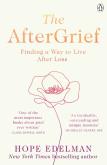
After years of feeling that love was always out of reach, journalist Natasha Lunn set out to understand how relationships work and evolve over a lifetime. She turned to authors and experts to learn about their experiences, as well as drawing on her own, asking: How do we find love? How do we sustain it? And how do we survive when we lose it?
In Conversations on Love she began to find the answers:
Philippa Perry on falling in love slowly
Dolly Alderton on vulnerability
Stephen Grosz on accepting change
Candice Carty-Williams on friendship
Lisa Taddeo on the loneliness of loss
Diana Evans on parenthood
Emily Nagoski on the science of sex
Alain de Botton on the psychology of being alone
Esther Perel on unrealistic expectations
Roxane Gay on redefining romance
and many more…
Why do some ideas make it big while others fail to take off? According to award-winning behavioural economist John List, the answer comes down to a single question: Can the idea scale?
Countless enterprises fall apart the moment they scale; their positive results fizzle, they lose valuable time and money, and the great electric charge of potential that drove them early on disappears. In short, they suffer a voltage drop. Yet success and failure are not about luck - in fact, there is a rhyme and reason as to why some ideas fail and why some make it big. Certain ideas are predictably scalable, while others are predictably destined for disaster.
In The Voltage Effect, University of Chicago economist John A. List explains how to identify the ideas that will be successful when scaled, and how to avoid those that won't. Drawing on his own original research, as well as fascinating examples from the realms of business, government, education, and public health, he details the five signature elements that cause voltage drops, and unpacks the four proven techniques for increasing positive results - or voltage gains - and scaling great ideas to their fullest potential.
By understanding the science of scaling, we can drive change in our schools, workplaces, communities, and society at large. Because a better world can only be built at scale.
Following the international critical and commercial success of The Cost of Living, this final volume of Levy's 'Living Autobiography' is an exhilarating, thought-provoking and boldly intimate meditation on home and the spectres that haunt it. It resumes and expands Levy's pioneering examination of a female life lived in the storm of the present tense, asking essential questions about womanhood, modernity, creative identity and personal freedom. From one of the great thinkers and writers of our time, Real Estate is a memoir and a manifesto for radical emancipation - as an artist, as a woman, and as an inheritor of the real estate of the now.
Ten produkt jest zapowiedzią. Realizacja Twojego zamówienia ulegnie przez to wydłużeniu do czasu premiery tej pozycji. Czy chcesz dodać ten produkt do koszyka?