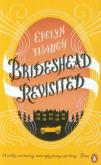
Charles Ryder, a lonely student at Oxford, is captivated by the outrageous and exquisitely beautiful Sebastian Flyte. Invited to Brideshead, Sebastian's magnificent family home, Charles welcomes the attentions of its eccentric, aristocratic inhabitants. But he also discovers a world which threatens to destroy his beloved Sebastian.
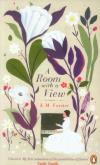
A Room with a View is a romance and a social critique of Edwardian society. A young woman is chaperoned to Italy by her bitter aunt. There she meets an intriguing, but eccentric young man. Back in England she finds herself respectably engaged to a proper gentleman, but is thrown into a muddle when her young man from Italy moves to her English town. The novel celebrates the chaotic, unsure muddle of feelings over a kind of lifeless acceptance of the way things are.
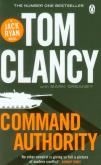
A new paperback featuring agent Jack Ryan. When an old friend is poisoned by a radioactive agent, the trail leads to Russia. A Jack Ryan film, "Shadow Recruit", was released in January, starring Chris Pine and Kenneth Branagh. The series has sales of over 2.2 million in the UK.
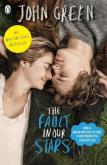
This witty, yet heart-wrenching novel debuted at no.1 on the "New York Times" bestseller list and sold 100,000 copies in the first month as a hardback edition. Echoing David Nicholl's "One Day" and Jenny Downham's "Before I Die", this book will appeal to a crossover audience of both adults and young adults alike. Terminal patient, Hazel, is about to be introduced to the gorgeous Augustus Walters, sending sparks flying in this brilliant exploration of the funny and tragic business of being alive and in love.
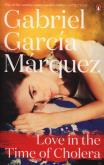
Fifty-one years, nine months and four days have passed since Fermina Daza rebuffed hopeless romantic Florentino Ariza's impassioned advances and married Dr Juvenal Urbino instead. During that half-century, Florentino has fallen into the arms of many delighted women, but has loved none but Fermina. Having sworn his eternal love to her, he lives for the day when he can court her again.
When Fermina's husband is killed trying to retrieve his pet parrot from a mango tree, Florentino seizes his chance to declare his enduring love. But can young love find new life in the twilight of their lives?
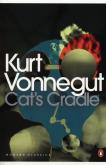
Told with deadpan humour and bitter irony, Kurt Vonnegut's cult tale of global destruction preys on our deepest fears of witnessing Armageddon and, worse still, surviving it...
Dr Felix Hoenikker, one of the founding 'fathers' of the atomic bomb, has left a deadly legacy to the world. For he is the inventor of 'ice-nine', a lethal chemical capable of freezing the entire planet. The search for its whereabouts leads to Hoenikker's three ecentric children, to a crazed dictator in the Caribbean, to madness. Felix Hoenikker's Death Wish comes true when his last, fatal gift to mankind brings about the end, that for all of us, is nigh...
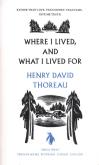
Thoreau's account of his solitary and self-sufficient home in the New England woods remains an inspiration to the environmental movement - a call to his fellow men to abandon their striving, materialistic existences of 'quiet desperation' for a simple life within their means, finding spiritual truth through awareness of the sheer beauty of their surroundings.
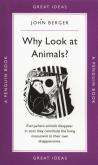
John Berger broke new ground with his penetrating writings on life, art and how we see the world around us. Here he explores how the ancient relationship between man and nature has been broken in the modern consumer age, with the animals that used to be at the centre of our existence now marginalized and reduced to spectacle.
These are unique stories of timeless wisdom and understanding from the Zen Masters. With rich and fascinating tales of swords, tigers, tea, flowers and dogs, the writings of the Masters challenge every perception - and seek to bring all readers closer to enlightenment.
Plato's retelling of the discourses between Socrates and his friends on such subjects as love and desire, truth and illusion, spiritual transcendence and the qualities of a good ruler, profoundly affected the ways in which we view human relationships, society and leadership - and shaped the whole tradition of Western philosophy.
Chuang Tzu examines the nature of existence in these dialogues and essays, from the battle to grasp the purpose of life to the search for knowledge. A collection of some of the most absorbing and charming philosophy ever written, THE TAO OF NATURE is also about perfection, perception, the value of skills and the truth revealed by complete understanding.
One of the most important works of cultural theory ever written, Walter Benjamin's groundbreaking essay explores how the age of mass media means audiences can listen to or see a work of art repeatedly - and what the troubling social and political implications of this are.
Visionary English Socialist and pioneer of the Arts and Crafts movement, William Morris argued that all work should be a source of pride and satisfaction, and that everyone should be entitled to beautiful surroundings - no matter what their class.
In Utopia Thomas More painted a fantastical picture of a distant island where society is perfected and people live in harmony, yet its title means 'no place', and More's hugely influential work was ultimately an attack on his own corrupt, dangerous times, and on the failings of humanity.
This collection of speeches from one of the great modern orators includes Churchill's famous words on the declaration of war with Germany, as well as his rousing call to the British in June 1940 after Dunkirk, and his immortal tribute to the young men fighting in the Battle of Britain.
A fascinating examination of ethics, religion and psychology, this selection of Schopenhauer's works contains scathing attack on the nature and logic of religion, and an essay on ethics that ranges from the American slavery debate to the vices of Buddhism.
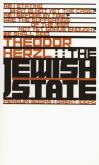
We shall live at last as free men on our own soil, and die peacefully in our own homes' Theodor Herzl's passionate advocacy of the founding of a Jewish state grew out of his conviction that Jews would never be assimilated into the populations in which they lived. Herzl concluded that the only solution for the majority of Jews would be organised emigration to a state of their own.
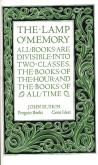
John Ruskin overturned Victorian society's ideas about art and architecture, arguing that ancient buildings must be conserved for their deep, mystical links with the past and that creative design is essential - not for financial gain, but to communicate eternal human truths.
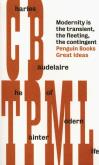
Poet, aesthete and hedonist, Baudelaire was also one of the most groundbreaking art critics of his time. Here he explores beauty, fashion, dandyism, the purpose of art and the role of the artist, and describes the painter who, for him, expresses most fully the drama of modern life.
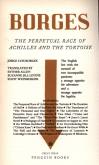
In this collection of wise, witty and fascinating essays, Borges discusses the existence (or non-existence) of Hell, the flaws in English literary detectives, the philosophy of contradictions, and the many translators of 1001 Nights. Varied and enthralling, these pieces examine the very nature of our lives, from cinema and books to history and religion.
Ten produkt jest zapowiedzią. Realizacja Twojego zamówienia ulegnie przez to wydłużeniu do czasu premiery tej pozycji. Czy chcesz dodać ten produkt do koszyka?