Loved for her quick and delicious recipes whipped up after a long day as a personal chef, Natalia Rudin has created a show-stopping cookbook full of her (mostly) plant-based recipes that are guaranteed to comfort, nourish and delight.
With chapters that take less than 15 minutes, 30 minutes or an hour; slower recipes to savour at the weekend or with friends; meal-prep ideas to elevate your packed lunches; breakfasts to be enjoyed slow or on the go; and moreish treats to satisfy every sweet tooth, there is a recipe for every occasion:
Smashed Miso Butterbeans and Crispy Soy Mushrooms
Basil, Courgette and Pistachio Mafaldine
Blistered Tomatoes and Chickpeas on Creamy Polenta
Romesco Roasted Veg Quinoa Bowl
Whipped ‘Feta’, Courgettes and Mint
Fluffy Buckwheat Pancakes with Date Caramel
Chai Spiced Chocolate and Pecan Blondies
Not exclusively vegan (although each recipe can be) Natalia takes cooking with plants to another level so that simple food feels posh, and posh food feels simple.
For the first time ever—a comprehensive biography of one of the twentieth-century’s most innovative creative artists: the incomparable, irreplaceable Jim Henson.
He was a gentle dreamer whose genial bearded visage was recognized around the world, but most people got to know him only through the iconic characters he created: Kermit the Frog, Bert and Ernie, Miss Piggy, Big Bird. The Muppets made Jim Henson a household name, but they were only part of his remarkable story.
This extraordinary biography--written with the generous cooperation of the Henson family--covers the full arc of Henson’s all-too-brief life: from his childhood in Leland, Mississippi, through the years of burgeoning fame in Washington D.C., New York, and London, to the decade of international celebrity that preceded his untimely death at age fifty-three. Drawing on hundreds of hours of new interviews with Jim Henson's family, friends, and closest collaborators, as well as unprecedented access to private family and company archives--including never-before-seen interviews, business documents, and Henson’s private letters--Brian Jay Jones explores the creation of the Muppets, Henson’s contributions to Sesame Street and Saturday Night Live, and his nearly ten year campaign to bring The Muppet Show to television. Jones provides the imaginative context for Henson’s non-Muppet projects, including the richly imagined worlds of The Dark Crystal and Labyrinth—as well as fascinating misfires like Henson’s dream of opening an inflatable psychedelic nightclub or of staging an elaborate, all-puppet Broadway show.
An uncommonly intimate portrait, Jim Henson captures all the facets of this American original: the master craftsman who revolutionized the presentation of puppets on television, the savvy businessman whose deal making prowess won him a reputation as “the new Walt Disney,” and the creative team leader whose collaborative ethos earned him the undying loyalty of everyone who worked for him. Here also is insight into Henson’s intensely private personal life: his Christian Science upbringing; his love of fast cars, high-stakes gambling, and expensive art; and his weakness for women. Though an optimist by nature, Henson was haunted by the notion that he would not have time to do all the things he wanted to do in life—a fear that his heartbreaking final hours would prove all too well-founded.
An up-close look at the charmed life of a legend, Jim Henson gives the full measure to a man whose joyful genius transcended age, language, geography, and culture—and continues to beguile audiences worldwide.
After an assassination attempt and in waning health, Naguib Mahfouz became more cautious in his twilight years. At the same time, in nightly dreams, his imagination began to roam his beloved city, Cairo, with a rare freedom.
In this collection of vivid vignettes linked together by the author’s precisely rendered nocturnal wanderings through Cairo, figures from Mahfouz’s personal life blend with his anxieties about Egypt’s political past and future. Each dream is layered with philosophical and spiritual musings, hopes and disappointments. Over the course of the book, they build to a rich and complex picture of Mahfouz’s subconscious.
Property might be theft. But the housing market is murder.
My name is Al. I live in wealthy people's second homes while their real owners are away.
I don’t rob them, I don’t damage anything… I’m more an unofficial house-sitter than an actual criminal.
Life is good.
Or it was - until last night, when my friends and I broke into the wrong place, on the wrong day, and someone wound up dead.
And now … now we’re in a great deal of trouble.
O brave new world, that has such people in't.
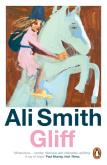
Once upon a time not very far from now, two children come home to find a line of wet red paint encircling the outside of their house.
What does it mean?
It’s a truism of our time that it’ll be the next generation who’ll sort out our increasingly toxic world.
What would that actually be like?
In a state turned hostile, a world of insiders and outsiders, what things of the past can sustain them and what shape can resistance take?
And what’s a horse got to do with any of this?
Gliff is a novel about how we make meaning and how we are made meaningless. With a nod to the traditions of dystopian fiction, a glance at the Kafkaesque, and a new take on the notion of classic, it's a moving and electrifying read, a vital and prescient tale of the versatility and variety deep-rooted in language, in nature and in human nature.
Onizuka Kumako is a fierce woman: tall, beautiful, and not afraid to speak her mind. In Tokyo bars, she seduces customers and commits petty crime, using her connections to the local yakuza to get by. When she meets Shirakawa Fukutaro, a rich widower desperate for companionship and unaware of her shady past, the two hit it off and are soon married. But their newlywed bliss is suddenly cut short: one rainy July evening, their car veers off course, plunges into the harbour and Fukutaro is pulled beneath the waves.
Suspected of murder and labelled a femme fatale, Kumako is hounded by the press, but stays firm, repeatedly proclaiming her own innocence. As pressure from dogged journalists mounts, the tide of public opinion is rising against her. But when a scrupulous defence lawyer takes on her case, doubt begins to creep in . . .
In this intricate, psychological noir, masterfully translated into English for the first time, Seicho Matsumoto draws out the hidden demons that guide our convictions, our biases and our deepest desires.
Just days after Raynor learns that Moth, her husband of 32 years is terminally ill, the couple lose their home and their livelihood. With nothing left and little time, they make the brave and impulsive decision to walk the 630 miles of the sea-swept South West Coast Path, from Somerset to Dorset, via Devon and Cornwall.
They have almost no money for food or shelter and must carry only the essentials for survival on their backs as they live wild in the ancient, weathered landscape of cliffs, sea and sky. Yet through every step, every encounter, and every test along the way, their walk becomes a remarkable journey.
The Salt Path is an unflinchingly honest, inspiring and life-affirming true story of coming to terms with grief and the healing power of the natural world. Ultimately, it is a portrayal of home, and how it can be lost, rebuilt, and rediscovered in the most unexpected ways
On 24 February 2022, the first day of Russia’s full-scale invasion of Ukraine, armoured vehicles approached the Chernobyl nuclear power plant in northern Ukraine. It was the most direct way for them to reach the capital - and an extraordinarily reckless plan after the disaster that had taken place there three decades earlier. Russian occupation of the plant had begun. It would last thirty-five days.
Closely reported and narrated from multiple perspectives, this is the story of the Ukrainians who were held hostage and worked shifts for weeks instead of days to spare the world a new nuclear accident. We meet Valentyn Heiko, the foreman who had also been there for the clean-up of the Chernobyl accident in 1986 and turned sixty during the occupation; plant workers who found a way to celebrate International Women’s Day despite all odds; Russian officers who had no knowledge of nuclear reactors; and four stalkers who were caught in the middle and stood in for the overworked cook.
Gripping and unforgettable, Chernobyl Roulette sounds the alarm about the dangers of nuclear sites in an unprecedented time, when plant workers are left to fight on their own while the world holds its breath. In a book that reads like a thriller, Serhii Plokhy tells a remarkable story about human nature, uncertainty and courage.
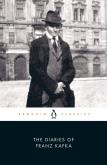
Dating from 1909 to 1923, Franz Kafka’s Diaries contains a broad array of writing, including accounts of daily events, assorted reflections and observations, literary sketches, drafts of letters, records of dreams, and unrevised texts of stories. This volume makes available for the first time in English a comprehensive reconstruction of Kafka’s handwritten diary entries and provides substantial new content, restoring all the material omitted from previous publications — notably, names of people and undisguised details about them, a number of literary writings, and passages of a sexual nature, some of them with homoerotic overtones.
By faithfully reproducing the diaries’ distinctive — and often surprisingly unpolished — writing as it appeared in Kafka’s notebooks, translator Ross Benjamin brings to light not only the author’s use of the diaries for literary invention and unsparing self-examination but also their value as a work of genius in and of themselves.
All of us have in our minds a cartoon image of what an autocratic state looks like, with a bad man at the top. But in the 21st century, that cartoon bears little resemblance to reality. Nowadays, autocracies are run not by one bad guy, but by sophisticated networks composed of kleptocratic financial structures, security services and professional propagandists. The members of these networks are connected not only within a given country, but among many countries. The corrupt, state-controlled companies in one dictatorship do business with corrupt, state-controlled companies in another. The police in one country can arm, equip, and train the police in another. The propagandists share resources—the troll farms that promote one dictator’s propaganda can also be used to promote the propaganda of another—and themes, pounding home the same messages about the weakness of democracy and the evil of America.
Unlike military or political alliances from other times and places, this group doesn’t operate like a bloc, but rather like an agglomeration of companies: Autocracy, Inc. Their relations are not based on values, but are rather transactional, which is why they operate so easily across ideological, geographical, and cultural lines. In truth, they are in full agreement about only one thing: Their dislike of us, the inhabitants of the democratic world, and their desire to see both our political systems and our values undermine.
That shared understanding of the world—where it comes from, why it lasts, how it works, how the democratic world has unwittingly helped to consolidate it, and how we can help bring it down—is the subject of this book.
Music is what makes us alive, mindful and connected to each other. Music is what makes us human. This is the power of music.
Cellist Sheku Kanneh-Mason knows and feels the transformative power of music as much as any musician alive. From winning the prestigious BBC Young Musician Award to performing at Harry and Meghan’s wedding; from Bach’s solo suites to Bob Marley’s reggae; his ferocious passion shines through in every single performance, whether in a packed-out concert hall or on record.
But how was it that someone like him – a person of colour, from a state school in Nottingham – rose to the upper echelons of the classical music world? What were the obstacles that he had to overcome, what did he learn along the way, and how could a young person follow in his footsteps today?
In The Power of Music, Sheku explores the experiences and values that led him here, from a childhood of football practice and family music sessions, to his work today in the world’s finest concert halls and in the less privileged communities that surround them. As his star continues to rise, he shows us the darker side of an industry ruled by exclusivity and stubborn adherence to tradition.
With its power to transform our mental and physical health, to effect social change, and to make a house a home, Sheku shows us that classical music is for everyone, not just an elite few. The Power of Music is a celebration of music of all sorts and those who make it, and a rallying call to change.
People kept asking: Why would you have cats that don’t love you back?
The morning after Courtney Gustafson moved into an old house in the Poets Square neighbourhood of Tucson, Arizona, she noticed tiny pawprints all over her driveway. They were the first evidence of a colony of feral cats who would, in time, become part of her family and help pierce a personal darkness she’d wrestled with for much of her life.
Beebs was the first cat to appear, allowing herself to be petted in the driveway. And then came so many others. There was Monkey, the hissing, dark-blotched calico, and Reverse Monkey, her timid, white-blotched opposite. There were Sad Boy and Lola, the inseparable pair who made their way across the internet and into strangers’ wedding vows. There was the sweet, serene Dr. Big Butt, who brought lessons about grief. And there was Goldie, the tiny king of Poets Square: sick, skinny, but completely unafraid. These cats – and many, many others – would expand her world spectacularly.
Poets Square is a love letter to community in a broken society, told through the cats Courtney meets in dark alleys, neglected homes and her own driveway; cats she cherishes and must sometimes let go. Above all, she explores what her encounters with feral cats can teach us about care, connectedness and the power
of hope.
It is spring in 1963 and George Smiley has left the Circus. With the wreckage of the West's spy war with the Soviets strewn across Europe, he has eyes only on a more peaceful life. And indeed, with his marriage more secure than ever, there is a rumour in Whitehall – unconfirmed and a little scandalous – that George Smiley might almost be happy.
But Control has other plans. A Russian agent has defected in the most unusual of circumstances, and the man he was sent to kill in London is nowhere to be found. Smiley reluctantly agrees to one last simple task: interview Susanna, a Hungarian émigré and employee of the missing man, and sniff out a lead. But in his absence the shadows of Moscow have lengthened. Smiley will soon find himself entangled in a perilous mystery that will define the battles to come, and strike at the heart of his greatest enemy…
Set in the missing decade between two iconic instalments in the George Smiley saga, The Spy Who Came in from the Cold and Tinker Tailor Soldier Spy, Nick Harkaway's Karla's Choice is an extraordinary, thrilling return to the world of spy fiction's greatest writer, John le Carré.
Razor-sharp, pugnacious and blackly funny, Wang Xiaobo’s essays established him as one of China’s most popular – and subversive – writers. From the political power of silence to the irrepressible spirit of a pig he met while working in a commune, these reflections on life and literature in the shadow of the Cultural Revolution provide a rare glimpse of a fearless satirical genius.
There was something coming to her and she was waiting for it, fearfully. What was it? She did not know; it was too subtle and elusive to name
Nuns, maidens, adventurers – with electricity, The Story of an Hour collects stories of female freedom, as Kate Chopin asks the question: what will emancipation feel like for her, looking at the horizon and the future, to the frontier?
Journey into space with Polish scifi master Stanislaw Lem. The whimsical time-loops of Ijon Tichy’s cosmic adventure ‘The Seventh Voyage’ are reminiscent of Douglas Adams, while the spectral whispers haunting Pirx the Pilot as he navigates his spaceship to Mars in ‘Terminus’, echo the author’s masterpiece Solaris. Then ‘The Mask’ introduces a perfect robot assassin and asks, can AI fall in love or refuse its programming? What if the target of its affections is also its prey?
All moonlight is moving, wherever it may be…
Japanese gentlewoman Sei Shonagon invites us to look behind the painted screens in the Emperor’s palace and discover a lost world, in which games of poetry are the highest form of wit, lovers send each other elegant morning-after letters, and appreciation of the natural world – wild geese in autumn, the pure white frost of winter – is one of life’s most exquisite pleasures.
In one of the great English war memoirs, we learn what it is to cross the Pyrenees through freezing snow to fight fascism in Spain; to narrowly escape execution by your own side; to kill a man with a borrowed rifle and feel nothing but shame. Moving and shrapnel-sharp, A Moment of War recalls the defeat of idealism; ‘that flush of youth which never doubts self-survival, that idiot belief in luck’.
Wu Cheng’en’s 16th-century novel Journey to the West is widely regarded as one of the most important Chinese novels ever written. Here, in Julia Lovell’s witty and charismatic translation, we meet one of its heroes: Sun Wukong, or Monkey King, whose powers include shape-shifting, immortality and being incredibly rude. Though he rises to a position of power in the heavenly bureaucracy, Monkey King’s arrogant exploits attract the attention of the Buddha – with very unfortunate consequences.
I am not a man, I am dynamite
Weeks before his final mental breakdown, Nietzsche set out to compose his autobiography, and Ecce Homo is the result. A summary of his life’s work as a philosopher, with chapter headings including ‘Why I Am So Wise’ and ‘Why I Write Such Good Books’, it is part mocking self-judgement and part battle cry, and remains one of the most singular, strange examples of the genre ever written.
Ten produkt jest zapowiedzią. Realizacja Twojego zamówienia ulegnie przez to wydłużeniu do czasu premiery tej pozycji. Czy chcesz dodać ten produkt do koszyka?