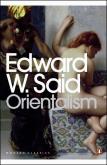
For generations now, Edward W. Said's Orientalism has defined our understanding of colonialism and empire, and this Penguin Modern Classics edition contains a preface written by Said shortly before his death in 2003.
In this highly-acclaimed work, Edward Said surveys the history and nature of Western attitudes towards the East, considering orientalism as a powerful European ideological creation - a way for writers, philosophers and colonial administrators to deal with the 'otherness' of eastern culture, customs and beliefs. He traces this view through the writings of Homer, Nerval and Flaubert, Disraeli and Kipling, whose imaginative depictions have greatly contributed to the West's romantic and exotic picture of the Orient. Drawing on his own experiences as an Arab Palestinian living in the West, Said examines how these ideas can be a reflection of European imperialism and racism.
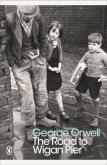
A searing account of George Orwell's observations of working-class life in the bleak industrial heartlands of Yorkshire and Lancashire in the 1930s, The Road to Wigan Pier is a brilliant and bitter polemic that has lost none of its political impact over time. His graphically unforgettable descriptions of social injustice, cramped slum housing, dangerous mining conditions, squalor, hunger and growing unemployment are written with unblinking honesty, fury and great humanity. It crystallized the ideas that would be found in Orwell's later works and novels, and remains a powerful portrait of poverty, injustice and class divisions in Britain.
Published with an introduction by Richard Hoggart in Penguin Modern Classics.
'It is easy to see why the book created and still creates so sharp an impact ... exceptional immediacy, freshness and vigour, opinionated and bold ... Above all, it is a study of poverty and, behind that, of the strength of class-divisions'
Richard Hoggart
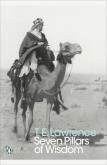
Although 'continually and bitterly ashamed' that the Arabs had risen in revolt against the Turks as a result of fraudulent British promises of self-rule, Lawrence led them in a triumphant campaign which revolutionized the art of war.
Seven Pillars of Wisdom recreates epic events with extraordinary vividness. In the words of E. M. Forster, 'Round this tent-pole of a military chronicle, T. E. has hung an unexampled fabric of portraits, descriptions, philosophies, emotions, adventures, dreams'. However flawed, Lawrence is one of the twentieth century's most fascinating figures. This is the greatest monument to his character and achievements.
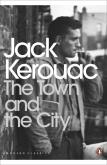
It is the sum of myself, as far as the written word can go' Kerouac on THE TOWN AND THE CITY Kerouac's debut novel is a great coming of age story which can be read as the essential prelude to his later classics. Inspired by grief over his father's death and gripped by determination to write the Great American Novel, he draws largely on his own New England childhood.
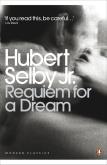
Harry Goldfarb, heroin addict and son of lonely widow Sara, cares only about enjoying the good life with girlfriend Marion and best friend Tyrone C Love, and making the most of all the hash, poppers and dope they can get. Sara Goldfarb sits at home with the TV, dreaming of the life she could have and struggling with her own addictions - food and diet pills. But these four will pay a terrible price for the pleasures they believe they are entitled to. A passionate, heart-breaking tale of the crushing weight of hope and expectation, Requiem for a Dream is a dark modern-day fable of New York.
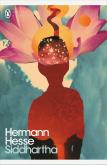
Siddhartha is perhaps the most important and compelling moral allegory our troubled century has produced. Integrating Eastern and Western spiritual traditions with psychoanalysis and philosophy, this strangely simple tale, written with a deep and moving empathy for humanity, has touched the lives of millions since its original publication in 1922. Set in India, Siddhartha is the story of a young Brahmin's search for ultimate reality after meeting with the Buddha. His quest takes him from a life of decadence to asceticism, from the illusory joys of sensual love with a beautiful courtesan, and of wealth and fame, to the painful struggles with his son and the ultimate wisdom of renunciation
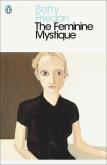
When Betty Friedan produced The Feminine Mystique in 1963, she could not have realized how the discovery and debate of her contemporaries' general malaise would shake up society. Victims of a false belief system, these women were following strict social convention by loyally conforming to the pretty image of the magazines, and found themselves forced to seek meaning in their lives only through a family and a home. Friedan's controversial book about these women - and every woman - would ultimately set Second Wave feminism in motion and begin the battle for equality.
This groundbreaking and life-changing work remains just as powerful, important and true as it was forty-five years ago, and is essential reading both as a historical document and as a study of women living in a man's world.
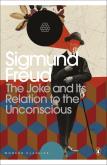
Building on the crucial insight that jokes use many of the same mechanisms he had already discovered in dreams, Freud developed one of the richest and most comprehensive theories of humour that has ever been produced.
Jokes, he argues, provide immense pleasure by allowing us to express many of our deepest sexual, aggressive and cynical thoughts and feelings which would otherwise remain repressed. In elaborating this central thesis, he brings together a dazzling set of puns, anecdotes, snappyone-liners, spoonerisms and beloved stories of Jewish beggars and marriage-brokers. Many remain highly amusing, while others throw a vivid light on the lost world of early twentieth-century Vienna.
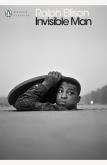
Ralph Ellison's blistering and impassioned first novel tells the extraordinary story of a man invisible 'simply because people refuse to see me'. Published in 1952 when American society was in the cusp of immense change, the powerfully depicted adventures of Ellison's invisible man - from his expulsion from a Southern college to a terrifying Harlem race riot - go far beyond the story of one individual. As John Callahan says, 'In an extraordinary imaginative leap, he hit upon a single word for the different yet shared condition of African Americans, Americans, and, for that matter, the human individual in the twentieth century and beyond.'
This edition includes Ralph Ellison's introduction to the thirtieth anniversary edition of Invisible Man, a fascinating account of the novel's seven-year gestation.
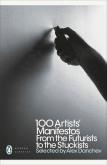
In this remarkable collection of 100 manifestos from the last 100 years, Alex Danchev presents the cacophony of voices of such diverse movements as Futurism, Dadaism, Surrealism, Feminism, Communism, Destructivism, Vorticism, Stridentism, Cannibalism and Stuckism, taking in along the way film, architecture, fashion, and cookery.
Artists' manifestos are nothing if not revolutionary. They are outlandish, outrageous, and frequently offensive. They combine wit, wisdom, and world-shaking demands. This collection gathers together an international array of artists of every stripe, including Kandinsky, Mayakovsky, Rodchenko, Le Corbusier, Picabia, Dalí, Oldenburg, Vertov, Baselitz, Kitaj, Murakami, Gilbert and George, together with their allies and collaborators - such figures as Marinetti, Apollinaire, Breton, Trotsky, Guy Debord and Rem Koolhaas. Edited with an Introduction by Alex Danchev
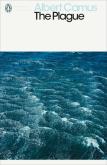
The townspeople of Oran are in the grip of a deadly plague, which condemns its victims to a swift and horrifying death. Fear, isolation and claustrophobia follow as they are forced into quarantine. Each person responds in their own way to the lethal disease: some resign themselves to fate, some seek blame, and a few, like Dr Rieux, resist the terror.
An immediate triumph when it was published in 1947, The Plague is in part an allegory of France's suffering under the Nazi occupation, and a story of bravery and determination against the precariousness of human existence.
An immediate triumph when it was published in 1947, The Plague is in part an allegory of France's suffering under the Nazi occupation, and a story of bravery and determination against the precariousness of human existence.
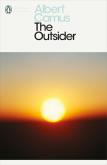
Meursault leads an unremarkable bachelor life in Algiers until he commits a random act of violence. His lack of emotion and failure to show remorse only increase his guilt in the eyes of the law, and challenge the fundamental values of society - a set of rules so binding that any person breaking them is condemned as an outsider. For Meursault, this is an insult to his reason; for Camus it encapsulates the absurdity of life. In The Outsider (1942), his classic existentialist novel, Camus explores the predicament of the individual who is prepared to face the indifference of the universe, courageously and alone.
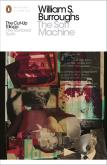
With a dangerous blend of chemistry and magic, secret agent Lee has the ability to change bodies - his own, or with anyone he chooses. Also able to time travel, he finds himself forced to use his skills to defeat a team of priests, who are using mind control to produce their own private slave race. Dead soldiers, African street urchins, evil doctors, corrupt judges and monsters from the mythology of history and science all feature in Lee's terrifying adventure.
A surreal space odyssey, The Soft Machine is the first book in Burrough's innovative 'cut-up' trilogy - followed by Nova Express and The Ticket That Exploded - and a ferocious assault on hype, poverty, war and addiction in all its forms.
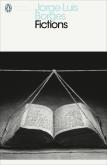
Nobody before Borges had ever attempted this strange and wonderful mixture of arcana, popular literature, national myth, the nature of time and classical themes. Now we can see it in all its intense and disturbing brilliance, certain that we will never see anything like it again' - Justin Cartwright, Independent on Sunday
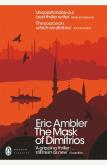
English crime novelist Charles Latimer is travelling in Istanbul when he makes the acquaintance of Turkish police inspector Colonel Haki. It is from him that he first hears of the mysterious Dimitrios - an infamous master criminal, long wanted by the law, whose body has just been fished out of the Bosphorus. Fascinated by the story, Latimer decides to retrace Dimitrios' steps across Europe to gather material for a new book. But, as he gradually discovers more about his subject's shadowy history, fascination tips over into obsession. And, in entering Dimitrios' criminal underworld, Latimer realizes that his own life may be on the line.
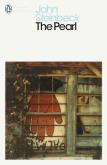
THE PEARL is Steinbeck's flawless parable about wealth and the evil it can bring. When Kino, an Indian pearl-diver, finds 'the Pearl of the world' he believes that his life will be magically transformed. He will marry Juana in church and their little boy, Coyotito, will be able to attend school. Obsessed by his dreams, Kino is blind to the greed, fear and even violence the pearl arouses in him and his neighbours. Written with haunting simplicty and lyrical simplicity, THE PEARL sets the values of the civilized world against those of the primitive and finds them tragically inadequate.
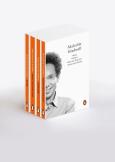
Malcom Gladwell's bestselling books have engaged, entertained and inspired millions of readers, transforming the way they see the world and covering a wide range of modern day issues, from success to relationships and the complexities of our minds. This newly designed box set gathers four of his best selling books, offering readers a captivating selection of his innovative and outstanding thinking.
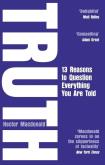
True or false? It’s rarely that simple.
There is always more than one truth in every story. Eating meat is nutritious but it’s also damaging to the environment. The Internet disseminates knowledge but it also spreads hatred. As communicators, we select the truths that are most useful to our agenda.
We can select truths constructively to inspire nations, encourage children, and drive progressive change. Or we can select truths that give a false impression of reality, misleading people without actually lying. Others can do the same, motivating or deceiving us with the truth.
In Truth, communications strategy expert Hector Macdonald explores how truth is used and abused in politics, business, the media and everyday life. Combining great storytelling with practical takeaways and a litany of fascinating, funny and insightful case studies, Truth is a chilling and engaging read about how profoundly our mindsets and actions are influenced by the truths that those around us choose to tell.
For fans of Factfulness, A Field Guide to Lies and Statistics and The Art of Thinking Clearly, a fascinating dive into the many ways in which ‘competing truths’ shape our opinions, behaviours and beliefs.
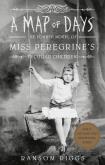
Things have started to get quite . . . peculiar . . .
Having defeated the monstrous threat that nearly destroyed the peculiar world, Jacob Portman is back in Florida, where his story began.
Joined by Miss Peregrine, Emma and their peculiar friends, life has become carefree. They spend days at the beach, and take part in 'normalling' lessons.
But it's not meant to last.
The discovery of Jacob's grandfather's subterranean bunker leads to clues about his double-life as a peculiar operative.
Jacob begins to learn more about the dangerous legacy he's inherited, and the truths that were part of him long before he walked into Miss Peregrine's time loop.
Now, the stakes are higher than ever as Jacob and his friends are thrust into the untamed landscape of American peculiardom - a world that none of them understand.
New wonders, and dangers, await in this darkly brilliant next chapter for Miss Peregrine's Peculiar Children, illustrated with haunting vintage photographs- in full colour.
Praise for the Miss Peregrine's Peculiar Children series:
'The popularity of the Miss Peregrine's book series cannot be overstated' Entertainment Weekly
'Creepy in the best way possible' The Guardian
'Readers searching for the next Harry Potter may want to visit Miss Peregrine's Home for Peculiar Children' CNN
'A thrilling, Tim Burton-esque tale with haunting photographs' USA Today
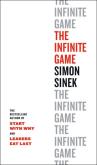
From the New York Times bestselling author of Start With Why and Leaders Eat Last, a bold framework for leadership in today’s ever-changing world.
How do we win a game that has no end? Finite games, like football or chess, have known players, fixed rules and a clear endpoint. The winners and losers are easily identified. Infinite games, games with no finish line, like business or politics, or life itself, have players who come and go. The rules of an infinite game are changeable while infinite games have no defined endpoint. There are no winners or losers—only ahead and behind.
The question is, how do we play to succeed in the game we’re in?
In this revelatory new book, Simon Sinek offers a framework for leading with an infinite mindset. On one hand, none of us can resist the fleeting thrills of a promotion earned or a tournament won, yet these rewards fade quickly. In pursuit of a Just Cause, we will commit to a vision of a future world so appealing that we will build it week after week, month after month, year after year. Although we do not know the exact form this world will take, working toward it gives our work and our life meaning.
Leaders who embrace an infinite mindset build stronger, more innovative, more inspiring organizations. Ultimately, they are the ones who lead us into the future.
Ten produkt jest zapowiedzią. Realizacja Twojego zamówienia ulegnie przez to wydłużeniu do czasu premiery tej pozycji. Czy chcesz dodać ten produkt do koszyka?