A poignant meditation on the nature of desire, and the enduring power of love, Gabriel García Márquez's Love in the Time of Cholera is translated from the Spanish by Edith Grossman in Penguin Modern Classics.
Florentino Ariza is a hopeless romantic who falls passionately for the beautiful Fermina Daza, but finds his love tragically rejected. Instead Fermina marriesdistinguished doctor Juvenal Urbino, while Florentino can only wait silently for her. He can never forget his first and only true love. Then, fifty-one years, nine months and four days later, Fermina's husband dies unexpectedly. At last Florentino has another chance to declare his feelings and discover if a passion that has endured for half a century will remain unrequited, in a rich, fantastical and humane celebration of love in all its many forms.
Gabriel García Márquez (b. 1928) was born in Aracataca, Colombia. He is the author of several novels, including Leaf Storm (1955), One Hundred Years of Solitude (1967), The Autumn of the Patriarch (1975) Chronicle of a Death Foretold (1981) and The General in His Labyrinth (1989). He was awarded the Nobel Prize for Literature in 1982.
This semi-autobiographical tale of Kerouac's trip to France, to trace his ancestors and explore his own understanding of the Buddhism that came to define his beliefs, contains some of Kerouac's most lyrical descriptions. From his reports of the strangers he meets and the all-night conversations he enjoys in seedy bars in Paris and Brittany, to the moment in a cab when he experiences Buddhism's satori - a feeling of sudden awakening - Kerouac's affecting and revolutionary writing transports the reader.
Published at the height of his fame, Satori in Paris is a hectic tale of philosophy, identity and the powerful strangeness of travel.
Moodily atmospheric, full of verve and energy, Maggie Cassidy is Kerouac's poignant tale of teenage romance in New England. The story of Jack and Maggie, in love with the idea of being in love, looking ahead to marriage with hope and trepidation, is told with touching simplicity. It skillfully captures both the intensity and the ordinariness of adolescent life, with its torments and complications and is a beautiful evocation of growing up in America.
Jack Kerouac called Doctor Sax, the enigmatic figure who haunted his boyhood imagination, 'my ghost, personal angel, private shadow, secret lover'. In this extraordinary autobiographical account of growing up in Lowell, Massachussetts, told through his fictional alter ego Jack Duluoz, he mingles real people and events with fantastical figures to capture the accents, scents, sights and texture of his childhood: playing among the river weeds and railroad tracks, going to church, witnessing life and death on the street corners. Written when he was staying with William Burroughs in Mexico in 1952, Doctor Sax was Kerouac's favourite of all his books: a dark, vivid and magical evocation of a boy's vibrant inner life.
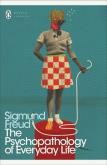
This collection of writings is famous for giving us the phrase 'Freudian slip'. It also builds up a strong social history of Vienna and the middle-class social milieu of Freud and his patients. Through a series of case histories, some no longer than a few lines long, Freud explores how it is that normal people make slips of speech, writing, reading and remembering in their everyday life, and reveals what it is that they betray about the existence of a sub-text or subliminal motive to our conscious actions. As he explains, most of these slips tend of be of a relatively anodyne nature, but some are a little more sinister, particularly those where pride or thwarted love are concerned...
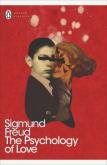
This volume brings together Freud's main contributions to the psychology of love. His illuminating discussions of the ways in which sexuality is always psychosexuality - that there is no sexuality without fantasy, conscious or unconscious - have changed the ways we think about erotic life. In these papers Freud develops his now famous theories about the sexuality of childhood and the transgressive nature of human desire.
In the famous case study of the eighteen-year-old 'Dora', we see Freud at work, both putting into practice and testing his sexual theories that were to change the modern world.
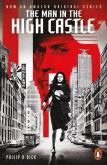
An official tie-in edition of Philip K. Dick's dazzling speculative novel to accompany the new TV series, executive produced by Ridley Scott.
Philip K. Dick's acclaimed cult novel gives us a horrifying glimpse of an alternative world - one where the Allies have lost the Second World War. In this nightmare dystopia the Nazis have taken over New York, the Japanese control California and the African continent is virtually wiped out. In a neutral buffer zone in America that divides the world's new rival superpowers, lives the author of an underground bestseller. His book offers a new vision of reality - an alternative theory of world history in which the Axis powers were defeated - giving hope to the disenchanted. Does 'reality' lie with him, or is his world just one among many others?
'The most brilliant science fiction mind on any planet'
Rolling Stone
'Dick's finest book, and one of the very best science fiction novels ever published'
Eric Brown
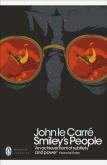
The concluding part of John le Carre's celebrated Karla Trilogy, Smiley's People sees the last confrontation between the indefatigable spymaster George Smiley and his great enemy, as their rivalry comes to a shattering end. A Soviet defector has been assassinated on English soil, and George Smiley is called back to the Circus to clear up - and cover up - the mess. But what he discovers sends him delving into the past, on a trail through Hamburg and Paris to Cold War Berlin - and a final showdown with his elusive nemesis, Karla.
'An enormously skilled and satisfying work' Newsweek'We are all Smiley's people, a kind of secular god of intelligence' - New Yorker
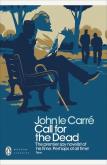
After a routine security check by George Smiley, civil servant Samuel Fennan apparently kills himself. When Smiley finds Circus head Maston is trying to blame him for the man's death, he begins his own investigation, meeting with Fennan's widow to find out what could have led him to such desperation. But on the very day that Smiley is ordered off the enquiry he receives an urgent letter from the dead man. Do the East Germans - and their agents - know more about this man's death than the Circus previously imagined?
Le Carré's debut novel, Call for the Dead, introduced the tenacious and retiring George Smiley in a gripping tale of espionage and deceit.
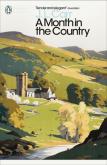
A sensitive portrayal of the healing process that took place in the aftermath of the First World War, J.L. Carr's A Month in the Country includes an introduction by Penelope Fitzgerald, author of Offshore, in Penguin Modern Classics.
A damaged survivor of the First World War, Tom Birkin finds refuge in the quiet village church of Oxgodby where he is to spend the summer uncovering a huge medieval wall-painting. Immersed in the peace and beauty of the countryside and the unchanging rhythms of village life he experiences a sense of renewal and belief in the future. Now an old man, Birkin looks back on the idyllic summer of 1920, remembering a vanished place of blissful calm, untouched by change, a precious moment he has carried with him through the disappointments of the years. Adapted into a 1987 film starring Colin Firth, Natasha Richardson and Kenneth Branagh, A Month in the Country traces the slow revival of the primeval rhythms of life so cruelly disorientated by the Great War
Joseph Lloyd Carr (1912-1994) attended the village school at Carlton Miniott in the North Riding and Castleford Secondary School. A head teacher, publisher and novelist, his books include A Day in Summer (1964); The Harpole Report (1972); A Month in the Country (1980), which won the Guardian Fiction prize and was shortlisted for the Booker Prize; The Battle of Pollock's Crossing (1985), which was also shortlisted for the Booker Prize; What Hetty Did (1988) and Harpole and Foxberrow, General Publishers (1992).
If you enjoyed A Month in the Country, you might like Ford Madox Ford's Parade's End, also available in Penguin Modern Classics.
'Unlike anything else in modern English literature'
D.J. Taylor, Spectator
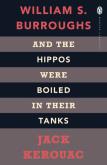
In 1944, Jack Kerouac and William S. Burroughs were charged as accessories to murder. One of their friends, Lucien Carr, had stabbed another, David Kammerrer. Carr had come to each of them and confessed; Kerouac helped him get rid of the weapon - neither told the police. For this failing they were arrested. Months later, the two writers - unpublished at the time - collaborated on And the Hippos Were Boiled in Their Tanks, a fictionalized account of the summer of the killing.
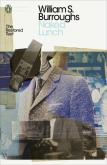
A cultural landmark and the most shocking novel in the English language, Naked Lunch is an exhilarating ride into the darkest recesses of the human psyche. An unnerving tale of an addict unmoored in New York, Tangier, and ultimately a nightmarish wasteland known as Interzone, Naked Lunch's formal innovation, formerly taboo subject matter, and tour de force execution has exerted its influence authors like Thomas Pynchon and J. G. Ballard; on the relationship of art and obscenity; and on the shape of music, film, and media in general.
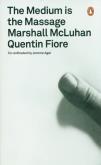
In a dazzling fusion of Quentin Fiore's bold and inventive graphic design and Marshall McLuhan's unique insight into technology, advertising and mass-media, The Medium is the Massage is a unique study of human communication in the twentieth century, published in Penguin Modern Classics
Marshall McLuhan is the man who predicted the all-pervasive rise of modern mass media. Blending text, image and photography, his 1960 classic The Medium is the Massage illustrates how the growth of technology utterly reshapes society, personal lives and sensory perceptions, so that we are effectively transformed by the means we use to communicate. His theories, many of which are illustrated in this astonishing 'inventory of effects', force us to question how modes of communication have shaped society. This concept, and his ideas such as rolling, up-to-the-minute news broadcasts and the media 'Global Village' have proved decades ahead of their time.
How do we see the world around us? The 'Penguin on Design' series includes the works of creative thinkers whose writings on art, design and the media have changed our vision forever.
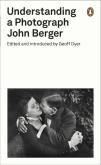
ohn Berger's writings on photography are some of the most original of the twentieth century. This selection contains many groundbreaking essays and previously uncollected pieces written for exhibitions and catalogues in which Berger probes the work of photographers such as Henri Cartier-Bresson and W. Eugene Smith - and the lives of those photographed - with fierce engagement, intensity and tenderness.
The selection is made and introduced by Geoff Dyer, author of the award-winning The Ongoing Moment.
How do we see the world around us? This is one of a number of pivotal works by creative thinkers whose writings on art, design and the media have changed our vision for ever.
'A wonderful bitter-sweet book, written with disarming simplicity' Esther Freud
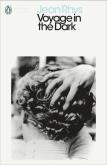
'It was as if a curtain had fallen, hiding everything I had ever known,' says Anna Morgan, eighteen years old and catapulted to England from the West Indies after the death of her beloved father. Working as a chorus girl, Anna drifts into the demi-monde of Edwardian London. But there, dismayed by the unfamiliar cold and greyness, she is absolutely alone and unconsciously floating from innocence to harsh experience. Her childish dreams have been replaced by harsh reality. Voyage in the Dark was first published in 1934, but it could have been written today. It is the story of an unhappy love affair, a portrait of a hypocritical society, and an exploration of exile and breakdown; all written in Jean Rhys's hauntingly simple and beautiful style.
'A brilliantly and preposterously funny book' Guardian
'A flawless comic novel ... I loved it then, as I do now. It has always made me laugh out loud' Helen Dunmore, The Times
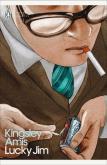
Jim Dixon has accidentally fallen into a job at one of Britain's new red brick universities. A moderately successful future in the History Department beckons - as long as Jim can stave off the unwelcome advances of fellow lecturer Margaret, survive a madrigal-singing weekend at Professor Welch's, deliver a lecture on 'Merrie England' and resist Christine, the hopelessly desirable girlfriend of Welch's awful son Bertrand. Inspired by Amis's friend, the poet Philip Larkin, Jim Dixon is a timeless comic character, adrift in a hopelessly gauche and pretentious world, in a witty campus novel that skewers the hypocrisies and vanities of 1950s academic life.
With an introduction by David Lodge
Josef Vadassy, a Hungarian refugee and language teacher living in France, is enjoying his first break for years in a small hotel on the Riviera. But when he takes his holiday photographs to be developed at a local chemists, he suddenly finds himself mistaken for a Gestapo agent and a charge of espionage is levelled at him. To prove himself innocent to the French police, he must discover which one of his fellow guests at his pension is the real spy. As he desperately tries to uncover the true culprit's identity, Vadassy must risk his job, his safety and everything he holds dear.
'When a day that you happen to know is Wednesday starts off by sounding like Sunday, there is something seriously wrong somewhere.'
When a freak cosmic event renders most of the Earth's population blind, Bill Masen - one of the lucky few to keep his sight - finds himself trapped in a London jammed with sightless mobs who prey on those who can still see. But another menace stalks blind and sighted alike. With nobody to stop them the Triffids - walking carnivorous plants with lethal stingers - rise up as humanity stumbles and falls . . .
Antoine de Saint-Exupéry, an intrepid and eccentric adventurer, transferred his passion for flying to the written word by writing several classics of aviation literature, including Southern Mail and Night Flight. Based on Saint-Exupéry's trail-blazing flights for the French airmail service over the Sahara and later, the Andes, these two novels evoke the tragic courage and nobility of the airborne pioneers who took enormous risks, flying in open cock-pits in planes that were often fragile and unstable.
The French Writer and aviator Antoine de Saint-Exupéry (1900-1944), was born in Lyon. His first two books, SOUTHERN MAIL and NIGHT FLIGHT, are distinguished by a poetic evocation of the romance and discipline of flying. Later works, including WIND, SAND AND STARS and FLIGHT TO ARRAS, stress his humanistic philosophy. Saint-Exupéry's popular children's book THE LITTLE PRINCE is also read by adults for its allegorical meaning. Saint-Exupéry's plane disappeared during a mission in World War II.
Ten produkt jest zapowiedzią. Realizacja Twojego zamówienia ulegnie przez to wydłużeniu do czasu premiery tej pozycji. Czy chcesz dodać ten produkt do koszyka?