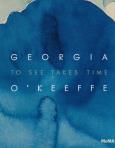
In 1916, Georgia O’Keeffe wrote to Alfred Stieglitz that she had “made [a] drawing several times - never remembering that I had made it before - and not knowing where the idea came from.” These drawings, and the majority of O’Keeffe’s works in charcoal, watercolor, pastel, and graphite, belong to series, in which she develops and transforms motifs that lie between observation and abstraction. In the formative years of 1915 to 1918, she made as many works on paper as she would in the next forty years, producing sequences in watercolor of abstract lines, organic landscapes, and nudes, along with charcoal drawings she would group according to the designation “specials.” While her practice turned increasingly toward canvas in subsequent decades, important series on paper reappeared - including charcoal flowers of the 1930s, portraits of the 1940s, and aerial views of the 1950s. Published in conjunction with an exhibition at The Museum of Modern Art, New York, this richly illustrated volume highlights the drawings of an artist better known as a painter, and reunites individual sheets with their contextual series in order to illuminate O’Keeffe’s persistently sequential practice.
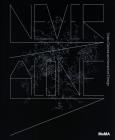
Our lives are increasingly lived on screens, and every one of our electronic interactions is mediated by a designed interface, which can be buggy and incomprehensible or inviting and accessible. Like other ubiquitous everyday tools, these interfaces are seldom recognized as objects of design—and even less as objects of interaction design. In video games, however, in which “play” is an essential feature, users are acutely aware of their relationship with the interface, making video games compelling examples of interaction design.Published in conjunction with an exhibition at The Museum of Modern Art, Never Alone: Video Games as Interactive Design explores the impact of interactive design by examining 35 video games created between 1972 and 2018—from Space Invaders (1978) and Pac-Man (1980) to The Sims (2000) and Minecraft (2011). An overarching essay by the curator Paola Antonelli presents the pioneering criteria by which MoMA has chosen these video games for its collection, as well as the protocols for their acquisition, display, and conservation. The richly illustrated plate section is divided into three sections that analyze input devices (keyboards, joysticks, buttons), game designers, and players, and each game is accompanied by a short text illuminating its significance in the history of the medium.
Set in the stark landscape of coastal Maine, Christina’s World depicts a young woman seen from behind, wearing a pink dress and lying in a grassy field. Although she appears to be in a position of repose, her torso, propped on her arms, is strangely alert; her silhouette is tense, almost frozen, giving the impression that she is fixed to the ground. She stares at a distant farmhouse and a group of outbuildings, ancient and grayed in harmony with the dry grass and overcast sky.
Wyeth’s neighbor Anna Christina Olson inspired the composition, which is one of four paintings by Wyeth in which she appears. As a young girl, Olson developed a degenerative muscle condition—possibly polio—that left her unable to walk. She refused to use a wheelchair, preferring to crawl, as depicted here, using her arms to drag her lower body along. “The challenge to me,” Wyeth explained, “was to do justice to her extraordinary conquest of a life which most people would consider hopeless.”
The high level of detail Wyeth gave to every object in his paintings encourages intense inspection, but his titles reveal the inner significance of their outwardly straightforward subjects. The title Christina’s World, courtesy of Wyeth’s wife, indicates that the painting is more a psychological landscape than a portrait, a portrayal of a state of mind rather than a place.
Ten produkt jest zapowiedzią. Realizacja Twojego zamówienia ulegnie przez to wydłużeniu do czasu premiery tej pozycji. Czy chcesz dodać ten produkt do koszyka?