W tej strefie zapraszamy czytelników tak zwane artystyczne dusze po książki z kategorii Sztuka. Polecamy szereg publikacji o sztuce i jej historii,ciekawostki i portfolia artystów, eseje, albumy, książki o malarstwie, rzeźbiarstwie, architekturze oraz histoii fotografii. Biografie ciekawych artystów, książki i powieści przedstawiające fascynujące losy malarzy i osób uwiecznianych na obrazach. W tym dziale tylko ksiązki ze sztuka w tle.
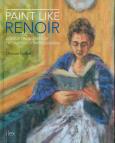
Oil paint has tremendous versatility, from the dilute and transparent glaze or wash, through to the thick impasto mark. Renoir employed the whole range of paint qualities and this is one of the most valuable reasons for studying his work. Every artist, beginner or expert, is inspired by the work of the great artists that have gone before, and one of the most enjoyable ways to learn painting is to study their work in detail. The Paint Like series unlocks the secrets of some of the most inspirational painters of all time, revealing their techniques and giving today's artists the confidence and skills they need to take their work to the next level. This is the second book in the series.
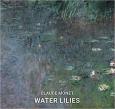
The cycles of Water Lilies are a highlight in Claude Monet's work. Found in collections around the world, they became some of his most beloved pieces. Never before had Monet brought in the interplay of color and light, the atmospheric water and air, and the beauty of nature and impressions together with such harmony.
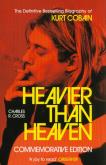
Alongside the death of Elvis Presley and the assassination of John Lennon, Kurt Cobain’s suicide in 1994 ranks as one of the generational milestones of American life – an epochal event in both rock ‘n’ roll and youth culture.
This book is the story of Kurt Cobain’s life, from abject poverty to unbelievable wealth, power and fame. It traces the journey from his humble origins in Aberdeen to becoming lead singer of Nirvana, the most popular rock band in the world from 1991 to 1994, and the most influential band of this decade. The beautifully written text is complimented by 16 pages of photographs.
Based on over one hundred interviews, Charles Cross allows us to understand Kurt Cobain’s personality. This is an incredible tale of a strange, tortured and very talented man.
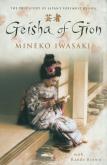
No woman in the three-hundred-year history of the karyukai has ever come forward in public to tell her story—until now.
"Many say I was the best geisha of my generation," writes Mineko Iwasaki. "And yet, it was a life that I found too constricting to continue. And one that I ultimately had to leave." Trained to become a geisha from the age of five, Iwasaki would live among the other "women of art" in Kyoto's Gion Kobu district and practice the ancient customs of Japanese entertainment. She was loved by kings, princes, military heroes, and wealthy statesmen alike. But even though she became one of the most prized geishas in Japan's history, Iwasaki wanted more: her own life. And by the time she retired at age twenty-nine, Iwasaki was finally on her way toward a new beginning.
Geisha, a Life is her story -- at times heartbreaking, always awe-inspiring, and totally true.
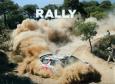
Since the Rally Championship started in 1973, Reinhard Klein and his colleagues have photographed every rally, the most visually varied and stunning events of motor sport. This book is the result. McKlein's pictures tell the stories of 40 years of grueling rallies across mud, grit and snow, of splendidly mistreated, hedge-hopping cars, and their flabbergastingly intrepid drivers.
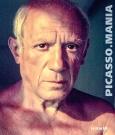
Picasso’s work appears never to have ceased to haunt the imagination of his peers. The great stylistic periods and certain emblematic works by Picasso like "Les Demoiselles d’Avignon" or "Guernica" will be answered by contemporary artworks. The publication will showcase the rich confrontation with Picasso’s work undertaken by contemporary artists since the 1960s.
Pablo Picasso’s vibrant presence struck a chord in the 1960s with the return to Picassien archetypal figures by Pop Art and Narrative Figuration by Warhol, Lichtenstein, Equipo Cronica, Erró. Martin Kippenberger’s self-portraits reveal the impact of Picasso’s public image on the imagination of 20th century artists. David Hockney’s Polaroid composites and multi-screen videos echo Picasso’s Cubism and his exploration of a polyfocal space. Picasso’s stylistic eclecticism, his “cannibalism” of the old masters, the free craftsmanship of the later paintings inspired a new generation of artists like Georg Baselitz, Jean-Michel Basquiat, or Julian Schnabel. Rineke Dijkstra’s video installation "I See a Woman Crying (Weeping Woman)", (2009-2010) will demonstrate the presence of Picasso’s work in contemporary imagination, in its most diverse means of expression (cinema, digital images, from videos to comic strips).
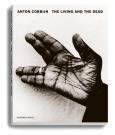
Anton Corbijn’s most recent publication goes back to his roots featuring his autobiographic series a. somebody; an early series of tombs, Cemetery; and eighty iconic portraits of musicians and bands from his career of 40 years.
Schirmer/Mosel. Catalogue Bucerius Kunst Forum, Hamburg. Ed by Anton Corbijn and Franz Wilhelm Kaiser. With texts by Franz Wilhelm Kaiser, Marie-Noël Rio and Daria Dittmeyer-Hössl. 220 pages, 119 colour and duotone plates. Size: 22.5 x 28 cm, softcover. English/German edition.
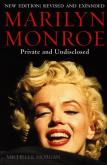
Meticulously researched and full of new insights into the private life of a very public superstar, Michelle Morgan tells the story of a movie actress whose fame never fades. In public, Marilyn Monroe was feted and loved, but in her private life there were controversies, conspiracies and unsolved puzzles.
Including rare and previously unseen images from the star's life, this book reveals a different side of Marilyn from the celluloid invention and is based on the author's extensive interviews with the main players in Monroe's life - family and friends, as well as work colleagues and more casual acquaintances.
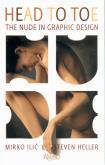
A beautifully designed flexibound edition that comes in a slipcase, this is a first of it’s kind celebration featuring more than 600 examples of the human body as represented in graphic design, this innovative book will appeal to art directors, graphic designers, and design fans.
This groundbreaking volume investigates and illuminates a new generation of artists and the ways that they relate to one of art history’s most storied traditions: nude figure drawing and painting. This informative (and occasionally very cheeky) book demonstrates the ways in which new mediums and new technologies are pushing graphic designers to previously untold heights of artistic representation, thereby cementing the graphic designer’s place alongside more traditional mediums (drawing, painting) in art history and criticism.
From PETA’s infamous “I’d Rather Go Nude” ad campaign, to John Lennon and Yoko Ono posing nude on the cover of Rolling Stone magazine, Head to Toe features myriad examples of the nude figure and how it is altered and manipulated in the service of both art and commerce.
Celebrating the ultimate masterpieces of modernist design, from the Arts and Crafts movement up to the twenty-first century, Total Design offers an intimate tour of houses conceived as complete works of art. Each of the spectacular houses making up Total Design demonstrates how an architect realized a unifying vision through all aspects of design - architecture, furniture, fittings, decorative objects, color, and gardens. Presenting masterpieces of modern architecture conceived as complete works of art inside and out, author George H. Marcus, a veteran chronicler of modernist design, delivers a highly accessible tour of the creations of some of the twentieth century’s greatest architects and designers, including Frank Lloyd Wright, Mies van der Rohe, Alvar Aalto, Eero Saarinen, Charles Rennie Mackintosh, and Gio Ponti. Together these masterworks of design offer a stunning survey of the many modes of modernist design, from the inventive refinement of Pierre Chareau to the colorful Nordic forms of Finn Juhl to the twenty-first-century expressionism of Daniel Libeskind.
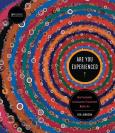
Looking at art through the lens of psychedelic experience and culture, New York Times critic Ken Johnson reveals an unexpected and illuminating dimension of art since the 1960s.
Art changed in a big way in the 1960s; it was no longer something just to look at and appreciate for its aesthetic qualities. The traditional ideal of connoisseurship was out; art as consciousnessaltering experience was in. Boundaries between conventional media such as paintings and sculpture stretched and dissolved. Hierarchical distinctions between high and low culture became irrelevant. Weird new forms proliferated. Would art have developed as it did in the past fifty years, would it be the way it is now, if psychedelics and psychedelic culture had not been so popular?
To answer that question, Ken Johnson, the veteran art critic of The New York Times, has examined a broad array of art of the past half century, from Robert Smithson’s Spiral Jetty to Pipilotti Rist’s recent swooningly trippy video installation at the Museum of Modern Art and Richard Serra’s warped, spiraling mazes ofinches-thick Corten steel, looking not just for obvious signs of psychedelic style but for an underlying psychedelic ethos animating the art. Extensively illustrated in color, Johnson’s pioneering study may change the way we see contemporary art.
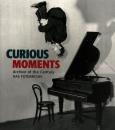
Curious moments provides a public stage for private individuals from the first half of the 20th century. The press photographer tracks down the ideas and inventions, desires and fantasies, visions and illusions of an earlier generation. Here, the reader will certainly find old friends or distant relatives.
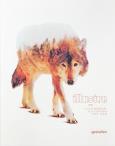
As the demand for work in illustration continues to grow, this medium is becoming a key component in the fields of advertising, communication, and reporting. Illusive, the definitive reference of contemporary illustration, showcases the work of both established names and new talents from around the world.
The book demonstrates the dynamism of this creative technique, documents global trends, and features an impressive variety of illustration styles and design approaches spanning from luscious fashion sketches to unapologetic protest images. Its scope makes Illusive a rich source of ideas for illustrators, painters, and all visual artists, as well as for graphic and editorial designers.
Whether as a complement to written content or a stand-alone attention getter, illustration is being used more and more often to set prominent accents. Illustrations have become a key component of advertising, communication, reporting, and other media. Because visual storytelling gets messages across more effectively in our age of information overload, illustration is gaining in importance. It’s no wonder that the current spectrum of creative expression represented by this technique is so vast. Illusive is the definitive reference of contemporary illustration and these developments.
Showcasing the work of more than 100 active illustrators —both established names and new talents —from around the world, the book demonstrates the dynamism of this creative technique and documents global trends.
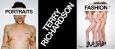
This first full-career monograph, featuring two decades of iconic fashion and celebrity editorial photographs, reveals the enormous influence and impact that Richardson has made on contemporary style, culture, and photography. Since Terry Richardson first rose to prominence in the 1990s, he has shocked and intrigued the world with his singular view and signature style of bold lighting, hypersexualized styling, and striking, off-kilter glamour. From glossy, high-end fashion photographs to raw in-studio portraits, Richardson’s work has had an unmistakable impact on contemporary visual culture.
This much-anticipated monograph is the first to cover Richardson’s complete career to date. It chronicles more than twenty years of photographs, advertising campaigns, and editorial work, revealing the evolution of Richardson’s style, an unexpected mix of glamour and rawness. This two-volume set, which is separated into Richardson’s fashion photography and celebrity portraiture, features more than 600 photographs and includes early, rarely seen magazine work from now-defunct publications; iconic and influential work for magazines such as Vogue, Harper’s Bazaar, The Face, i-D, Vice, and Interview; advertising work for brands such as Gucci, Yves Saint Laurent, Chloé, and A.P.C.; and very intimate studio portraits. This compilation is an intriguing look at the mark Richardson’s work has made on fashion, photography, and pop culture, and it captures his edgy, provocative style in a book that is as unusual and unforgettable as the photographer himself.
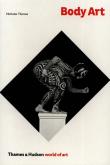
Body art is the most intimate art form, linking the self, the senses, and the social and political. Today, in almost any major city worldwide, you will encounter tattoos, piercings, henna painting and elaborate hairstyles. In recent years, body art has proliferated in an unprecedented way, borrowing motifs and practices from many different traditions. What is it that new and borrowed body arts do, and what do they tell us about the global culture that we now inhabit?
Anthropologist and art historian Nicholas Thomas explores these questions and many more in this wide-ranging survey of body arts from prehistoric origins to the present.
He illuminates their role in expressing personal and cultural identity; their longstanding associations with ritual, theatricality, criminality and beauty; and their recent resurgence via the Modern Primitive movement and the work of contemporary artists such as Marc Quinn and Rebecca Belmore.
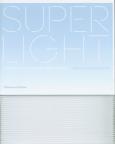
One of the most influential design philosophies of the past 25 years has been Glenn Murcutt’s dictum that buildings should ‘touch the earth lightly’. While architects have always sought to liberate architecture from its solid foundations through the use of new materials and spatial reconfigurations, climate change, new materials and restricted land use have given new impetus to finding lightweight solutions for our homes.
‘Superlight’ houses combine two strands of thinking: that lightweight buildings have less impact on their environments, and that this lightness (visually, materially, ecologically) can lead to more open living and greater communion with their surroundings.
Each of the 41 featured houses is shown through photographs, plans and lucid explanations. Residences that appear to float, ingenious constructions using local materials, innovative structures, inflatable spaces, high-tech hyper-intelligent houses: superlight takes many forms, in many places, from the urban jungle of Tokyo to rural China and mountainous Chile.
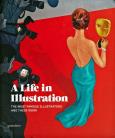
Illustration is no longer just illustration. Today, illustrators write and create children's picture books and graphic novels; they structure information through infographics; they design logos, fonts, and other typographical applications; they contribute to the editorial design of newspapers and magazines; they apply their talents to advertising and fashion; and they develop and produce their own products on the basis of their creations. Despite the fact that all of these activities are based on illustration, each of them has its own rules and its own specialists, tasks, and job descriptions to go along with them.
Against this background, A Life in Illustration gives an insider‘s look at the diverse facets of this creative medium through extensive portraits of today‘s leading illustrators. Perceptive texts and images describe the work and day-to-day activities of outstanding talents including Christoph Niemann, Andrea Ventura, Jan Van Der Veken, Peter Grundy, Jessica Hische, and the New York Times’s Jonathan Corum.
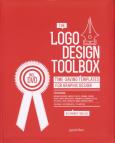
The Logo Design Toolbox includes over 900 templates for contemporary graphic and logo design that provide designers with practical groundwork for implementing their own ideas. This book not only depicts the most used, recurring elements, symbols, and motifs in all of their conceivable permutations, but makes them available as scalable and customizable vector files on a free included DVD.
Thanks to The Logo Design Toolbox, no one has to reinvent the wheel-or almost anything else for that matter. The book provides a variety of designs for items from wheels, sashes, laurel wreaths, and crowns to anchors, beards, and pirate skulls along with multiple renditions of letters, triangles, stars, ornaments, and speech bubbles. These can be used by amateurs and professionals alike as a time-saving basis for creating their own cards, flyers, posters, websites, presentations, logos, or T-shirts.
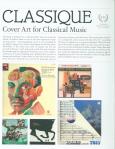
Classique introduces 777 of the most inspiring classical LP covers from its heyday,documenting groundbreaking art work and cover culture that is typical of itsepoch. In the same way that an attractive cover lures you into buying a record,Classique entices readers taking them on a journey through the magnificentevolution of record cover art. Ranging from romantic motifs, naturalism, abstractart, psychedelic and surreal experimentation to supernatural artwork and pureunadulterated kitsch, the diverse examples of classical cover design assembledin the book are immense.
Compiled by avid record collector Hort Scherg, the cover art featured in this bookis taken from his substantial collection and presented in fifteen chapters. Eachchapter is dedicated to the stylistic approaches significant to each decade fromthe 1950s to the 1980s, the variety and characteristic trends for countries suchas the US, England and Russia, the different musical genre
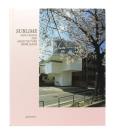
Sublime is a comprehensive collection of current Japanese architecture, interiors, and products that showcases and explores the country’s uniquely elegant design aesthetic. After the visual excesses of the early new millennium, there is now a distinct demand for clear and rational, yet forward-thinking, design—a style in which the Japanese have specialized for hundreds of years. Today, architects and other creatives from Japan are masters at designing striking, virtually transcendent work that seamlessly melds aesthetics, functionality, and quality. With its opulent visuals and insightful texts by Andrej Kupetz and Shonquis Moreno, the book examines this distinctive talent for combining the rational and traditional with the cutting-edge in a way that seems effortless and even playful.
After the visual excesses of the first decade of the new millennium, there now appears to be a distinct demand for clear and rational, yet forward-thinking, design. Seamlessly melding aesthetics, functionality, and quality while simultaneously avoiding excess has been a foundation of Japanese handicraft for hundreds of years. Creatives from Japan are masters at skillfully combining rational functionality with a contemporary sense of design in a way that seems effortless and even playful. Sublime is a comprehensive collection of the relevant trends in Japanese design that reveals the country’s overall design aesthetic. The book presents architecture, interiors, and products that are created with an approach that is both rational and visionary. The results of this striking combination often appear futuristic and somehow transcendent. Japanese architecture is adept at bringing inner and outer areas of buildings together harmoniously. Even the smallest rooms can seem surprisingly spacious. Sublime explores the impact of the interplay between old-style handicraft and modern technology as well as traditional and high-tech materials on Japanese design. It features work by established names such as Naoto Fukasawa, Tokujin Yoshioka, Kengo Kuma, and Nendo, and introduces talent from a new generation that has found its own design style somewhere between a traditional Japanese approach and modern or post-modern influences. As the book clearly shows, a Japanese design philosophy based on local traditions has not only survived a general trend toward Westernization, but it is also being translated into outstanding examples of contemporary visual culture around the world.
Ten produkt jest zapowiedzią. Realizacja Twojego zamówienia ulegnie przez to wydłużeniu do czasu premiery tej pozycji. Czy chcesz dodać ten produkt do koszyka?