W tej strefie zapraszamy czytelników tak zwane artystyczne dusze po książki z kategorii Sztuka. Polecamy szereg publikacji o sztuce i jej historii,ciekawostki i portfolia artystów, eseje, albumy, książki o malarstwie, rzeźbiarstwie, architekturze oraz histoii fotografii. Biografie ciekawych artystów, książki i powieści przedstawiające fascynujące losy malarzy i osób uwiecznianych na obrazach. W tym dziale tylko ksiązki ze sztuka w tle.
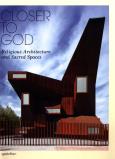
Across all cultures, contemporary religious buildings are among the most stimulating and experimental in architecture. Although these structures do need to offer a certain amount of functionality, they also resonate with believers or visitors on an emotional level. Because they are called on to communicate higher purposes and meanings, these constructions can be much freer in their use of architecture, space, and light than other buildings.
Closer to God is a unique collection of international examples of sacred spaces of all denominations that were built in the last few years. Whether churches, synagogues, mosques, temple complexes, or other contemplative places for meditation and reflection, the architecture highlighted in this book ranks among the most exciting of our time.
Closer to God presents vivid proof that contemporary religious structures are no longer bound by predominant styles. Rather, the explicitly expressive architectural language of sacred spaces at the start of the twenty-first century is shaped equally by respect for established traditions and forays into the visuality of the future.
"We all perform. It's what we do for each other all the time, deliberately or unintentionally. It's a way of telling about ourselves in the hope of being recognized as what we'd like to be."
--Richard Avedon, 1974
The preeminent stars and artists of the performing arts from the second half of the 20th century offered their greatest gifts—and, sometimes, their inner lives—to Richard Avedon. More than 200 are portrayed in Performance, many in photographs that have been rarely or never seen before. Of course, the great stars light the way: Hepburn and Chaplin, Monroe and Garland, Brando and Sinatra. But here too are the actors and comedians, pop stars and divas, musicians and dancers, artists in all mediums with public lives that were essentially performances, who stand at the pinnacle of our cultural achievement.
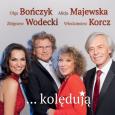
Święta Bożego Narodzenia to magiczny czas! Spotkania z najbliższymi, prezenty, zapach choinki i… kolędy – oczywiście nasze polskie, bo te są najpiękniejsze!
Olga Bończyk, Alicja Majewska, Zbigniew Wodecki, Włodzimierz Korcz nagrali wyjątkowy album z tradycyjnymi polskimi kolędami oraz utworami autorskimi. Na płycie „… kolędują” znalazły się m.in. „Dzisiaj w Betlejem”, „Pójdźmy wszyscy do stajenki”, „Bracia patrzcie jeno”, „Lulajże Jezuniu”. Ponadto obok nich usłyszmy autorskie kompozycje Włodzimierza Korcza, do których teksty napisali wyśmienici twórcy tacy jak Wojciech Młynarski, Magda Czapińska, Wojciech Kejne, Ernest Bryll.
Radosne, pełne optymizmu, ale i z nutą refleksji melodie prezentuje to niepowtarzalne wydawnictwo. Album „… kolędują” sprawi, że świąteczny czas będzie jeszcze piękniejszy!
A survivor's account of the Tiananmem Square massacre, told through photographs taken at the event. The colours of the photographs have been inverted to create a more interactive and thought-provoking experience Inspired by the reform movements in the Soviet Union and Eastern Europe, student protests began to form in China in the spring of 1989. They made Tiananmen square their central meeting place. Unsettled by this public display of dissent, on 3 and 4 June the Chinese army violently crushed the protests. There are no official figures for the number of victims. 2600 people are estimated to have been killed, and 7000 injured. The photographer Xu Yong, aged 35 at the time, was among the survivors. He captured the chaotic scenes on celluloid. In 2014, he published his photos in a book that was banned by the board of censors. This new edition, published by Verlag Kettler, makes the book available to the public. Xu has not retouched the photographs. He reproduces the negatives with inverted colours, which can only be deciphered once the color inversion function on mobile phones or tablets is activated. Consequently, his work represents an eerie yet authentic perspective on this watershed moment in Chinese history.
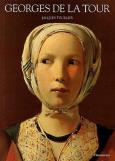
A compact edition of a major monograph that offers insights into the life and work of the seventeenth-century master Georges de La Tour. Georges de La Tour ranks with Vermeer and the Le Nain brothers among those seventeenth-century painters whose unmistakable talent is matched only by their aura of mystery. This groundbreaking monograph uses original correspondence and archival documents to reconstruct the master’s life and practices. Influenced by Caravaggio, La Tour created a form of realism that displays rare poetic beauty. The attention to detail, from the dirt under a saint’s fingernails to the wavering flame of a girl’s candle, is highlighted in full-page close-ups, while the paintings are contextualized by color reproductions of works that influenced, and were influenced by, La Tour. Available for the first time in a compact edition, complete with an illustrated catalogue, bibliography, and key documentary sources, this remains the essential reference work on a fascinating artist.
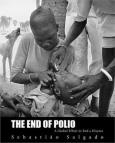
An inspirational account of the global initiative to eliminate the scourge of polio offers one hundred stunning duotone photographs that capture the campaign in five polio endemic nations--Democratic Republic of Congo, India, Pakistan, Somalia, and Sudan.
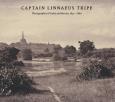
This is the first major traveling exhibition devoted to the British photographer Captain Linnaeus Tripe (1822–1902). Between 1854 and 1860, Tripe produced an unprecedented series of photographs documenting the landscape and cultural artifacts of south India and Burma (now the Republic of Myanmar). With few models to follow, he developed a professional practice under the auspices of the British East India Company, the commercial enterprise governing the region as Great Britain's imperial agent. As an officer in the British army, he traveled with diplomatic expeditions, creating a visual inventory of celebrated archaeological sites and monuments, religious and secular buildings—some now destroyed—as well as geological formations and scenic vistas. His training as a military surveyor, where the choice of viewpoint and careful attention to visual details were essential, gave his photographs a striking aesthetic rigor that distinguishes them from the picturesque travel views characteristic of the period.
102 color illustrations
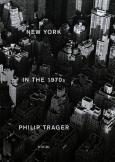
The luminous and compelling photographs in New York in the 1970s capture the essence of a city in a way best described as “place portraiture.” Trager’s images present the architecture of Manhattan with time-defiant clarity and beauty. Although Trager selected his subjects for aesthetic and visual reasons-rather than from an historical or documentary point of view-with the passage of time his distinctly imaginative photographs have also acquired value as historical documents. The negatives for the images in this book, only recently rediscovered, had originally been archived for printing but Trager began other projects before any prints were made.
The photographs in New York in the 1970s were taken at the same time as Trager’s timeless Philip Trager: New York, published by Wesleyan University Press in 1980, in which the photographer depicts the city “as a solitary figure, always aware of the ‘enveloping sky’.” New York in the 1970s reveals Trager’s more concentrated attention to the interaction between the city’s architecture and the dynamics of the street.
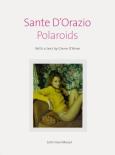
Sante D’Orazio, Italoamerikaner aus Brooklyn, ist einer der bedeutendsten Fashion- und Beautyphotographen unserer Tage. Schirmer/Mosel-Fans kennen sein Werk bereits aus den beiden Büchern A Private View und Pamela Anderson – American Icon und wissen, dass sich die schönsten Frauen des amerikanischen Showbusiness gern und völlig unbefangen vor seinem Kamerablick in Szene setzen. Alle diese Photos sind in der Regel zur Veröffentlichung in Magazinen bestimmt, manche sind freizügig, manche diskreterer Natur. Gemeinsam ist ihnen immer die Verehrung für einen schönen, (fast) makellosen Körper und ein ebenso schönes Gesicht.
Nun hat Sante D’Orazio in seine Schatzkiste gegriffen und eine Anzahl seiner Polaroids zur Veröffentlichung freigegeben. Sie gehen fast immer den Auftragsphotographien voraus, pendeln noch zwischen Photograph und Modell, bevor es sozusagen „ernst“ wird. In dieser spielerischen Qualität suchen sie ihresgleichen und steigern den erotisch-voyeuristischen Moment noch einmal durch ihre Intimität.
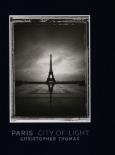
Christopher Thomas captures the streets and sights of Paris devoid of people in the photographer’s signature, hauntingly beautiful style.
Imagine an entirely empty Louvre, or the Eiffel Tower minus the lines of tourists waiting to ascend. By taking advantage of the late night and early morning hours of a notoriously busy city, Christopher Thomas is able to capture familiar sights devoid of people. Using a large-format camera, long exposures, and the last of his remaining Polaroid film, Thomas shows us Paris as an explorer might experience a forgotten city. Without the human element, the buildings, streets, landmarks, and gardens take on an architectural significance that is at once majestic and intimate. As with his other books in the series, these photographs are stunningly reproduced on heavy paper and bound in a linen cover. Framed by the ragged edges that characterize Polaroids, each print is given space to breathe on the page. The result is a sequence of dream-like images that encourage close, contemplative examination. Fans of Thomas’ earlier books on New York and Venice, and anyone who loves Paris, will treasure this exquisite tribute to one of the world’s most captivating cities.
From the refined homes of Tokyo to the nightclubs of Kyoto; from gangster chic to Harajuku street style; from ateliers and catwalks to city sidewalks and religious festivals—this book shows how the kimono has continued to be one of Japan’s most exciting wardrobe elements.
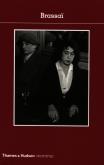
No photographer is more closely associated with a city than Brassaï (1899–1984) is with Paris. From the moment he moved there in 1924, he devoted his life and art to immortalizing his adopted city – capturing the street life by day, the cafés and the Seine by night. His most famous portraits and cityscapes collected in this fascinating book, form a unique vision of life in pre- and post-war Europe. A friend of Picasso and Henry Miller, Brassaï knew and photographed the leading figures of his day – Giacometti, Sartre, Dalí, Matisse and Mann among them.
The Photofile series brings together the best work of the world’s greatest photographers, in an affordable pocket format. Handsome and collectable, the books are produced to the highest standards. Each volume contains some sixty full-page reproductions printed in superb duotone, together with a critical introduction and a full bibliography. The series has been awarded the first annual prize for distinguished photographic books by the International Center of Photography, New York.
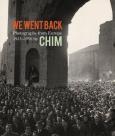
This book traces the career of Chim, famed photojournalist and cofounder of Magnum Photos, who dedicated much of his life to documenting war and its aftermath.
Born Dawid Szymin in Warsaw, Chim began his career in the early 1930s photographing for leftist magazines in Paris. In 1936, one of these magazines, Regards, sent him to the front lines of the civil war in Spain, along with comrades Robert Capa and Gerda Taro. Although war formed the backdrop of much of his reportage, Chim was an astute observer of 20th-century European politics, social life, and culture, from the beginnings of the antifascist struggle to the rebuilding of countries ravaged by World War II. Like millions of other Europeans, Chim had suffered the pain of dislocation and the loss of family in a concentration camp. His profound empathy for his subjects is evident in his postwar work on child refugees. In this volume, Chim emerges as both a talented reporter and a creator of elegant compositions of startling grace and beauty. The book places Chim’s work within the broader context of 1930s–1950s photography and European politics.
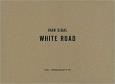
From 1998 to 2005, Ivan Sigal worked, lived and travelled in Central Asia, traversing Russia, Kazakhstan, Uzbekistan, Tajikistan, Kyrgyzstan and Afghanistan. He roamed with a dual identity: on the one hand designing media projects with local communities; on the other, an itinerant documentarian. The images from his multi-year odyssey reveal the unsettled lives of Eurasians in provincial towns and cities. Alongside the photos, an episodic narrative unfolds: vignettes chronicling Sigals encounters while tracing his restless passage through the landscape. Through image and text, White Road addresses what was left behind when the Soviet Unions ideological superstructure was stripped away, eliminating the grand narrative that imposed meaning on peoples lives. The cumulative effect is that of a search without a centre or apparent goal. We sense that circumstances of history and power propel ussubject, traveller, and readerfrom encounter to encounter, and from place to place. The term white road means safe journey in Kazakh, Kyrgyz and Uzbek. These words are printed on road signs at the edges of Central Asian towns, wishing travellers well as they enter the emptiness of the steppe. Ivan Sigal is a documentary photographer who works on long-term storytelling projects. Born in 1969 in Pennsylvania, he has lived for extensive periods in the former Soviet Union and in Asia. Sigals Eurasia work has been exhibited in cities across the former Soviet Union and in the United States. He also designs and creates international media projects, with a focus on networked communities.
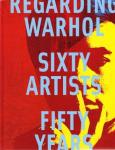
For decades, commentators have acknowledged Andy Warhol's phenomenal impact on contemporary art. Unlike the many existing books about the artist, Regarding Warhol: Sixty Artists, Fifty Years is the first full-scale exploration of his tremendous reach across several generations of artists who in key ways respond to his groundbreaking work.
Examining in depth the nature of the Warhol sensibility, the book is organized around five significant themes in the artist's work: popular consumer culture and tabloid news; portraiture and the cult of celebrity; issues of sexual identity and gender; artistic practices such as seriality, abstraction, and appropriation; and the role of collaboration in Warhol's ventures into filmmaking, publishing, and the creation of environments and spectacles. Each theme is delineated with visual "dialogues" between prime examples of Warhol's works and works in various media by some sixty other artists, among them John Baldessari, Robert Gober, Jeff Koons, Gerhard Richter, Cindy Sherman, and Ryan Trecartin. These juxtapositions not only demonstrate Warhol's overt influence but also suggest how artists have either worked in parallel modes or developed his model in dynamic new directions.
The volume includes a major essay by Mark Rosenthal, original interviews with a number of artists featured in the book, and a visual archive and extensive illustrated chronology that chart the "Warhol effect" over the past fifty years.
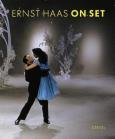
This volume considers the film-stills of Ernst Haas, one of the most accomplished photographers of the twentieth century, transgressing the borders between static photography and the moving image. Haas worked with a variety of directors from Vittorio de Sica to John Huston, Gene Kelly and Michael Cimino covering movie genres from suspense (The Third Man; The Train) to the Western (The Oregon Trail; Little Big Man), and from comedy (Miracle in Milan; Love and Death) to musicals (West Side Story; Hello Dolly). While the photographic reference system known as the film-still has existed since the birth of cinema, inherent to the genre are precisely those parameters that are essential qualities of Haas photography, and which interact in a striking manner with his images made independently of film. On the one hand, we find photographs documenting shoots and depictions of individual scenes. On the other hand, it is Haas clear ambition to inscribe a temporal dimension into these images; to impose filmic principles into the stills which, viewed in a sequence, generate movement and narrative. Indeed, so great was his mastery of colour, light, and motion that Haas was frequently called upon to photograph large group actions from the battle scenes of Charge of the Light Brigade and the dances of West Side Story to the ski-slopes of Downhill Racer. While adding a fascinating new take on the sets and the stars he photographed, Ernst Haas On Set will also introduce readers to a little-known but crucial dimension in the work of this celebrated photographer. Ernst Haas was born in Vienna in 1921 and took up photography after World War II. His early work on returning Austrian prisoners of war brought him to the attention of Life Magazine, from which he courageously declined a job as staff photographer in order to maintain his independence. At the invitation of Robert Capa, Haas joined Magnum in 1949, developing close associations with Capa, Werner Bishof and Henri Cartier-Bresson. He began experimenting with colour, and went on to become the premier colour photographer of the 1950s. In 1962 New Yorks Museum of Modern Art mounted its first solo exhibition of his colour photography. Haas books were legion, and one, The Creation (1971), sold 350.000 copies. Ernst Haas received the Hasselblad award in 1986, the year of his death.
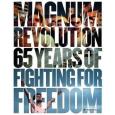
Culled from the archives of the prestigious 65-year-old photo agency founded by Henri Cartier Bresson, this collection of images from internationally renowned photographers is a compelling record of the recent decades of worldwide revolution.
The history of revolution is as old as humanity; yet it is only since the invention of photography that we have been able to discern the realities of these conflicts from the distance of time. Starting with the Hungarian uprising in 1956 and culminating with the most recent triumphs and tragedies of the “Arab Spring“, this book brings together hundreds of color and black-and-white images that depict historic events from a human perspective. Iconic images from revolutions in Prague, Nicaragua, Tiananmen Square, Romania, Ukraine, Poland, Tunisia, Egypt, Libya, and other locations are introduced in double-page spreads featuring the images of Magnum photographers such as Raymond Depardon, Burt Glinn, René Burri, Josef Koudelka, Susan Meiselas, and many more.
Introduced by renowned “New Yorker“ journalist Jon Lee Anderson, and featuring texts and interviews by Paul Watson, this uplifting and important book offers, for the first time, a collective understanding of the universal dream of freedom and the inevitability of change.
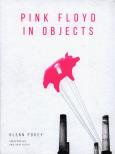
Remember Me: Pink Floyd in Objects tells the story of the great psychedelic rock band through items that they created, instruments they played, music they wrote and posters, photographs and props from their amazing stage shows. A strange collection of vehicles, posters, tickets, instruments, records and press cuttings come together to tell the story of decades of music in a new and innovative way. The history of Pink Floyd has been related before... but never like this.
Simo Heikkilä jest fińskim projektantem i architektem wnętrz. Karierę rozpoczął od projektowania sklepów i wystaw dla Marimekko, a następnie zajął się projektowaniem mebli. Książka ma na celu przedstawienie życia i twórczości Simo Heikkilä w szerszym kontekście historycznym i stylistycznym.
Published to coincide with the first UK retrospective of work by Edward Krasinski (1925 -2004), one of the most important Polish artists of the twentieth century. This richly illustrated publication will investigate the development of Krasinski's unique formal language, showcasing works spanning over fifty years of the artist's remarkable career. Introduced by Tate curator Kasia Redzisz, a series of texts by leading scholars present fresh research on Krasinski's practice, placing it within a wider global context. Featuring rarely reproduced artworks and documentary photographs, as well as previously unpublished archival materials and a fully illustrated chronology, this is the definitive English-language volume on one of the most important Polish artists of the twentieth century.
Ten produkt jest zapowiedzią. Realizacja Twojego zamówienia ulegnie przez to wydłużeniu do czasu premiery tej pozycji. Czy chcesz dodać ten produkt do koszyka?