Ta kategoria dedykowana jest współczesnym czytelniczkom literatury kobiecej. Bardzo szeroki wybór romansów, kryminałów, powieści obyczajowe, poruszająca literatura kobieca, erotyki, harlequiny polskich i zagranicznych autorów. Każda lubiąca czytać kobieta znajdzie coś szczególnego dla siebie.
Polecamy literaturę Sergiusza Piaseckiego, Stanisława Srokowskiego, Diany Palmer czy w końcu Blanki Lipińskiej.
Zwariowana i ironiczna komedia autora bestsellerowego Jednego dnia . Brian Jackson wierzy w to, że uczestnictwo w popularnym turnieju wiedzy pomoże mu zdobyć serce uniwersyteckiej piękności Alice Harbinson. Plan mógłby się powieść, gdyby nie jego wrodzone szczęście do pecha. Najpierw feralne eliminacje, potem niefortunnie ulokowane uczucia i wreszcie finałowa kompromitacja. Brian poczuł na własnej skórze, że wiedza to nie mądrość, zauroczenie to nie prawdziwa miłość, a dobry początek wcale nie gwarantuje happy endu. Ta książka pozwala poczuć niepowtarzalny klimat studenckich czasów; pierwszą miłość, walkę o przyjaźń, rozczarowania. Na chwilę, bo czyta się ją jednym tchem...- poleca Kamil Kula
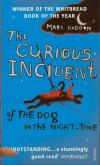
The Curious Incident of the Dog in the Night-Time is a murder mystery novel like no other. The detective, and narrator, is Christopher Boone. Christopher is fifteen and has Asperger's Syndrome. He knows a very great deal about maths and very little about human beings. He loves lists, patterns and the truth. He hates the colours yellow and brown and being touched. He has never gone further than the end of the road on his own, but when he finds a neighbour's dog murdered he sets out on a terrifying journey which will turn his whole world upside down.
Łucja ma trzydzieści lat, stanowisko dyrektorskie w dużej firmie, urządzone mieszkanie i samochód. Właśnie pożegnała przyjaciółkę od serca, niemal siostrę - Martę, która zmarła na raka. W spadku po niej odziedziczyła dużo dobrej energii, pamiętnik i... brata, Kacpra. I choć początkowo Łucja pragnie ostro się z nim rozmówić w sprawie nieobecności na pogrzebie Marty i zerwać znajomość, okazuje się, że jak zwykle pozory mylą, życie komplikuje się nie tylko nam, ale i innym ludziom, a wielka miłość może zaiskrzyć tam, gdzie się tego najmniej spodziewamy.
Skandalizująca historia Serafiny, jej potwornej ciotki, a także zdarzenia z udziałem wielu sympatycznych lub okropnych mężczyzn przewijających się przez łóżko współczesnej panienki. Groteska i humor nie przesłonią nikomu faktu, że wiele tu twardej prozy życia, choć, jak zwykle u Krystyny Nepomuckiej, okraszonej ciepłem, życzliwością oraz zrozumieniem dla ludzkich słabostek.
Czyta: Hanna Kinder Kiss.
Emil Zola (1840-1902)
Francuski pisarz, główny przedstawiciel naturalizmu. Ważniejsze dzieła: „Rougon-Macquartowie” , „Teresa Raquin”, „Laurdes”, „Paryż”, „Germinal”, „Rzym”, „Nana”.
Emil Zola jest też autorem serii opowiadań znakomicie opisujących ludzkie dramaty:
1.Zgon Oliwiera Becaille / czyta Artur Barciś - 93 minuty
2. Nantas/ czyta Joanna Lissner - 103 minuty
3. Radykał/ czyta Joanna Lissner - 117 minut
4. Atak na młyn/ czyta Joanna Lissner - 90 minut
5. Feta w Coqueville/ czyta Andrzej Szopa 86 minut
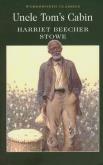
Uncle Tom's Cabin is the most popular, influential and controversial book written by an American. Stowe's rich, panoramic novel passionately dramatises why the whole of America is implicated in and responsible for the sin of slavery, and resoundingly concludes that only ‘repentance, justice and mercy’ will prevent the onset of ‘the wrath of Almighty God!’.
The novel gave such a terrific impetus to the crusade for the abolition of slavery that President Lincoln half-jokingly greeted Stowe as‘the little lady’ who started the great Civil War. As Keith Carabine argues in his lively and provocative Introduction, the novel immediately provoked a storm of competing and contradictory responses among Northern and Southern readers, moderate and radical abolitionist groups, blacks and women, with regard to issues of form, genre, politics, religion, race and gender, that are still of great interest because they anticipate the concerns that vex and divide modern readers and critical constituencies.
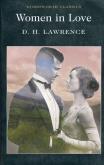
First published in 1920, D. H. Lawrence’s “Women in Love” is the sequel to his 1915 novel “The Rainbow” and is widely considered one of his best works and one of the most important English novels of the twentieth century. “Women in Love” continues to follow the Brangwen family, focusing on the lives and loves of sisters Gudrun and Ursula Brangwen. Living in the Midlands of England during the 1910’s, Ursula is a teacher and Gudrun is an artist. The sisters meet two men who live nearby, Rupert Birkin and Gerald Crich, the four find that they have much in common and the sisters soon get involved with them romantically. Rupert and Ursula are at first friends, but develop a loving relationship and eventually become engaged. Gudrun pursues a romantic relationship with Gerald, a local industrialist, but their romance is stormy and tumultuous and ultimately ends in tragedy. Controversial during its time for its frank depictions of sexuality and the destructiveness of relationships and jealousy, “Women in Love” is a modern and powerful story of love and human imperfections set against the backdrop of the social turmoil of the First World War. This edition is printed on premium acid-free paper.
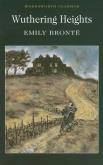
Wuthering Heights is a wild, passionate story of the intense and almost demonic love between Catherine Earnshaw and Heathcliff, a foundling adopted by Catherine's father. After Mr Earnshaw's death, Heathcliff is bullied and humiliated by Catherine's brother Hindley and wrongly believing that his love for Catherine is not reciprocated, leaves Wuthering Heights, only to return years later as a wealthy and polished man. He proceeds to exact a terrible revenge for his former miseries.
The action of the story is chaotic and unremittingly violent, but the accomplished handling of a complex structure, the evocative descriptions of the lonely moorland setting and the poetic grandeur of vision combine to make this unique novel a masterpiece of English literature.
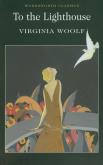
This book is with an introduction and notes by Dr Nicola Bradbury, University of Reading. "To the Lighthouse" is the most autobiographical of Virginia Woolf's novels.
It is based on her own early experiences, and while it touches on childhood and children's perceptions and desires, it is at its most trenchant when exploring adult relationships, marriage and the changing class-structure in the period spanning
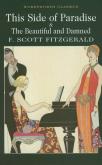
This Side of Paradise tells the story of Amory Blaine, the only child of wealthy parents, whose journey from adolescence to adulthood follows him from prep school through to Princeton University, where his literary talents flourish, in contrast to his academic failure. A sequence of love affairs with beautiful young women are fatally damaged by the collapse of his family's fortune, and the novel ends with him poised to face the challenge of making his own way in the world. Composed in an unconventional narrative mode, the novel is a rich fusion of satiric and romance idioms, and found a captivated audience on its publication in1920. It made Fitzgerald rich and famous overnight.
The Beautiful and Damned is a bleaker version of the corrosive power of wealth and its privileges, one of Fitzgerald's abiding subjects. Anthony Patch, is heir to a huge fortune, whose marriage to the beautiful and indolent Gloria is increasingly shadowed by Anthony's fall into alcoholism. Though he wins a lawsuit to gain his inheritance of millions of dollars, it is a pyrrhic victory, for he is now a physically and morally broken man.
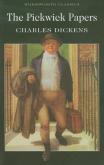
With an Introduction and Notes by David Ellis, University of Kent at Canterbury. With Illustrations by R.Seymour, R.W. Buss and Hablot K. Browne (Phiz).
The Pickwick Papers is Dickens' first novel and widely regarded as one of the major classics of comic writing in English. Originally serialised in monthly instalments, it quickly became a huge popular success with sales reaching 40,000 by the final part.
In the century and a half since its first appearance, the characters of Mr Pickwick, Sam Weller and the whole of the Pickwickian crew have entered the consciousness of all who love English literature in general, and the works of Dickens in particular.
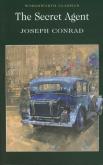
Then the vision of an enormous town presented itself, of a monstrous town...a cruel devourer of the world's light. There was room enough there to place any story, depth enough for any passion, variety enough there for any setting, darkness enough to bury five millions of lives.'
Conrad’s ‘monstrous town’ is London, and his story of espionage and counter-espionage, anarchists and embassies, is a detective story that becomes the story of Winnie Verloc’s tenacity in maintaining her devotion to her peculiar and simple-minded brother, Stevie, as they pursue their very ordinary lives above a rather dubious shop in the back streets of Soho. However, far from offering any sentimental picture, The Secret Agent is Conrad’s funniest novel. Its savagely witty picture of human absurdity and misunderstanding is written in an ironic style that provokes laughter and unease at the same time, and that continues to provide one of the most disturbing visions of aspiration and futility in twentieth century literature.
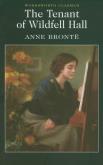
The Tenant of Wildfell Hall is a powerful and sometimes violent novel of expectation, love, oppression, sin, religion and betrayal. It portrays the disintegration of the marriage of Helen Huntingdon, the mysterious ‘tenant’ of the title, and her dissolute, alcoholic husband. Defying convention, Helen leaves her husband to protect their young son from his father’s influence, and earns her own living as an artist. Whilst in hiding at Wildfell Hall, she encounters Gilbert Markham, who falls in love with her.
On its first publication in 1848, Anne Brontë’s second novel was criticised for being ‘coarse’ and ‘brutal’. The Tenant of Wildfell Hall challenges the social conventions of the early nineteenth century in a strong defence of women’s rights in the face of psychological abuse from their husbands. Anne Brontë’s style is bold, naturalistic and passionate, and this novel, which her sister Charlotte considered ‘an entire mistake’, has earned Anne a position in English literature in her own right, not just as the youngest member of the Brontë family.
This newly reset text is taken from a copy of the 1848 second edition in the Library of the Brontë Parsonage Museum and has been edited to correct known errors in that edition.
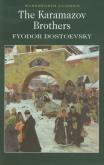
As Fyodor Karamazov awaits an amorous encounter, he is violently done to death. The three sons of the old debauchee are forced to confront their own guilt or complicity. Who will own to parricide? The reckless and passionate Dmitri? The corrosive intellectual Ivan? Surely not the chaste novice monk Alyosha? The search reveals the divisions which rack the brothers, yet paradoxically unite them. Around the writhings of this one dysfunctional family Dostoevsky weaves a dense network of social, psychological and philosophical relationships.
At the same time he shows - from the opening 'scandal' scene in the monastery to a personal appearance by an eccentric Devil - that his dramatic skills have lost nothing of their edge. The Karamazov Brothers, completed a few months before Dostoevsky's death in 1881, remains for many the high point of his genius as novelist and chronicler of the modern malaise.
It cast a long shadow over D. H. Lawrence, Thomas Mann, Albert Camus, and other giants of twentieth-century European literature.
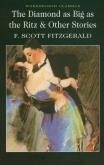
The Diamond as Big as the Ritz is an ominous fable about the pursuit of great wealth. Readers will be transported to a fabulous fantasy land of such opulence that its very existence has to remain a jealously guarded secret. Fatal consequences lie in store for 'bona fide' guests and uninvited visitors alike, while the sybaritic luxury of the place is evoked in an effortless prose style which is quintessentially F. Scott Fitzgerald. Also featured in this volume are The Cut-Glass Bowl, May Day, The Rich Boy, Crazy Sunday, An Alcoholic Case, The Lees of Happiness, The Lost Decade and Babylon Revisited.
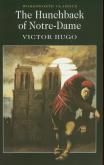
Set in 1482, Victor Hugo's powerful novel of 'imagination, caprice and fantasy' is a meditation on love, fate, architecture and politics, as well as a compelling recreation of the medieval world at the dawn of the modern age. In a brilliant reworking of the tale of Beauty and the Beast, Hugo creates a host of unforgettable characters -- amongst them, Quasimodo, the hunchback of the title, hopelessly in love with the gypsy girl Esmeralda, the satanic priest Claude Frollo, Clopin Trouillefou, king of the beggars, and Louis X1, King of France.
Over the entire novel, both literally and symbolically, broods the Cathedral of Notre-Dame. Vivid characters and memorable set-piece action scenes combine to bring the past to life in this story of love, lust, betrayal, doom and redemption.
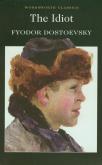
Prince Myshkin returns to Russia from an asylum in Switzerland. As he becomes embroiled in the frantic amatory and financial intrigues which centre around a cast of brilliantly realised characters and which ultimately lead to tragedy, he emerges as a unique combination of the Christian ideal of perfection and Dostoevsky's own views, afflictions and manners. His serene selflessness is contrasted with the worldly qualities of every other character in the novel. Dostoevsky supplies a harsh indictment of the Russian ruling class of his day who have created a world which cannot accomodate the goodness of this idiot.
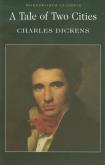
A Tale of Two Cities (1859), Dickens’ greatest historical novel, traces the private lives of a group of people caught up in the cataclysm of the French Revolution and the Terror. Dickens based his historical detail on Carlyle’s great work – The French Revolution – and also on his own observations and investigations during numerous visits to Paris.
‘The best story I have written’ was Dickens’ own verdict on A Tale of Two Cities, and the reader is unlikely to disagree with this judgement of a story which combines historical fact with the author’s unsurpassed genius for poignant tales of human suffering, self-sacrifice, and redemption.
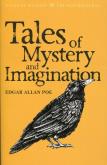
This collection of Poe's best stories contains all the terrifying and bewildering tales that characterise his work. As well as the Gothic horror of such famous stories as 'The Pit and the Pendulum', 'The Fall of the House of Usher', 'The Premature Burial' and 'The Tell-Tale Heart', all of Poe's Auguste Dupin stories are included.
These are the first modern detective stories and include 'The Murders in the Rue Morgue', 'The Mystery of Marie Roget' and 'The Purloined Letter'.
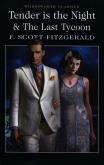
Tender is the Night is a story set in the hedonistic high society of Europe during the ‘Roaring Twenties’. A wealthy schizophrenic, Nicole Warren, falls in love with Dick Diver - her psychiatrist. The resulting saga of the Divers’ troubled marriage, and their circle of friends, includes a cast of aristocratic and beautiful people, unhappy love affairs, a duel, incest, and the problems inherent in the possession of great wealth. Despite cataloguing a maelstrom of interpersonal conflict, Tender is the Night has a poignancy and warmth that springs from the quality of Fitzgerald's writing and the tragic personal experiences on which the novel is based.
Six years separate Tender is the Night and The Last Tycoon, the novel Fitzgerald left unfinished at his death in December 1940. Fitzgerald lived in Hollywood more or less continuously from July 1937 until his death, and a novel about the film industry at the height of 'the studio system' centred on the working life of a top producer was begun in 1939. Even in its incomplete state The Last Tycoon remains the greatest American novel about Hollywood and contains some of Fitzgerald's most brilliant writing.
Ten produkt jest zapowiedzią. Realizacja Twojego zamówienia ulegnie przez to wydłużeniu do czasu premiery tej pozycji. Czy chcesz dodać ten produkt do koszyka?