Ta kategoria dedykowana jest współczesnym czytelniczkom literatury kobiecej. Bardzo szeroki wybór romansów, kryminałów, powieści obyczajowe, poruszająca literatura kobieca, erotyki, harlequiny polskich i zagranicznych autorów. Każda lubiąca czytać kobieta znajdzie coś szczególnego dla siebie.
Polecamy literaturę Sergiusza Piaseckiego, Stanisława Srokowskiego, Diany Palmer czy w końcu Blanki Lipińskiej.
As Angus Calder states in his introduction to this edition, 'Seven Pillars of Wisdom is one of the major statements about the fighting experience of the First World War'. Lawrence's younger brothers, Frank and Will, had been killed on the Western Front in 1915. Seven Pillars of Wisdom, written between 1919 and 1926, tells of the vastly different campaign against the Turks in the Middle East - one which encompasses gross acts of cruelty and revenge and ends in a welter of stink and corpses in the disgusting 'hospital' in Damascus.
Seven Pillars of Wisdom is no Boys Own Paper tale of Imperial triumph, but a complex work of high literary aspiration which stands in the tradition of Melville and Dostoevsky, and alongside the writings of Yeats, Eliot and Joyce.
Njal's Saga is the finest of the Icelandic sagas, and one of the world's greatest prose works. Written c.1280, about events a couple of centuries earlier, it is divided into three parts: the first recounts the touching friendship between noble Gunnar and the statesman Njal, together with the fatal enmity between their wives. The second part works out the central tragedy of the saga, while the third describes the retribution wrought by Flosi and Kari.
The saga is remarkable not only for the details of everyday life - the farming, the feasting and the charcoal-burning - but also for the social structure of the society in which that life took place - the Althing or Parliament, the lawmaking and the lawgiving. The grandeur of the narrative and the beauty and distinction of the characters mark Njal's Saga as an essential text for all who love adventure and great literature.
During his life, Geoffrey Chaucer (born c.1340) was courtier, diplomat, revenue collector, administrator, negotiator, overseer of building projects, landowner and knight of the shire. He was servant, retainer, husband, friend and father. Whilst he was doing and ‘being’ all of these things, he was writing. Not only did he write in English - for princes, friends, family and, presumably, for his own pleasure – but his knowledge of French and Italian enabled him to engage with the works of notable French poets such as Eustache Deschamps, and also with the Italian works of Petrarch, Dante and Boccaccio, an understanding which he used to enrich and develop his own language.
It was Boccaccio’s Decameron which inspired Chaucer, in the 1390s, to begin work on The Canterbury Tales, which was still unfinished at his death in October 1400. It tells the story of a group of 30 pilgrims who meet at the Tabard Inn in Southwark, on the south bank of the Thames opposite the city of London, and travel together to visit the then famous shrine of St Thomas Becket in Canterbury cathedral. The tavern host, who accompanies them, suggests that they amuse one another along the way by telling stories. There will be a prize for this: the best storyteller will get a free meal in the tavern on their return. The stories told by the pilgrims range from bawdy comedies through saints’ lives and moral tracts to courtly romances, but are always delivered with a generous helping of Chaucer’s own sly wit and ironic humour. Although based on the stereotypes of ‘estates satire’, his pilgrims appear as individuals who can be recognised by their audience. Chaucer succeeds in his aim of producing an overview of his times and their culture, for posterity, in the manner of Italian, proto-Renaissance, writers. In the decades after his death, Chaucer was recognised and elevated by a new generation of writers to a position of prominence in the emerging canon of English writing, from which he ultimately became known as ‘the Father of English Literature’.
He saw her wounded, and bleeding to death; saw her ashy countenance, and her wasting eyes ... turned piteously on himself, as if imploring him to save her from the fate that was dragging her to the grave...’
Ann Radcliffe, author of The Romance of the Forest and The Mysteries of Udolpho, is the high priestess of the gothic novel. In The Italian, first published in 1797, she creates a chilling, atmospheric concoction of thwarted lovers, ruined abbeys, imprisonment and dark passages, with an undercurrent of seething sexuality and presents us with a cunning villain in the sinister monk Schedoni.
A contemporary review commented on, ‘Radcliffe’s uncommon talent for exhibiting, with picturesque touches of genius, the vague and horrid shapes which imagination bodies forth...’
Radcliffe’s work was hugely influential and H.P. Lovecraft, early twentieth century master of the uncanny, was impressed by the, ‘eerie touch of setting and action contributing artistically to the impression of illimitable frightfulness which she wished to convey.’
The novel remains a fascinating, engrossing and unnerving masterpiece of gothic fiction.
Crowley was a successful critic, editor and author of fiction from 1908 to 1922, and his short stories are long overdue for discovery. Of the forty-nine stories in the present volume, only thirty were published in his lifetime. Most of the rest appear here for the first time.
Like their author, Crowley's stories are fun, smart, witty, thought-provoking and sometimes unsettling. They are set in places he had lived and knew well: Belle Epoque Paris, Edwardian London, pre-revolutionary Russia and America during the first World War. The title story The Drug stands as one of the first accounts–if not the first–of a psychedelic experience. His Black and Silver is a knowing early noir discovery that anticipates an entire genre. Atlantis is a masterpiece of occult fantasy, a dark satire that can stand with Samuel Butler's Erewhon . Frank Harris considered The Testament of Magdalen Blair the most terrifying tale ever written.
COUNT LEO TOLSTOY (1828-1910) is best known for War and Peace and Anna Karenina, commonly regarded as amongst the greatest novels ever written. He also, however, wrote many masterly short stories, and this volume contains four of the longest and best in distinguished translations that have stood the test of time.
In the early story Family Happiness, Tolstoy explores courtship and marriage from the point of view of a young wife. In The Kreutzer Sonata he gives us a terrifying study of marital breakdown, in The Devil a powerful depiction of the power of sexual temptation, and, in perhaps the finest of all, The Death of Ivan Ilyich, he portrays the long agony of a man gradually coming to terms with his own mortality.
This volume also includes an Introduction and Notes written specially for this Wordsworth edition by Dr Tim Cook, formely lecturer in literature at the Universities of Kingston and Ulster. Previous work contributed by Dr Cook for Wordsworth includes an introduction and notes to Charles Dickens' Nicholas Nickleby.
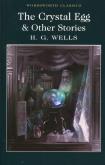
From "The Crystal Egg": There was, until a year ago, a little and very grimy-looking shop near Seven Dials over which, in weather-worn yellow lettering, the name of "C. Cave, Naturalist and Dealer in Antiquities," was inscribed. The contents of its window were curiously variegated. They comprised some elephant tusks and an imperfect set of chessmen, beads and weapons, a box of eyes, two skulls of tigers and one human, several moth-eaten stuffed monkeys (one holding a lamp), an old-fashioned cabinet, a flyblown ostrich egg or so, some fishing-tackle, and an extraordinarily dirty, empty glass fish tank. There was also, at the moment the story begins, a mass of crystal, worked into the shape of an egg and brilliantly polished.
The clergyman, without any ceremony, asked the price of the crystal egg.
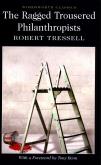
The Ragged Trousered Philanthropists is a classic representation of the impoverished and politically powerless underclass of British society in Edwardian England, ruthlessly exploited by the institutionalized corruption of their employers and the civic and religious authorities.
Epic in scale, the novel charts the ruinous effects of the laissez-faire mercantilist ethics on the men, women, and children of the working classes, and through its emblematic characters, argues for a socialist politics as the only hope for a civilized and humane life for all. It is a timeless work whose political message is as relevant today as it was in Tressell's time. For this it has long been honoured by the Trade Union movement and thinkers across the political spectrum.
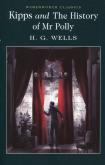
These comic novels will resonate with anyone who has ever felt trapped by circumstance. Their central characters, Artie Kipps and Alfred Polly, are prisoners of their modest social class, limited education, dull work, and sterile relationships. In Wells' hands they break out of the cages that society has constructed for them, learning after bitter experience the truth that 'if the world does not please you, you can change it'. This message, a revolutionary one in its day for the growing army of Edwardian clerks and drapers, is handled with a rich comedy and freshness that belies its deadly seriousness.
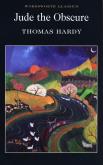
Jude Fawley is a rural stone mason with intellectual aspirations. Frustrated by poverty and the indifference of the academic institutions at the University of Christminster, his only chance of fulfilment seems to lie in his relationship with his unconventional cousin, Sue Bridehead. But life as social outcasts proves undermining, and when tragedy occurs, Sue has no resilience and Jude is left in despair.
Hardy’s portrait of Jude, the idealist and dreamer who is a prisoner of his own physical nature, is one of the most haunting and desperate of his creations. Jude the Obscure is a dark yet compassionate account of the insurmountable frustrations of human existence which reflect Hardy’s yearning for the spiritual values of the past and his despair at their decline.
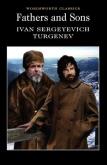
Fathers and Sons is one of the greatest nineteenth century Russian novels, and has long been acclaimed as Turgenev's finest work. It is a political novel set in a domestic context, with a universal theme, the generational divide between fathers and sons. Set in 1859 at the moment when the Russian autocratic state began to move hesitantly towards social and political reform, the novel explores the conflict between the liberal-minded fathers of Russian reformist sympathies and their free-thinking intellectual sons whose revolutionary ideology threatened the stability of the state.
At its centre is Evgeny Bazorov, a strong-willed antagonist of all forms of social orthodoxy who proclaims himself a nihilist and believes in the need to overthrow all the institutions of the state. As the novel develops Bazarov's political ambitions become fatally meshed with emotional and private concerns, and his end is a tragic failure. The novel caused a bitter furore on its publication in 1862, and this, a year later, drove Turgenev from Russia.
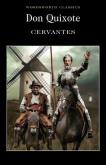
Cervantes’ tale of the deranged gentleman who turns knight-errant, tilts at windmills and battles with sheep in the service of the lady of his dreams, Dulcinea del Toboso, has fascinated generations of readers, and inspired other creative artists such as Flaubert, Picasso and Richard Strauss. The tall, thin knight and his short, fat squire, Sancho Panza, have found their way into films, cartoons and even computer games.
Supposedly intended as a parody of the most popular escapist fiction of the day, the ‘books of chivalry’, this precursor of the modern novel broadened and deepened into a sophisticated, comic account of the contradictions of human nature. On his ‘heroic’ journey Don Quixote meets characters of every class and condition, from the prostitute Maritornes, who is commended for her Christian charity, to the Knight of the Green Coat, who seems to embody some of the constraints of virtue.
Cervantes’ greatest work can be enjoyed on many levels, all suffused with a subtle irony that reaches out to encompass the reader, and does not leave the author outside its circle.
Peter Motteux’s fine eighteenth-century translation, acknowledged as one of the best, brilliantly succeeds in communicating the spirit of the original Spanish.
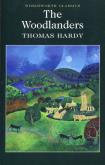
In this classically simple tale of the disastrous impact of outside life on a secluded community in Dorset, now in a new edition, Hardy narrates the rivalry for the hand of Grace Melbury between a simple and loyal woodlander and an exotic and sophisticated outsider. Betrayal, adultery, disillusion, and moral compromise are all worked out in a setting evoked as both beautiful and treacherous. The Woodlanders, with its thematic portrayal of the role of social class, gender, and evolutionary survival, as well as its insights into the capacities and limitations of language, exhibits Hardy's acute awareness of his era's most troubling dilemmas.
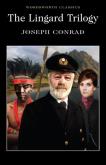
Almayer’s Folly was Conrad’s outstanding debut novel: as well as exploring the culture of a part of the world previously unknown to English fiction, it showed immense sophistication in its handling of narrative, time-shifts and point of view. Hailed as ‘a writer of genius’ by contemporary reviewers, Conrad returned to the same riverine settlement in Borneo in his second novel, An Outcast of the Islands. Set some 15 years earlier, this prequel to Almayer’s Folly tells how Lingard lost his monopoly of trade in Sambir, and follows the dangerous rivalry of his protegés Willems and Almayer. In The Rescue, the narrative moves even further back in time and shows the young, idealistic Lingard torn between his loyalties to his Sulawesi allies and his unexpected attraction to Edith Travers, with explosive consequences. Throughout this sequence of novels, the fascinating figure of Captain Lingard comes steadily into the foreground.
Wordsworth Classics makes the Lingard Trilogy available, for the first time, in a single volume.
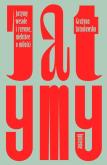
Jatymy"" to zbiór miniaturowych opowiadań, w których autorka zagląda pod podszewkę dobrze znanego nam świata. Mają w sobie coś z bajek, filozoficznych opowiastek, flash fiction, udramatyzowanych scenek, a nawet kabaretowych skeczy. Może są nowym gatunkiem?
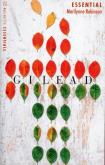
In 1956, toward the end of Reverend John Ames's life, he begins a letter to his young son, a kind of last testament to his remarkable forebears. 'It is a book of such meditative calm, such spiritual intensity that is seems miraculous that her silence was only for 23 years; such measure of wisdom is the fruit of a lifetime. Robinson's prose, aligned with the sublime simplicity of the language of the bible, is nothing short of a benediction. You might not share its faith, but it is difficult not to be awed moved and ultimately humbled by the spiritual effulgence that lights up the novel from within' Neel Mukherjee, The Times 'Writing of this quality, with an authority as unforced as the perfect pitch in music, is rare and carries with it a sense almost of danger - that at any moment, it might all go wrong. In Gilead, however, nothing goes wrong' Jane Shilling, Sunday Telegraph
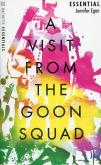
A Visit from the Goon Squad is a book about the interplay of time and music, about survival, about the stirrings and transformations set inexorably in motion by even the most passing conjunction of our fates. In a breathtaking array of styles and tones ranging from tragedy to satire to PowerPoint, Egan captures the undertow of self-destruction that we all must either master or succumb to; the basic human hunger for redemption; and the universal tendency to reach for both—and escape the merciless progress of time—in the transporting realms of art and music. Sly, startling, exhilarating work from one of our boldest writers.
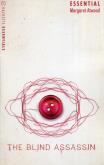
Laura Chase's older sister Iris, married at eighteen to a politically prominent industrialist but now poor and eighty-two, is living in Port Ticonderoga, a town dominated by their once-prosperous family before the First War. While coping with her unreliable body, Iris reflects on her far from exemplary life, in particular the events surrounding her sister's tragic death. Chief among these was the publication of THE BLIND ASSASSIN, a novel which earned the dead Laura Chase not only notoriety but also a devoted cult following.
Sexually explicit for its time, THE BLIND ASSASSIN describes a risky affair in the turbulent thirties between a wealthy young woman and a man on the run. During their secret meetings in rented rooms, the lovers concoct a pulp fantasy set on Planet Zycron. As the invented story twists through love and sacrifice and betrayal, so does the real one; while events in both move closer to war and catastrophe. By turns lyrical, outrageous, formidable, compelling and funny, this is a novel filled with deep humour and dark drama.
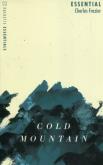
A soldier wounded in the Civil War, Inman turns his back on the carnage of the battlefield and begins the treacherous journey home to Cold Mountain, and to Ada, the woman he loved before the war began.
As Inman attempts to make his way across the mountains, through the devastated landscape of a soon-to-be-defeated South, Ada struggles to make a living from the land her once-wealthy father left when he died. Neither knows if the other is still alive.
Rodzina Auerbachów przeprowadza się do wielkiego domu, znajdującego się obok nowo powstającego osiedla. Na tle urokliwego jeziora, w sąsiedztwie ruin historycznego zamku, rozgrywają się skomplikowane losy bohaterów: miłość miesza się z nienawiścią, podziw z zazdrością, zdrada z wiernością...
Ten produkt jest zapowiedzią. Realizacja Twojego zamówienia ulegnie przez to wydłużeniu do czasu premiery tej pozycji. Czy chcesz dodać ten produkt do koszyka?