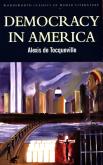
Democracy in America is a classic of political philosophy. Hailed by John Stuart Mill and Horace Greely as the finest book ever written on the nature of democracy, it continues to be an influential text on both sides of the Atlantic, above all in the emerging democracies of Eastern Europe.
De Tocqueville examines the structures, institutions and operation of democracy, and shows how Europe can learn from American success and failures. His central theme is the advancement of the rule of the people, but he also predicts that slavery will bring about the 'most horrible of civil wars', foresees that the USA and Russia will be the Superpowers of the twentieth century, and is 150 years ahead of his time in his views on the position and importance of women.
Publikacja powstała na bazie wywiadów z osobami, które wyemigrowały z państw byłej Jugosławii w czasie konfliktów zbrojnych, które miały miejsce w latach 90. XX wieku, lub po nich. Zgromadzony w ten sposób materiał ukazał w szalenie sugestywny sposób przyczyny, przebieg i konsekwencje toczących się konfliktów .
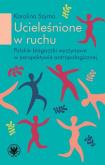
Antropologiczne spojrzenie na cielesność w kobiecym bieganiu wyczynowym z punktu widzenia autoetnografii, antropologii ciała oraz antropologii sportu. Autorka przyjmuje dwie uzupełniające się perspektywy: wewnętrzną, czyli zapis zmysłowy odczuwania biegu, oraz zewnętrzną, jaką jest próba pokazania, w jaki sposób zawodniczki poddawane są sportowej dyscyplinie i jednocześnie jak konstruuje się kobieca sprawczość w bieganiu wyczynowym.
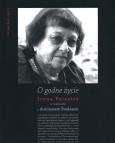
Tę książkę, pomyślaną jako wywiad-rzeka, powinien znać każdy, kto interesuje się historią Litwy ostatnich kilkudziesięciu lat. Irena Veisaite jest jednym z najświatlejszych ludzi w naszym kraju, jest uosobieniem tolerancji i zdrowego rozsądku. Najwięcej uwagi poświęca kulturze, zwłaszcza teatrowi, i opozycji kulturalnej w okresie sowieckim. Czyni to z wyjątkową roztropnością, unikając skrajności i pustosłowia, a przy tym wnikliwie rozpatruje także złożone kwestie filozoficzne.
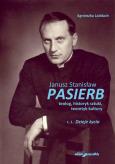
Prezentowana książka świadczy o dużej samodzielności badawczej, erudycji i kompetencjach naukowych autorki, a w warstwie metodologiczno-merytorycznej stanowi poważne osiągnięcie historiograficzne, dokonane w oparciu o najlepsze wzorce pisania prac biograficznych.ks. prof. dr hab. Anastazy Nadolny (fragment recenzji)Ogromna dawka informacji na temat życia, działalności i myśli Janusza Stanisława Pasierba, które udało się Autorce zgromadzić, znacznie wzbogaca naszą wiedzę o tej postaci. (...) Pragnę podkreślić niezwykle obszerny zestaw źródeł historycznych i literatury przedmiotu. Trzeba też bardzo wysoko ocenić kwerendę przeprowadzoną przez Autorkę, zarówno w kraju, jak i za granicą, w archiwach kościelnych, państwowych i uczelni wyższych, zbiorach specjalnych bibliotek czy wreszcie zasobach archiwów medialnych.dr hab. Adam Kucharski (fragment recenzji)
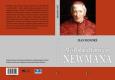
Książka Myśl Johna Henry’ego Newmana autorstwa kardynała Jeana Honoré – wybitnego znawcy dorobku intelektualnego angielskiego konwertyty – w tłumaczeniu Czesława Mazurka przystępnie przybliża istotę myśli Newmana. Autor zaprasza czytelnika do zapoznania się z postacią anglikanina, który został katolickim kardynałem, i jego nauką, ostatecznie prowadzącą do mistycznego zjednoczenia z Bogiem i głoszącą, że największym zagrożeniem dla sumienia jest relatywizm myślowy, według którego wartości poznawcze, etyczne, estetyczne oraz związane z nimi normy i oceny są względne.
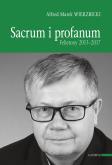
Książka jest zbiorem 48 felietonów pisanych z miesiąca na miesiąc w latach 2013–2017. Wybitny filozof, publicysta i poeta ks. Alfred Marek Wierzbicki zaprasza czytelników do świata swojego odczuwania i własnych przemyśleń. Otwarcie dzieli się swoimi poglądami. Unika moralizowania i nie boi się protestować wobec spraw niepokojących. Pisze z głębi serca, bo jak sam zauważa: „Subiektywność i zaangażowanie są skrzydłami felietonisty”. Wnikliwe i precyzyjne pióro felietonisty dotyka zagadnień związanych z Kościołem, judaizmem, pamięcią o Żydach, uchodźcami. Zachęca do wyjścia z gorsetu schematów ograniczających myślenie. Poszerza perspektywę patrzenia na Lublin jako europejskie miasto kultury. I właśnie ten klimat Lublina, europejskiego miasta kultury, przenika książkę ks. Wierzbickiego. Szerokość horyzontów Autora sprawia, te miniatury publicystyczne nabierają ponadczasowej wartości.
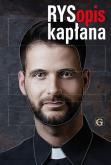
Książka Rysopis kapłana. Wizerunek księdza w kulturze polskiej w XXI wieku to dwanaście tekstów, które są odpowiedzią na ankietę przygotowaną przez redaktorów czasopisma „Akcent”. Pomysłodawcy zaprosili do współpracy księży zajmujących się literaturą, sztuką oraz pracą naukową. Wśród respondentów znaleźli się m.in.: o. Tomasz Dostatni OP, ks. Alfred Wierzbicki, ks. Jerzy Szymik, o. Wacław Oszajca SJ, ks. Andrzej Luter. Pytania postawione księżom – poetom, profesorom, publicystom, duszpasterzom – dotyczyły ważkich spraw i skłoniły do wielu ciekawych przemyśleń.
Teksty wcześniej publikowane przez „Akcent” mają wyjątkową wartość – są zapisem głosu konkretnych osób, osobistymi – czasem wręcz intymnymi – refleksjami na tematy tak trudne, jak kwestia powołania, wierności własnym przekonaniom, stosunku do hierarchii Kościoła czy relacji z Bogiem.
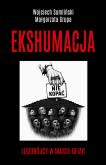
We Wprowadzeniu abp Stanisław Budzik napisał: „Książka ta wydaje się w swym zamyśle czymś w rodzaju rozmowy o kapłaństwie prowadzonej przez samych księży, w nadziei, że dołączą do niej również czytelnicy”. Każdy, kto sięgnie po tę publikację, weźmie udział w ważnej debacie na temat obrazu kapłana w kulturze XXI wieku, podejmie dialog o tak istotnej dla historii Polski obecności kapłana i jego posługi na wielu płaszczyznach życia człowieka. Sam ostatecznie rozważy i zdecyduje, jak ma się do rzeczywistości hasło „Księża na Księżyc” wypisywane na murach i ścianach budynków.
Treścią publikacji są świadectwa kapłanów i sióstr zakonnych dotyczące powołania. Obejmują zasadniczo okres od momentu, gdy zaczęło się ono rodzić, aż do czasu, gdy ukształtowała się decyzja o wstąpieniu do seminarium czy do zgromadzenia zakonnego. Książka zawiera trzydzieści tekstów podzielonych na dwie części. Pierwsza obejmuje świadectwa kapłanów, druga – świadectwa sióstr zakonnych. Wśród osób duchownych są zarówno księża diecezjalni, jak i ojcowie ze zgromadzeń zakonnych. Autorzy i Autorki należą do różnych diecezji i wspólnot życia konsekrowanego. Historie powołań to kategoria najpiękniejszych świadectw działania Boga. Książka wyrasta z pragnienia dzielenia się żywą wiarą i budzenia jej w przekonaniu, że Chrystus stale przechadza się między ludźmi i pociąga ich ku sobie. Szczególnym adresatem tych opowiadań są ci, którzy zastanawiają się nad swoją przyszłością i szukają swego miejsca w świecie. Może już przeczuwają, że Pan ma dla nich specjalną misję.
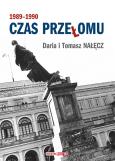
Musimy wygrać! jak narodziła się III RPKsiążka Darii i Tomasza Nałęczów Czas przełomu 1989-1990 opisuje budowę demokratycznego państwa prawa. Możemy prześledzić, jak tworzono od podstaw system parlamentarny i samorząd na poziomie lokalnym, wprowadzano gwarancje praw obywatelskich, apolityczności policji i niezawisłości sędziów.Rewolucyjne wydarzenia, zapoczątkowane rozmowami przy Okrągłym Stole, a zwieńczone pierwszymi powszechnymi wyborami prezydenckimi autorzy przypominają z werwą i anegdotą. Odpowiadają na wiele pytań. Co się stało, że obydwie strony - my i oni - zeszły z barykady? Jak przebiegały pęknięcia w obu, z pozoru monolitycznych, blokach? Czego się bali zwycięzcy czerwcowych wyborów? Pasjonująca książka dla wszystkich, którzy chcą poznać narodziny III RP.
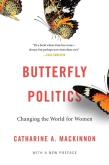
“Sometimes ideas change the world. This astonishing, miraculous, shattering, inspiring book captures the origins and the arc of the movement for sex equality. It’s a book whose time has come—always, but perhaps now more than ever.”—Cass Sunstein, coauthor of Nudge
Under certain conditions, small simple actions can produce large and complex “butterfly effects.” Butterfly Politics shows how Catharine A. MacKinnon turned discrimination law into an effective tool against sexual abuse—grounding and predicting the worldwide #MeToo movement—and proposes concrete steps that could have further butterfly effects on women’s rights. Thirty years after she won the U.S. Supreme Court case establishing sexual harassment as illegal, this timely collection of her previously unpublished interventions on consent, rape, and the politics of gender equality captures in action the creative and transformative activism of an icon.
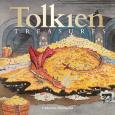
"This volume is an excellent introduction to the world of J. R. R. Tolkien. Recounting in images and words the story of his early years and life as a scholar and family man, the book also illustrates some of the primary items associated with ""The Hobbit"", ""The Lord of the Rings"", and ""The Silmarillion"". These include manuscripts, drawings, watercolours, letters, family photographs, and private papers. It also includes his remarkably detailed and endlessly engaging maps of Middle Earth produced over many years an annotated in his own hand.
The book brings vividly to life the astonishing range of Tolkien's skills, from scholar, to linguist, storyteller, illustrator, herald, and mapmaker. Drawing on the Bodleian Library's vast Tolkien archive, this book gives us a unique and highly personal glimpse into Tolkien's worlds – scholarly, literary, creative, and domestic.
From Tolkien's childhood in the Midlands and his experience of the First World War to his studies at school and university, and from his exquisite illustrations for his novels to his intricate and beautiful maps showing Middle-earth's topography, this stunning book, faithfully reproducing many of the treasures of the Tolkien Archive in Oxford, is the perfect introduction to Tolkien's life and works."
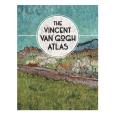
An extraordinary survey of Van Gogh’s travels, this book explores the influential artist’s journeys across the continent from his hometown of Zunderf in the southern Netherlands to Auvers-sur-Oise near Paris, where his life came to an end.
This publication features hundreds of colour images, including maps, contemporary photographs, and related artworks by Van Gogh, which paint a vivid picture of his life and career.
Nienke Denekamp and Rene van Blerk convey a vivid account of Van Gogh’s story in this book. The accessible style allows readers of all ages to familiarise themselves with one of history’s great artists.
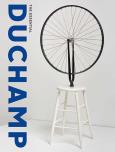
"This richly illustrated publication explores the full career of the hugely influential and endlessly fascinating French-American artist Marcel Duchamp (1887-1968). A pioneer whose creative output was predicated on a fundamental questioning of what art is, Duchamp is well known despite remaining mysterious as an artist, owing to his elusive persona and the unconventional nature of his work.
Focusing on the world-renowned Duchamp collection at the Philadelphia Museum of Art, ""The Essential Duchamp"" tells the artist's story through four key periods. The book begins with his early paintings and engagement with the avant-garde, then charts his abandonment of painting and invention of the readymade. This is followed by the creation of his alter ego Rrose Selavy and the optical experiments of the interwar years, and, finally, by the making of ""Etant donnes"" (1946-66), the project that occupied the artist in the final two decades of his life. Shorter accompanying texts include explanations of key terms Duchamp used for his innovative ideas – readymade, precision optics, pictorial nominalism, and infrathin – as well as interviews and statements by the artist about his own art and ideas."
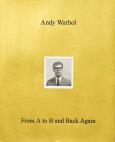
"One of the most emulated and significant figures in modern art, Andy Warhol (1928-1987) rose to fame in the 1960s with his iconic Pop pieces. Warhol expanded the boundaries by which art is defined and created groundbreaking work in a diverse array of media that includes paintings, sculptures, prints, photographs, films, and installations.
This ambitious book is the first to examine Warhol's work in its entirety. It builds on a wealth of new research and materials that have come to light in recent decades and offers a rare and much-needed comprehensive look at the full scope of Warhol's production – from his commercial illustrations of the 1950s through his monumental paintings of the 1980s. Donna De Salvo explores how Warhol's work engages with notions of public and private, the redefinition of media, and the role of abstraction, while a series of incisive and eye-opening essays by eminent scholars and contemporary artists touch on a broad range of topics, such as Warhol's response to the AIDS epidemic, his international influence, and how his work relates to constructs of self-image seen in social media today."
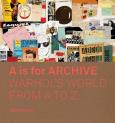
A riveting excursion through Warhol’s incomparable personal collections, from the bizarre to the illuminating
Andy Warhol (1928–1987) remains an icon of the 20th century and a leading figure in the Pop Art movement. He also was an obsessive collector of things large and small, ordinary and quirky. Since 1994, The Andy Warhol Museum has studied and safeguarded the artist’s archive encompassing hundreds of thousands of these objects, at turns strange, amusing, and poignant. From this array, many of these items have been researched and described in this book for the first time.
Written by Matt Wrbican, the foremost authority on Warhol’s personal collection, A is for Archive features curated selections from this collection, shedding light on the artist’s work and motivations, as well as on his personality and private life. The volume is organized alphabetically, honoring Warhol’s own use of a whimsical alphabetical structure: “A is for Autograph” (a selection of signed objects, many of which influenced his most popular works), “F is for Fashion” (featuring his collections of cowboy boots, neckties, and jackets), “S is for Stamp” (works of art by Warhol and others relating to stamps and mailed items), and “Z is for Zombie” (a grouping of photographs and ephemera of Warhol in various disguises: drag, robot, zombie, clown). The book also features an insightful essay by renowned art critic and Warhol biographer Blake Gopnik.
For the myriad fans of Warhol and his quixotic world, this volume is essential and unforgettable.
At the turn of the twentieth century, Swedish artist Hilma af Klint (1862–1944) created a body of work that left visible reality behind, exploring the radical possibilities of abstraction years before Vasily Kandinsky, Kazimir Malevich, or Piet Mondrian. Many consider her the first trained artist to create abstract paintings. With Hilma af Klint: Notes and Methods, we get to experience the arc of af Klint’s artistic investigation in her own words.
Hilma af Klint studied at the Royal Swedish Academy in Stockholm where she was part of the first generation of female students. Up until the beginning of the century, she painted mainly landscapes and detailed botanical studies. Her work from this period was that of a young artist of her time who meticulously observed the world around her. But, like many of her contemporaries, af Klint was also interested in the invisible relationships that shape our world, believing strongly in a spiritual dimension. She joined the Theosophical Society, and, with four fellow female members who together called themselves “The Five,” began to study mediumship. Between 1906 and 1915, purportedly guided by a higher power, af Klint created 193 individual works that, in both scale and scope of imagery, are like no other art created at that time. Botanically inspired images and mystical symbols, diagrams, words, and geometric series, all form part of af Klint’s abstract language. These abstract techniques would not be seen again until years later.
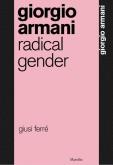
What characterize Armani's style and make it so contemporary and relevant are crossovers of identity and culture, as can be seen from the mannish taste that influences many of his recent collections. But what has marked out Armani's research and continues to set it apart is the ethics from which he derives his aesthetics. From his very first interviews, he has always explained his choices in terms of concepts like dignity, rigor, freedom and authority. A way of accentuating the qualities of strength in women that complement the courage to display sensuality and tenderness in men. This interpretation of the nature of cross gendering is the strongest indication of the contemporary nature of his creations: to illustrate this phenomenon thoroughly, going beyond what the success of the Armani jacket is usually attributed to, the book establishes connections between art, culture and society, for the Armani style is the representation of a liquid society, in which every boundary is crossed and redrawn. What emerges is a vivid, intriguing picture of society and its changes and of the man who, through fashion, has been able to interpret and even anticipate them.
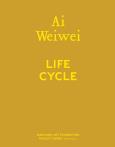
Ai Weiwei (born 1957) is recognized around the globe for his conceptual installations that generate dialogue between the contemporary world and traditional Chinese modes of thought and production. Ai’s multifaceted installation at the Marciano Art Foundation includes Life Cycle, a sculptural response to the global refugee crisis, and a series of figures based on mythic creatures from the Classic of Mountains and Seas, crafted from bamboo and silk.
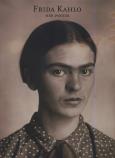
The Diego Riviera-Anahuacalli and Frida Kahlo Museum Trust Fund, as well as its Technical Committee, are honored to present the book Frida Kahlo, Her Photographs, which includes over 500 pictures from Frida Kahlo Museum Archive. Pablo Ortiz Monasterio - a photographer, editor, curator, and eager promoter of photography in Mexico - was in charge of this selection.
Ten produkt jest zapowiedzią. Realizacja Twojego zamówienia ulegnie przez to wydłużeniu do czasu premiery tej pozycji. Czy chcesz dodać ten produkt do koszyka?