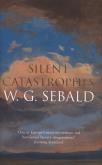
From acclaimed critic, novelist and academic W. G. Sebald, author of Austerlitz and The Rings of Saturn, a collection of essay on the Austrian writers who meant so much to him
As a German in self-chosen exile from his country of birth, Sebald found a particular affinity with these writers from a neighbouring nation. The traumatic evolution of Austria from vast empire to diminutive Alpine republic, followed by its annexation by Germany, meant that concepts such as ‘home/land’, ‘borderland’ and ‘exile’ occupy a prominent role in its literature, just as they would in Sebald’s own.
Through a series of remarkable close readings of texts by Bernhard, Stifter, Kafka, Handke, Roth and more, Sebald charts both the pathologies which so often drove their work and the seismic historical forces which shaped them. This sequence of essays will be a revelation to Sebald’s English-language readers, tracing as they do so many of the themes which animate his own literary writings, to which these essays form a kind of prelude.
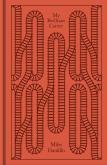
The beloved Australian classic, published in a stunning Penguin Clothbound Classics edition for the first time
Miles Franklin’s debut novel follows the vivacious and rebellious sixteen-year-old Sybylla Melvyn – closely modelled on Franklin herself – as she fights to break free of restrictive bush life. Growing up on her parents’ outback farm, Sybylla is desperate to read, write, sing and achieve great things. Yet her aspirations for a ‘brilliant career’ are persistently thwarted, first by the arduous demands of rural family life, and later by the shackles of a proposed conventional marriage to the wealthy Harold Beecham. With only her brilliant, conflicted mind to guide her, Sybylla is forced to define a life on her own terms.
My Brilliant Career is acclaimed for capturing the spirit of Australia at the turn of the twentieth century. The struggles of its fiery, precocious protagonist shine a light on the emergent women’s rights and suffrage movement during this period, and memorably evoke the intensity of youth.
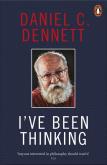
One of philosophy's finest minds looks back over a life in thought
'Who would have guessed that a philosopher's life could be so full of adventures?'
Daniel C. Dennett, philosopher and cognitive scientist, has spent his career considering consciousness. I've Been Thinking traces the development of Dennett's own intellect and instructs us how we too can become good thinkers.
Dennett's restless curiosity leads him from his childhood in Beirut to Harvard, and from Parisian jazz clubs to 'tillosophy' on his tractor in Maine. Along the way, he encounters and debates with a host of legendary thinkers, and reveals the breakthroughs and misjudgments that shaped his paradigm-shifting philosophies. Thinking, Dennett argues, is hard, and risky. In fact, all good philosophical thinking is inevitably accompanied by bafflement, frustration and self-doubt. It is only in getting it wrong that we, very occasionally, find a way to get it right.
This memoir by one of the greatest philosophers of our time will speak to anyone who seeks a life of the mind with adventure and creativity.
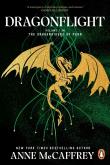
‘Pern is where dragon riding was conceived, and fifty years later, Anne McCaffrey’s epic tale remains a masterpiece of adventure, intrigue, and romance!’ Danielle L. Jensen, New York Times bestselling author of A Fate Inked in Blood
‘Anne McCaffrey's Pern novels are truly foundational books. The seeds of every dragonrider story are here, if not of every take on magical bonding. They carried me away as a young reader, and I hope they'll do so for new readers now.’ Naomi Novik, author of the Temeraire series
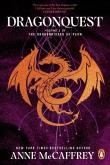
Lessa and her golden queen dragon may have given their world a fighting chance against the deadly Thread by bringing several hundred dragons and their riders forward in time, but this has also caused other problems to arise. The Oldtimers, as they are known, are having a difficult time adjusting to their more modern world, and tensions are rising. Worse, Threadfall is becoming more unpredictable, which makes it harder to combat.
Inspired by Lessa’s example, brown dragonrider F’nor hatches a bold plan to cut through these growing tensions by destroying the Thread at its source: the mysterious Red Star. But his quest to go where no man—or dragon—has gone before will risk not only his life, but the heart of a woman who has already lost far more than she can bear.
Don’t miss the original trilogy from Anne McCaffrey’s beloved Dragonriders of Pern series:
DRAGONFLIGHT • DRAGONQUEST • THE WHITE DRAGON
VOLUME 1 in the DRAGONRIDERS OF PERN
‘The world building opened my eyes to what fantasy could be; the characters introduced me to women in roles of power; and the romances left my young heart aflutter. No series has ever captured my imagination so completely as Pern did.’ Susan Dennard, New York Times bestselling author of the Witchlands Series
\"Anne McCaffrey, one of the queens of science fiction, knows exactly how to give her public what it wants\" - THE TIMES
‘Anne McCaffrey’s Pern books forever changed how readers looked at dragons—not just fearsome beasts to be slain, but bonded warrior partners...books that shaped a generation and more of fantasy writers.’ Cassandra Clare, No. 1 New York Times bestselling author
\"Read Dragonflight and you're confronted with McCaffrey the storyteller in her prime...\" - SFX
On a beautiful world called Pern, Lessa is an outcast survivor—her parents murdered, her birthright stolen—a fierce young woman who has never stopped dreaming of revenge. That is, until an ambitious young dragonrider, F’lar, offers her something even greater: the chance to lead Pern at his side by Impressing a golden dragon with whom she will share a telepathic bond more intimate than any human connection. Although there is also her intense relationship with F’lar himself.
But Lessa’s fierceness and courage will be put to the test when an ancient scourge returns to the land: a deadly silver spore that falls from the sky, destroying all it touches. Only dragons can fight this Thread, and there are not enough dragons to protect all of Pern. Lessa and her dragon may hold the key to their world’s salvation . . . but executing her daring plan may be costlier than she ever envisioned.
Don’t miss the original trilogy from Anne McCaffrey’s beloved Dragonriders of Pern series:
DRAGONFLIGHT • DRAGONQUEST • THE WHITE DRAGON
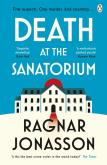
An old sanatorium. A terrifying murder. Six suspects and a case that never closed . . . Discover the new locked-room mystery by the Sunday Times bestselling author
Once a hospital dedicated to treating tuberculosis, The Akureyri Sanatorium now sits haunted by the ghosts of its past. But a single wing remains open, housing six employees.
When one of the hospital's nurses, Yrsa, is found brutally murdered, it sets in motion a series of terrifying events.
Despite just six suspects, the case remains unsolved two decades later. Until young criminologist, Helgi Reykdal, attempts to put the mysteries of the hospital’s past to rest . . .
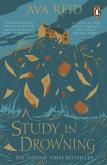
Effy has always believed in fairy tales. She's had no choice. Since childhood, she's been haunted by visions of the Fairy King. She's found solace only in the pages of Angharad - a beloved epic about a mortal girl who falls in love with the Fairy King, and then destroys him.
Effy's tattered copy is all that's keeping her afloat through her stifling first term her prestigious architecture college. So when the late author's family announces a contest to design his house, Effy fells certain this is her destiny.
But Hiraeth Manor is an impossible task: a musty, decrepit estate on the brink of crumbling into a hungry sea. And when Effy arrives, she finds she isn't the only one who's made a temporary home there. Preston Héloury, a stodgy young literature scholar, is studying Myrddin's papers and is determined to prove her favourite author is a fraud.
As the two rival students investigate the reclusive author's legacy, piecing together clues through his letters, books, and diaries, they discover that the house's foundation isn't the only thing that can't be trusted. There are dark forces, both mortal and magical, conspiring against them - and the truth may bring them both to ruin.
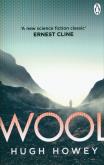
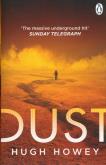
In a ruined and hostile landscape, in a future few have been unlucky enough to survive, a community exists in a giant underground silo.
Inside, men and women live an enclosed life full of rules and regulations, of secrets and lies.
To live, you must follow the rules. But some don't. These are the dangerous ones; these are the people who dare to hope and dream, and who infect others with their optimism.
Their punishment is simple and deadly. They are allowed outside.
Jules is one of these people. She may well be the last.
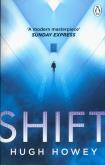
In the aftermath of the uprising, the people of Silo 18 are coming to terms with a new order.
Some embrace the change, others fear the unknown; none have control of their fate.
The Silo is still in danger.
There are those set on its destruction.
Jules knows they must be stopped.
The battle has been won.
The war is just beginning.
The much anticipated prequel to bestseller Wool that takes us back to the beginnings of the silo.
In a future less than fifty years away, the world is still as we know it. Time continues to tick by. The truth is that it is ticking away.
A powerful few know what lies ahead. They are preparing for it. They are trying to protect us.
They are setting us on a path from which we can never return.
A path that will lead to destruction; a path that will take us below ground.
The history of the silo is about to be written.
Our future is about to begin.
You know him as the founder of Microsoft; the philanthropic, kind-hearted billionaire who has donated endless funds to good causes around the world. But there’s another side to Bill Gates.
In this fearless, groundbreaking investigation, Tim Schwab offers readers a counter-narrative, one where Gates has used his monopolistic approach in business to amass a stunning level of control over public policy, scientific research and the news media. Whether he is pushing new educational standards in America, health reforms in India or industrialized agriculture in Africa, Gates’s unbridled social experimentation has shown itself to be not only undemocratic, but also ineffective.
All of which begs the question: why should the super rich be able to transform their wealth into political power, and just how far can they go?
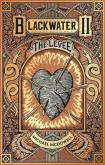
Perdido, Alabama, has scarcely recovered from the floods that devasted the community. Now a scheme to build a levee is dogged by a series of mysterious events: unpredictable currents in the river, worrying disappearances. Meanwhile in the Caskey family, Marie-Love, the matriarch, continues her machinations against Elinor, her strange daughter in law. Plots, unholy alliances, sacrifices - in the struggle between them, nothing is off limits. In Perdido, the changes will be profound; the consequences irreversible.
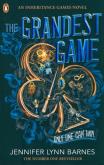
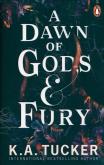
Impossible puzzles, shocking twists and addictive romance combine in this unmissable new chapter in the #1 bestselling INHERITANCE GAMES saga - guaranteed to keep you hooked until the very last page . . .
A RUTHLESS GAME. SEVEN MYSTERY PLAYERS. LOVE AND LIVES ARE AT STAKE.
Welcome to the Grandest Game, a life-changing competition run by billionaire Avery Grambs and the four infamous Hawthorne brothers.
LYRA tells herself she’s only playing for the money – not for answers about her father’s death and certainly not to confront the infuriating, enigmatic GRAYSON Hawthorne. Facing off against Lyra are GIGI, Grayson’s half-sister, who is determined to prove herself, and ROHAN, who has few morals, a dangerous skill set, and no future – unless he wins the game.
Swept away to a luxury private island, Lyra, Gigi and Rohan must do whatever it takes to best one another, a cast of formidable rivals, and a game that only the sharpest minds can conquer. As sparks fly and the challenges push the players to their limits, it becomes clear that everyone has secrets, ad the past won’t stay buried forever.
WHO HAS WHAT IT TAKES TO WIN?
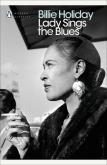
Lady Sings the Blues is the inimitable autobiography of one of the greatest icons of the twentieth century. Born to a single mother in 1915 Baltimore, Billie Holiday had her first run-in with the law at aged 13. But Billie Holiday is no victim. Her memoir tells the story of her life spent in jazz, smoky Harlem clubs and packed-out concert halls, her love affairs, her wildly creative friends, her struggles with addiction and her adventures in love. Billie Holiday is a wise and aphoristic guide to the story of her unforgettable life.
Ten produkt jest zapowiedzią. Realizacja Twojego zamówienia ulegnie przez to wydłużeniu do czasu premiery tej pozycji. Czy chcesz dodać ten produkt do koszyka?