W tej strefie zapraszamy czytelników tak zwane artystyczne dusze po książki z kategorii Sztuka. Polecamy szereg publikacji o sztuce i jej historii,ciekawostki i portfolia artystów, eseje, albumy, książki o malarstwie, rzeźbiarstwie, architekturze oraz histoii fotografii. Biografie ciekawych artystów, książki i powieści przedstawiające fascynujące losy malarzy i osób uwiecznianych na obrazach. W tym dziale tylko ksiązki ze sztuka w tle.
The classic and definitive monograph on iconic architect Mies van der Rohe
This is the most readable, comprehensive, and beautiful book ever published on one of the twentieth century’s most influential architects, now available with a stunning new cover. Known for the beauty and purity of his work, Ludwig Mies van der Rohe built remarkable houses, skyscrapers, museums, and multibuilding campuses. Accompanied by more than 700 drawings, photographs, plans, and diagrams,
Mertins’ rich and highly readable text traces the aesthetic and intellectual context for all of Mies van der Rohe’s work, with in-depth discussions of his most important buildings and projects. The clarity of Mies’s architecture belies the diversity of his interests, which included philosophy and science as well as design, and Mertin’s rigorous and accessible text gives the reader a clear description of all the most important of Mies’s buildings as well as the intellectual contexts for their design.
The most complete in-depth survey of global Mid-Century Modern homes ever published - more than 400 stunning homes from 40 countries, designed by more than 290 of the world's greatest architects
The love of Mid-Century style is at an all-time high, with a steady flow of exhibitions, house tours, and books celebrating its unique cross-generational appeal. This collection of more than 400 of the world's most glamorous homes from more than 290 architects, showcases work built between the 1940s and 1960s by such icons as Marcel Breuer, Le Corbusier, Richard Neutra, Lina Bo Bardi, Alvar Aalto, and Oscar Niemeyer alongside extraordinary but virtually unknown houses in Australia, Africa, and Asia. This stunning and thoroughly researched, comprehensive appraisal is a must-have for all design aficionados, Mid-Century Modern collectors, and anyone looking for inspiration for their own homes.
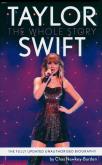
As Taylor releases her 11th album, THE TORTURED POET’S DEPARTMENT, catch up on the full story of Taylor Swift’s stratospheric rise to fame; all any dedicated Swifty needs to know about the pop superstar who’s taking over the world
A small-town girl with incredible talent – and the strength and determination to realise her dream – Taylor Swift has gone from America’s sweetheart to global megastar. But how did she get there? And how has she coped with the realities of fame?
Fully updated in fascinating detail, Taylor Swift: The Whole Story explores Taylor’s musical evolution and her status as a fearless businesswoman operating on her own terms. From her early beginnings in Pennsylvania to the challenges she faced on the road to success, and from her relationships with Harry Styles, Joe Alwyn and Travis Kelce to her record-breaking Eras tour, this is the unmissable account of Taylor’s journey to world domination.
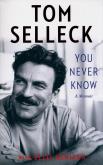
There are many miles from the business school and basketball court at the University of Southern California to 50 million viewers for the final episode of a TV show called Magnum P.I. Tom Selleck has lived every one of those miles in his own iconoclastic and joyful way.
Frank, funny and open-hearted, You Never Know is an intimate memoir from a beloved actor, the story of a remarkable life and thoroughly accidental career. Journey to the top in Hollywood, learn of his mistakes and his well-earned success. Selleck clears up an armload of misconceptions and shares never-told stories. His rambunctious California childhood. His clueless arrival as a good-looking college jock in Hollywood (from the Dating Game to the Fox New Talent Program to co-starring with Mae West). What it was like to emerge as a mega-star in his mid-thirties and remain so for decades to come, an actor whose ease on screen connected with audiences worldwide, while redefining the clichés of manhood.
In You Never Know, Selleck recounts his personal friendships with a vivid army of A-listers, everyone from Frank Sinatra to Carol Burnett to Sam Elliott, paying special tribute to his mentor James Garner of The Rockford Files, who believed, like Selleck, that TV protagonists are far more interesting when they have rough edges. He tips his hat to the American western and the scruffy band of actors, directors and other ruffians who helped define that classic genre, where Selleck has repeatedly found a happy home. Magnum fans will be fascinated to learn how Selleck put his career on the line to make Thomas Magnum a more imperfect hero and explains why he walked away from a show that could easily have gone on for years longer.
Hollywood is never easy, even for stars who make it look that way. Selleck explains how he’s struggled to balance his personal and professional lives, frequently adjusting his career to protect his family’s privacy and normalcy. His journey offers a truly fresh perspective on a changing industry and a changing world. Beneath all the charm, talent, and self-deprecating humor, this memoir reveals an American icon who reached remarkable heights through authenticity.
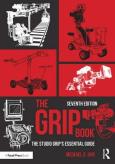
Gain the essential skills of a professional grip to become the jack and master of all trades on any movie or television show set. This new edition has been fully updated and revised and will enable aspiring and professional grips to discover vital insider tips ranging from how to operate cutting-edge rigging and lighting equipment to performing difficult camera mounts on aircraft, boats, trains, and cars.
Seasoned Hollywood grip Michael G. Uva teaches you to install, set up, maintain, and ensure the safety of all equipment on a set, such as C-stands, cameras, and any specialty gear needed for a shoot. Expanded content on navigating the set, including set etiquette and how to succeed as a technical crew member, will jump-start your career and make you a valuable asset on any film or television crew. This seventh edition has been updated to include the latest technology, further explanations of equipment and how to use it for those new to the role, a new chapter on working as a grip on virtual sets. Other features include technical expertise on maintaining the latest and greatest filmmaking equipment; a self-test section containing over one hundred questions and answers; a comprehensive appendix containing a robust glossary of insider and equipment terms; and guidelines on what a grip has to be physically able to perform in their day-to-day duties.
The book is ideal for the aspiring or working grip to use on the role, as well as aspiring students looking to break into the industry.
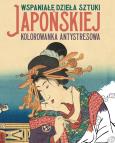
Odkryj świat autentycznych japońskich grafik i drzeworytów!Któż nie kojarzy ikonicznych obrazów z Kraju Kwitnącej Wiśni - wielkiej morskiej fali czy gałązki kwitnącej śliwy na tle księżyca. Tego typu ilustracje, popularne w Japonii w okresie Edo (1603-1868 r.), znane były jako ukiyo-e, co tłumaczy się jako "obrazy przemijającego, ulotnego świata". To najczęściej sceny z życia codziennego, portrety uwodzicielskich kurtyzany, czy aktorów kabuki oraz wspomniane słynne romantyczne pejzaże. Kolekcja, którą trzymasz w dłoniach, to wybór kilkudziesięciu autentycznych japońskich grafik, które możesz pokolorować samodzielnie odkrywając niezwykły kunszt tradycyjnej japońskiej ilustracji.
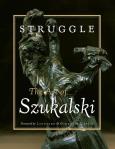
A new printing of Last Gasp’s publication Struggle: The Art of Szukalski, with a foreword by George and Leonardo DiCaprio, presents an overview of Szukalski’s best sculpture and drawings.
Szukalski (1893-1987) was one of the great sculptors of the 20th Century.
Szukalski was a Polish-born sculptor, writer, graphic artist, and heretic. Highly regarded in both the US and Poland between the World Wars, he lapsed into obscurity, living and working in “America’s Cultural Siberia” (Southern California) until comic art collector Glenn Bray rediscovered him in 1973.
Struggle is the first critical view of Szukalski’s work published since 1923 — a 200-page overview of his art.
A new Netflix documentary produced by Leonardo DiCaprio is bringing greater interest and attention to one of the world’s greatest and least-known artists.
Struggle: The Life and Lost Art of Szukalski, tells the story of Stanislav Szukalski, an unparalleled artistic genius who lapsed into obscurity after WWII until comic art collector Glenn Bray rediscovered him in 1973.
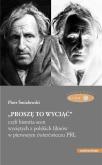
Sceny wycięte z polskich filmów w okresie PRL-u obrosły legendą czegoś bezpowrotnie utraconego. Taśmy z takimi scenami niszczono, a jedyną po nich pozostałością były osobiste opowieści reżyserów, fragmenty scenopisów i dokumenty kolaudacyjne. Dopiero kilkanaście lat temu okazało się, że istnieje jednak pewien wizualny ślad, pozwalający pełniej wyobrazić sobie te utracone sekwencje: to niewykorzystane wcześniej fotosy filmowe, które fotosiści wykonywali na planie. Z wielu negatywów fotograficznych nie robiono nigdy odbitek, spoczywały przez lata w pudłach i dopiero proces skanowania tych materiałów klatka po klatce pozwolił teraz odkryć, że są tam również fotosy ilustrujące wycięte sceny. Autor Proszę to wyciąć analizuje najważniejsze polskie filmy pierwszego ćwierćwiecza PRL-u. Za punkt wyjścia bierze właśnie historię wyciętych z nich scen i próbuje odpowiedzieć na pytanie: jakimi filmami byłyby Pokolenie i Niewinni czarodzieje Andrzeja Wajdy, Nikt nie woła Kazimierza Kutza, Zezowate szczęście Andrzeja Munka czy Rejs Marka Piwowskiego, gdyby nie ingerencje cenzorskie? Jakie treści dobudowywały do tych filmów sceny, których usunięcie zostało autorom odgórnie narzucone? Zestawienie archiwalnych dokumentów produkcyjnych i cenzorskich z odkrytymi fotosami oraz wspomnieniami twórców pozwala najpełniej dziś odtworzyć nie tylko historię konkretnych scen wyciętych z filmów, ale także opisać cały skomplikowany proces ingerowania w dzieło filmowe na różnych etapach jego produkcji. Piotr Śmiałowski - historyk kina polskiego i dziennikarz filmowy. Doktor nauk humanistycznych. W latach 20042019 stały współpracownik miesięcznika "Kino". Od 2009 roku współpracownik portalu Fototeka Filmoteki Narodowej - Instytutu Audiowizualnego oraz Nowych Horyzontów Edukacji Filmowej (noszących od niedawna nazwę Edukacja Młode Horyzonty). Publikował także w "Ekranach", "Images" i "Pleografie". Autor monografii Tadeusz Janczar. Zawód: aktor (2007), wywiadu rzeki z reżyserem Tadeuszem Chmielewskim Jak rozpętałem polską komedię filmową (2012) oraz książki Niewidzialne filmy. Uparci debiutanci (2018) o niezrealizowanych projektach debiutów fabularnych Wojciecha Jerzego Hasa, Janusza Morgensterna oraz Jerzego Hoffmana i Edwarda Skórzewskiego.
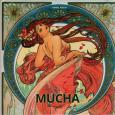
Art Nouveau, elegant ornamentation, and sensual women. Hardly any other artist proved a greater virtuoso in this style than Alphonse Mucha. Discover not only the most beautiful of the Czech artist’s posters, but also many of lesser-known works including oil paintings, furniture, interior design, and murals.
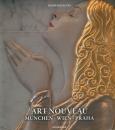
Between 1890 and the beginning of the First World War, a new international style developed in architecture and design. Following the example of the English Arts and Crafts movement, the representatives of Art Nouveau turned against the eclectic excesses of historicism and opposed them with organic forms, plant ornamentation, and functional constructions. This volume shows the highlights of Art Nouveau in Germany, Austria, Bohemia, Hungary, Italy, and Switzerland.
With Art Nouveau there developed a new, international style under various names in the architecture and handicrafts from the 1880s onwards that sought to replace the forms of historicism with plant ornamentation and functional construction. A comprehensive reform of the arts that produced rich floral ornaments in Paris and Brussels, and became an expression of national identity in Barcelona. This volume illuminates the origins of this current and its manifestations in France, Belgium, and Spain.
This richly illustrated monograph delves into the innovative output of one of the world's most prolific international design and architecture practitioners, Tokyo-based Shigeru Ban. Canvassing an enormous compilation of works, this title is a significant contribution to IMAGES' stable of works showcasing renowned architects from around the globe. This book features an array of innovative projects, from commercial and residential innovation strategies to humanitarian works, such as emergency shelters made from paper and modular shelters for earthquake victims.
Shigeru Ban's visionary residential design philosophies encompass timber hybrid structures, including a building constructed from cardboard tubes; the tallest hybrid timber structure in the world for a residential tower in Vancouver; as well as the new home designed for the Aspen Art Museum, which features woven wooden cladding. His innovation extends to the industrial design of an architect's scale pen used for drawing. This book also helps to relay Shigeru Ban's contemporary discourse on architectural culture, and how it is moving in new directions.
This title is a must-have for any serious aficionado of modern architecture, innovative thinking, and design.
Global icon. Songwriting sensation. Fashion phenomenon. Welcome to the Taylor-verse.
Through stunning photographs that explore key outfits from her style evolution alongside expert analysis, Icons of Style pays homage to the artist whose every outfit tells a tale. From country boots to bejewelled body suits, explore the wardrobe of the girl-next-door-turned-superstar, who connects with fans the world over with her ever-evolving attire, eye-catching looks and signature pieces.
Taylor’s relatability, integrity and sartorial storytelling mean this fearless fashion queen will never go out of style.
Immerse yourself in the yokai images and their mesmerizing detail showcased over more than 500 pages in this epic collection!
Lurking beneath the global obsession with manga and anime, there is a world of Japan’s yokai monsters, mutants, and vengeful mononoke spirits, which have long held people’s imaginations in their terrifying grip ever since the Edo period (16th-19th centuries). These fearsome creatures are now gathered together in this gorgeous new release that, for the first time ever, shows many enlargements of these masterpieces! Selections include over 60 works chosen from the collection at the Yumoto Koichi Memorial Japan Yokai Museum (Miyoshi Mononoke Museum), Japan’s – and, in fact, the world’s – only museum specializing in Japanese yokai monsters, each reproduced in high-resolution images with explanations. This compilation provides readers with the rare experience of seeing the brushwork of Edo-era painters like Tsukioka Yoshitoshi in detail firsthand. This is a must-have book for those who love strange worlds and mutant creatures, and for anyone wanting to know more about Japanese yokai monsters.
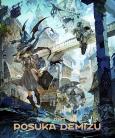
The long-awaited debut collection of illustrations by Posuka Demizu, the up-and-coming manga artist
Posuka Demizu is a rising star among manga artists whose new title, The Promised Neverland, created with co-author Kaiu Shirai, is currently running in the manga magazine Weekly Shonen Jump in Japan. The Promised Neverland Volume 1 will be released by Viz Media in October 2017 (Digital), and December 2017 (Print).
This first collection of Posuka’s work features outstanding artworks from the career so far, along with new illustrations created especially for this edition.
Readers will appreciate seeing Posuka's vibrant characters and compositions rendered in the characteristically precise style gathered together for the first time in a single volume.
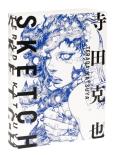
A GIANT 512-page collection of Katsuya Terada’s RAKUGAKI sketches and illustrations.
The one and only legendary illustrator Katsuya Terada, a.k.a RAKUGAKING (The Sketch King) and well known as a pioneer who is always seeking new ideas and motifs for his drawings, has finally revealed his RAKUGAKI sketches and illustrations, long kept in his sketch book. Although most illustrations in this collection have appeared in Terada’s previous international exhibitions (e.g., Giant Robot in Los Angeles), never before has any book collected so many of his RAKUGAKI. This is the best and most comprehensive collection of Katsuya Terada’s pencil sketches, making it a must-have book for both his hardcore fans and also to illustrators in general.
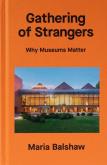
Written by Director of Tate Maria Balshaw, this book is a powerful, timely and thought-provoking exploration of the transformative role of the museum – and of art – in society today.
As the world adapts to the consequences of a global pandemic, museums continue to experience unprecedented disruption and change. At the same time, there is a growing debate and dissent over what museums are for, who they speak to and what the histories, objects and ideas they are tasked with holding reflect – all taking place within a public sphere that feels increasingly dynamic and volatile.
’Public institutions do not sit “outside” society, they are the barometer of time and place. How museums and galleries open themselves up to change and engage dissenting voices is not obvious or easy, but as a recent visitor said, “Art is an invitation to a conversation” – so perhaps our role might be to unlock that conversation.’ – Maria Balshaw Taking a wide-ranging and thought-provoking look at the roles and responsibilities of some of our most well-known and best-loved public institutions, Gathering of Strangers: Why Museums Matter explores the critical challenges and opportunities for the museum at this point in the twenty-first century. Moving from the historical origins of the gallery to important current debates taking place around art and public engagement, the climate emergency, race equality and decolonisation, and the value of the arts in education, this book sets out the role of art and artists in imagining and shaping our collective future.
It is also a love letter to museums, from a sector leader who is at the forefront of the cultural conversation today.
‘Ambitious, generous and packed with ideas, this is a thrilling, thought-provoking invitation into the museum of the future, where both art and people are made welcome.’ – Olivia Laing Maria Balshaw is Director of Tate. Previously, she was Director of the Whitworth, University of Manchester; Director of Manchester City Galleries; and Director of Culture for Manchester City Council. She is also a member of the Women Leaders in Museums Network and a member of the Bizot group of leading global museums.
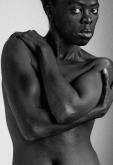
Created to accompany one of the most exciting exhibitions of 2020, this stunning paperback catalogue presents the full breadth of Muholi’s photographic and activist practice.
Richly illustrated, it includes images from the key series Muholi has produced over the past twenty years, as well as never-before-published and recent works. The exhibition book also features six newly commissioned essays exploring their work, as well as a full glossary and chronology.
Born in South Africa, Zanele Muholi came to prominence in the early 2000s with photographs that sought to envision black lesbian, gay, bisexual, trans, queer and intersex lives beyond deviance or victimhood. Muholi’s work challenges hetero-patriarchal ideologies and representations, presenting the participants in their photographs as confident and beautiful individuals bravely existing in the face of prejudice, intolerance and, frequently, violence. While Muholi’s intimate photographs of others launched their international career, their intense self-portraits solidified it.
Sarah Allen is Assistant Curator at Tate Modern.
Yasufumi Nakamori is Senior Curator, International Art at Tate Modern.
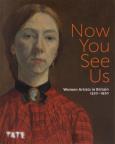
From Tudor times to the First World War, this paperback exhibition book accompanying Now You See Us: Women Artists in Britain 1520–1920 charts these women’s journeys to becoming professional artists.
From Levina Teerlinc, a miniaturist at the court of Elizabeth I, to Laura Knight, the first woman to be elected a member of the Royal Academy after a gap of more than 150 years, women have been a constant presence in the art world, conducting commercially successful careers and exhibiting in public exhibitions.
Against society’s expectations of wives, mothers and daughters, limited to the private domestic sphere, they dared to pursue public careers, and to paint history pieces, battle scenes and the nude, usually regarded as the preserve of men. An examination of figures such as Mary Beale, Angelica Kauffman, Elizabeth, Lady Butler and many more reveals careers very far from the stereotypical view of women as amateur watercolourists, pursuing art as a ladylike accomplishment. Instead, in this exhibition catalogue. they are revealed as professionals who navigated the art world despite being excluded from academy training and art institution membership, and who were determined to succeed despite the obstacles they faced.
In English Female Artists, 1876, Ellen Creathorne Clayton wrote that women artists had ‘left only but faintly impressed footprints on the sands of time’. By looking at what women painted, how their work was received by exhibition critics, what women said themselves about their status in the art world, including their links to campaigns for women’s rights, Women Artists in Britain shines a spotlight on their true legacy and place in art history.
Tabitha Barber is Curator of British Art, 1500–1750 at Tate Britain.
Tim Batchelor is an Assistant Curator at Tate Britain.
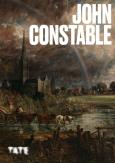
A fascinating introduction to the life and work of John Constable, this book highlights key aspects of his innovative practice and the ways in which he brought a new vivacity to the observation of nature in nineteenth century art.
John Constable (1776–1837) was one of the greatest landscape painters of all time. Inspired by nature and the ever-changing British weather, he dedicated his career to capturing the beauty of the natural world, often painting in the open air and, rather radically, making expressive sketches in oil on the spot. His idyllic, nostalgic depictions of nineteenth-century rural life are iconic: attentive to detail, spontaneous in gesture and bold in their use of colour, they are imbued with a sense of drama and narrative, conveying feelings of happiness and sorrow, love and friendship. But they also have a clarity of expression borne of familiarity: preferring to paint the places he knew and loved, Constable’s landscapes demonstrate an emotional connection, and a true sense of place.
Charting Constable’s remarkable trajectory from his childhood and adolescence in rural Suffolk to his death in London at the age of sixty, this book is the perfect introduction to the life and work of the acclaimed artist. Bringing together a selection of paintings, drawings, sketchbooks and prints from across his career, the introduction book spotlights the influences that shaped his artistic vision, revealing a masterful use of light and colour, and his immense contribution to the landscape tradition.
Gillian Forrester is an independent art historian, curator and writer. She was formerly Senior Curator of Prints and Drawings at the Yale Centre for British Art and specialises in British print culture, with a particular focus on John Constable and J.M.W. Turner.
Ten produkt jest zapowiedzią. Realizacja Twojego zamówienia ulegnie przez to wydłużeniu do czasu premiery tej pozycji. Czy chcesz dodać ten produkt do koszyka?