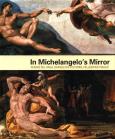
In the first decades of the sixteenth century, the pictorial arts arrived at an unprecedented level of perfection. That, at least, was a widespread perception among artists and their audiences in central Italy. Imitation, according to the artistic literature of the period, was a productive means of continuing the perfections of a predecessor. In Michelangelo’s Mirror reconsiders the question of Italian mannerism, focusing on the idea of imitation in the works of such artists as Perino del Vaga, Daniele da Volterra, and Pellegrino Tibaldi.
Michelangelo was praised as an unsurpassable ideal, and more than any other artist he received the flattering epithet divino. As the cult around him grew, however, a different discourse arose. With the unveiling of the Sistine Last Judgment in 1541, Michelangelo stood accused of having set artifice above the sacred truth he was meant to serve, effectively making an idol of his art. Hansen examines the work of three of the master’s most talented followers in the light of this critical backlash. He argues that their choice to imitate Michelangelo was highly self-conscious and related to the desire to construct their own artistic identities, either by associating their work directly with the ideal paradigm (Daniele), through irony and displacement (Perino), or by incorporating both approaches (Tibaldi).
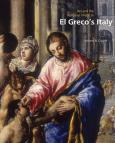
“Andrew R. Casper’s Art and the Religious Image in El Greco’s Italy makes an important contribution to the growing body of scholarship on El Greco, one of the most original and, often, least understood artists of the late Renaissance. In a probing and illuminating fashion, Casper reveals the ways in which El Greco’s encounter with both Counter-Reformation theological ideas and Venetian and Roman art and art theory enabled him to transform himself from a provincial painter of icons in the Byzantine manner to a truly modern painter of devotional images. The El Greco we encounter here is a highly self-conscious, ambitious, and learned painter who, by virtue of his ‘Byzantine way of thinking,’ reconciled aesthetic concerns with contemporary attitudes toward sacred images in the form of what Casper brilliantly terms ‘artful icons.’”
—Steven F. Ostrow, University of Minnesota
Ten produkt jest zapowiedzią. Realizacja Twojego zamówienia ulegnie przez to wydłużeniu do czasu premiery tej pozycji. Czy chcesz dodać ten produkt do koszyka?