Ta kategoria dedykowana jest współczesnym czytelniczkom literatury kobiecej. Bardzo szeroki wybór romansów, kryminałów, powieści obyczajowe, poruszająca literatura kobieca, erotyki, harlequiny polskich i zagranicznych autorów. Każda lubiąca czytać kobieta znajdzie coś szczególnego dla siebie.
Polecamy literaturę Sergiusza Piaseckiego, Stanisława Srokowskiego, Diany Palmer czy w końcu Blanki Lipińskiej.
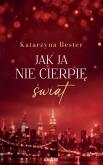
Nazywają go Cichy nie bez powodu. Jest surowy, oziębły, wyrachowany i rzadko się odzywa. A kiedy to robi, w jego słowach słychać pogardę. A kiedy to robi, jego słowa nie są przeznaczone dla mnie. A kiedy to robi, mój żołądek fika koziołki, a mój świat wywraca się do góry nogami. Ma trzydzieści trzy lata. A ja osiemnaście. Jest samotnym ojcem i partnerem biznesowym mojego ojca. A ja jestem dla niego tylko dzieckiem i córką jego wroga. Jest emocjonalnie niedostępny. I coś do niego czuję. Coś, czego nie powinnam. Trent Rexroth złamie mi serce. Nieszczęście wisi w powietrzu, jest wyryte w mojej duszy. A mimo to nie potrafię trzymać się od niego z daleka. Skandal jest ostatnią rzeczą, której potrzebuje moja rodzina. Ale właśnie ten skandal im zapewnimy. Och, to będzie piękny chaos
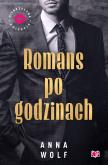
Patrycja to pełna energii i chęci do działania dziewczyna, która często angażuje się w pomoc przykościelną. Tam poznaje siostry zakonne i zaprzyjaźnia się z nimi. Gdy kończy edukację, postanawia iść w ich ślady. Po przekroczeniu murów zakonnych zderza się z rzeczywistością, którą wyobrażała sobie zupełnie inaczej. Nieprzewidywalny los sprawia, że jej życie zmienia się diametralnie. Czy nasze wybory są zgodne z tym, czego pragnie serce?Czyta Lena Schimscheiner
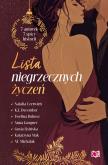
Jedna kobieta, dwóch słowiańskich bogów i tajemnicza przepowiednia.Róża wdaje się w romans ze swoim wrednym, ale bosko przystojnym sąsiadem, Piotrem. Nie wie, że mężczyzna to ludzkie wcielenie Peruna, słowiańskiego boga nieba, który wraz z innymi bóstwami został w pradawnych czasach skazany na życie na Ziemi.Piotr natychmiast rozpoznaje w Róży boginię Mokosz. Zgodnie z przepowiednią jej narodziny są początkiem powrotu starych słowiańskich bogów oraz krwawego konfliktu między nimi.Perun stanie do walki przeciwko własnemu bratu. To będzie bitwa o najwyższą stawkę… Różę.Czy w wojnie bogów życie i los dziewczyny mają jakieś znaczenie? Czy miłość boga może zmienić przeznaczenie?
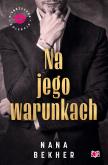
Nie obchodzi mnie, co mówi moja kuzynka nie jestem królową niemożliwych związków. To, że mój ostatni chłopak próbował mnie zabić i zostawił mi bliznę na szyi, a potem zmusił do przeprowadzki na drugi koniec kraju i legalnej zmiany nazwiska na Reese Randall, nie znaczy wcale…
Okej, kogo ja próbuję oszukać? Jak na świeżo upieczoną studentkę college`u, mam okropne doświadczenia z facetami.
Nic dziwnego, że miłość to ostatnia rzecz, o jakiej myślę, gdy w moim życiu pojawia się Mason Lowe. Ale trudno zignorować chemię między nami. Nasza więź przeczy logice. A on jest po prostu diabelsko przystojny. W jego towarzystwie bardziej niż kiedykolwiek czuję, że żyję. Lubię się nawet z nim sprzeczać. Mógłby być moją bratnią duszą… gdyby nie jeden mały problem.
Jest żigolakiem.
Ja to mam szczęście do chłopaków.
Książka zawiera treści nieodpowiednie dla osób poniżej osiemnastego roku życia.
Delikatna sieć relacji międzyludzkich utkana jest według wzoru, którego Sunday nie jest w stanie zrozumieć. Praktyczna wiedza w postaci konwenansów i społecznych oczywistości z jakiegoś powodu ominęła jej neurotyp. Sunday, gotowa zawsze do największych poświęceń dla córki, próbuje połapać się w świecie ludzkich współzależności według własnych reguł, których podstawę stanowią jej ograniczenia, staroświecki podręcznik etykiety dla gospodyń domowych oraz zbiór sycylijskich legend.
Cytując jury nagrody Bookera: „Napisany z perspektywy matki w spektrum autyzmu Śpiew ptasich serc to liryczny debiut powieściowy, który po mistrzowsku splata wątki rodzinnej miłości, przyjaźni, klas społecznych, uprzedzeń i traumy, łącząc psychologiczną wnikliwość z elokwentnym dowcipem”.
Sunday mieszka ze swoją szesnastoletnią córką Dolly, ale pęknięć na powierzchni ich więzi jest kilka: niezrozumienie autystycznych dziwactw matki, nastoletnie pragnienie wyrwania się z gniazda i w konsekwencji planowany wyjazd na studia daleko od domu, gdzie obie spędziły całe swoje życia. Bezpieczny schemat ich codzienności, w którym bohaterka próbuje zbliżyć się do córki niejednokrotnie dokonując wyborów wbrew sobie, rozbija pojawienie się ekscentrycznych sąsiadów. Tajemniczy zachwyt, który wzbudzają w Sunday niebotycznie bogaci i wyluzowani Vita i Rollo pozwala odkryć przepiękny świat wewnętrzny bohaterki, jej wyjątkową perspektywę postrzegania ludzi i zjawisk, wrażliwość oraz ujmującą potrzebę akceptacji. Ta pozorna przyjaźń ma jednak mroczną stronę, a ludzie, którzy zdają się mieć wszystko, nadal próbują odebrać innym to, co najcenniejsze.
„Palce miała drobne, a całe jej dłonie wyglądały jak dziecięce mimo paznokci pomalowanych na bordowo, które migały na ciemno, ilekroć gestykulowała – czyli często. Z reguły nie lubię dotykać ludzi, ale wtedy miałam ochotę zacisnąć palce na jej małej dłoni (…). Jak się później okazało, umiałam trafnie uchwycić pewne cechy Vity, ale akurat nie te istotne”.
Viktoria Lloyd-Barlow – doktorka kreatywnego pisania na Uniwersytecie w Kent; Ma rozległe doświadczenie osobiste, zawodowe i akademickie związane z autyzmem. Podobnie jak jej bohaterka Sunday w powieści All the Little Bird-Hearts, Viktoria jest osobą w spektrum. Prezentowała swoje badania doktoranckie na arenie międzynarodowej, ostatnio wygłaszając wykład na Uniwersytecie Harvarda na temat autyzmu i narracji literackiej. Viktoria mieszka z mężem i dziećmi na wybrzeżu północno-wschodniego hrabstwa Kent. Jest pierwszą autorką w spektrum autyzmu nominowaną do Nagrody Bookera.
Opens a fascinating new window onto medieval and early modern life - a world where it's possible to meet the devil on the road, control the future through stars, and employ a fairy to help find gold
In Cunning Folk: Life in the Era of Practical Magic, historian Tabitha Stanmore will transport readers to a time when magic was used day-to-day as a way to navigate life's challenges and to solve problems of both trivial and deadly importance.
Imagine: it’s 1600 and you’ve lost your precious silver spoons – or perhaps your neighbour has stolen them. Or maybe your child has a fever. Or you’re facing trial. Or you’re looking for love. Or you're hoping to escape a husband … What do you do?
In medieval and early modern Europe, your first port of call might very well have been cunning folk: practitioners of ‘service magic’. Neither feared (like witches), nor venerated (like saints), they were essential to everyday life, a ubiquitous presence in a time when the supernatural was surprisingly mundane. For people from all walks of life, practical magic was a cherished resource with which to navigate life’s many challenges.
In Tabitha Stanmore’s beguiling account, we meet lovelorn widows and dissolute nobles, selfless healers and renegade monks. We listen in on Queen Elizabeth I’s astrology readings and track treasure hunters trying to unearth buried gold without upsetting the fairies that guard it. Much like us, premodern people lived in bewildering times, buffeted by forces beyond their control; and as Stanmore reveals, their faith in magic has much to teach us about how we accommodate ourselves to the irrational in our allegedly enlightened lives today.
Told with warmth, wit and above all, empathy, these stories take us deep into people’s day-to-day lives: their hopes and desires, their fears and vulnerabilities. Charming in every sense of the word, Cunning Folk is an immersive reconstruction of a bygone world and a thought-provoking commentary on the beauty and bafflement of being human.
Science is a serious business, right? Wrong.
Scientists have been participants in the best reality show of all time, with all the highs, lows, bust-ups, and strange personalities of any show on telly today. From Luke O'Neill - the science teacher you wish you'd had - this hugely accessible history of science reveals the human stories behind the biggest discoveries.
For example, we meet Charles Darwin as he weighs up the pros and cons of marrying his cousin: 'constant companion' vs 'less money for books'. Tough call.
To Boldly Go Where No Book Has Gone Before covers everything from space travel and evolution to alchemy and AI. Written by one of our leading scientists, this is an insider's account that celebrates the joy of science. It is filled with all the juicy bits that other histories leave out.
An essential new translation of the author’s complete, uncensored diaries — revealing the idiosyncrasies and rough edges of one of the twentieth century’s most influential writers
Dating from 1909 to 1923, Franz Kafka’s Diaries contains a broad array of writing, including accounts of daily events, assorted reflections and observations, literary sketches, drafts of letters, records of dreams, and unrevised texts of stories. This volume makes available for the first time in English a comprehensive reconstruction of Kafka’s handwritten diary entries and provides substantial new content, restoring all the material omitted from previous publications — notably, names of people and undisguised details about them, a number of literary writings, and passages of a sexual nature, some of them with homoerotic overtones.
By faithfully reproducing the diaries’ distinctive — and often surprisingly unpolished — writing as it appeared in Kafka’s notebooks, translator Ross Benjamin brings to light not only the author’s use of the diaries for literary invention and unsparing self-examination but also their value as a work of genius in and of themselves.
A social history of 1980s Britain, told through the sport of the time.
Travel back to the 1980s - to Botham's Ashes and the Brixton riots; the Moscow Olympics and the miners' strike; the Crucible Theatre and the Falklands - to explore how we got to where we are now. Discover how sport became fully entwined in our national story; how sporting heroes were made, and destroyed; how 'wars' were fought on the pitch; and how sport responded to - and drove cultural change in - our society.
From Sebastian Coe to Margaret Thatcher, John Barnes to the ZX Spectrum, Martina Navratilova to Section 28, Everybody Wants to Rule the World speaks to our treasured memories of eighties sports while also throwing light on where things went deeply wrong. In so doing it tells nothing less than the story of how British sport came into the modern era.
Earth is home to a huge story that is rarely told - that of our ocean. Not the fish or the dolphins, but the massive ocean engine itself: what it does, why it works, and the many ways it has influenced animals, weather and human history & culture.
In a book that will recalibrate our view of this defining feature of our planet, physicist Helen Czerski dives deep to illuminate the murky depths of the ocean engine, examining the messengers, passengers and voyagers that live in it, travel over it, and survive because of it. From the ancient Polynesians who navigated the Pacific by reading the waves to permanent residents of the deep such as the Greenland shark that can live for hundreds of years, she explains the vast currents, invisible ocean walls and underwater waterfalls that all have their place in the ocean's complex, interlinked system.
Timely, elegant and passionately argued, Blue Machine presents a fresh perspective on what it means to be a citizen of an ocean planet. The understanding it offers is crucial to our future. Drawing on years of experience at the forefront of marine science, Helen Czerski captures the magnitude and subtlety of Earth's defining feature, showing us the thrilling extent to which we are at the mercy of this great engine.
A powerful and urgent explanation and vindication of our human rights and freedoms
After the devastation of World War Two, the international community came together to enshrine fundamental rights to refuge, health, education and living standards, for privacy, fair trials and free speech, and outlawing torture, slavery and discrimination. Their goal was greater global justice, equality, and peace. That settlement is now in danger, attacked by opponents from across the political spectrum and populist and authoritarian movements worldwide. We are threatened by wars, inequality, new technologies and climate catastrophe, and we need our human rights now more than ever. In this powerful, accessible book, Shami Chakrabarti, lawyer, parliamentarian and leading British human rights defender, shows us why human rights are essential for our future.
Outlining the historic national and international struggles for human rights, from the fall of Babylon, to the present day, Chakrabarti is an indispensable guide to the law and logic underpinning human dignity and universal freedoms. Her intervention will engage both sceptics and supporters, equipping believers in the battle of ideas and persuading doubters to think again. For human rights to survive, they must be far better understood by everyone.
The new collection from 'one of America's most legendary living poets' (Ocean Vuong), written in the drive to fall in love with the world again not as it was, but as it is
when the hammer
approached we thought
is that thing coming this way
Breathing, moving, living on the page, CAConrad’s exhilarating work is centred on the (Soma)tic ritual, their celebrated practice which draws on nature, crystals, meditation and interactions with strangers to create an ‘extreme present’ of unfettered creativity from which poems can emerge.
Listen to the Golden Boomerang Return gathers the results of a single new ritual, focused on fellow animals who have found ways to thrive in the Anthropocene, and spanning environments from Seattle – a city built in the midst of an abundant nontropical rainforest – to the Mojave Desert. The poet receives gifts from a crow; associates different parts of their body with nine different species encountered in the desert; and joins a woman each morning in feeding rats in the streets of Rome, taking turns looking out for the police.
Written with urgency, hope, anger and joy, the poems that result are an ode to survival in a world that humanity has poisoned, and a testament to a love that knows no by-laws.
From the outside, she has an enviable life: a successful career, stunning looks, a beautiful house in the suburbs, two healthy children, and most importantly, an ideal husband. After fifteen years together, she is still besotted with him. But she's never quite sure that her passion is reciprocated.
Determined to keep their relationship perfect, she meticulously prepares for every encounter they have, always taking care to make her actions seem effortless. She watches him attentively, charting every mistake and punishing him accordingly to help him improve. And she tests him - setting traps to make sure that he still loves her just as much as he did when they first met.
Until one day she realizes she may have gone too far . . .
With the surprise of Gone Girl, the bleakness of The Talented Mr Ripley and the sinister charm of the Netflix thriller You, My Husband is a bold and exhilarating story of passion and the dark secrets that lie beneath a seemingly healthy marriage.
Gut-wrenching, ingenious, absolutely hilarious, this is the rediscovered story of woman's desperate quest for freedom.
'I'm thirty, and I'm stuck'
Arabella is on an increasingly desperate quest for freedom from her overbearing father and her conspicuously absent brother. But her desire for self-actualisation only ends up leading her into the orbit of a happily married man. A spiky, self-conscious love affair begins, complete with awful dinner dates, devastating kisses and agonising introspection. Can Arabella realise what she wants? Can she escape the trap of being sexy, good and likable?
Back in print after many decades, this is an outstanding novel by an extraordinary and little-known writer, the inimitable Rosemary Tonks.
'Salted with wit and peppered with clever images' Guardian
Brilliantly funny and brutal, this is the story of one woman’s escape from the clutches of polite society, by the incredible mid-century writer who destroyed her own books.
Sophie’s mother knows exactly how to needle her. Sophie’s lover Philip knows how to stab her in the heart. She may be clever, charming and smart but is Sophie destined to be an eternal bit-part?
After a particularly callous throwaway remark from Philip, Sophie knows she must break away – from him, from her mother, from the snobbery of her Hampstead Heath upbringing. Being good and agreeable has brought nothing but loneliness; setting out alone might finally bring Sophie satisfaction.
Back in print after many decades, this novel is a piece of dynamite, written by an extraordinary and little-known writer, the inimitable Rosemary Tonks.
Fun, witty and sun-soaked – literary cartwheels and seaside capers from the astoundingly brilliant mid-century writer who destroyed her own books.
Great friends, Mimi and Caroline, are off on holiday to a beautiful Italian island. There they find themselves part of an eccentric cast of characters including their debonair host and his mistress, a relentless venture capitalist and a villain in the form of the local dentist. There is also Beetle, with whom Mimi is completely and simply in love. As everyone relaxes into island living and the demands of real life drift away, the holiday hijinks culminate in a very Mediterranean prank – the cutting down of the dentist’s prize lemon tree.
Back in print after many decades, this is a glorious novel by an extraordinary and little-known writer, the inimitable Rosemary Tonks.
'Everyone could do with a bit of Tonks in their lives' Stewart Lee
Four generations. Three sisters. One impossible choice.
Tricked aboard a boat to East Africa, Pirbhai is only thirteen when he is forced by the British into labouring on the railway. Under sweltering heat, hungry and frightened, he commits a terrible act just to survive.
He will never tell a soul, even when he meets Sonal, a fierce, loving woman with whom he starts a family in Uganda, in hope of a better life. But their granddaughters come of age in a divided nation.
Finally forced to flee, the family scatters across the world. They take with them a steel pot, a handful of photos, and a secret – that one day, will help them find each other again.
A History of Burning is a gorgeous family portrait of love, survival, inheritance - and the eternal search for home.
Ten tales of loss and longing, from one one Japan's greatest writers
It was the height of summer, and there was anger in the rays of the sun
A summer holiday that turns to tragedy; a moonlit journey to fulfil a wish; a couple’s unusual way of making a living; a young lieutenant who ends his life; a night of infidelities. This selection contains nine short stories and one modern Noh play by one of Japan’s greatest writers. Selected by Mishima himself for translation, they are by turns tender and delicate, ironic and shocking, showing the strange pull between duty and desire, death and beauty.
‘He can be funny, even hilarious, but he is also capable of plunging into the dark psychic depths achieved by Hitchcock’ New York Times Book Review
Translated by Edward G. Seidensticker, Ivan Morris, Donald Keene and Geoffrey W. Sargent
Variations on a musical theme by a striking range of authors, among them Flaubert, Turgenev, Proust, Nabokov, Katherine Mansfield, Kazuo Ishiguro, Ian McEwan, Amit Chaudhuri, Bernard MacLaverty and Maya Angelou. Wesley Stace's attractive medley embraces musical genres from Virginia Woolf's 'A String Quartet' to Langston Hughes's 'The Blues I'm Playing'. Short stories are interspersed with interludes from longer works - E. M. Forster's Howards End, Ann Patchett's Bel Canto and Vikram Seth's An Equal Music. Here are music lessons, solos and duets, rehearsals and performances - and a whole suite of stories demonstrating that music is indeed the food of love. The perfect marriage of the musical and the literary.
German Romantic poetry is both fluid and formed, and it is full of song: the poems themselves are often intrinsically lyrical, and many of them inspired some of the best-known musical compositions of the nineteenth century. In this collection, we see German Romantic poets confronting life's greatest moments and greatest challenges - love, loss, death - and producing beautiful, and sometimes witty, works in response. Admiration for nature, in for particular the dramatic forests which still cover large areas of Germany, is also prominent in their work. Characters from myth and folklore abound too, most famously Lorelei, an enchantress who is associated with the River Rhine, and who features in several poems in this volume. Gathered here are favourites such as Goethe's 'Erl King', Eichendorff's 'Night of Moon', Heine's 'In May, the magic month of May', along with works by some of the most famous women writers of the period, Sophie Mereau, Karoline von Günderrode and Annette von Droste-Hülshoff. The works have been recreated in English verse by a range of poets and scholars
Ten produkt jest zapowiedzią. Realizacja Twojego zamówienia ulegnie przez to wydłużeniu do czasu premiery tej pozycji. Czy chcesz dodać ten produkt do koszyka?